
Dog Wound Licking: Why It Happens and How to Stop It


Dogs lick wounds by instinct, but it rarely helps. A little licking may clear debris, yet repeated licking irritates tissue, adds bacteria and can reopen a wound or pull out stitches. The best approach is to block access to the wound, keep it clean, and call your vet when something looks wrong. This guide covers each step, including cone alternatives, torn nails and what to do if your dog licks your wound.
TL;DR
Dogs lick to soothe pain and clear debris, but excessive licking can cause infection, delay healing and reopen wounds.
An Elizabethan collar is usually the most reliable barrier. Soft cones, inflatable collars and recovery suits are alternatives, depending on where the wound is.
Clean wounds with water or saline only, unless your vet tells you otherwise.
A torn nail with an exposed quick needs a vet visit, because the quick is attached to bone.
Redness, pus, colored discharge or a reopened wound mean call your vet right away.
Table of Contents
Does licking help a dog’s wound heal?
Dog saliva has slight antibacterial properties, which is part of why the habit persists. Dogs also lick to ease pain and remove dirt. But the benefit is small and the cost is real.
VCA Animal Hospitals calls it a myth that licking cleans wounds, noting that a pet’s mouth is germy. PetMD lists the usual problems: bacteria introduced into the wound, irritated tissue, delayed healing, enlarged or reopened wounds, and pulled-out sutures.
So the goal is simple. Let your dog’s instinct run its course for a moment if you must, then stop it.
Signs the licking has caused a problem
Watch the wound daily. According to PetMD, redness, inflammation, thick or colored discharge, pus, a reopened wound or slow healing are signs of infection. Contact your veterinarian right away if you see any of them.
A wound that looks worse on day three than on day one is also a reason to call, even if you cannot name what changed.
How to stop a dog licking a wound
Start with the barrier that matches the wound.
Elizabethan collar (cone). VCA says it is often the best way to prevent licking, and that a T-shirt or gym shorts might work too.
Check the fit. PetMD advises the cone should extend at least 2 inches beyond the muzzle. A short cone lets a determined dog reach around it.
Keep it on. Taking it off “just for a minute” is when most licking happens. Supervise any break.
Distract and redirect. Short walks, chew toys and food puzzles give a bored dog something else to do.
Clean and cover. Keep the wound clean and covered if your vet agrees, since out of sight often means out of mind.
Alternatives to a cone
Many dogs hate the hard plastic cone. PetMD lists several options: soft cones, inflatable collars, dog clothing, recovery suits, booties or socks for foot wounds, and dressings applied by a veterinarian. Which one works depends on the injury.
Option | Best for | Watch out for |
Soft cone | Dogs that panic in hard plastic | Can fold and let a dog reach the wound |
Inflatable collar | Wounds on the body or hindquarters | May not stop a flexible or determined dog, and may not work for paw wounds |
Recovery suit or T-shirt | Belly, chest and back wounds | Must fit well and stay clean and dry |
Bootie or sock | Paw and lower leg wounds | Check often for moisture and tightness |
Vet-applied dressing | Wounds needing protection | Only your vet should place it |
PetMD notes that inflatable collars may not work for paw wounds or very flexible or determined dogs.
Anti-lick strips and sprays
Some products go on the skin around an incision to deter licking. FirstVet says to consult a veterinarian first, because some dogs may be attracted to the taste.
Keeping a dog from licking stitches
After surgery, the stakes are higher. Licking can pull out sutures. VCA says that if your dog keeps licking or chewing an incision, an Elizabethan collar may help, and a recovery garment may be an alternative depending on the incision location. Ask your veterinarian which option suits your dog.

Some dogs heal more comfortably with extra support. Mobile practices now offer options such as laser therapy for dog wounds, which you can raise with your own vet during recovery.
Torn dog nail and exposed quick
A torn nail is painful and often bloody, and dogs go straight to licking it. Act in this order.
Control bleeding. For paw bleeding, VCA says to wrap the paw in gauze or a small towel and apply constant pressure. Bleeding should stop in 5 to 10 minutes.
Use a clotting aid. For a broken nail, the same page lists a styptic pencil, silver nitrate stick or cauterizing powder. If you have none, baking powder, cornstarch, flour or a bar of soap may help.
Prevent licking. A bootie, sock or cone keeps the paw protected until your vet sees it. For a longer walkthrough, see our guide to stopping paw pad bleeding.
Call your vet. The quick is living tissue attached to bone. VCA warns that an exposed quick is prone to serious bone infections, and a professional should remove damaged nail fragments.
If bleeding scares you or your dog panics, preparation helps. A calm plan and a stocked kit matter, and this guide to emergency preparation for dogs is a good place to start.
What to put on a dog’s wound
Keep it plain. VCA advises cleaning wounds with water or saline only, and no soaps, alcohol, hydrogen peroxide or herbal preparations unless your veterinarian directs you. That includes our own products: talk to your vet before using any ointment on a dog.
For step-by-step cleaning, read how to clean a dog wound safely at home. If you are weighing topical options with your vet, our overview of pet-safe ointments explains what to look for, and the post on why peroxide is a poor choice shows what to skip.
If an ointment is on your vet’s approved list, make sure it is safe if licked. Dogs will lick whatever you apply, so a barrier still matters.

Our perspective
We make a plant-based, petroleum-free ointment, so people often ask whether it replaces a cone. It does not. Any topical product, ours included, works best on a wound that is kept clean and left alone. That means stopping the licking first.
We see ointment as support for the recovery phase, after your vet has examined the injury. Choose a product you understand, ask your vet before using it on your dog, and watch the wound every day. Calm, consistent care does more than any single product.
— Kyle
Support skin recovery with Re-gen
Once your vet has examined the wound and approved a topical, Re-gen Plant-Based Regenerative Ointment is our petroleum-free option, made with a blend of 10 herbal ingredients to support skin recovery in people and pets.
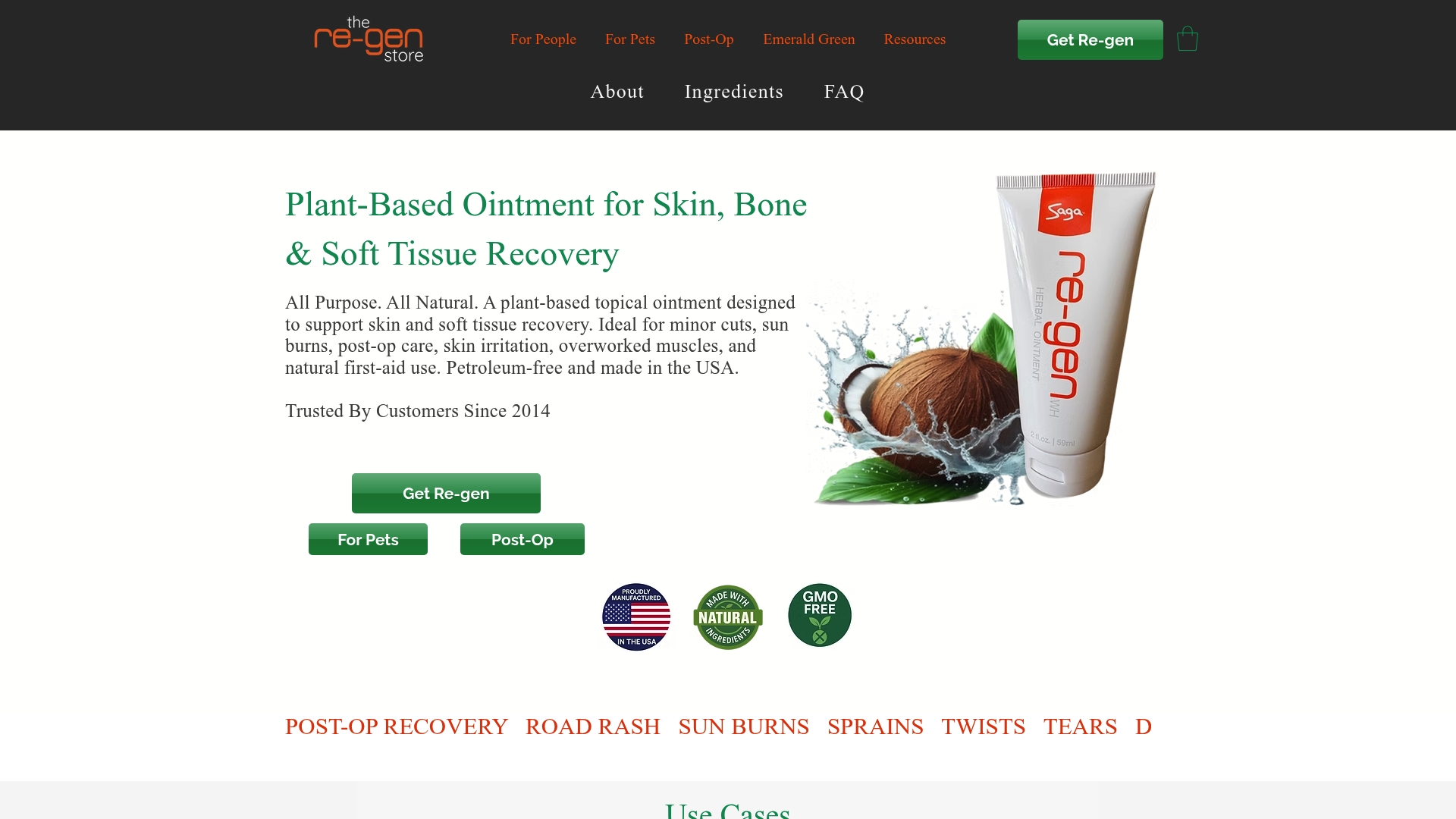
Browse the full Re-gen range. Shipping is a flat $3. For more on our approach, see our guide to healing pet cuts safely.
If your dog licks your wound
Dogs do this out of affection or instinct, but their mouths carry bacteria. A dog lick on an open cut is not harmless, and a case report in the medical literature describes serious infection after a dog licked a small leg wound. Gently discourage it, and clean your wound as you would any other. See a doctor if you notice spreading redness, swelling, pus or fever, especially if you have a weakened immune system.
FAQ
Will a dog’s wound heal if they lick it?
Saliva has slight antibacterial properties, but licking usually does more harm than good. Excess licking can irritate tissue, introduce bacteria, slow healing and reopen the wound. Block access and let the wound rest.
What should I do if my dog keeps licking a wound?
Fit a properly sized cone or a recovery garment that suits the wound location. Supervise any time without it. If the wound looks red, swollen or drains pus, call your vet.
Can I use a cone alternative after surgery?
Often yes, depending on the incision location. A recovery suit or inflatable collar can work for some dogs. Ask your veterinarian which option suits your dog before you switch.
What do I do for a torn nail with the quick showing?
Apply pressure with gauze or a towel and use a styptic product to stop the bleeding. Then protect the paw and call your vet. An exposed quick can lead to bone infection, so professional care matters.
Sources
Recommended
Comments