
Bruise vs. Hematoma: How to Tell the Difference


A bruise is skin discoloration from damaged blood vessels leaking under the skin. A hematoma is a larger collection of blood outside the vessels, and it is typically raised and painful to the touch. The two are closely related. The difference comes down to how much blood escapes and whether it forms a lump.
This guide shows you how to tell them apart, what each one looks like as it heals, how to care for it at home and which signs mean you should call a professional.
TL;DR
A bruise (contusion) is flat or slightly tender discoloration. A hematoma is a pooled collection of blood that usually feels like a raised lump.
Most common bruises fade within about two weeks. Hematomas and severe bruises can take a month or longer.
Home care for both: elevate, ice wrapped in a towel, gentle compression and rest.
Get medical help for a lump over a bruise, pain that lasts, unexplained bruising, extreme pressure in a limb or any head injury with symptoms.
Intact, closed skin and broken skin need different care. Know which one you have before you reach for a topical.
Table of Contents
Bruise, contusion and hematoma: what the words mean
“Bruise” is the everyday word. “Contusion” is the medical term for the same thing, so bruise vs. contusion is not a real contrast. When people search for hematoma vs. contusion, what they are really asking is how big the bleed is and whether it has collected into a pocket.
Here is the practical breakdown:
Bruise (contusion) | Hematoma | |
What happens | Small vessels under the skin leak blood | Blood collects in a larger pool outside the vessels |
Look | Flat or slightly swollen, spreading color | Often a visible bump or swelling |
Feel | Tender, may be sore | Firm or spongy, often painful to the touch |
Typical cause | Bumps, knocks, minor falls | Harder impacts, surgery, greater trauma |
Usual timeline | About two weeks | A month or longer for severe cases |
The timeline row follows Cleveland Clinic’s guidance: most common bruises fade within two weeks, while more severe bruising and hematomas may last a month or longer.
Where a bruise can be deeper than skin
Bruises are not always on the surface. Muscle can bruise, and so can bone. MedlinePlus notes that bone bruises are considered the most severe and painful type of contusion. If a deep ache outlasts the color on your skin, you may be dealing with more than a surface bruise. Our guide on bone bruise vs. fracture explains why imaging matters in those cases.
How to tell which one you have
Check three things.
Shape. Run your fingers gently over the area. A bruise usually feels like normal skin. A hematoma often feels like a raised, lumpy or rubbery mass.
Pain. Both hurt. A hematoma tends to be more painful when you press on it.
Size and cause. A larger area after a hard hit, a surgical procedure or a significant injury points to a hematoma.
There is a gray zone. A bruise can have a slightly raised area, and a small hematoma can look like a bruise. You do not have to settle the label yourself. What matters is what the area does over the next few days, and whether any warning sign below appears. A clinician can also feel a hematoma during an exam because it feels different from healthy tissue.
What healing looks like, day by day
The color change is the same for a bruise and a hematoma that sits near the skin. MedlinePlus describes the usual order: pinkish-red, then blue-purple, then greenish-yellow before the skin returns to its normal color.
That color shift is a good sign. It means your body is clearing the leaked blood. A hematoma may also change in firmness over time, softening as the pooled blood is reabsorbed.

A bruise that is not changing, keeps growing or gets more painful after the first days is worth a call to your provider.
Home care for a bruise or hematoma
The basics are simple and come from Mayo Clinic’s first aid guidance:
Rest and elevate the area, if you can, above the level of your heart.
Ice it. Use an ice pack wrapped in a towel for about 20 minutes, several times a day for a day or two.
Add gentle compression. If it is swelling, use an elastic bandage. Do not wrap it too tight.
Manage pain. A nonprescription pain reliever can help. Cleveland Clinic mentions acetaminophen and advises checking with your provider before using NSAIDs.
If you want to understand how wraps and pressure are used in recovery more broadly, this overview of compression therapy uses is a useful companion to the elastic bandage step.
Do not poke, drain or squeeze a hematoma yourself. If it is large, tense or growing, it needs a professional.
Supporting the skin while it recovers
Once the first day or two of cold and rest are done, many people want to support the tissue as it clears. Our walkthrough on how to heal bruises faster and support tissue recovery covers the habits we suggest. For sore ribs, see home care for rib bruises. For muscle injuries that feel worse than a bruise, read muscle strain or tear: red flags and recovery time.
When a bruise or hematoma needs a professional
Most bruises are harmless. Know these signs, though. Mayo Clinic lists reasons to see a healthcare professional:
very painful swelling
pain that continues three days after a minor injury
frequent, large or painful bruises
bruising with no clear cause
a lump over the bruise
unusual bleeding
Extreme pressure in a limb. Contact a provider right away if a bruised area feels under extreme pressure, especially if it is large or very painful. MedlinePlus says this may be compartment syndrome, which needs emergency care. It is rare but can be life-threatening.
Head injury. A hematoma inside the skull is especially dangerous because there is limited space and pooled blood can press on the brain. After a blow to the head, dizziness, nausea or vomiting, confusion or loss of consciousness mean you should tell your doctor right away.
Blood thinners. Medicines such as aspirin, warfarin and clopidogrel can make you more likely to bruise. If you take one and notice large or growing bruises, ask the prescriber about it. Do not stop the medicine on your own.
Unexplained bruises. Cleveland Clinic says unexplained bruising could signal an underlying condition, and a provider may run tests to rule out causes.
Our perspective: support the tissue, protect the skin
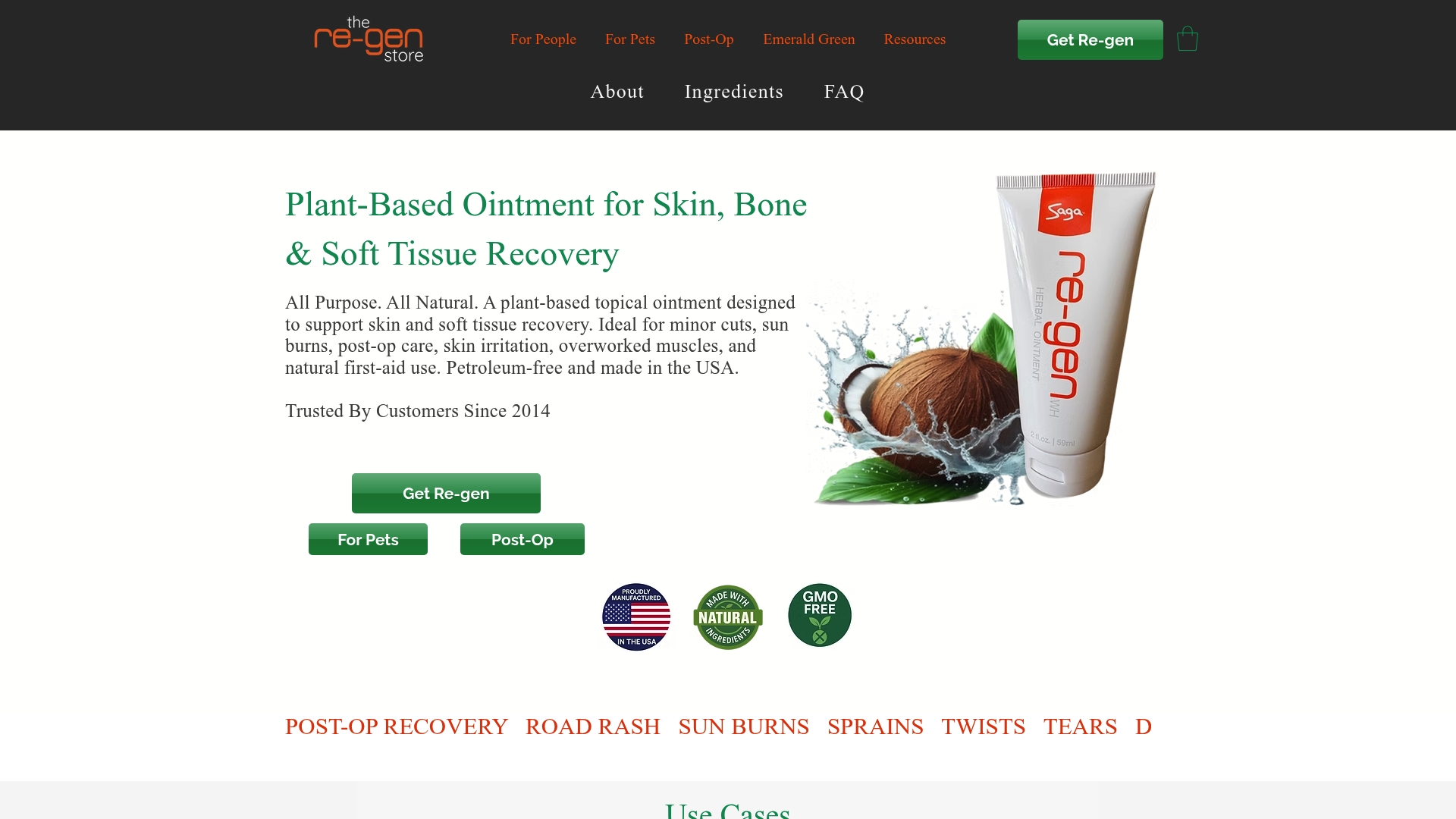
We formulated Re-gen as a plant-based, petroleum-free ointment built around a blend of 10 herbal ingredients. It is designed to support skin, soft tissue, muscle and bone recovery. When people ask us about bruises, we give the same advice every time.
First, get the diagnosis right. A lump, severe pain or pressure belongs with a clinician. Second, do the proven basics: rest, cold, gentle compression. Third, once the acute stage has passed, give the area steady support.

This is where a topical has a role. Bruises often come with scrapes, scuffs and irritated skin, and hematomas often follow surgery, where the skin is healing as well. Our approach favors natural, chemical-free ingredients that you can use on people and, with the pet-specific guidance on our site, on animals. If you are caring for post-surgical skin, see our guides on how to heal skin after surgery and supporting healing after surgery naturally. Always follow your surgeon’s instructions first.
The body does the repair work. Our job is to give it good conditions for it.
— Kyle
Re-gen for the recovery stage
If you want a plant-based option to keep on hand for bumps, scrapes and recovering skin, Re-gen Plant-Based Regenerative Ointment comes in several package sizes. Shipping is a flat $3. You can see the range on our Re-gen product page or learn more about the formula in Petroleum-Free & Plant-Based Wound Treatment.
Ready to order? Start at theregenstore.com.
FAQ
Is a hematoma the same as a bruise?
Not quite. Both involve blood leaking from damaged vessels. A bruise is discoloration under the skin, while a hematoma is a larger pooled collection of blood that is usually raised and painful to the touch. Contusion is just the medical word for a bruise.
When does a bruise count as a hematoma?
There is no sharp line. If the area is raised, firm or lumpy, hurts when pressed and followed a harder impact or a procedure, it is likely a hematoma. A lump over a bruise is also a reason to have a healthcare professional look at it.
How long does a hematoma take to heal?
Most common bruises fade within about two weeks. Hematomas and severe bruises may take a month or longer to resolve fully. If the lump is growing or getting more painful, see your provider instead of waiting.
What is the best home care for a hematoma?
Elevate the area, apply a towel-wrapped ice pack for about 20 minutes several times a day for a day or two, and use an elastic bandage that is snug but not tight. Acetaminophen is a common choice for pain, and you should check with your provider before taking NSAIDs.
Can blood thinners cause bruising?
Yes. Aspirin, warfarin and clopidogrel can make bruising more likely. Tell your prescriber if you see large, frequent or unexplained bruises, and keep taking the medicine as directed until they advise otherwise.
Sources
Recommended
Comments