
Why Use Ointments for Sprains: Benefits and Relief


If you’ve ever dealt with a sprained ankle, you know the frustration of limping through your day and wondering what actually helps. Most people reach for an ointment out of habit, then second-guess whether it’s doing anything real. Understanding why use ointments for sprains goes beyond temporary comfort. The right topical treatment can reduce inflammation, support tissue recovery, and help you stay mobile during healing — especially when paired with modern recovery methods that prioritize movement over prolonged rest.
Table of Contents
Key takeaways
Point | Details |
Ointments target the injury site | Topical application delivers relief directly where you need it, with less systemic exposure than oral medication. |
Ointment type matters | Counter-irritants and topical NSAIDs work differently; choosing the right one for your injury phase improves results. |
Timing affects outcomes | Applying anti-inflammatory ointments too early may disrupt natural healing signals; strategic use post-acute phase works better. |
Natural options support recovery | Plant-based, petroleum-free formulations can support inflammation control and tissue repair without synthetic chemicals. |
Ointments are adjunctive | They relieve symptoms and support mobility but work best alongside controlled movement, compression, and rehabilitation. |
What a sprain actually does to your body
A sprain happens when a ligament — the fibrous tissue connecting bones at a joint — gets stretched or torn. Ankles are the most common site, but wrists, knees, and thumbs are frequently affected too. The injury triggers an immediate inflammatory response as your body sends blood and immune cells to begin repair.
That response produces the classic symptoms most people recognize:
Pain at and around the injured joint, often sharp during movement
Swelling from fluid accumulation in soft tissue surrounding the ligament
Stiffness that limits range of motion, especially in the first 24 to 48 hours
Bruising from small blood vessel damage beneath the skin
Difficulty bearing weight or using the affected limb normally
These symptoms affect daily life immediately. Walking, gripping, and climbing stairs become painful tasks. Getting local, targeted relief from these symptoms matters not just for comfort but because maintaining mobility during recovery is now recognized as a key factor in healing speed and tissue quality.
How ointments work for sprain relief
Not all ointments work the same way. Understanding the difference helps you choose what’s right for your situation.

Counter-irritants vs. anti-inflammatory agents
Counter-irritants and pharmacological agents serve very different purposes. Counter-irritants like menthol and camphor create a cooling or warming sensation that overrides pain signals at the nerve level. They don’t reduce inflammation directly. Instead, they distract the nervous system from the pain, which can be helpful during the acute phase when you need relief without suppressing the body’s healing signals.
Topical NSAIDs (non-steroidal anti-inflammatory drugs), like diclofenac, work pharmacologically. They reduce prostaglandin production at the injury site, which directly lowers inflammation and pain. Diclofenac patches begin relief within approximately four hours and maintain effects for up to 12 hours, with significantly lower drug levels in the bloodstream compared to oral NSAIDs.
Ointment type | Primary mechanism | Best used during |
Counter-irritant (menthol, camphor) | Overrides pain signals via skin sensation | Acute phase, first 24 to 48 hours |
Topical NSAID (diclofenac) | Reduces inflammation at injury site | Post-acute phase, day 2 onward |
Natural plant-based formulas | Supports tissue recovery and inflammation control | Throughout recovery |
The localized delivery is one of the key benefits of ointments for sprains. Because you’re applying the active ingredient directly to the affected area, less of it enters systemic circulation. That reduces the risk of stomach irritation and other side effects common with oral medications.
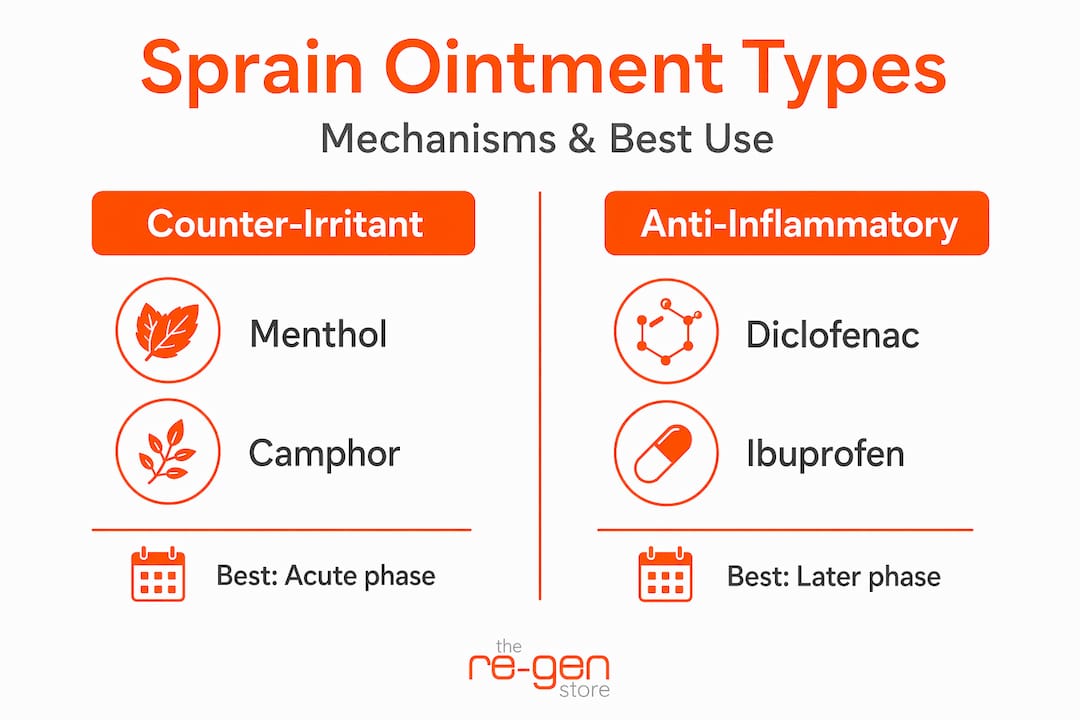
Pro Tip: If your sprain is less than 24 hours old, start with a counter-irritant rather than a topical NSAID. Let your body’s natural inflammatory response begin the repair process first, then transition to anti-inflammatory topicals once the acute phase settles.
Ointments vs. other sprain treatments
The sprain treatment conversation used to be simple: rest, ice, compress, elevate. That formula is changing.
Recent preclinical research from 2026 found that icing may actually double the recovery time for inflammatory injuries by disrupting the natural healing phases your body depends on. The inflammatory response is not the enemy. It’s the mechanism that recruits fibroblasts, which are the cells that rebuild collagen in damaged ligaments. Blocking it prematurely slows structural repair.
Modern clinical practice has shifted toward the POLICE protocol: Protection, Optimal Loading, Ice (cautiously), Compression, Elevation. Pain-guided movement is now central to good outcomes.
Here’s where ointments fit clearly:
They reduce discomfort enough to allow gentle, controlled movement
They address joint stiffness without suppressing healing the way prolonged icing may
They carry fewer side effects than oral NSAIDs taken regularly
They offer on-demand symptom relief without interrupting activity-based recovery
Pro Tip: Use an ointment before your gentle mobility exercises to reduce the stiffness and pain that makes movement feel impossible. Think of it as a support tool, not a replacement for movement.
How to treat sprains with ointments effectively
Getting the most from topical treatment means using it at the right time and in the right way. Here’s a practical sequence:
Assess the injury first. If you cannot bear weight at all, or if the pain is severe, get a medical evaluation before self-treating. Fractures can mimic sprains.
First 24 to 48 hours: use counter-irritants. Avoid routine anti-inflammatory NSAIDs early on unless pain is unmanageable. Acetaminophen is preferred initially to avoid blunting healing signals.
Day 2 onward: transition to topical anti-inflammatories. Apply according to product instructions, typically two to three times daily, targeting the swollen and stiff area.
Combine with compression and elevation. Ointments are most effective when the tissue is not still pooling with fluid. Reduce swelling mechanically first.
Reintroduce gentle movement. Use pain-guided loading. If an activity causes sharp pain, scale back. Ointments support this process by keeping discomfort at a manageable level.
Don’t mistake relief for recovery. Masked pain from ointments is one of the most common reasons people return to full activity too soon and re-injure themselves. Reduced pain does not mean the ligament has healed.
Natural ointments and sprain recovery
There’s growing interest in plant-based topical formulations for sprain care, and for good reason. Many conventional ointments contain petroleum derivatives, synthetic preservatives, and chemical carriers that some users prefer to avoid.
Natural, plant-based ointments offer several advantages for people focused on soft tissue recovery:
Mineral-rich clays can support collagen synthesis and help draw inflammatory byproducts away from the injury site
Petroleum-free bases improve skin absorption and feel less occlusive, which many users prefer during active wear with compression bandages
Herbal anti-inflammatory compounds like arnica and comfrey have traditional use for soft tissue injuries with emerging research support
Reduced chemical exposure matters when applying a product multiple times daily over days or weeks
When evaluating any natural ointment, check for transparency around ingredients, sourcing, and absence of synthetic fillers. Over half of topical analgesic users rate them effective or very effective — but efficacy depends heavily on formula quality and appropriate use. Natural does not automatically mean effective, and reading ingredient lists carefully protects you from products that are mostly fragrance and carrier oils.
My take on ointments for sprain recovery
I’ve watched a lot of people misuse topical treatments in ways that actually slow them down. They apply a warming ointment the moment they sprain something, feel better within 20 minutes, and then immediately test the ankle by going for a walk. That’s not recovery. That’s just masked pain followed by a worse injury.
What I’ve found consistently is that people who do best with ointments are the ones who understand them as support tools, not solutions. They use a counter-irritant to take the edge off during the first day, switch to an appropriate topical formula once the acute phase passes, and combine it all with compression, gentle mobility work, and patience. The ointment allows them to stay in motion without white-knuckling through every step.
The shift toward natural, plant-based formulations is one I genuinely support. When you’re applying something to your skin multiple times a day, the ingredient list matters. Products that are petroleum-free and built around regenerative plant compounds align much better with how the body actually heals. What I tell people is this: ointment effectiveness for injuries isn’t about the strongest possible numbing agent. It’s about giving your tissue the right environment to repair itself, with the least interference from chemicals that don’t belong there.
— Kyle
Natural ointment support from Theregenstore
If you’re looking for a plant-based option that was built specifically for soft tissue recovery, Theregenstore’s Re-gen ointment is worth a close look. It’s formulated without petroleum or synthetic chemicals, making it suitable for daily use during sprain recovery without the concerns that come with conventional products.
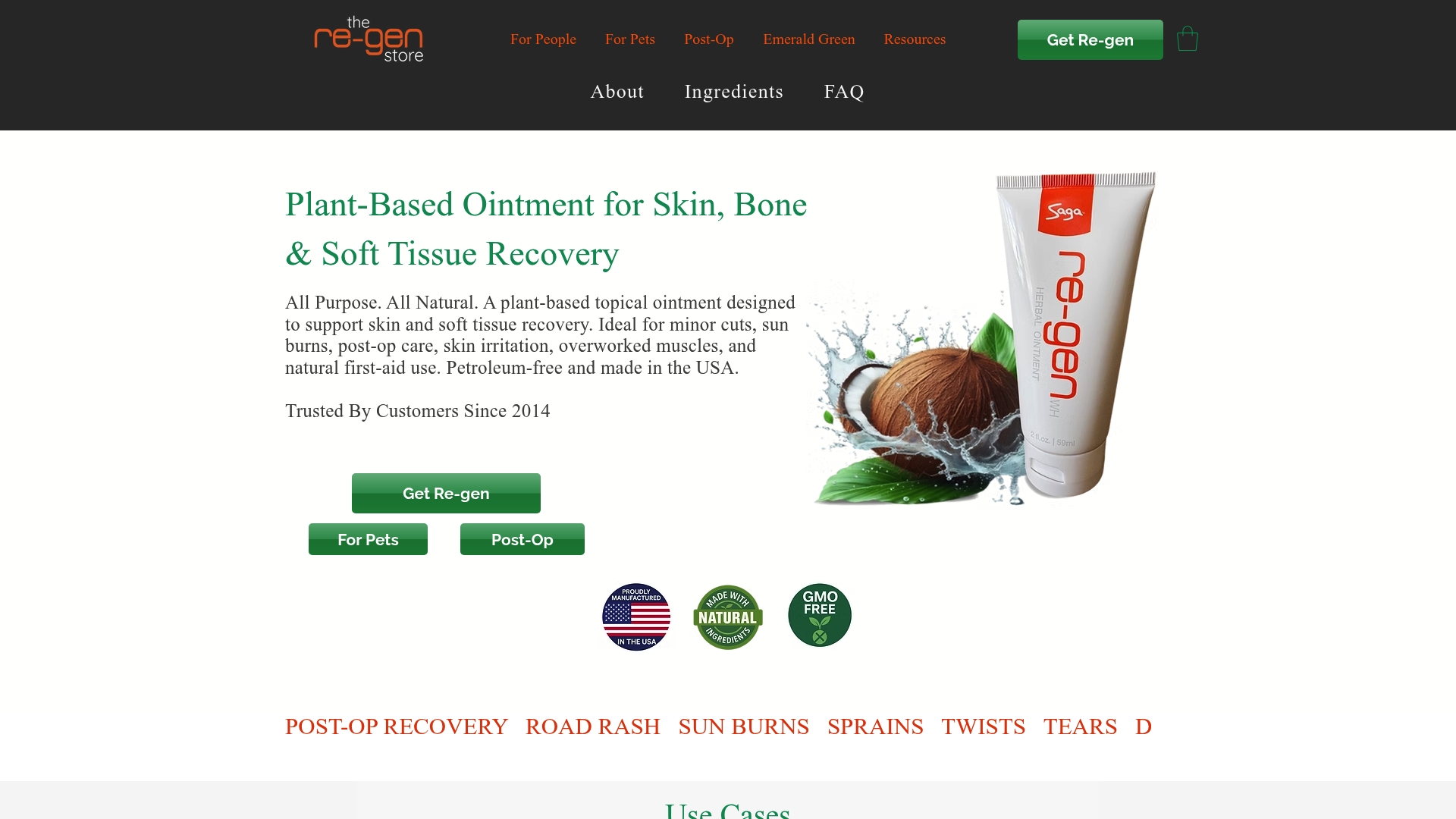
Re-gen is designed to support skin, soft tissue, and connective tissue recovery using a plant-based, chemical-free formula. Whether you’re managing a sprained ankle naturally or supporting recovery from a soft tissue strain, it offers a clean, regenerative alternative. Explore the full Re-gen plant-based ointment and see how it can support your recovery from the outside in.
FAQ
Why use ointments for sprains instead of oral pain medication?
Topical ointments deliver relief directly to the injury site with lower systemic exposure than oral NSAIDs, reducing the risk of stomach irritation and other side effects while still managing pain and inflammation.
Are ointments good for sprains during the acute phase?
Counter-irritant ointments with menthol or camphor are appropriate early on, but anti-inflammatory topicals are generally better suited for the post-acute phase, starting around 48 hours after injury, to avoid disrupting early healing signals.
What are the best ointments for a sprained ankle?
The best choice depends on the injury stage. Counter-irritants work well in the first 24 to 48 hours, while topical NSAIDs or natural plant-based formulations support recovery more effectively as inflammation shifts to the repair phase.
Can ointments replace rest and rehabilitation for sprains?
No. Topical agents manage symptoms and support comfort and mobility, but they don’t repair structural ligament damage. Controlled movement, compression, and progressive loading are still required for full recovery.
How often should you apply ointment to a sprain?
Most topical formulas are applied two to three times daily. Follow the product’s specific instructions and avoid over-application, since more is not always more effective and frequent high-dose use of pharmacological ointments can carry its own risks.
Recommended
Comments