
What is topical ointment and how natural ones work


Grab any two jars from a health store shelf and they might both say “natural healing ointment” on the label. One might be safe for your dog. The other could send him to the emergency vet. The difference is not always obvious from the front label, and that gap in understanding leads to real mistakes every day. Whether you are caring for a minor cut on your own skin, a post-op wound, or a scraped paw on your cat, knowing what a topical ointment actually is, how it works, and what makes certain formulas risky changes how you shop, apply, and recover.
Table of Contents
Key Takeaways
Point | Details |
Ointment basics | Topical ointments are fatty, oil-based mixtures that act locally on the skin for targeted relief. |
Natural doesn’t mean safe | Always check the ingredients and evidence before using herbal ointments, especially on pets. |
Check product labels | Look for ingredient transparency and ‘external use only’ warnings on any skin ointment. |
Pets need special care | Consult your veterinarian before applying any topical ointment to animals, even if it’s natural. |
What is a topical ointment?
A topical ointment is a preparation applied directly to the skin to act locally on the area of treatment. That word “locally” is key. Unlike a pill or injection, the active ingredients stay at or near the surface rather than circulating through the bloodstream. This makes topical delivery ideal for skin injuries, surface inflammation, and wound support.
What separates ointments from creams and gels is their base. Ointments are mixtures of fats that are spreadable, made from fat, oil, or wax, or combinations of all three. That thick, greasy consistency is not a flaw. It creates an occlusive layer, meaning it slows water evaporation from the skin, keeping the area moist and protected longer than lighter products do.
Product type | Base | Texture | Absorption | Best for |
Ointment | Oil or wax | Thick, greasy | Slow | Dry, cracked, or scaly skin; wounds needing moisture |
Cream | Oil and water | Light, smooth | Moderate | General moisturizing, rashes |
Gel | Water or alcohol | Cooling, clear | Fast | Inflamed or oily areas, muscle soreness |
For dry or damaged skin, ointments typically outperform creams because they stay in contact longer and reduce moisture loss. If you are treating a scrape, a minor burn, or a post-operative incision, that extended contact time gives active ingredients more opportunity to support the skin’s natural repair process. You can read more about plant-based recovery for skin and pets to understand how this delivery method applies to natural formulas specifically.
Key takeaway: An ointment is not simply a thick cream. Its oily, occlusive base is a deliberate design choice that keeps it working longer on the surface where healing happens.
Natural ingredients in ointments: what to look for
Now that you know what defines a topical ointment, let’s explore what is really inside those “natural” or “herbal” jars on your shelf.
Many natural ointments use plant-derived ingredients with long histories of traditional use. Here are the most common ones and what they are generally used for:
Aloe vera: Soothes minor burns, sunburns, and surface irritation. Well studied for its cooling and anti-inflammatory properties.
Calendula: Derived from marigold flowers. Commonly used to support healing of small cuts, abrasions, and chapped skin.
Honey (especially Manuka): Has recognized antimicrobial properties. Used in some clinical wound dressings as well as consumer ointments.
Comfrey: Traditionally applied to bruises, sprains, and skin inflammation. Contains allantoin, which may support cell regeneration. Note that it is not recommended for use on open wounds or broken skin due to pyrrolizidine alkaloids.
Beeswax: A common ointment base in natural formulas. Provides a gentle occlusive layer and helps other ingredients stay in place.
Tea tree oil: Antimicrobial properties are well documented, but concentration matters greatly. High concentrations can irritate skin and are toxic to pets.
The evidence level varies widely across these ingredients. Some, like honey, have solid clinical backing. Others, like comfrey, are supported mainly by traditional use and limited studies. Consumer products marketed as herbal or natural wound-healing ointments are still topical preparations intended for minor, external skin issues, but evidence and safety vary by ingredient and product quality. That means the “natural” label does not guarantee either effectiveness or safety. You can explore evidence-based natural healing examples to see which ingredients have stronger scientific support.
Pro Tip: Before applying any natural ointment to a large area, test a small amount on the inside of your wrist for 24 hours to check for sensitivity reactions, especially if the formula contains botanical extracts.
If you are looking for a formula without synthetic chemicals, check whether the product is a genuine best natural alternative to Neosporin with transparent ingredient sourcing, not just marketing language.
Topical ointments for pets: safety and risks
Choosing a natural ointment for yourself is one thing. For pet owners, there is a much higher safety bar.
Pets, especially cats and birds, metabolize substances very differently than humans do. Their skin also absorbs topical products at different rates, and because animals groom themselves, anything on their coat or skin can end up ingested. This makes topical ointment selection for animals a serious decision, not a casual one.

Essential oils can be toxic to pets and should not be applied directly. The risk increases with concentration and exposure route. Tea tree oil, eucalyptus, clove, and pennyroyal are among the most commonly documented causes of pet toxicity. Even lavender and peppermint, both widely used in human products, can cause neurological symptoms in cats at certain concentrations.
Steps to check if an ointment is pet-safe:
Read the full ingredient list, not just the front label.
Search each active botanical ingredient plus your pet’s species in a veterinary toxicology database.
Check whether the product is specifically formulated and labeled for veterinary or animal use.
Look for guidance on what to do if the animal licks the treated area.
Call your vet or an animal poison control hotline before applying anything unfamiliar.
Pro Tip: Always consult your vet before using human or herbal ointments on pets. Even products labeled “organic” or “chemical-free” can contain plant compounds that cause serious harm to cats, birds, or small mammals.
If your pet has a skin wound or irritation, look for formulas specifically designed with animals in mind. Resources on soothing skin irritation for pets can help you identify safe approaches and what to avoid.
When should you use a topical ointment?
Knowing the risks helps you see why picking the right product matters. Now, understand when a true topical ointment is the right and safest option for you or your pet.
Topical ointments are most appropriate when the skin needs prolonged moisture retention and surface protection. Topical ointments cover drug products and dosage forms whose route of administration is topical, including over-the-counter treatments applied externally. That external-only classification is meaningful. It signals that ointments work best when the skin barrier is intact or partially intact.
Common scenarios where an ointment is the right call:
Dry, cracked, or chapped skin that is not healing with lighter moisturizers
Minor cuts, scrapes, or abrasions where the wound is clean and shallow
Minor burns, including sunburn, where moisture retention supports recovery
Post-operative sites where a doctor or vet has approved topical care
Mild eczema or psoriasis flares where barrier support is the priority
For sunburn specifically, an ointment can provide meaningful relief by reducing trans-epidermal water loss. Learn more about sunburn and skin recovery and what ingredient types tend to work best in those situations.
When not to use an ointment (red flags):
Deep puncture wounds or lacerations requiring medical attention
Signs of infection: redness spreading beyond the wound edge, discharge, or increasing pain
Known allergy to any ingredient in the formula
Wounds that are not improving after 48 to 72 hours of home care
If you are weighing natural options against conventional antibiotic ointments, look at a clear comparison of natural Neosporin alternatives to understand where plant-based formulas are most appropriate.
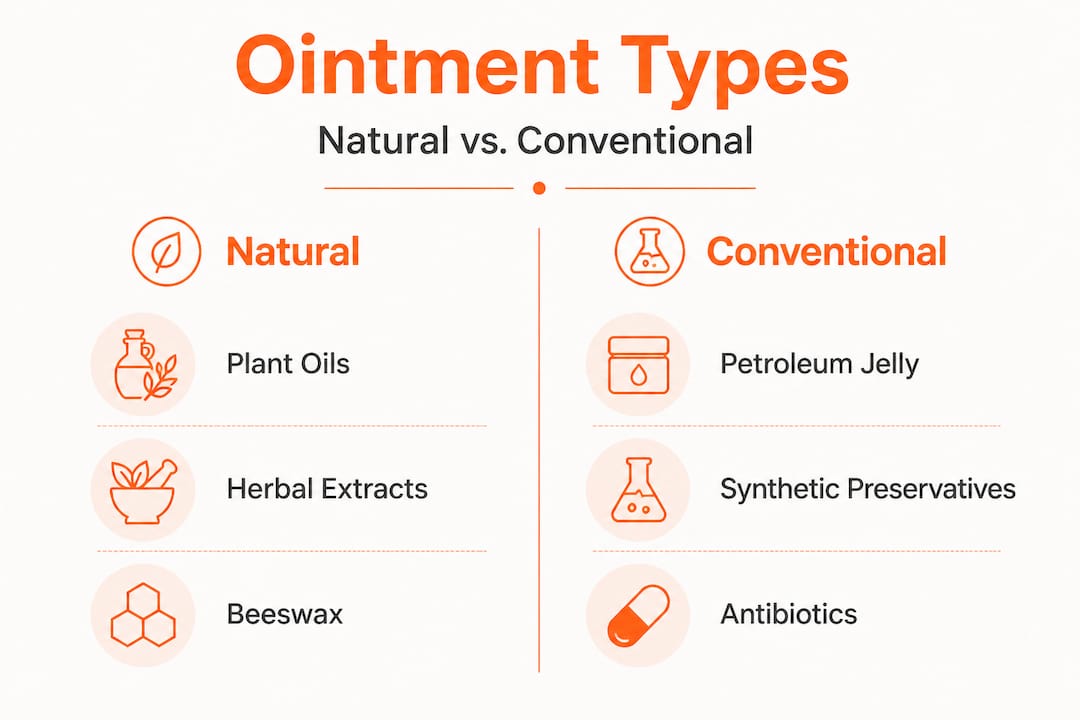
The hidden truths about ‘natural’ topical ointments
We have covered the facts, but there is a deeper layer that most guides skip.
The biggest misconception in this space is automatic safety. Many people believe that because an ingredient comes from a plant, it cannot cause harm. That logic simply does not hold. Poison ivy is natural. So is hemlock. The source of an ingredient tells you very little about its safety profile when concentrated, combined with other ingredients, or applied to broken skin.
A second common mistake is expecting herbal ointments to replace medical treatment for infections. If a topical product treats symptoms like pain or itch rather than the underlying infection, the “safe herbal” framing can be misleading. Soothing discomfort while an infection progresses is a real danger, and it happens more often than most natural health guides acknowledge.
Regulated products carry precise warnings, dosage instructions, and tested formulations. Most home remedies and some commercial herbal ointments do not. That gap creates risk, particularly for children and pets who cannot communicate adverse reactions clearly.
The honest answer is that natural ointments can be genuinely valuable for minor, external skin support when the right formula is chosen and applied correctly. That is not a rejection of plant-based healing. It is a commitment to using it well. Explore the full picture of plant-based healing perspective to see how responsible natural formulation works in practice.
Explore safe, effective plant-based ointments
Ready to choose wisely for yourself or your pets? Here’s where to start safely with trusted, plant-based ointments.
At TheRegenStore.com, the Re-gen ointment is formulated without petroleum, synthetic preservatives, or harsh chemicals. Every ingredient is listed transparently, so you know exactly what is going on your skin or your pet’s skin.
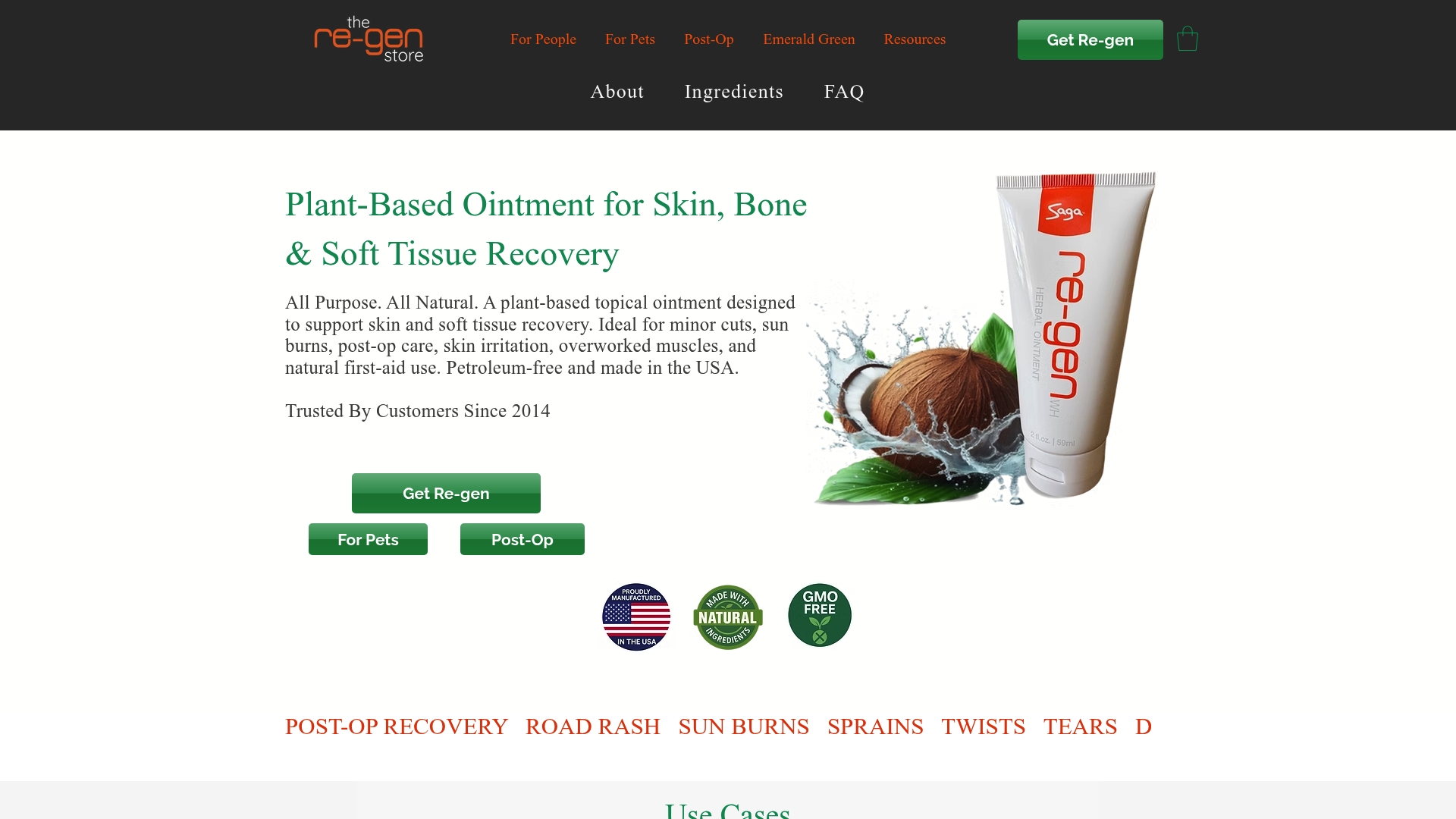
Whether you need support for a minor wound, post-surgery recovery, or everyday skin protection, you can explore the plant-based regenerative ointment and read exactly what makes it different from typical store options. If you are moving away from antibiotic ointments like Neosporin, the natural Neosporin alternative page walks you through the comparison clearly. You can also learn specific strategies to speed up healing naturally and get the most from your recovery routine.
Frequently asked questions
Can I use natural topical ointment on my dog or cat?
Not all natural ointments are safe for pets. Always check with your vet first, as essential oils can be toxic to animals even at low concentrations.
What are the main differences between ointments, creams, and gels?
Ointments are heavier, oil-based, and best for dry or damaged skin. Ointments are made of fat, oil, or wax, while creams absorb faster and gels feel cooling and water-based.
Is herbal ointment safe for open wounds?
Not all herbal ointments are appropriate for open or serious wounds. Use only products intended for minor, external skin issues and follow label directions carefully.
How do I know if a topical ointment is regulated?
Check the packaging for FDA labeling, an “Active Ingredients” section, and for external use only directions, which indicate the product falls under regulated OTC drug categories.
Recommended
Comments