
Holistic wound care: Natural healing for people and pets


Most people think wound care means rinsing a cut, applying antibiotic ointment, and slapping on a bandage. That approach handles the surface, but it leaves a lot on the table. Real healing involves your nutrition, stress levels, sleep quality, immune function, and even your emotional state. Holistic wound care brings all of these factors together into one clear, actionable strategy. Whether you’re managing a minor scrape, a post-surgical site, or a pet’s injury, understanding holistic principles gives you a far better shot at faster, cleaner recovery.
Table of Contents
Key Takeaways
Point | Details |
Holistic care definition | Holistic wound care integrates physical, mental, and environmental health for optimal healing. |
Assessment frameworks | Frameworks like TIMERS ensure thorough evaluation for both humans and pets. |
Natural remedies | Evidence-based options include herbal medicine, light therapy, ozone therapy, and natural antiseptics. |
Pain & chronic wounds | Holistic approaches manage pain and complex cases by addressing psychological and lifestyle factors. |
Practical solutions | Safe, plant-based products and therapies are available for real-world wound care needs. |
What is holistic wound care?
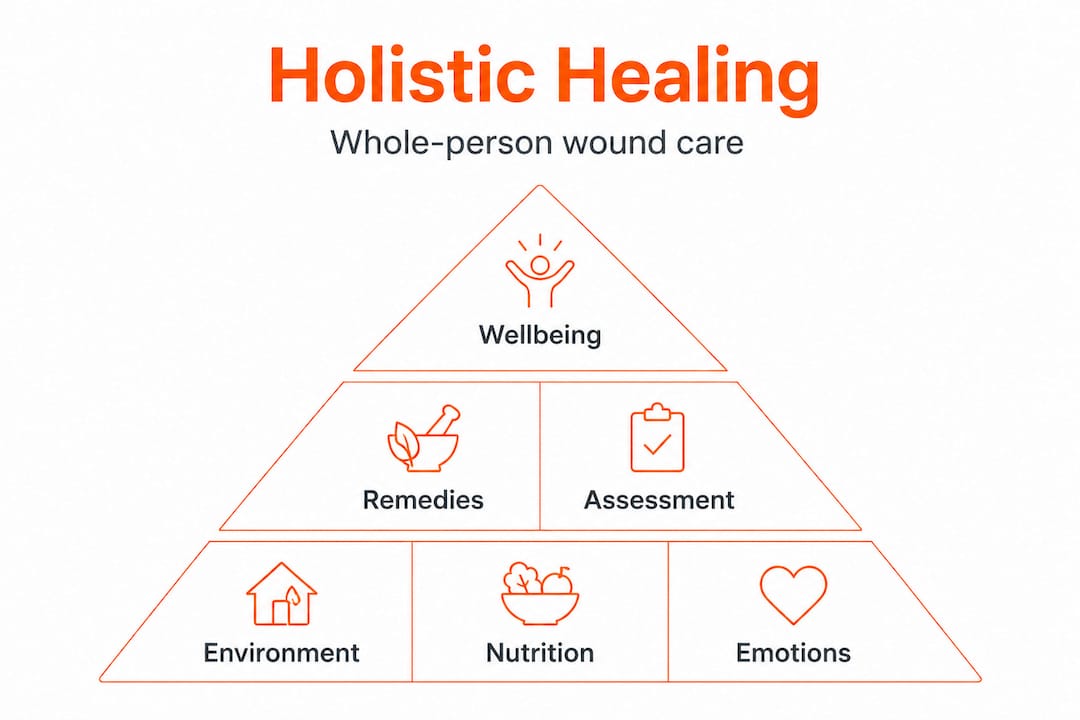
Holistic wound care is a patient-centered approach that looks at the whole person, not just the wound itself. It considers physical health, emotional wellbeing, lifestyle habits, and environmental conditions alongside the wound’s physical characteristics. This is a significant shift from conventional wound care, which typically focuses almost entirely on the wound site.
A key part of this approach is how you assess healing progress. Holistic wound assessment methodologies use structured frameworks alongside pain management strategies, both pharmacological and non-pharmacological, and a concept called Wound Balance, which identifies all the factors blocking or supporting healing. This means a clinician or caregiver considers your blood sugar levels, your stress, your social support system, and your diet as part of the wound care plan.
Here’s what holistic wound care actively addresses:
Physical health: Nutrition, hydration, circulation, immune function
Wound characteristics: Size, depth, infection status, tissue type
Pain levels: Both acute discomfort and chronic pain patterns
Mental and emotional state: Anxiety, depression, and healing outlook
Environmental factors: Living conditions, hygiene access, social support
Lifestyle habits: Sleep, smoking, alcohol use, activity level
You can see many of these principles at work through natural healing examples that combine topical remedies with supportive whole-body care.
Pro Tip: Before applying any topical treatment, take 60 seconds to assess overall wellbeing. Is the person stressed, dehydrated, or sleep-deprived? These factors affect how well any wound heals, no matter how good the product is.
Core frameworks: Holistic wound assessment techniques
With the definition established, let’s look at how holistic wound care is put into practice using proven frameworks. The most widely recognized tool is the TIMERS framework, which gives caregivers a structured way to evaluate every dimension of healing.
TIMERS Component | What It Evaluates |
T — Tissue | Type of wound tissue: necrotic, granulating, or epithelializing |
I — Infection/Inflammation | Signs of infection, biofilm, or prolonged inflammation |
M — Moisture | Wound moisture balance: too dry, too wet, or ideal |
E — Edge | Wound edges: advancing, stalled, or rolled under |
R — Repair/Regeneration | Evidence of new tissue growth and closure progress |
S — Social factors | Patient circumstances, support, access to care |
The inclusion of “Social factors” in TIMERS is what separates holistic assessment from conventional wound charting. A wound that isn’t healing may not need a stronger antibiotic. It may need better nutrition, reduced isolation, or improved access to consistent care.
Pain management in holistic wound care draws on both pharmacological and non-pharmacological approaches, with TIMERS helping identify specific healing barriers at each reassessment.
Here’s how to apply holistic wound assessment in practice:
Evaluate the wound visually using each TIMERS component as a checklist.
Ask about pain using a simple 1 to 10 scale, and ask about the character of the pain (burning, throbbing, aching).
Review lifestyle factors including diet, sleep, and stress level.
Document the environment including access to clean water, dressings, and consistent care.
Reassess regularly because healing is dynamic, and the barriers change over time.
You can also explore practical strategies to speed up wound healing naturally and apply skin recovery tips alongside your TIMERS-based evaluation.

Pro Tip: Reassess every 48 to 72 hours for acute wounds, and weekly for chronic wounds. A wound that looked clean yesterday can shift quickly. Consistent, structured reassessment catches problems before they escalate.
Natural remedies and holistic therapies for wound care
Understanding assessment processes, let’s explore proven remedies that bring holistic wound care to life. Natural and holistic therapies have been used for centuries, and modern research is now validating many of them for both human and veterinary wound care.
For pets specifically, holistic veterinary wound approaches include ozone therapy, light therapy, herbal medicine, and propolis as complementary tools alongside conventional treatment. These aren’t fringe ideas. They are being studied and applied in clinical settings around the world.
Remedy | Mechanism | Best For |
Ozone therapy | Antimicrobial, promotes oxygen delivery | Infected or chronic wounds |
Light therapy (photobiomodulation) | Stimulates cellular repair | Slow-healing wounds, post-surgical sites |
Propolis | Antioxidant, antimicrobial | Minor wounds, skin irritation |
Calendula | Anti-inflammatory, promotes tissue repair | Burns, rashes, cuts |
Aloe vera | Cooling, hydrating, antimicrobial | Burns, sunburn, minor abrasions |
Raw honey (medical grade) | Creates moist wound environment, antimicrobial | Infected or stalled wounds |
Diluted apple cider vinegar | Mild antiseptic | Minor cuts, surface cleaning |
These remedies work because they support the body’s own repair mechanisms rather than suppressing them. Calendula, for example, actively stimulates collagen production and reduces excess inflammation without disrupting the natural healing cascade. Honey creates a low-pH, moist environment that most bacteria cannot survive in, which makes it effective even against antibiotic-resistant strains.
For those who want to move away from petroleum-based products, a petroleum-free wound treatment approach uses plant-derived ingredients that work with skin biology rather than sitting on top of it. You can also read more about plant-based recovery for skin and pets to understand how these ingredients interact with different tissue types.
Key benefits of plant-based and natural therapies:
No harsh chemicals that can disrupt the wound microbiome
Gentle enough for sensitive skin and animals
Supports multiple healing phases from inflammation through remodeling
Often multi-functional: antimicrobial, anti-inflammatory, and tissue-supportive in one
Managing chronic wounds and pain holistically
After learning about natural remedies, it’s important to address the challenges and nuances of chronic wounds and persistent pain. Not every wound follows a clean, predictable healing path. Chronic wounds, which are defined as wounds that fail to progress through normal healing stages within four to six weeks, require a different level of attention and care.
“Holistic wound care for chronic conditions must address not just the wound, but the person living with it. Pain, mental health, and social circumstance are as important as any dressing choice.”
Chronic wound management involves patient-centered plans, regular reassessments, and direct attention to psychological impact. Depression and anxiety are more common in people with chronic wounds, and they significantly slow recovery. Addressing these factors isn’t optional. It’s medically necessary.
Here’s how a holistic plan for chronic wound management looks in practice:
Identify underlying comorbidities such as diabetes, poor circulation, or autoimmune conditions that prevent healing.
Establish consistent pain management using both natural methods (topical herbs, heat therapy, rest) and medical support when needed.
Address nutritional deficiencies especially zinc, vitamin C, and protein, all of which are essential for tissue repair.
Support mental health through counseling, social connection, or stress reduction practices like breathing exercises.
Monitor and adjust the care plan based on regular reassessment rather than a fixed protocol.
For those recovering from procedures, resources on faster healing after surgery offer practical guidance on supporting the body during the most critical recovery window. And if you’re looking to replace chemical-based ointments, exploring the natural alternative to Neosporin is a practical starting point.
A fresh perspective: What most wound care guides miss
Most wound care guides focus heavily on products and techniques. They tell you what to apply and how often. What they rarely address is the fact that two people with identical wounds can have dramatically different outcomes based on factors that have nothing to do with their dressings.
Stress hormones like cortisol actively suppress immune function and slow tissue repair. A person under significant emotional pressure will almost always heal more slowly than someone in a calm, supported environment. This is not speculation. It is a measurable physiological reality. Yet most wound care advice ignores it entirely.
The same applies to pets. An anxious animal in an unfamiliar environment will heal more slowly than one that feels safe and calm. Holistic wound care for pets means managing their stress as actively as managing their wound.
The most powerful shift you can make is to stop treating the wound as a separate problem and start treating the person or animal as a whole system. Simple, consistent practices like improving sleep, reducing sugar intake, ensuring adequate protein, and managing stress often do more for recovery than any advanced dressing. If you want to support that process with effective topical solutions, learning to soothe skin irritation naturally is a great place to start.
Holistic wound care doesn’t require you to abandon conventional medicine. It requires you to expand beyond it.
Explore holistic healing solutions from The Re-gen Store
If you’ve found this guide useful, you’re probably already thinking about how to apply these principles with the right products. At The Re-gen Store, we’ve built our approach around the same philosophy: natural, plant-based support for real healing outcomes.

Our regenerative ointment is formulated without petroleum, harsh chemicals, or synthetic preservatives. It’s designed to support skin and soft tissue recovery for both people and pets, making it a practical choice for holistic wound care at home. Whether you’re looking for a petroleum-free wound treatment or a trusted natural alternative to Neosporin, Re-gen offers a straightforward, plant-based solution you can feel confident using.
Frequently asked questions
What makes holistic wound care different from traditional wound care?
Holistic care addresses not only the wound, but also physical, emotional, and environmental factors for complete healing. Traditional wound care focuses on wound-site management alone, without considering the whole person.
Are holistic remedies safe for pets?
Many holistic therapies, including ozone therapy, herbal medicine, and propolis, are safe for pets when used correctly, but always consult your vet before applying any treatment to an animal’s wound.
Can chronic wounds be healed using holistic methods?
Holistic strategies help manage chronic wounds by addressing underlying health, pain, and psychological factors that standard wound care often overlooks. Results depend on the individual’s overall health and consistency of care.
What are some natural antiseptics used in holistic wound care?
Common natural antiseptics include diluted apple cider vinegar, calendula, aloe vera, and raw honey. These natural antiseptic options are gentle enough for minor wounds and, in the case of honey, effective against some antibiotic-resistant bacteria.
Recommended
Comments