
Step-by-Step Skin Healing With Natural Remedies


Slow-healing wounds are frustrating. Whether you’re recovering from a surgical procedure, managing a stubborn cut, or nursing a burn that just won’t close, the waiting feels endless and the guidance often feels scattered. Most online resources give you a list of generic tips without explaining the “why” behind each step. This guide is different. We’ll walk you through the biology of how your skin repairs itself, what natural and herbal tools actually support that process, and exactly what to do at each stage so you can heal smarter, not slower.
Table of Contents
Key Takeaways
Point | Details |
Four healing phases | Understanding each skin healing phase helps you choose the right care at the right time. |
Natural essentials matter | Herbs like Centella, plus nutrients and moist dressings, speed up healing and reduce scarring. |
Stepwise care works best | A phase-based, evidence-backed routine gets better results than random remedies. |
Stay alert for issues | Watch for infection or delayed healing and adapt your approach as needed. |
Safe herbal support | Not all natural therapies are risk-free—read labels, and consult your provider if unsure. |
Understand the four phases of skin healing
To lay the foundation, let’s break down exactly what happens inside your skin as it heals. Knowing the phases removes the guesswork and helps you apply the right care at the right time.
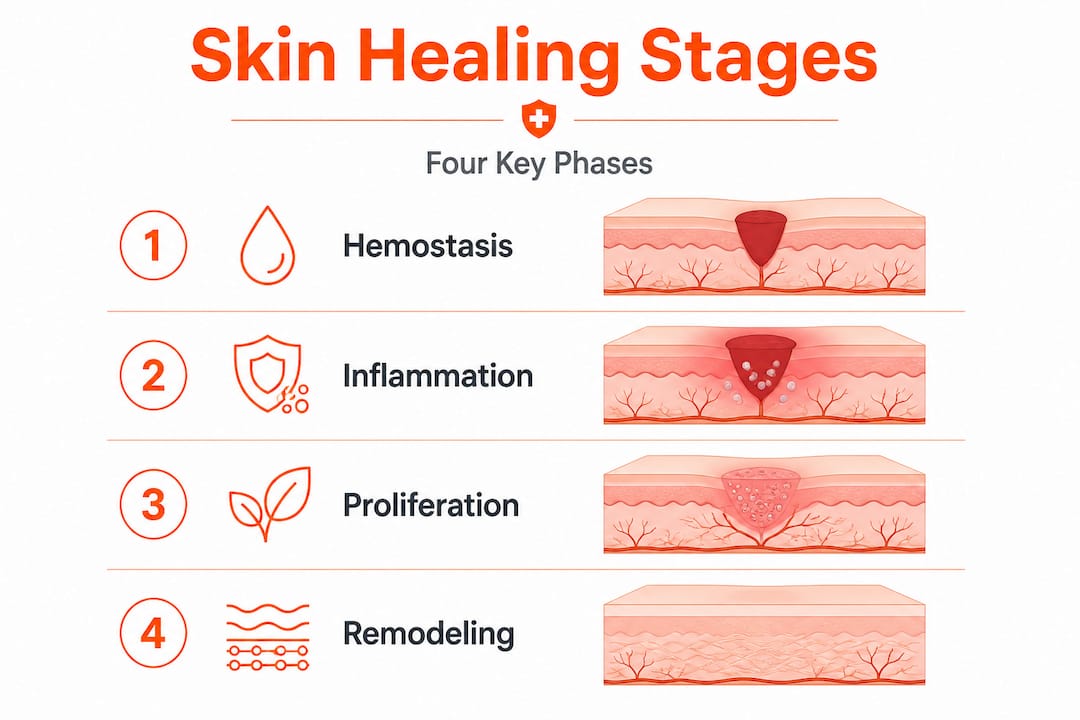
According to wound healing research, skin heals in four overlapping phases:
Phase | Timeline | What’s happening |
Hemostasis | Minutes to hours | Blood vessels constrict; clotting begins |
Inflammation | 1 to 3 days | Immune cells clear debris and pathogens |
Proliferation | 3 to 21 days | New tissue, blood vessels, and skin cells form |
Remodeling | 21 days to 1+ year | Collagen reorganizes into scar tissue |
Each phase builds on the last. Rush one, and the next one suffers.
Here’s what each phase means for your daily care:
Hemostasis: Don’t disturb the clot. Let the wound stabilize.
Inflammation: Mild redness and swelling are normal. Don’t suppress them aggressively.
Proliferation: This is when your wound needs consistent moisture and nutrients.
Remodeling: Long-term scar management begins here.
“Improper wound care during any phase can impede healing, increase infection risk, and worsen scarring.” Respect each stage and follow medical wound care phases as a reference point alongside your natural protocol.
You can read more about healing phases explained and what they mean for your recovery timeline.
Gather your natural healing essentials
With those healing stages in mind, it’s time to set yourself up for success with the right materials.
You don’t need a pharmacy’s worth of supplies. What you need is a focused, evidence-backed kit that supports your skin through every phase.
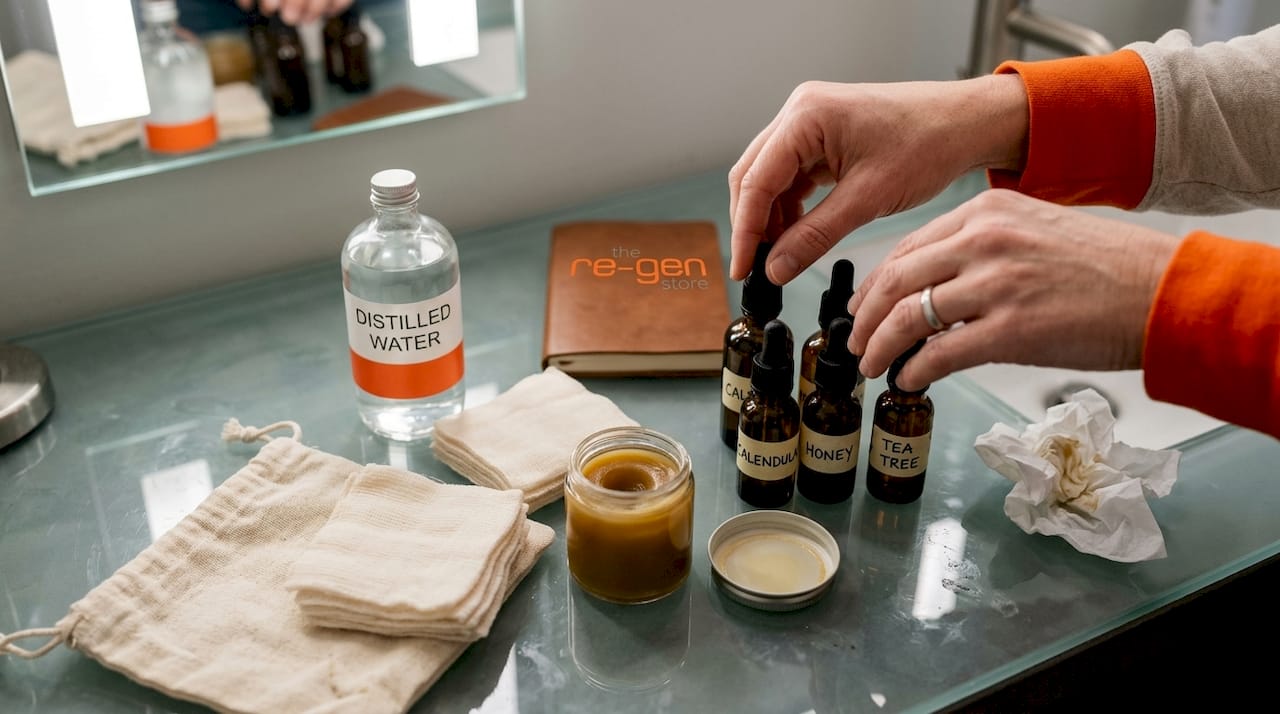
Your basic wound care checklist:
Saline solution or clean water for gentle rinsing
Non-stick wound dressings and medical tape
A plant-based herbal ointment (free from petrochemicals)
Colloidal or medical-grade honey for antimicrobial support
Vitamin C, zinc, and protein-rich foods or supplements
Breathable secondary dressings to lock in moisture
Natural ingredient matchup:
Ingredient | Healing function |
Centella asiatica | Collagen support, scar reduction |
Medical-grade honey | Antimicrobial, moist healing environment |
Calendula oil | Soothing, anti-inflammatory support |
Aloe vera | Cooling, light hydration, minor burns |
Zinc | Cell growth, immune function |
Centella asiatica (at 0.2 to 0.4% asiaticoside) improves scar outcomes measurably, with wound contraction rates improving 25 to 40% in clinical trials. It also boosts collagen I production, hydration, and skin elasticity.
Nutrition plays a parallel role. Healing nutrition research confirms that protein rebuilds tissue, vitamin C drives collagen synthesis, and zinc supports both immune response and cell growth. A wound healed with good nutrition looks and feels better than one healed on poor diet alone.
Pro Tip: If you’ve recently had surgery, check out post-surgery nutrition tips for specific food guidance tailored to post-operative recovery.
Moist wound healing consistently outperforms dry wound care. Moist environments prevent cell dehydration, reduce pain during dressing changes, and allow skin cells to migrate across the wound surface more efficiently. You’ll also find top natural healing tips that support a moisture-first approach without synthetic additives.
Step-by-step: natural skin healing protocol
Now you’re ready to act. Here’s how to put your healing plan into motion, step by step.
Phase 1: Hemostasis (day 1)
Apply gentle pressure with a clean cloth until bleeding slows.
Rinse with saline or clean water. Do not scrub.
Pat dry lightly with sterile gauze.
Apply a thin layer of plant-based herbal ointment to protect the wound edges.
Cover with a non-stick dressing.
Phase 2: Inflammation (days 1 to 3)
Change your dressing once daily or when it becomes saturated.
Rinse gently with saline each time.
Reapply herbal ointment to keep the surface hydrated.
Watch for signs of normal inflammation: mild warmth, pinkness, minor swelling.
Avoid anti-inflammatory drugs unless medically necessary. They can slow immune recruitment.
Phase 3: Proliferation (days 3 to 21)
Continue dressing changes every 24 to 48 hours.
Apply Centella-based or calendula ointment consistently to support tissue formation.
Increase protein and vitamin C intake through food or supplementation.
Begin gentle movement around the wound site if it’s on a limb (unless restricted post-surgery).
Monitor for granulation tissue, which looks pink and slightly raised. That’s a positive sign.
Phase 4: Remodeling (day 21 onward)
Transition from wound dressings to scar support products.
Apply herbal ointments that modulate collagen, such as Centella-based formulas.
Keep the scar moisturized daily.
Protect the area from sun exposure to prevent hyperpigmentation.
Continue nutrition support for at least 60 days post-injury.
Moist versus dry healing therapy research shows that wounds kept moist heal significantly faster and with less scarring. This is not a minor detail. It’s one of the most impactful decisions you’ll make in your protocol.
One important caution: wound healing research also notes that polyherbal products, while often synergistic, carry a risk of interactions with medications or other topicals. Vitamin E, often promoted as a scar remedy, is frequently ineffective and can cause skin irritation. Stick to evidence-backed ingredients.
Pro Tip: Learn more about soothing skin naturally and build your natural post-surgery routine from the beginning of recovery.
Troubleshooting and avoiding common setbacks
Even with preparation, healing can sometimes veer off course. Here’s how to spot trouble and what to do.
Warning signs that your wound needs attention:
Increasing redness spreading beyond the wound edge
Yellow or green discharge with an unpleasant odor
Fever or chills alongside a wound site that feels hot
No visible improvement after 2 weeks of consistent care
Wound edges pulling apart or reopening
Special situations:
For people managing diabetes, chronic wound research supports the use of honey and chitosan-based products to support healing when circulation and immune response are compromised. Consistent moisture and gentle cleansing become even more important.
For keloid-prone individuals, prioritize Centella-based ointments early and often. They support collagen modulation, which can reduce the likelihood of raised or thickened scars. Avoid aggressive scrubbing or picking, which stimulates excess scar tissue.
For post-surgical wounds, your primary focus should be nutrition, hydration, and wound moisture. Dehydrated tissue and poor nutrition are two of the most overlooked contributors to post-op complications.
Never assume a wound is healing simply because it’s not getting worse. Actively check for healthy signs at each stage.
Pro Tip: Browse natural healing case examples to see how others have navigated specific wound types, including post-operative and skin-condition-related wounds.
What to expect: verifying results and long-term care
After working through the steps, here’s how to check your progress and support your skin’s lasting recovery.
Signs of healthy healing:
Wound edges gradually pulling together and flattening
Pink, granulating tissue visible across the wound surface
Decreasing drainage over time
New skin forming from the outside edges inward
Reduced tenderness when touching near the wound
Timeline check:
Milestone | When to expect it |
Wound closes completely | 1 to 3 weeks for minor wounds |
Scar becomes flat and pale | 3 to 6 months |
Full scar maturation | Up to 1 year |
Centella asiatica remains one of the most clinically supported options for long-term scar management, with measurable improvements in scar texture, skin elasticity, and hydration. The collagen modulation for scars process takes time, but consistent herbal support makes a real difference.
You’ll find additional guidance on long-term natural skin care covering the transition from wound care to scar management and beyond.
When to seek medical help:
Signs of deep infection (spreading redness, fever, swelling)
Wounds that fail to close after 3 weeks of proper care
Sudden reopening of a surgical incision
Excessive or worsening scarring despite consistent herbal care
A holistic perspective: what most guides miss about stepwise skin healing
Most wound care guides hand you a list and leave you to figure out the rest. What they rarely address is how interconnected every healing variable truly is.
The biggest misconception we see is this: people treat natural healing as a single intervention rather than an adaptive process. They apply one product and expect results. But your skin’s repair system responds to a combination of signals: moisture levels, nutrient availability, inflammation management, and consistent care over time. No single herb or supplement fixes a wound in isolation.
We also want to address the “natural equals safe” assumption. It feels reasonable, but it’s incomplete. As noted in StatPearls wound healing research, polyherbal formulas can cause unexpected interactions, and not every traditional remedy is well-studied for every wound type. A thoughtful approach means choosing products with clear ingredient transparency and clinical backing, not just marketing claims.
Tracking your healing phase is one of the most underrated habits in wound recovery. When you know you’re in the proliferation phase, for example, you stop worrying that the wound still looks raw and instead focus on feeding it what it needs: moisture, collagen-supporting nutrients, and gentle protection. That clarity removes anxiety and keeps your care consistent.
The most effective healers we observe treat natural recovery as a dynamic process, not a passive one. They adjust based on what they see, stay consistent with moisture and nutrition, and lean on plant-based synergy rather than chasing a single silver bullet. That adaptive mindset is what separates frustrating plateaus from steady, visible progress.
Advance your healing with proven, plant-based solutions
Ready for the next step? Here’s how to complement your routine with specialized support.
Every phase of healing benefits from the right topical support, and that means choosing formulas free from petrochemicals, synthetic preservatives, and harsh additives that disrupt your skin’s natural repair signals.
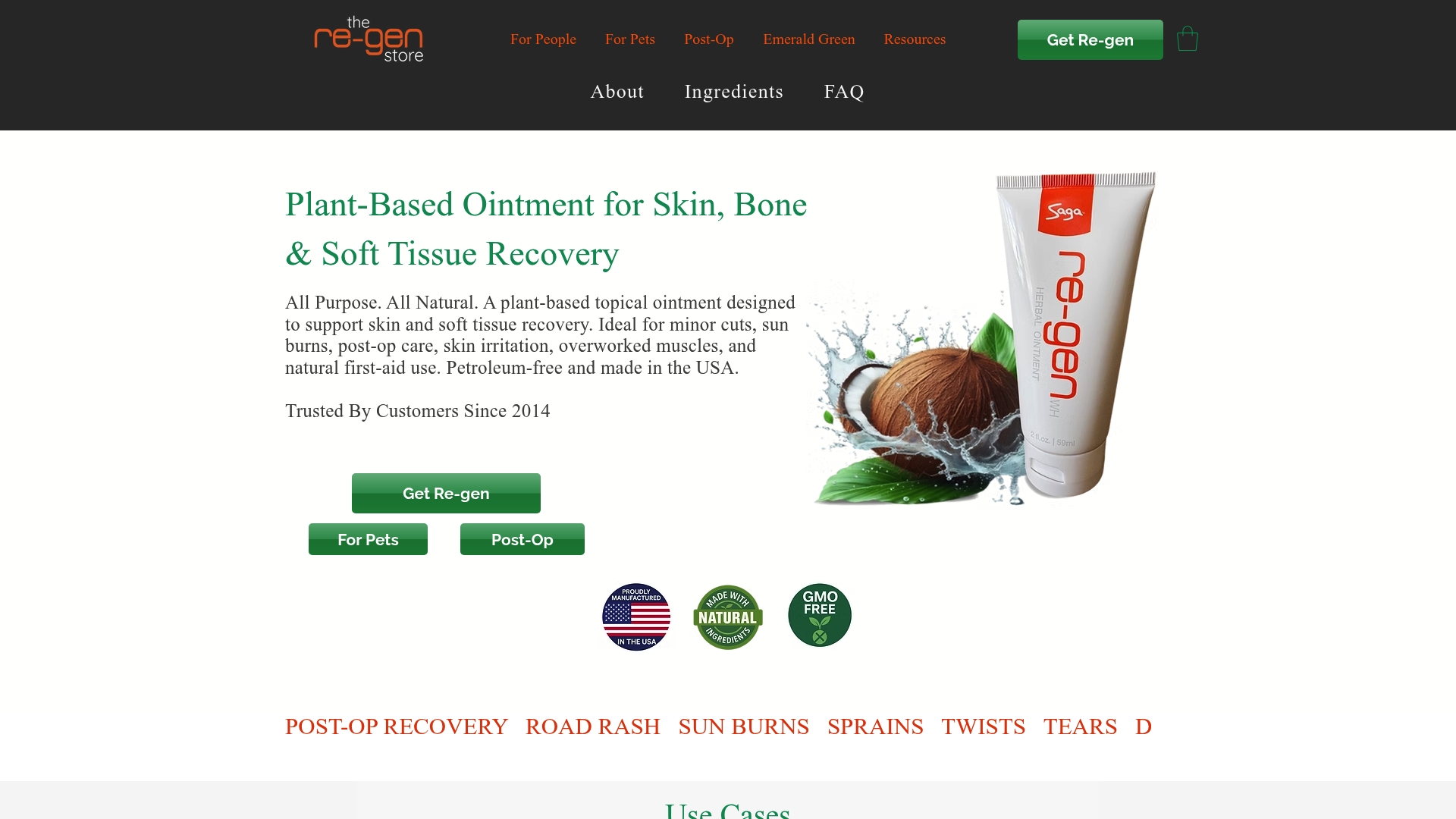
At TheRegenStore.com, the Re-gen regenerative ointment is formulated with plant-based ingredients designed to support skin, soft tissue, and wound recovery at every stage. If you’re moving away from synthetic antibiotic creams, explore what a natural Neosporin alternative looks like in practice. For those recovering from heat exposure or sun damage, our plant-based sunburn relief solution offers the same clean, herbal approach. Gentle, transparent, and built for real recovery.
Frequently asked questions
How long does full skin healing usually take?
Minor wounds typically close within 1 to 3 weeks, but full scar tissue remodeling can continue for up to a year after the initial injury.
Is it better to let a wound dry out or keep it moist?
Keeping a wound moist is consistently better. A moist healing environment reduces cell dehydration, speeds closure, and results in less scarring than letting the wound dry out.
What foods help skin heal more quickly?
Focus on foods rich in protein, vitamin C, and zinc. These nutrients directly support tissue repair, collagen production, and immune function during recovery.
Can herbal ointments cause side effects?
Yes. Even plant-based products carry a risk of skin reactions or medication interactions. Always patch-test new products and disclose all topicals to your healthcare provider if you’re on prescription medications.
How should post-surgical wounds be cared for naturally?
Prioritize consistent moisture, gentle cleansing, and a nutrient-rich diet starting from day one after surgery. Hydration and proper nutrition are among the most critical factors in reducing post-operative complications and scarring.
Recommended
Comments