
What Is Muscle Healing Naturally? Your Recovery Guide


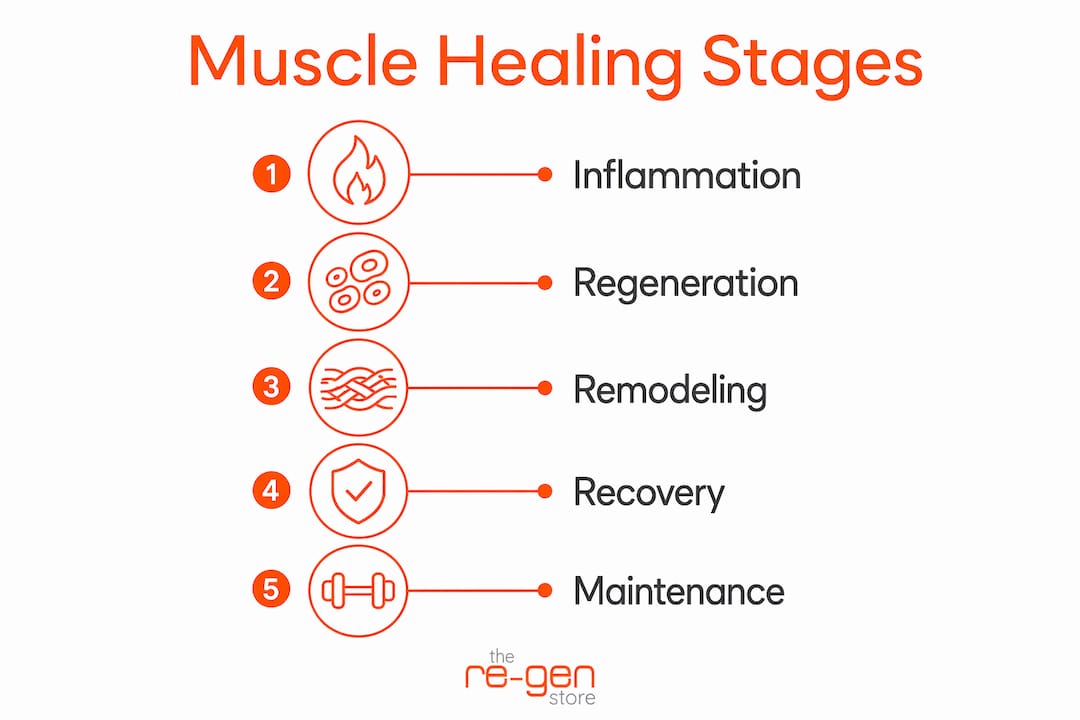
Muscle healing naturally is the body’s intrinsic process of repairing damaged muscle fibers through three overlapping biological phases: inflammation, regeneration, and remodeling. This process, studied extensively by institutions like Frontiers in Physiology, Cleveland Clinic, and Memorial Hermann, is not passive. It is an active, coordinated repair program that your body runs every time you push hard in training, sustain a strain, or recover from surgery. Understanding how it works gives you real control over how fast and how fully you recover.
What is the natural muscle healing process, phase by phase?
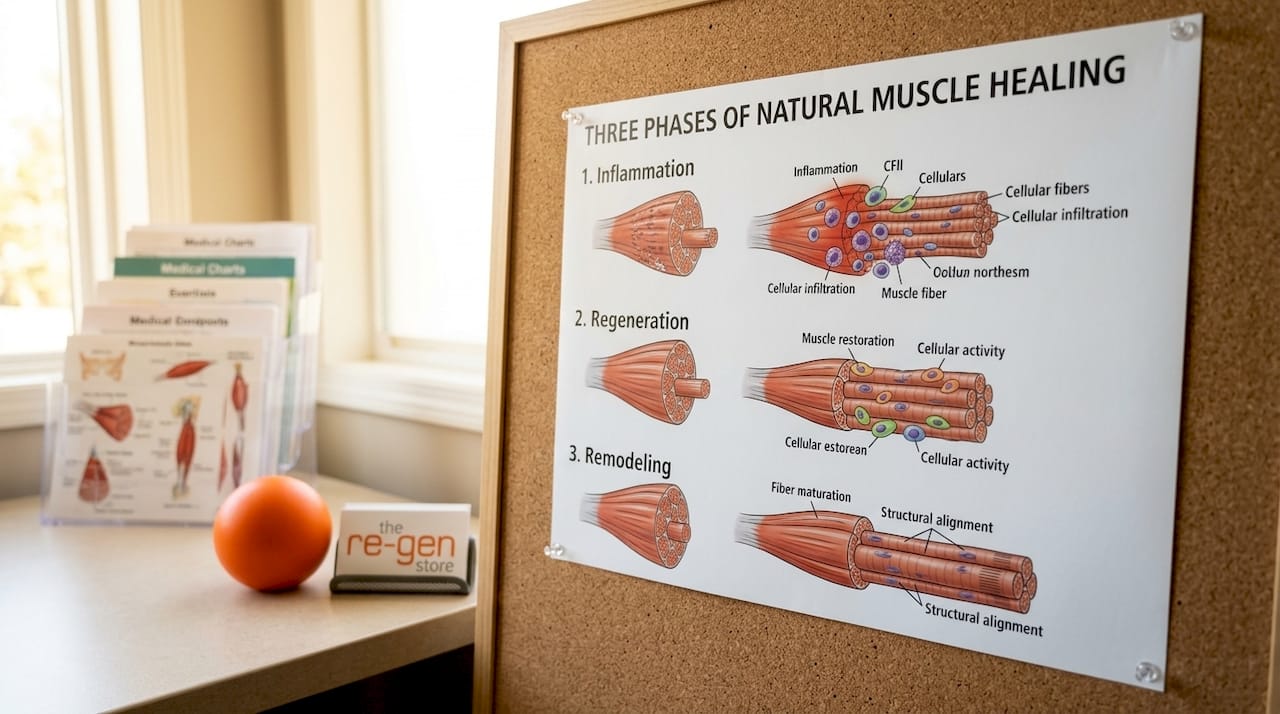
Natural muscle healing, known in clinical literature as skeletal muscle regeneration, follows three distinct but overlapping phases. Each phase has a specific biological job, and disrupting any one of them slows the entire process.
Inflammation (days 1–3). Immediately after muscle fibers tear, the body sends white blood cells and immune signals to the damaged site. This is not a problem to suppress. Muscle soreness is a natural part of the body’s planned repair program, triggered by inflammation after microtears. Swelling and tenderness are signs that repair has started.
Regeneration (days 3–21). Satellite cells, the muscle’s resident stem cells, activate and multiply to rebuild damaged fibers. A 2026 Frontiers review details how satellite cell activation restores contractile function after injury. Without adequate protein and sleep, this phase stalls.
Remodeling (weeks 2–6+). The final phase goes beyond fiber repair. Connective tissue reorganization, blood vessel restoration, and neuromuscular junction recovery all occur here. Skipping this phase by returning to full intensity too early is the most common reason athletes re-injure the same muscle.
The full cycle typically spans one to three weeks for minor injuries, though complete remodeling can take longer depending on severity and age.
Pro Tip: Delayed onset muscle soreness (DOMS) peaks around 24–72 hours after exercise and resolves within about five days. Intense training during this window can prolong symptoms. Lighter movement supports healing far better than forced rest or aggressive re-exercise.
What lifestyle and dietary habits support natural muscle recovery?
The methods of muscle healing that produce the most consistent results are not found in a supplement bottle. They are built into your daily habits. Here is what the evidence actually supports:
Protein timing. Consuming 20–40 grams of protein within two hours after exercise gives satellite cells the amino acids they need to rebuild fibers. Pair this with carbohydrates to replenish glycogen and reduce cortisol, which otherwise breaks down muscle tissue.
Hydration. Hydration and cool-down routines improve blood flow and support muscle recovery post-exercise. Dehydrated muscle tissue heals more slowly because nutrient delivery and waste removal both depend on adequate fluid volume.
Sleep. Deep sleep is when the body releases growth hormone and other anabolic signals that drive the regeneration phase. Cutting sleep short is one of the fastest ways to undermine every other recovery effort you make.
Light movement during soreness. Rest plus moderate activity during the recovery phase is the clinical recommendation for managing DOMS. A short walk, gentle stretching, or a low-intensity swim promotes blood flow without stressing the repair site.
Warm-ups and cool-downs. These are not optional extras. A proper warm-up prepares connective tissue for load, and a cool-down gradually reduces heart rate while keeping blood circulating through recovering muscle.
Pro Tip: Improving conditions for repair through nutrition, hydration, and sleep matters more than masking symptoms with ice or anti-inflammatories. Symptom suppression can actually interfere with the inflammation phase your body needs.
Which natural supplements show evidence for muscle repair?
Natural remedies for muscle repair have attracted serious research attention. The results are more nuanced than most supplement marketing suggests. The table below summarizes what current evidence actually shows.
Supplement | Claimed benefit | What research shows |
Tart cherry | Reduces soreness and speeds recovery | Alters muscle proteome and immune response after eccentric exercise but does not accelerate functional recovery |
Turmeric (curcumin) | Anti-inflammatory, reduces DOMS | Modest reduction in soreness markers; absorption is low without black pepper extract (piperine) |
Omega-3 fatty acids | Reduces inflammation, supports cell membranes | Consistent evidence for reduced muscle soreness and improved range of motion post-exercise |
Collagen peptides | Supports connective tissue repair | Promising for tendons and ligaments; less direct evidence for muscle fiber rebuilding |
The honest takeaway: supplements can complement muscle and connective tissue recovery but they do not replace the foundational habits of sleep, protein, and appropriate movement. Tart cherry, for example, produces real molecular changes in muscle tissue after hard exercise. It does not, however, make you functionally stronger or recovered faster than you would be otherwise. That distinction matters when you are deciding where to spend your money and attention.
For athletes exploring post-marathon recovery, the same principle applies: supplements support the process, but the process itself is driven by biology and lifestyle.
How does aging change the muscle healing process?
Aging does not simply slow muscle healing. It changes the biological environment in which healing occurs. Senescent cell accumulation in aged muscle alters the regenerative microenvironment, impairing the satellite cell activity that drives fiber repair. A 2026 Science Advances study links this senescent cell burden directly to decreased muscle healing capacity in older adults.
The practical result is that older individuals experience slower regeneration, longer remodeling timelines, and a higher risk of re-injury if they return to full activity too soon. Protocols designed for younger athletes do not translate directly. Adapted strategies, including lower training volume during recovery, higher protein targets, and more deliberate sleep prioritization, produce better outcomes for people over 50.
The research on senolytics (compounds that clear senescent cells) is promising in animal models, but human applications are still early. For now, the most reliable approach for older adults is patience, consistent nutrition, and avoiding the temptation to push through soreness that signals incomplete repair.
Key takeaways
Natural muscle healing is a three-phase biological process driven by satellite cells, supported by protein, sleep, and hydration, and disrupted by premature intense activity or poor recovery habits.
Point | Details |
Three-phase repair process | Inflammation, regeneration, and remodeling each serve a distinct role and cannot be skipped. |
Protein timing matters | Consuming 20–40 g of protein within two hours post-exercise directly fuels satellite cell activity. |
Light movement beats full rest | During DOMS peak (24–72 hours), gentle activity promotes blood flow better than complete rest. |
Supplements complement, not replace | Tart cherry and omega-3s show real molecular effects but do not substitute for sleep and nutrition. |
Aging requires adapted protocols | Senescent cell buildup slows healing in older adults, requiring longer timelines and adjusted training loads. |
Why I think most people misunderstand muscle recovery
Most people treat muscle soreness as a problem to eliminate. I see it differently. Soreness is your body’s confirmation that the repair program is running. The goal is not to silence it. The goal is to give the repair program everything it needs to finish the job.
The biggest mistake I see is the rush back to intensity. Someone feels 80% recovered and trains at 100%. That gap is where re-injury lives. Accepting the soreness timeline and managing exercise intensity carefully is the single most underrated factor in long-term strength gains.
Natural supplements are genuinely useful, but they work at the margins. Tart cherry will not save a recovery week built on four hours of sleep and skipped meals. The foundation always comes first. Build that, and the supplements become a meaningful addition rather than a substitute for discipline.
— Kyle
Support your recovery with plant-based natural products
If you are committed to healing muscles naturally, what you put on your body matters as much as what you put in it. Theregenstore offers Re-gen, a petroleum-free, plant-based regenerative ointment formulated to support soft tissue, skin, and muscle recovery without synthetic chemicals.

Re-gen is designed for people who take a holistic approach to healing. Whether you are managing a sprain, recovering from a strain, or supporting tissue repair after surgery, it works alongside the lifestyle habits covered in this article. Explore Theregenstore’s plant-based wound treatment options and see how a natural topical can complement your full recovery approach. Visit Theregenstore to learn more.
FAQ
What is muscle healing naturally in simple terms?
Muscle healing naturally is the body’s built-in repair process that rebuilds damaged muscle fibers through inflammation, regeneration, and remodeling phases. It is supported by protein intake, sleep, hydration, and appropriate movement rather than pharmaceutical intervention.
How long does natural muscle recovery take?
Minor muscle soreness from exercise resolves within about five days, while more significant muscle injuries can take one to three weeks or longer for full tissue remodeling. Age, nutrition, and activity level all affect the timeline.
Does ice actually help with muscle healing?
Ice reduces pain and swelling but may interfere with the inflammation phase that initiates repair. Research on ice and sports recovery suggests that routine icing after exercise is less beneficial than previously assumed.
What is the best natural remedy for sore muscles?
Protein-rich nutrition within two hours post-exercise, adequate sleep, and light movement during peak soreness are the most evidence-supported natural remedies for muscle repair. Omega-3 fatty acids and tart cherry offer additional support at the molecular level.
Can older adults heal muscles as effectively as younger people?
Older adults can heal muscles effectively, but the process takes longer due to senescent cell accumulation that impairs satellite cell activity. Adapted recovery protocols with higher protein intake, longer rest periods, and lower training volume produce the best results.
Recommended
Comments