
Scar Tissue Explained: Healing, Risks & Natural Solutions

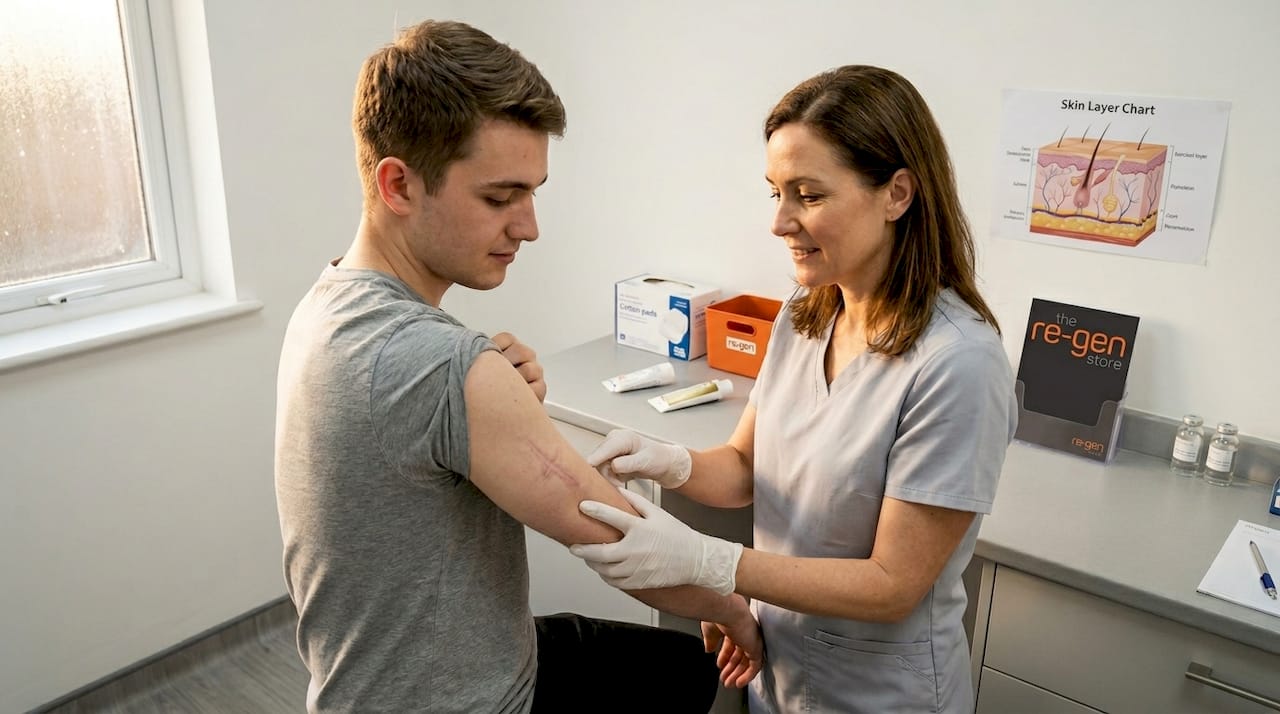
Once a wound closes and the skin looks healed, it’s easy to assume everything is back to normal. But that’s not quite accurate. The tissue that replaces injured skin is structurally and functionally different from what was there before. Scar tissue lacks key features of healthy skin, responds differently to stress, and can cause lasting discomfort if not supported properly. Whether you’re recovering from surgery, a soft tissue injury, or helping a pet heal, understanding how scar tissue actually works gives you a real advantage in supporting better outcomes.
Table of Contents
Key Takeaways
Point | Details |
Scar tissue basics | Scar tissue is different from normal skin, less elastic, and forms after injuries. |
Healing phases | Every scar is shaped by how the body repairs after an injury through four key phases. |
Early care matters | Quick, proper wound care and the right environment reduce scar formation. |
Natural solutions | Plant-based remedies can help scars heal better for both people and pets. |
Pets heal naturally | Many natural healing principles and gentle options apply to animals, not just people. |
What is scar tissue and how does it form?
Scar tissue is fibrous connective tissue composed primarily of collagen that forms as the body’s natural response to replace damaged or lost tissue following injury, surgery, acne, or disease. It’s not a malfunction. It’s the body doing exactly what it’s designed to do: close the wound fast and move on.
Scar formation occurs through four overlapping phases of wound healing: hemostasis, inflammation, proliferation, and remodeling. Each phase has a specific job.
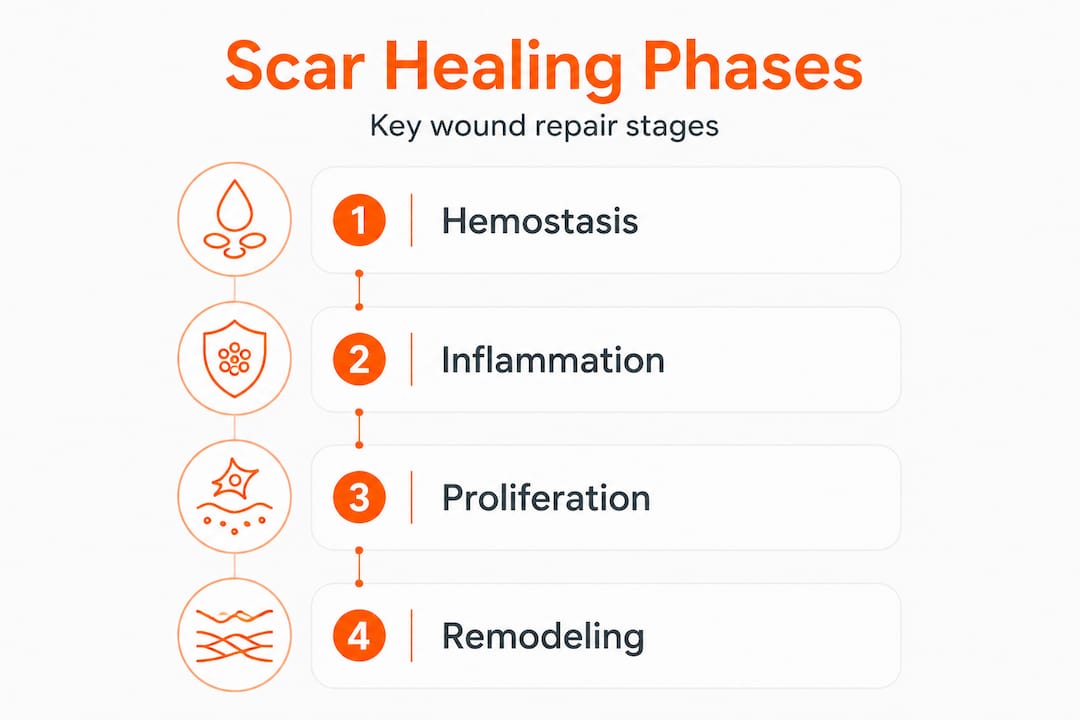
Phase | What happens | Timeline |
Hemostasis | Blood clotting stops bleeding | Minutes to hours |
Inflammation | Immune cells clear debris and bacteria | Days 1 to 5 |
Proliferation | Fibroblasts lay down new collagen | Days 4 to 21 |
Remodeling | Collagen reorganizes and matures | Months to years |
The key player in scar formation is the fibroblast, a cell that produces collagen rapidly during the proliferation phase. The problem is that this collagen is laid down in parallel bundles rather than the complex, basketweave pattern found in healthy skin. Speed wins over precision, and that trade-off is what creates scar tissue.
Key facts about scar tissue formation:
It forms in response to any full-thickness skin injury, including cuts, burns, surgical incisions, and deep abrasions
The deeper the injury, the more likely a visible scar will form
Collagen in scar tissue is less organized and less functional than in original tissue
Supporting muscle and tissue recovery early can influence how much scar tissue develops
If you’ve had surgery, you already know that even a clean incision leaves a mark. That’s because the body can’t regenerate skin perfectly. It can only repair it. Understanding that distinction is the first step toward supporting better healing.
How does scar tissue differ from normal skin?
With the biology established, it’s important to see how scar tissue’s structure and function compare to that of uninjured skin.
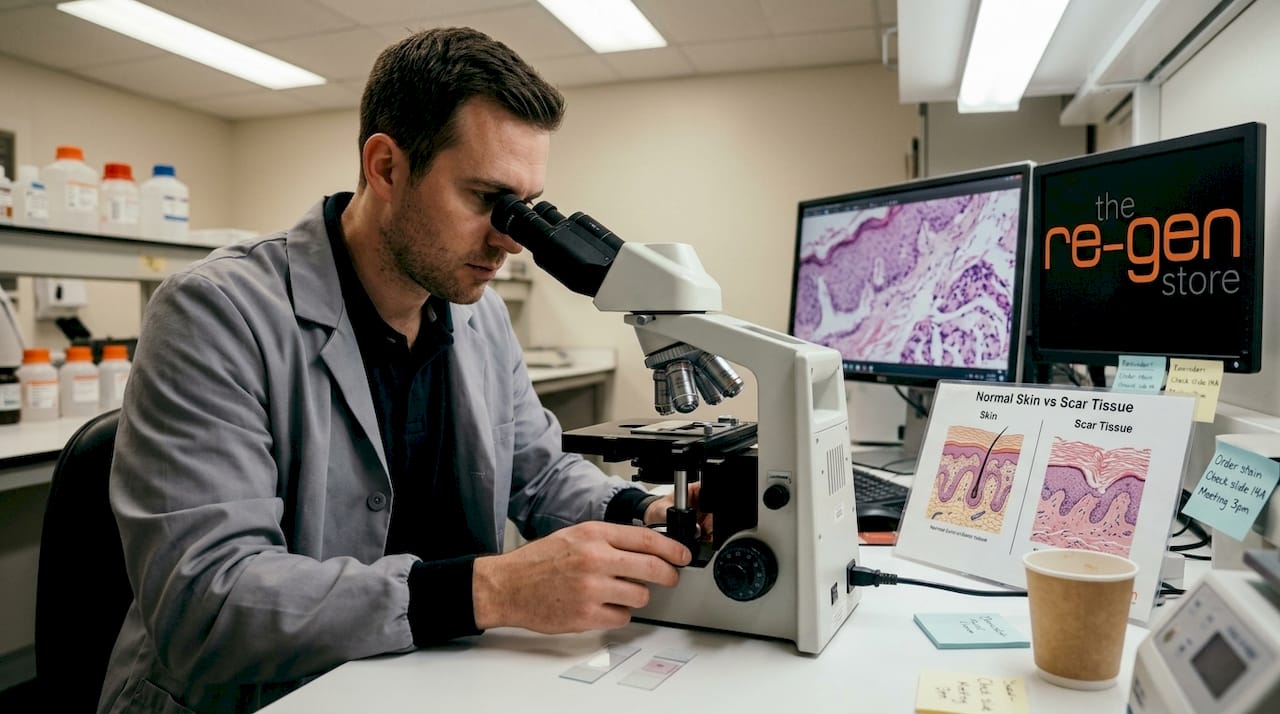
Scar tissue has 70 to 80% tensile strength of normal skin. Aligned collagen reduces UV resistance and overall functionality. That means even a well-healed scar is weaker, less flexible, and more vulnerable to sun damage than the skin it replaced.
Feature | Normal skin | Scar tissue |
Collagen pattern | Basketweave (multidirectional) | Parallel bundles (aligned) |
Elasticity | High | Reduced |
Hair follicles | Present | Absent |
Sweat glands | Present | Absent |
UV resistance | Normal | Lower |
Tensile strength | 100% | 70 to 80% |
Fibroblasts produce excessive aligned collagen that is inferior to the normal pattern, and the resulting tissue lacks elasticity, hair follicles, and sweat glands. This is why scars can feel tight, look shiny, and react differently to heat or friction.
Scar tissue isn’t just a cosmetic issue. Its structural differences affect how the skin protects, stretches, and responds to the environment around it.
Practical implications you should know:
Scars are more prone to sunburn, so SPF protection matters more over healed wounds
Tight or thick scars near joints can restrict movement over time
Itching and sensitivity are common as nerve endings regenerate unevenly
Soothing irritated scars early can prevent long-term discomfort
For a deeper look at expert solutions for smoother scars, clinical approaches can complement natural care when scarring is severe or restrictive.
Why do some scars heal better than others?
Not all scars are the same, so why do some heal with less visible or less restrictive tissue?
Scarless healing is possible for small wounds or those with rapid epithelialization (the process where skin cells cover a wound quickly). Mechanics like tension and cell signaling pathways including TGF-beta and YAP/TAZ are key drivers of how much scar tissue forms. In other words, the environment around a healing wound matters as much as the wound itself.
Targeting scar cell mechanics may unlock scarless healing in the future. Researchers now understand that reducing mechanical tension on a wound during healing can significantly reduce scar formation. This is why surgeons use tension-free suturing techniques and why wound closure strips work better than tape for minimizing marks.
Factors that influence scar quality:
Location on the body — Areas under constant movement (knees, shoulders, chest) tend to scar more heavily due to ongoing tension
Age — Younger skin heals faster but can also produce more aggressive scar tissue; older skin heals slower but sometimes with less visible scarring
Wound size and depth — Deeper or larger wounds almost always produce more prominent scars
Infection history — Infected wounds trigger prolonged inflammation, which increases collagen overproduction
Genetics — Some people are predisposed to keloid or hypertrophic scars due to how their cells respond to injury signals
Pets are actually a useful example here. Animals that heal quickly with minimal intervention often show less visible scarring, partly because they don’t experience the psychological stress that can impair human healing, and partly because their skin structure responds differently to injury. Road rash healing tips apply this same principle: keeping tension low and the wound clean and supported leads to better tissue outcomes.
Pro Tip: Apply gentle pressure or use silicone-based or plant-based dressings within the first two weeks of wound closure. This is when collagen is still being laid down and you have the most influence over how the scar forms.
Can herbal and natural treatments support better scar healing?
With the mechanisms and outcomes of scar formation laid out, let’s focus on practical, natural steps for human and animal healing.
Early intervention with silicone, massage, and herbals like aloe and centella minimizes scarring. This isn’t fringe advice. It’s supported by clinical evidence and increasingly recommended alongside conventional treatments.
Here are the most well-supported natural options:
Aloe vera — Reduces inflammation and supports collagen synthesis; gentle enough for sensitive skin and pets
Centella asiatica (gotu kola) — Stimulates collagen production while keeping it balanced; widely used in wound care research
Curcumin — The active compound in turmeric; reduces inflammatory markers and supports tissue remodeling
Chitosan — A natural polymer derived from shellfish; supports wound closure and has antimicrobial properties
Curcumin-chitosan-aloe vera accelerates wound contraction, collagen formation, and epithelialization. Chitosan spray has also shown effectiveness in animal wound care, making it a strong option for pet owners looking for non-toxic first-aid solutions.
Practical guidance for using natural treatments:
Start as early as possible, ideally once the wound has closed and is no longer open or bleeding
Apply consistently, once or twice daily, for at least four to six weeks
Avoid harsh chemicals, alcohol-based products, or anything that disrupts the skin’s moisture barrier
Watch for red flags: increasing redness, swelling, warmth, or discharge that doesn’t improve with natural care; these require medical or veterinary attention
Pro Tip: For pets, always check that any topical product is free from essential oils like tea tree or eucalyptus, which can be toxic to dogs and cats. Plant-based options using aloe, curcumin, and chitosan are generally much safer for animals.
For a broader look at natural scar treatments and how they compare to conventional options, the evidence increasingly supports herbal approaches as effective early interventions. You can also explore herbal scar treatment expertise for a clinical perspective on how these options fit into broader care plans.
A new way to think about scars—what most people miss
Most people treat scars as a cosmetic concern and address them months or years after the wound has healed. By that point, the collagen is already mature and far less responsive to treatment. The real window for meaningful change is early, during the proliferation and early remodeling phases, when the tissue is still actively being shaped.
Contrasting views exist on scar formation: mammals scar largely due to cell mechanics, and while herbals support healing through anti-inflammatory and collagen-balancing effects, more randomized controlled trials are still needed to standardize protocols. That’s fair. But waiting for perfect evidence while your scar matures isn’t a great strategy either.
Here’s what we believe based on the science available: changing the healing environment changes the outcome. Reduce tension, reduce inflammation, support collagen balance, and you shift the odds toward better tissue. That’s not wishful thinking. That’s biology.
Pets offer a compelling proof of concept. Animals treated with gentle, plant-based wound care often heal with minimal scarring and fewer complications than those treated with harsh antiseptics that disrupt the tissue environment. Their healing process is less complicated by synthetic chemicals, and the results often speak for themselves.
The plant-based ointment comparison between natural formulations and conventional products like petroleum jelly reveals meaningful differences in how the skin responds. Natural ingredients don’t just cover the wound. They actively support the tissue environment.
Treat scar care as a process, not a product. Start early, stay consistent, and choose ingredients that work with your body’s biology rather than against it.
Support better healing with nature-powered solutions
If you’re ready to put these healing insights into practice, there are gentle, advanced natural solutions available for both people and pets.
At TheRegenStore.com, we’ve developed Re-gen, a plant-based regenerative ointment formulated to support skin and soft tissue recovery using natural, chemical-free ingredients. It’s designed for use on cuts, burns, surgical wounds, and soft tissue injuries, and it works with your body’s own repair process rather than simply masking the wound. For animal lovers, our pet wound ointment brings the same plant-based approach to safe, effective first aid for dogs, cats, and other animals. Because your pets deserve gentle, non-toxic care too.
Frequently asked questions
Is scar tissue permanent or does it fade over time?
Scar tissue is permanent but can fade and become less noticeable with consistent care and time. Scar tissue retains 70 to 80% tensile strength of normal skin and never fully matches the original tissue, but its appearance can improve significantly over months and years.
Do natural treatments really improve scar appearance?
Natural options like aloe, centella, and curcumin can help minimize scars, especially when applied early in the healing process. Early herbal intervention is one of the most effective strategies for reducing scar visibility and improving tissue quality.
Can pets develop scar tissue, and can it be treated safely?
Yes, pets form scar tissue just like humans do, and it can restrict movement or cause discomfort if not addressed. Curcumin-chitosan-aloe vera formulations have been shown to accelerate healing in animals with a low risk of toxicity, making them a reliable option for pet owners.
Does scar tissue hurt or itch more than normal skin?
Scar tissue can be more prone to itching or discomfort because of how it’s structured. Scar tissue lacks sweat glands and elasticity, and as nerve endings regenerate unevenly through the new tissue, sensations like itching, tightness, or sensitivity are common, especially in the first year after injury.
Recommended
Comments