
Saddle Sores Treatment: What Actually Stops the Pain
- Sunny

- 10 minutes ago
- 8 min read
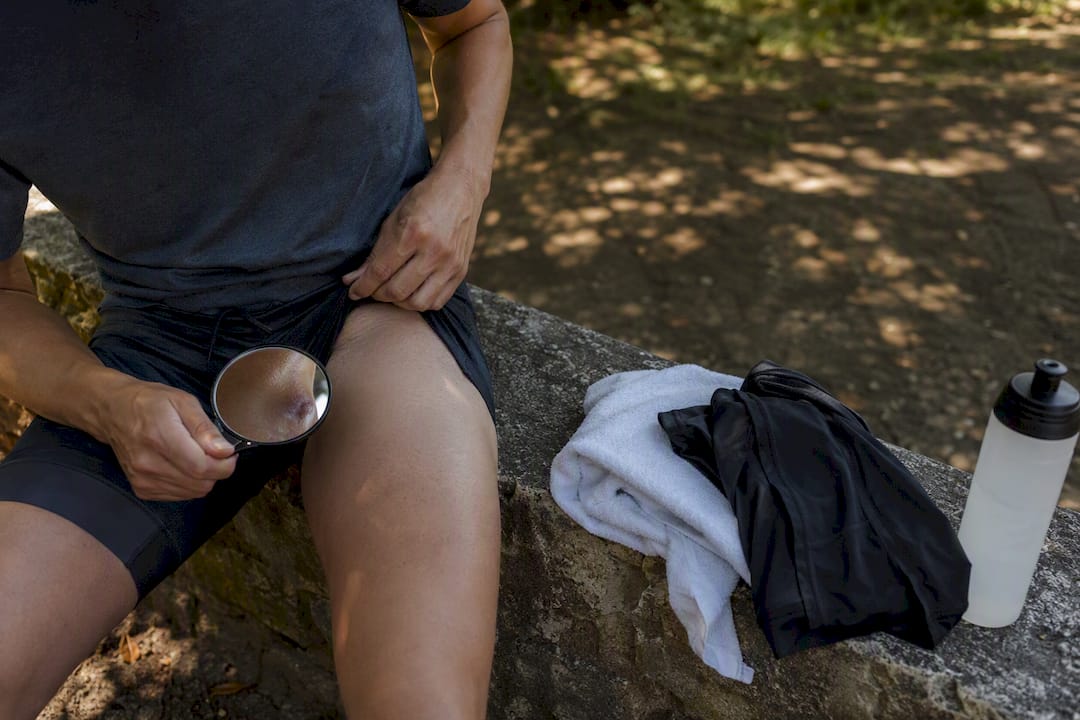
Stop riding, clean the area gently, and apply a warm compress before covering it with a thin barrier ointment. That combination, backed by Cleveland Clinic’s clinical guidance, resolves most minor saddle sores within days.
A scoping review of saddle-sore literature found the evidence base thinner than most cyclists assume, but conservative care (rest plus topical treatment) remains the consistent starting point across every major source, including Theregenstore’s own approach to skin recovery.
Here’s what to do in the first hour:
Stop riding and take pressure off the area immediately.
Wash gently with mild soap, pat dry (never rub).
Apply a warm compress for 10 to 15 minutes.
Follow with a thin layer of a barrier ointment.
Watch daily for pus, spreading redness, or fever.
Most minor sores show visible improvement within a few days of rest and proper care. If yours doesn’t, that’s your signal to escalate.
Key Takeaways
Saddle sores respond best to a fit-first prevention strategy paired with early rest, gentle hygiene, and a natural barrier ointment during active healing.
Point | Details |
Rest comes first | Stop riding at the first sign of irritation; continuing to apply pressure delays healing. |
Watch for red flags | Pus, spreading redness, warmth, or fever means seeing a doctor, not waiting it out. |
Fix the bike, not just the skin | Saddle tilt, height, and sit-bone width matter more than any cream for preventing recurrence. |
Match the product to the stage | Use barrier creams during healing and chamois cream for prevention, not the other way around. |
Consider a plant-based option | Re-gen from Theregenstore offers a chemical-free ointment for minor, intact-skin irritation during recovery. |
Table of Contents
Saddle Sores Treatment: The First 48 to 72 Hours
The first three days determine whether a sore heals cleanly or turns into something that needs a prescription. Cyclists who keep riding through early symptoms almost always extend their own recovery time, according to the same scoping review that found rest to be the most commonly recommended first step.
Follow this sequence:
Wash twice daily with a mild, fragrance-free soap. Fragranced products and harsh exfoliants irritate already-inflamed skin.
Pat the area dry completely. Trapped moisture feeds the bacteria that turn a sore into an infection.
Apply a warm compress for 10 to 15 minutes, two to three times a day. Heat improves local blood flow and helps any developing pustule drain on its own.
Use a barrier product like zinc oxide or a diaper-rash cream on unbroken or mildly broken skin. For a natural option, applying a plant-based ointment correctly matters more than which brand you choose.
Leave it alone. Do not pop or squeeze the lesion. Squeezing pushes bacteria deeper and increases scarring risk.
Over-the-counter pain relievers like ibuprofen or acetaminophen help with discomfort, but treat that relief carefully. Numbing the pain doesn’t mean the tissue has healed, and riding while medicated can mask the warning signs your body is sending.
Pro Tip: Keep a small mirror or your phone camera handy to check progress daily. Saddle sores hide in a spot you can’t easily see, and catching a change early is the difference between a few days off the bike and a trip to urgent care.
When Should You See a Doctor for a Saddle Sore?
Most saddle sores never need a clinician. Some do, and waiting too long is the most common mistake cyclists make.
Watch for these red flags:
Pus or visible discharge from the lesion.
Redness that spreads beyond the original sore rather than shrinking.
Warmth radiating from the area, or a firm, hot lump under the skin (a possible abscess).
Fever or chills, which signal the infection has moved beyond the local skin.
No improvement at all after 5 to 7 days of rest and home care.
Any of those means it’s time for professional evaluation, not another few days of “waiting it out.”
If a clinician confirms infection, treatment may include prescription topical or oral antibiotics, drainage of an abscess, or in chronic, recurring cases, a steroid injection or minor surgical excision. The same scoping review flags real trade-offs here. Steroid injections carry a risk of skin atrophy, and surgical excision has documented recurrence in some patients, since cutting out a lesion doesn’t fix the friction or fit problem that caused it.
How Do You Prevent Saddle Sores From Coming Back?
Treating the sore fixes today’s problem. Fixing your setup is what stops next month’s problem. Cycling specialists consistently rank bike fit as the single biggest prevention factor, ahead of any cream or short you could buy.
Start here, in this order:
Saddle tilt. Level or very slightly nose-down is the standard starting point. A cheap spirit level against the saddle takes thirty seconds to check.
Saddle height. Too high forces your hips to rock side to side with every pedal stroke, grinding skin against the saddle edge with each revolution.
Sit-bone width. Press into a piece of corrugated cardboard while seated to get rough sit-bone spacing, then compare it to your saddle’s width. A mismatch here causes pressure in the wrong places no matter how good the padding is.
Test incrementally. Change one variable at a time and ride a few times before judging results. Changing tilt, height, and saddle model in the same week tells you nothing useful.
Shorts and hygiene matter almost as much as fit. Skip underwear under your chamois (the padded liner adds friction against seams). Wash shorts after every single ride, and retire a pair once the padding compresses and stops cushioning the way it did new.
Chamois cream helps on rides longer than 90 minutes, per Cyclingnews’s guidance, but more isn’t better. Overusing it can clog pores and trigger the same folliculitis it’s meant to prevent, so apply a moderate layer and prioritize getting your fit right before you lean on any product to compensate.
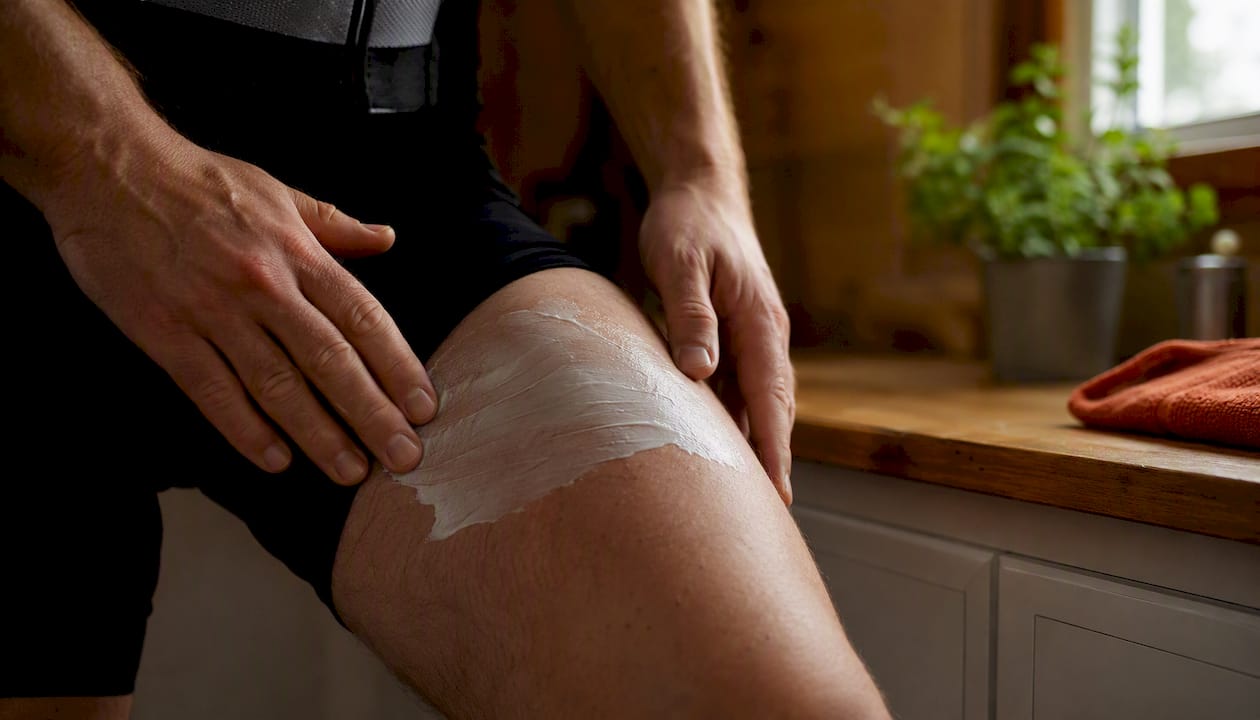
Pro Tip: If you’ve replaced your shorts, adjusted your saddle, and you’re still getting the same sore in the same spot every time, that’s a fit issue the manufacturer’s sizing chart can’t fix. A professional bike fit is often cheaper than another season of recurring sores.
Which Topical Treatments Actually Work?
Not every cream serves the same job, and using the wrong one at the wrong stage slows healing rather than speeding it up.
Barrier products (zinc oxide, diaper-rash cream) protect intact or lightly broken skin from further friction and moisture. Use these during active healing, not prevention.
Chamois cream reduces friction during the ride itself. It’s a prevention tool, not a treatment for an open sore.
OTC antibacterial creams help when skin is broken but not clearly infected. Comparing barrier versus antibacterial options helps you pick the right one for your specific lesion.
Prescription antibiotics or steroid creams belong to a doctor’s judgment, reserved for confirmed infection or severe inflammation, since steroid use carries a documented atrophy risk with repeated use.
For minor, intact-to-near-intact skin irritation, Re-gen’s plant-based formula works as a chemical-free alternative to conventional antibiotic ointments, applied after cleaning and drying the area. It is not a substitute for medical care on an abscess or a clearly infected lesion. A step-by-step method for soothing irritated skin from Mooses Tallow covers similar application principles worth knowing regardless of which product you choose.
Minor sores treated with rest and topical care typically show meaningful improvement within 3 to 5 days, consistent with Healthline’s home-remedy guidance on conservative saddle-sore care.
How Soon Can You Get Back on the Bike?
Rushing back too early is the single most common cause of a saddle sore turning into a recurring one.
Surface sores (mild chafing, no broken skin): rest 2 to 3 days before a light test ride.
Folliculitis (small infected hair follicles, localized bumps): rest 3 to 7 days, and only resume once the area looks visibly calmer.
Infected or abscessed sores: ride only after a clinician clears you. This isn’t optional given the risk of worsening a deeper infection.
Test ride rules: keep it short, use fresh shorts, apply chamois cream, and stand out of the saddle every few minutes to relieve pressure.
Stop signs mid-ride: new pain, drainage, or redness means turn around and give it more time. Pushing through a bad sign on a test ride is how a three-day recovery becomes a three-week one.
Why Cyclists Keep Getting the Same Sore Twice
Most riders treat the sore and never touch the cause. That’s backwards. A cream can calm irritated skin for a week, but if the saddle is tilted wrong or the shorts are worn out, the same lesion shows up in the same spot next month, and the cycle repeats.
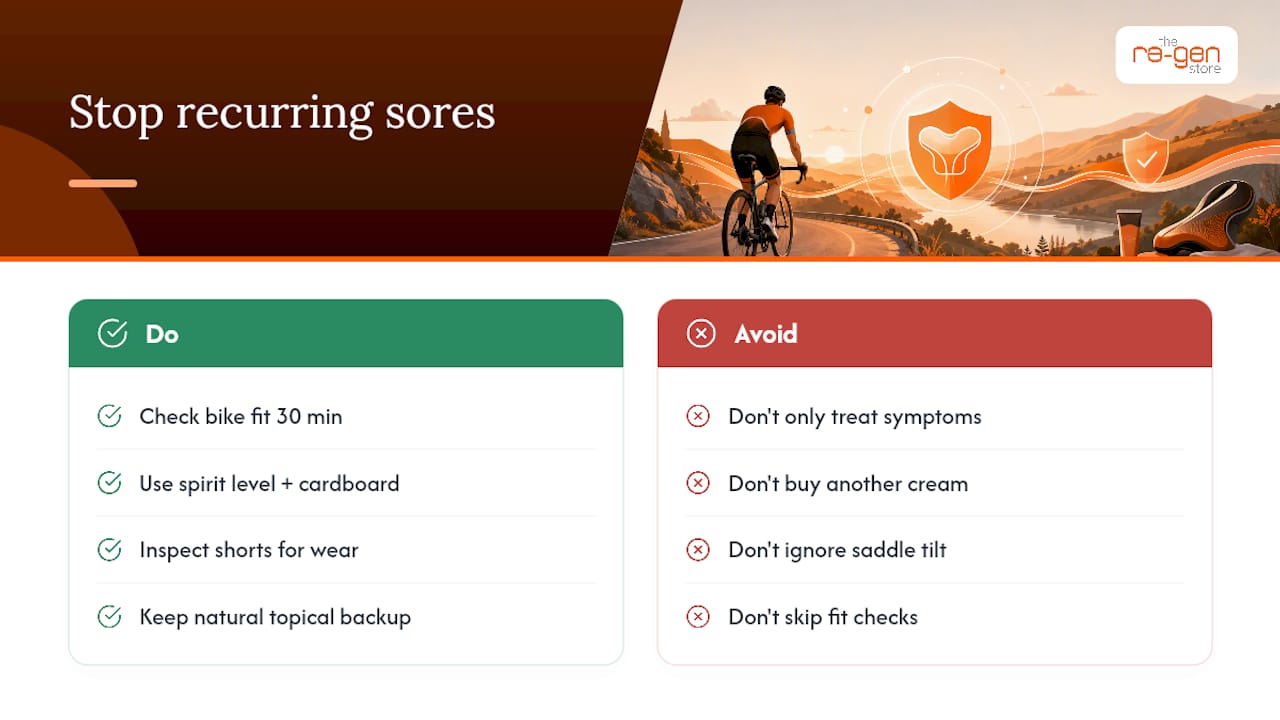
The uncomfortable truth is that a lot of “recurring saddle sores” aren’t really a skin problem. They’re a fit problem wearing a skin problem’s symptoms. I’d rather see a rider spend thirty minutes with a spirit level and a piece of cardboard than another $40 on yet another chamois cream that treats a symptom without touching the cause.
That said, having a safe, effective option on hand for the inevitable minor irritation matters, too. Prevention isn’t perfect, and even a well-fitted setup can produce the occasional hot spot on a long ride. That’s where a natural topical option earns its place, not as a replacement for fixing your fit, but as sensible backup for the skin itself while it heals.
— Kyle
Support Healing With a Plant-Based Ointment
Re-gen is Theregenstore’s plant-based ointment formulated to support skin recovery without petroleum or synthetic chemicals. For minor saddle-sore irritation on intact or lightly broken skin, it works as a natural alternative to conventional antibiotic ointments. It is not designed for deep abscesses or actively draining infections, which still call for a clinician’s care.

Apply it after cleaning and drying the area, following the same gentle application steps that apply to any topical treatment on irritated skin. You’ll find full usage guidance and ingredient details on the petroleum-free, plant-based wound treatment page, and if you want the full product details and packaging sizes, visit the Re-gen ointment product page to order.
Sources
FAQ
How Long Does It Take to Heal a Saddle Sore?
Minor sores usually improve within 3 to 5 days of rest and proper care, while folliculitis or infected lesions can take a week or longer, according to Healthline’s guidance.
Can You Ride With a Saddle Sore?
You shouldn’t ride through active pain or broken skin. Continued pressure is the most common reason a minor sore turns into a lingering or infected one.
What Is the Best Home Remedy for Saddle Sores?
Rest, gentle cleaning, warm compresses, and a barrier ointment like zinc oxide or a plant-based option such as Re-gen cover most minor cases without needing a prescription.
Are Saddle Sores a Sign of Poor Bike Fit?
Frequently, yes. Recurring sores in the same spot often point to saddle tilt, height, or width issues rather than a product problem, per cycling-specialist guidance.
When Should I Worry About a Saddle Sore?
See a doctor if you notice pus, spreading redness, fever, or no improvement after 5 to 7 days of rest, since these can indicate an infection needing antibiotics or drainage.
Recommended
Comments