
0.9% Saline First: Natural Piercing Aftercare and When to Use Re-gen

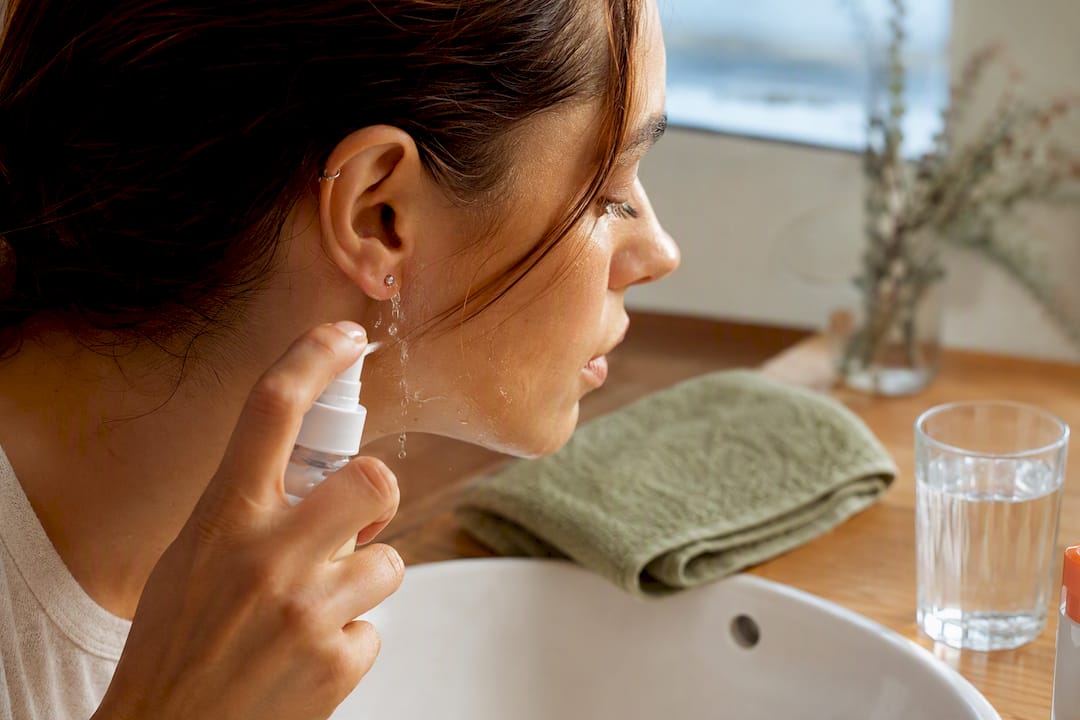
Sterile isotonic saline, used twice daily, is the safest natural aftercare for any new piercing. It cleans without damaging the delicate cells your body is producing to heal the wound. Harsh antiseptics, hydrogen peroxide, and heavy ointments should stay off your piercing entirely. A plant-based, petroleum-free topical like Re-gen can serve as a gentle adjunct once the drainage has settled, but saline stays the foundation of your routine.
TL;DR:
Sterile saline solution at 0.9% concentration is the preferred and safest natural aftercare option, supporting healing without damaging delicate tissues.
Avoid using hydrogen peroxide, alcohol, antibiotic ointments, or petroleum-based products, as they hinder tissue regeneration and may prolong healing.
Clean the piercing twice daily with saline, applying it after thorough hand-washing, and never over-clean to prevent irritation and delays.
External oils like tea tree or carrier oils should be used cautiously and only as an adjunct after initial drainage has subsided; saline remains central.
Swimming, early jewelry changes, or touching with unclean hands can introduce bacteria and slow healing, especially in cartilage and oral piercings.
Table of Contents
What Should You Put on a Piercing Naturally?
Sterile saline is the answer, and the reason comes down to chemistry your skin actually recognizes. A 0.9% isotonic saline solution matches the salt concentration of your own body fluids, so it cleans debris and supports the healing environment without harming the new cells your body is building around the jewelry. That is why it sits at the center of professional aftercare guidance rather than being treated as one option among many.
The Association of Professional Piercers recommends packaged sterile saline wound wash over homemade sea-salt mixtures whenever a sterile product is available. Homemade solutions carry real risk: too much salt irritates tissue, too little does nothing useful, and non-distilled water can introduce contaminants the piercing does not need while it is still an open wound. If you cannot access a commercial spray, the APP guidance calls for precise proportions and distilled water only, never tap water and never a rough guess with table salt.
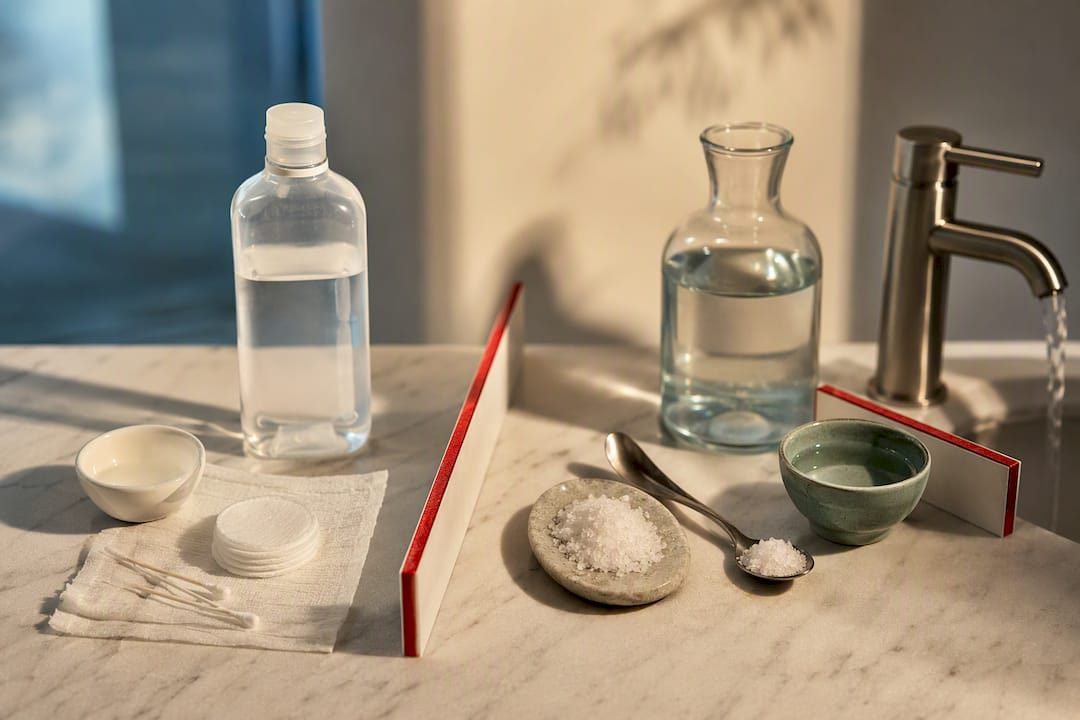
Pro Tip: Skip the recipe entirely if you can. A single bottle of sterile wound wash costs about the same as a bag of sea salt and removes the guesswork completely.
A few safe adjuncts round out the routine without competing with saline for the main job:
A warm compress (clean washcloth, warm water) helps loosen crust and ease minor bumps after the first week.
A cold compress in the first 24 to 48 hours reduces initial swelling, especially on cartilage.
A brief, direct shower rinse is fine as a supplemental cleanse, but it does not replace your saline application.
When you shop, read the label carefully. You want the words “sterile,” “0.9% sodium chloride,” or “wound wash” printed on the bottle. Contact lens saline is not the same thing. Products labeled as multipurpose cleaning solutions often contain additives that have no business near an open piercing.
Roughly 0.9% sodium chloride is the isotonic threshold that matches human tissue fluid. That single number is worth remembering, because it is the difference between a solution that supports healing and one that either stings or does nothing at all.
How to Build a Natural Piercing Aftercare Routine
A simple, repeatable sequence beats any specialty product. Do this exact routine twice a day, no more:
Wash your hands for a full 20 seconds with soap and warm water before you touch anything near the piercing.
Apply the saline. Spray directly onto the piercing, or soak a clean gauze pad and hold it against the area for 5 to 10 minutes if spraying is impractical for the placement.
Let it sit for about 30 seconds so the solution can loosen any crust and reach the fistula, the healing tunnel of tissue forming around the jewelry.
Rinse in a warm shower if you can, then pat dry, never rub, with a disposable paper product. Cloth towels can harbor bacteria and snag on jewelry.
Twice daily is the ceiling, not a floor to build on. Cleaning more often does not speed healing. Piercing studio protocols consistently warn that over-cleaning irritates the fistula and can actually prolong the healing timeline by keeping the tissue in a constant state of low-grade irritation.
Location changes the math slightly. Earlobes commonly reach the point where jewelry can be safely downsized around 6 to 8 weeks. Cartilage, whether it’s a helix, conch, or industrial, often needs 8 to 14 weeks or longer before it settles enough for a downsize. Oral piercings follow a different track altogether: skip topical applications inside the mouth and instead rinse with an alcohol-free mouthwash after meals, since anything you’d apply topically elsewhere becomes an ingestion risk in the mouth.
Pro Tip: Tie your cleanings to something you already do every day. Right after your morning shower and right before bed works well because you are already near a sink with clean hands.
Which Natural Oils Actually Help Piercings Heal?
The honest answer is: fewer than the internet suggests, and only with real caution. Tea tree oil has documented antimicrobial and anti-inflammatory properties, but it is also drying and can irritate skin at higher concentrations. Research on tea tree oil supports diluted use, applied only after a patch test on unaffected skin, and never on oral piercings or as a full-strength application. Undiluted tea tree on a fresh piercing is a common mistake that trades minor antimicrobial benefit for real irritation.
Carrier oils like fractionated coconut oil or sweet almond oil come up often in natural aftercare circles, but they carry a structural problem: they are occlusive. During the active drainage phase of healing, a heavy oil traps moisture, bacteria, and lymph discharge against the skin instead of letting the wound breathe. That is the opposite of what a fresh piercing needs.
Chamomile compresses have a place, though a modest one. A cooled chamomile tea bag applied as a compress can ease discomfort and calm visible redness, but it is a comfort measure, not a cleaning agent. It never replaces saline.
Steer clear of these home remedies entirely, since none of them have earned their reputation:
Honey sounds soothing but is sticky, occlusive, and unnecessary for piercing care.
Garlic and lemon juice are acidic enough to chemically burn healing tissue.
Apple cider vinegar carries the same acidity risk with no upside for a fresh piercing.
Hydrogen peroxide, despite its reputation as a cleaner, breaks down healthy tissue along with bacteria.
What Should Never Touch a New Piercing?
Certain products are cytotoxic, meaning they kill the very cells your body needs to rebuild tissue around the jewelry. University health guidance is direct about this: rubbing alcohol, hydrogen peroxide, povidone-iodine (Betadine), antibiotic ointments, benzalkonium chloride (often listed as BZK), Bactine, and harsh antibacterial soaps all fall into this category. They do not distinguish between bacteria and the healthy cells forming your fistula, so they damage both and slow the entire process down.
Occlusive petroleum products deserve their own mention. Ointments and jellies that seal the skin trap drainage underneath, which prevents the air circulation a healing piercing depends on and can prolong inflammation rather than resolve it. The same logic applies to fresh tattoos and even post-surgical stitches, where heavy occlusives routinely do more harm than good.
Avoid these behaviors along with the product list:
Rotating or twisting jewelry “to loosen crust” tears the fistula lining and reopens micro-injuries.
Changing jewelry early, before the placement-specific downsize window, risks scarring and prolonged healing.
Unnecessary touching introduces bacteria from your hands, even when they look clean.
Swimming in pools, lakes, or hot tubs during active healing exposes an open wound to bacteria and chemicals neither saline nor any oil can fully counter.
Instead: stick to sterile saline, leave jewelry alone until your piercer clears a change, protect the area with clean clothing, and skip submersion until healing is well underway. One data point worth sitting with: piercers report that misuse of antiseptics and essential oils, along with early jewelry changes, causes more prolonged irritation than poor initial piercing technique.
How Do You Know If a Piercing Is Infected?
Most bumps and crusting during healing are not infections, they are normal parts of the process. A small amount of clear or pale yellow discharge that crusts overnight is expected. Try a warm compress, keep up your saline routine, and resist the urge to add a new product to “fix” it.
Watch for these red flags instead, since they call for a different response:
Fever or feeling generally unwell alongside piercing symptoms.
Spreading redness that extends noticeably beyond the piercing site rather than staying localized.
Severe or worsening pain, especially pain that increases days after the initial piercing rather than easing.
Thick green or yellow pus with an odor, as opposed to normal clear or pale discharge.
Rapidly enlarging swelling, particularly anything that changes shape or size within hours.
If you see any of these, contact your piercer first and bring photos along with a timeline of when symptoms started and how they’ve changed. For oral piercings with swelling that affects swallowing or breathing, or for any systemic signs like fever, seek medical care directly rather than waiting to see if it improves.
Where a Plant-Based Ointment Like Re-gen Fits In
A plant-based topical has a real but limited role in natural piercing aftercare, and it’s worth being precise about where that role starts and stops. A plant-based, petroleum-free ointment can support skin and soft tissue recovery as part of an aftercare routine, serving as an adjunct, never a replacement for sterile saline.
Timing matters here more than almost anywhere else in this guide. While a piercing is actively draining, any topical ointment risks the same occlusion problem that makes petroleum jelly a poor choice: it can trap moisture and slow the healing your saline routine is trying to support. The more sensible window for a plant-based ointment like Re-gen is once initial drainage has visibly subsided, or per specific guidance from your piercer or a clinician.
A few points worth keeping in mind:
Apply a thin film only, following the same logic that applies to post-operative wound care: more product is not more protection.
Continue your saline cleaning regardless of whether you introduce a topical adjunct.
Check with your piercer before adding any new product if you notice ongoing drainage or irritation.
Read full usage guidance on the product page before applying it to a fresh piercing.
The goal is not to replace the proven saline-first approach professional guidance supports. It is to give readers who want a chemical-free option for the later stages of healing a formulation that avoids the petroleum-based occlusives that cause problems elsewhere in aftercare.
Why Simple Beats Fancy in Piercing Aftercare
The biggest misconception I run into is that natural aftercare means assembling a shelf of remedies: an oil for this, a compress for that, a rinse for something else. The research points the other way entirely. Saline alone, applied consistently and correctly, outperforms almost every add-on people reach for.
What tends to prolong healing isn’t a piercer’s technique or bad luck. It’s overcorrection: rotating jewelry out of anxiety, layering on essential oils because a bump appeared, switching products every time something looks slightly off. The routine that works is boring on purpose. Saline twice daily, hands off the jewelry, patience with the timeline.
Where I’d push back on the natural-healing conversation generally is the assumption that “natural” automatically means “gentle.” Garlic and citrus juice are natural. So is undiluted tea tree oil. Neither belongs anywhere near an open piercing. The natural products worth trusting are the ones with a clear mechanism and a dilution guideline behind them, not the ones that sound wholesome on social media.
— Kyle
Get the Aftercare Adjunct Without the Guesswork
Once your piercing has moved past active drainage and you’re ready for a natural, petroleum-free option to support the skin around it, Re-gen is built for exactly that stage. Unlike antibiotic ointments or heavy petroleum jellies that seal the skin and trap moisture, this plant-based formula supports tissue recovery without the occlusion risk that slows healing during the wrong window.

It’s straightforward to use: a thin film applied once drainage has settled, alongside your ongoing saline routine, not instead of it. If you’re comparing it to conventional options, the natural alternative to Neosporin page walks through how the ingredients differ from standard antibiotic ointments. Visit Theregenstore to check the full ingredient list and usage instructions before adding it to your aftercare routine.
Sources
FAQ
How Can I Make Homemade Piercing Aftercare Saline?
Dissolve the APP-recommended proportion of non-iodized salt in distilled water, but commercial sterile 0.9% saline wound wash is preferred whenever it’s available since it removes the risk of an inaccurate mix.
What’s the 3/2 Piercing Rule?
This isn’t a standard established by the APP or clinical piercing guidance referenced in professional aftercare protocols, so treat any specific numeric rule you see online with caution and follow placement-based timelines instead, such as 6 to 8 weeks for lobes and 8 to 14 or more weeks for cartilage.
What Oil Can I Put on My Piercing?
Diluted tea tree oil, used only after a patch test and never on oral piercings, is the most commonly cited option, but it should never replace your twice-daily saline routine.
Does Salt Water Help Piercings Heal?
Yes. Sterile 0.9% isotonic saline is the primary recommended cleaning solution for new piercings because it matches your body’s own fluid concentration and does not damage new tissue the way harsher antiseptics do.
Recommended
Comments