
First Hour Spider Bite Care: Clinician Steps and Plant Based Support

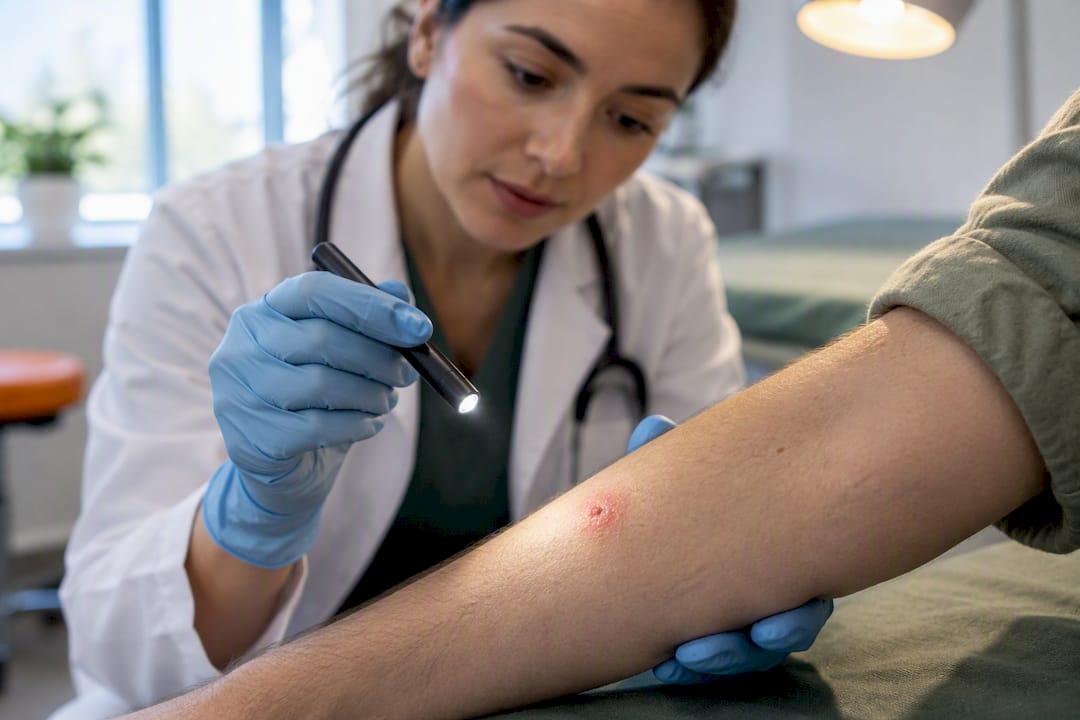
Wash the bite with soap and water right away, apply a cool compress in intervals of about 15 minutes at a time, and watch the area over the next 24 to 48 hours for spreading redness, fever, or severe pain. Most spider bites are minor and heal on their own within a typical short healing period. The exceptions, black widow and brown recluse bites, need faster attention, so knowing what to watch for matters as much as the initial cleaning.
TL;DR:
Washing the bite with soap and water immediately is crucial, as it significantly reduces infection risk through dilution of venom and bacteria.
Seek emergency care if there is trouble breathing, expanding redness, or systemic symptoms like severe muscle cramps or fever within hours to days of the bite.
Most bites heal within a week with basic care, but brown recluse bites may worsen over several days and take months to heal, sometimes leaving scars.
Over-the-counter pain relief like acetaminophen or ibuprofen, along with antihistamines, can help manage discomfort during normal healing.
Use plant-based topical aids only after confirming the wound is clean and free of infection signs, and avoid home remedies that can cause irritation or secondary infection.
Table of Contents
Spider Bite Care: Step-by-Step First Aid
The first few minutes after a bite set the tone for how it heals. A clinician at Cleveland Clinic puts it simply: the solution is dilution, meaning thorough washing does more to prevent infection than almost anything else you can do at home.
Follow these steps in order:
Wash the area with soap and running water for a full minute. Diluting any venom or bacteria on the skin lowers infection risk more than any ointment applied afterward.
Apply a cool compress for 15 minutes, then remove it for 15 minutes. Repeat this cycle for the first few hours to control swelling and pain.
Elevate the area if it’s on an arm or leg. Gravity helps reduce pooling and swelling.
Cover lightly with a thin sterile dressing only if the skin is broken or oozing. Leave it uncovered if it’s just red and intact, since air exposure helps you monitor changes.
Skip the home remedies. Baking soda paste, lemon juice, and cutting or trying to suck out venom don’t work and can introduce bacteria into the wound.
Document it. Note the time of the bite and, if you can safely do so, snap a photo of the spider. Diagnosis is often based on symptoms rather than a confirmed sighting, so any detail helps if you need to describe it to a clinician later.
Pro Tip: Take a photo of the bite itself every few hours during the first day. A simple time-stamped record makes it much easier for a doctor to judge whether the reaction is progressing normally or turning into something that needs treatment.
What Does a Normal Reaction Look Like vs. a Dangerous One?
Most bites cause a small, localized reaction: redness, mild swelling, itching, and tenderness at the site. This typically peaks within a day or two and fades within about a week without any special treatment.
Certain signs mean you should stop watching and start acting. Watch for:
Difficulty breathing or swelling of the face, lips, or throat
Severe or spreading muscle cramps, especially in the abdomen or back
Redness that expands rapidly beyond the original bite area
Fever, chills, or general illness developing over hours to days
A dark, sunken, or blistering patch of skin that looks like it’s breaking down (a possible sign of tissue death)
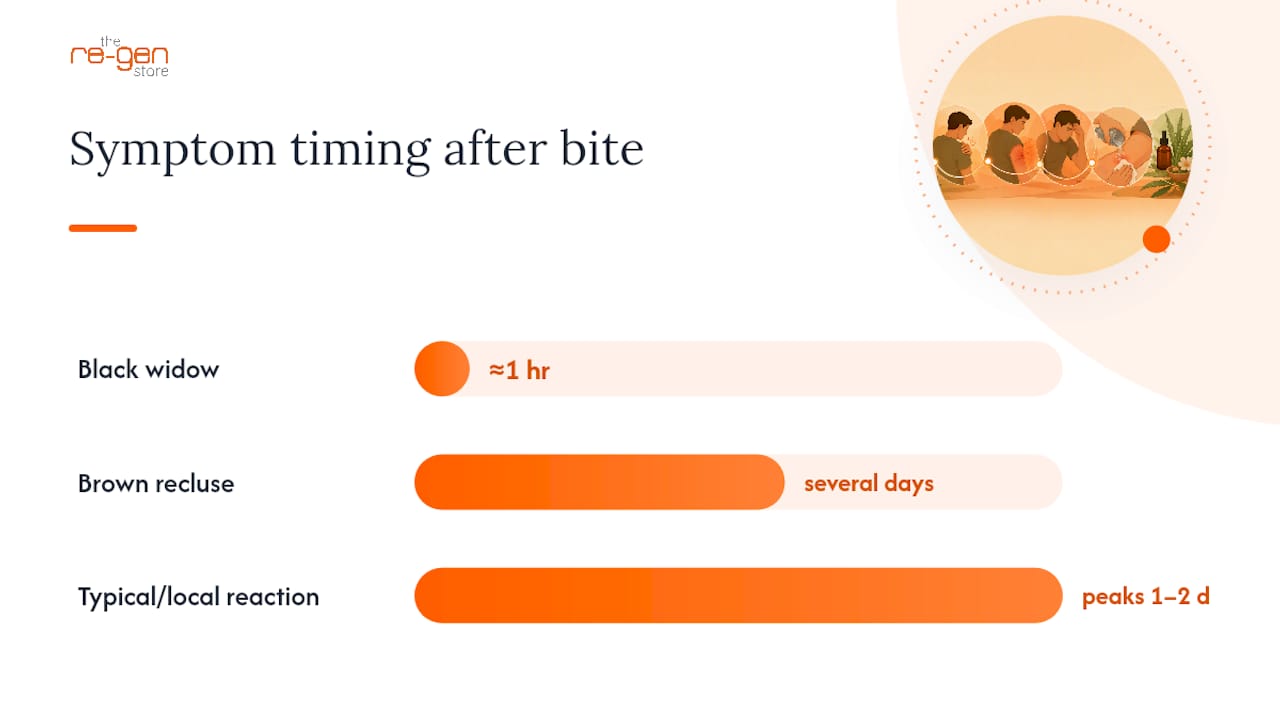
Two spiders drive nearly all serious cases in the United States: the black widow and the brown recluse. Black widow bites tend to announce themselves fast. Systemic symptoms like muscle cramping and sweating can appear within about an hour of the bite. Brown recluse bites behave almost the opposite way. The wound may look unremarkable at first, then slowly worsen over several days as tissue around the bite breaks down.
Children, older adults, and anyone with a compromised immune system should seek evaluation sooner rather than later, even for symptoms that would otherwise seem borderline.
When Do You Need a Doctor for a Spider Bite?
Not every bite needs a clinic visit, but certain symptoms shouldn’t wait.
Go to the emergency room immediately if you notice:
Trouble breathing, throat tightness, or facial swelling (possible anaphylaxis)
Severe, whole-body muscle cramping or rigid abdominal pain
Fainting, confusion, or rapid heartbeat following the bite
Head to urgent care or call your doctor the same day if you see:
Redness expanding noticeably hour by hour, even without breathing trouble
Pus, worsening warmth, or a fever developing over one to two days
A wound that looks like it’s turning black or breaking down at the center
Once you’re being seen, clinicians typically clean the wound thoroughly, prescribe antibiotics if it looks infected, and check whether you’re due for a tetanus booster, which is generally recommended every 10 years for puncture-type wounds. Severe, confirmed black widow cases sometimes call for antivenom, though this is reserved for significant systemic symptoms rather than routine bites. Because the spider is rarely seen at the moment of the bite, diagnosis usually relies on your description of symptoms and how they progress rather than a confirmed identification. That’s exactly why the timing notes and photos from your first-aid steps come in handy later.
Which OTC Medicines and Wound Care Steps Actually Help?
Once the wound is clean and you’re past the first hour, over-the-counter medication can take the edge off discomfort. For adults, acetaminophen (500 to 1,000 mg) or ibuprofen (400 to 600 mg) can ease pain and inflammation. Always follow label directions or check with your pharmacist if you take other medications.
A few other guidelines worth knowing:
Antihistamines (like diphenhydramine or cetirizine) can reduce itching and swelling, particularly if the area feels hot or hive-like.
Topical antibiotic ointment is reasonable once the skin is clean and if it’s broken or oozing slightly. Skip it on intact skin that’s just red.
Baking soda paste and “draw-out” remedies don’t remove venom and can irritate skin that’s already inflamed, so leave them out of your kit entirely.
Cutting or suctioning the bite is never appropriate. It doesn’t remove venom and raises the chance of a secondary infection.
Preventing Bites and Knowing What Healing Should Look Like
Most spiders only bite when startled or handled directly, so reducing contact does most of the prevention work.
Wear gloves and long sleeves when gardening, moving firewood, or cleaning storage areas.
Shake out shoes, gloves, and bedding before use, especially after they’ve sat unused for a while.
Clear clutter in garages, attics, and closets where spiders tend to nest undisturbed.
Seal cracks around doors, windows, and foundation gaps to limit indoor entry points.
For healing, most bites resolve within about a week with basic care. Brown recluse bites are the outlier. They can take months to fully heal and sometimes leave a permanent scar in more severe cases. If a wound isn’t visibly improving after a week, or if a dark patch keeps expanding instead of shrinking, that’s your cue to follow up with a clinician rather than wait it out.
How Plant-Based Recovery Support Fits After First Aid
Some brands build their reputation around the idea that skin heals better with fewer synthetic chemicals interfering with the process. Kyle, who writes much of the wound-care content on the site, focuses on translating clinical first-aid guidance into practical steps people can actually follow at home.
Here’s where a topical recovery aid like Re-gen fits into the picture, and where it doesn’t:
Use it only after the wound is properly washed with soap and water, never as a substitute for that step.
It’s meant to support moisture balance and skin comfort during recovery, not to treat infection or systemic symptoms.
Stop using any topical product and call a clinician if you notice spreading redness, pus, fever, or a darkening patch of skin.
A plant-based recovery aid works best on minor, uninfected bites during the normal healing window, not as an emergency treatment.
Pro Tip: Apply a thin layer once or twice daily on clean, intact skin. If you’re unsure whether a bite qualifies as “minor,” treat it as one that needs a doctor’s opinion first.
A Straight Answer on What Actually Matters Here
People searching for spider bite advice usually want reassurance, but the honest answer is that reassurance and vigilance aren’t opposites. Clean the bite well, track how it changes over the next day or two, and don’t talk yourself out of seeing a doctor if something looks off. The overwhelming majority of bites never need more than soap, a cold compress, and patience. The rare ones that do need more attention tend to announce themselves clearly, whether through fast-moving cramping or a wound that keeps getting worse instead of better. Trust the pattern, not the guesswork.
— Kyle
A Natural Next Step for Skin Recovery After a Bite
Once a spider bite is cleaned and you’re past the point of watching for red flags, many people look for something gentler than petroleum-based ointments to support the skin while it heals. Re-gen is a plant-based, petroleum-free topical option, formulated to support skin comfort and recovery once a wound is already clean and free of infection signs.

It’s not designed to treat infection, necrosis, or any systemic reaction. If you see spreading redness, pus, fever, or a wound that looks like it’s breaking down, see a clinician before reaching for any topical product. But for the common case, a minor bite that’s clean, intact, and simply needs support through the healing window, Re-gen offers a chemical-free alternative to conventional antibiotic ointments. Browse the Re-gen product line to find the size that fits your first-aid kit, and take advantage of flat rate shipping at $3 on your order.
Sources
This article is general information, not a substitute for advice from a qualified doctor. Consult a qualified healthcare professional about your own circumstances before acting on anything here.
FAQ
What Is the Best Thing to Do for a Spider Bite?
Wash the area with soap and water immediately, then apply a cool compress in intervals of about 15 minutes at a time to reduce swelling. This combination lowers infection risk and controls pain better than any single remedy alone.
Should I Cover a Spider Bite or Leave It Open?
Leave it uncovered if the skin is intact so you can monitor changes easily. Cover it with a thin sterile dressing only if the skin is broken or oozing, changing the dressing daily.
What Does a Concerning Spider Bite Look Like?
A concerning bite shows rapidly spreading redness, a dark or blistering patch that looks like it’s breaking down, or systemic symptoms like fever and severe muscle cramping. Black widow bites can cause symptoms within about an hour, while brown recluse bites tend to worsen gradually over several days.
How Long After a Spider Bite Are You Safe?
Most local reactions resolve within about a week, and if nothing has worsened by then, the risk of a serious complication has largely passed. Brown recluse bites are the exception. They can take months to fully heal and warrant continued follow-up if the wound isn’t improving.
Can I Use a Natural Topical Product on a Spider Bite?
Yes, but only after the wound has been properly cleaned and shows no signs of infection or tissue breakdown. Products like Re-gen are designed to support skin comfort during normal healing, not to treat infection or systemic symptoms.
Recommended
Comments