
Six Weeks to C Section Scar Care: What New Mothers Should Do

Keep the incision clean with mild soap and water, and skip the bath or pool until your provider clears you. Expect primary healing in about six weeks, and call your clinician right away for increasing redness, swelling, pus, fever, or a wound edge that opens. Once the incision has fully closed over, options like scar massage, silicone sheets, and plant-based ointments such as Re-gen can support the way the scar looks and feels, with your clinician’s sign-off.
TL;DR:
The incision typically takes about six weeks to fully close, but scar remodeling continues for many months, gradually fading in color and flattening.
Signs requiring medical attention include increased redness, swelling, oozing fluid, fever, or wound separation, rather than normal redness or mild swelling.
Early scar care should focus on gentle cleaning, air exposure, and supporting mobility without heavy lifting, avoiding submersion in water until cleared.
Silicone sheets and gels are proven effective for minimizing hypertrophic scars, especially when used consistently over weeks or months.
Numbness and sensations around the scar often last months, with pain controlled by over-the-counter medications and proper supportive measures.
Table of Contents
What Does a C-Section Scar Look Like?
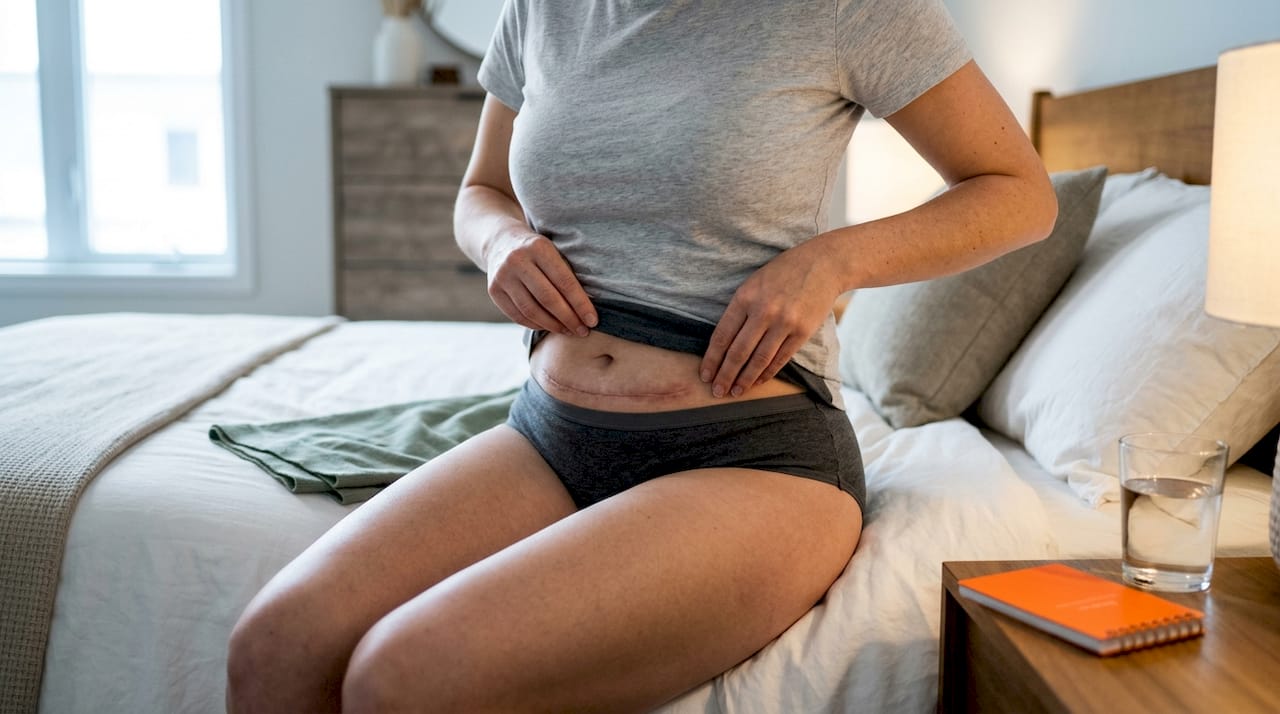
Most C-section scars follow one of two incision patterns, and knowing which one you have helps you know what to expect. A low transverse incision runs horizontally, low across the bikini line, and it’s the most common choice because it heals with less tension and a lower risk of future complications. A vertical incision runs from the navel down toward the pubic bone, usually reserved for emergency deliveries or specific medical situations.
In the first weeks, the scar will look angry: red or purple, slightly raised, and firm to the touch. That’s normal. Over the following months, as collagen reorganizes underneath, the color fades toward pink, then to a paler shade close to your natural skin tone, and the raised edge gradually flattens. This process, called remodeling, can continue for a year or longer, according to research on wound healing and scar biology.
Numbness around the scar is common, too. The nerves in that area get cut during surgery, and sensation often returns slowly, sometimes taking months, sometimes never fully returning to normal.
What’s expected versus what needs a second look:
Normal: redness or pink color that gradually fades, mild swelling in the first weeks, itchiness as the skin heals, numbness or tingling around the scar line.
Worth a call: the scar suddenly gets more red or hot to the touch weeks after surgery, a lump or ridge keeps growing instead of flattening, or the area starts oozing fluid that wasn’t there before.
How Long Does It Take for a C-Section Scar to Heal?
Primary healing, meaning the incision closes and the skin knits back together, usually takes about six weeks. Tenderness often lingers for two to three weeks even after the surface looks fine, and pain typically eases within the first two to three days after surgery, based on MedlinePlus patient guidance. The scar itself keeps changing well past that six-week mark. Full remodeling, where the tissue underneath matures and the color settles, can stretch out over many months.
By the numbers: Six weeks is the standard estimate for primary incision healing, but the visible scar continues to remodel for months afterward, per MedlinePlus.
Here’s what a realistic first few weeks looks like:
Days 1 to 3: Pain is at its peak. You may still have a dressing or Steri-Strips in place, and the area will feel tight and tender.
Days 4 to 10: Pain starts to ease. The scab or crust along the incision line begins to soften and may flake off on its own. Don’t pick at it.
Weeks 2 to 3: Steri-Strips, if used, usually fall off on their own or get removed at a follow-up visit. Tenderness continues but should be trending down, not up.
Weeks 4 to 6: The incision should look closed and stable. Any remaining scab is typically gone.
Watch for these warning signs at any point in recovery:
Redness that spreads outward or gets worse instead of better
Swelling that increases rather than decreases
Drainage that’s yellow, green, or foul-smelling (a small amount of clear fluid can be normal early on)
Fever above 100.4°F
Any part of the incision that opens or separates
If you notice one or two of these mildly, call your provider’s office the same day. If you have a fever, significant drainage, or the wound visibly opens, that’s an urgent-care or emergency-room situation, not a wait-and-see one.
Day-to-Day Incision Care After Surgery
Good C-section scar care in the early weeks comes down to a short list of habits, done consistently.
Clean gently, once a day. Use mild soap and warm water during your normal shower, according to Mayo Clinic’s recovery guidance. Skip scented body washes, hydrogen peroxide, alcohol, and iodine on the incision itself. Those harsh options can slow healing rather than help it, per Banner Health’s incision care instructions.
Pat, don’t rub, dry. Use a clean towel and press gently against the skin instead of wiping back and forth.
Let air reach the incision when you can. Many providers recommend leaving the incision uncovered once home unless there’s drainage. In that case, a light, breathable dressing works better than a heavy bandage.
Handle Steri-Strips and glue carefully. Don’t peel them off early. Let them loosen and fall away on their own, or follow your provider’s specific removal timeline.
Hold off on baths, hot tubs, and pools. Submerging the incision raises infection risk until it’s fully sealed, typically around the three-week mark, though your own provider’s clearance is what matters, not a general rule.
Support the incision during coughing, sneezing, or laughing. Press a pillow or your forearm gently against the area to reduce strain on the healing tissue.
Respect lifting limits. Most providers advise nothing heavier than your baby for the first two to six weeks. That includes laundry baskets, older siblings, and grocery bags.
Pro Tip: Keep a small pillow near your favorite nursing spot. Pressing it against your lower abdomen before you cough, laugh, or shift a breastfeeding baby into position takes real pressure off the incision line and makes a noticeable difference in comfort.
For a broader look at wound care logistics in the days after any surgery, this post-operative wound care guide covers dressing changes and activity pacing in more depth.
Why Does My C-Section Scar Itch, Hurt, or Feel Numb?
Pain, itching, and numbness all show up at different points in recovery, and each one has a different fix.
For pain, over-the-counter options like ibuprofen and acetaminophen are commonly used after a C-section, but breastfeeding mothers should confirm dosing and timing with their provider before relying on either one regularly. Cold packs, applied over clothing rather than directly on skin, can also ease soreness during the first week.
Itching tends to show up as the skin heals and new tissue forms; it’s often a sign of active repair, not a problem. Fragrance-free moisturizers help, applied around the scar rather than directly on an open area. Avoid scratching, and avoid strongly scented lotions or essential oils until the incision is fully closed, since those can irritate healing skin.
Numbness is one of the more surprising parts of C-section recovery for a lot of mothers. The surgery cuts through small sensory nerves, and it can take months for feeling to partially or fully return. Some numbness or altered sensation around the scar can be permanent for some women.
Quick reference for managing symptoms:
Pain: ibuprofen or acetaminophen per your provider’s guidance; a supportive abdominal binder can ease movement-related discomfort.
Itching: fragrance-free moisturizer, loose clothing, and hands off the scab.
Numbness: typically improves gradually; report any numbness paired with new pain or a burning sensation.
General soreness: cold packs early on, gentle movement to avoid stiffness, and avoiding sudden twisting motions.
Call your provider if pain suddenly worsens after a period of improvement, or if numbness comes with tingling that spreads or feels like burning. That combination can signal nerve irritation or another issue that’s worth a professional look.
What Actually Reduces C-Section Scar Appearance?
Real scar-appearance improvement happens slowly, and the tools that work best all share one thing in common: they’re used consistently over weeks or months, not applied once and forgotten.
Scar massage can begin once the wound has fully epithelialized, meaning the skin has closed over completely with no open areas or scabs. Using clean fingers, small circular motions applied with light to moderate pressure for a few minutes, once or twice a day, is the basic technique. Tommy’s patient guidance notes that many midwives recommend this once healing is complete, though the research on how much it actually changes scar appearance is mixed. Think of it as a low-risk habit with a reasonable shot at softening tissue, not a guaranteed fix.
Silicone sheets and gels have stronger backing. Clinical guidance treats silicone-based products as a first-line option for preventing raised scars and for treating hypertrophic ones that have already formed, largely because they keep the scar hydrated and apply gentle, steady compression, according to physiotherapy-focused research on cesarean scar outcomes. Sheets are typically worn for several hours a day, and most protocols run for weeks to months before assessing results.
Evidence snapshot: Silicone products are recommended as first-line prophylaxis and therapy for linear and hypertrophic scars in clinical practice, per Ginekologia Polska’s review of cesarean scar physiotherapy.
Topical treatments matter most in the early stretch. Plain petroleum jelly is a commonly cited option for keeping the incision moist while it’s still closing, per Banner Health. Once the wound is fully closed, some mothers look for plant-based alternatives instead, and this guide to natural scar treatment walks through how botanical ingredients typically function in that later stage. Whatever you choose, avoid harsh chemical exfoliants, alcohol-based products, or anything with strong fragrance on the scar itself during active healing.
Physical therapy comes into play when the scar feels tight, pulls with certain movements, or seems to be limiting mobility. Manual therapy, compression, and kinesio taping are among the techniques physical therapists use to loosen adhesions and improve how the tissue moves, and the right combination depends on how far along healing is. If tightness or pain persists past a couple of months, ask your provider for a referral to a physical therapist familiar with postpartum recovery.
Sun protection is easy to forget and genuinely important. Fresh scar tissue lacks the pigment-regulating function of normal skin, so unprotected sun exposure during the first year can cause the scar to darken permanently. SPF 30 or higher, or simply keeping the area covered with clothing, protects against that outcome.
For a longer view on how these pieces fit together across recovery, this skin recovery guide after surgery covers the same ground with a broader post-surgical lens.
Meet the Author: Natural Wound Care Expertise Behind This Guide
This guide draws on both clinical sources, MedlinePlus, Mayo Clinic, and peer-reviewed physiotherapy research, and Kyle’s background in natural skin and wound care. Kyle focuses on how plant-based topicals fit alongside standard medical guidance rather than replacing it.
A plant-based ointment’s main job in scar care is moisture retention and gentle botanical support once the wound has closed. That timing matters: apply only after full epithelialization unless your clinician has specifically cleared earlier use, since open or healing skin needs different handling than a closed scar.
Before adding any new topical to your routine, three things are worth doing. Patch test on a small area of unaffected skin first. Ask your provider whether combining a plant-based ointment with silicone sheeting makes sense for your situation, since layering products isn’t always necessary. And flag any known sensitivities or allergies to botanical ingredients before you start.
Getting Back to Exercise Without Stressing the Scar
Returning to movement after a C-section is less about hitting a calendar date and more about listening to what the incision tells you. Most providers clear light activity, like short walks, within the first couple of weeks, but higher-impact exercise and core work usually wait until at least the six-week checkup, and sometimes longer.
Core strength took a direct hit during surgery, since the abdominal muscles were separated to reach the uterus. Jumping back into crunches, planks, or heavy lifting before that tissue has rebuilt strength can pull on the scar and, in rare cases, contribute to a hernia at the incision site.
A few practical adjustments help protect the area as you rebuild activity:
Start with walking and gentle pelvic floor engagement before adding any core-specific movement.
Avoid twisting motions or sudden, jerky movements that stretch the scar sideways.
Wear a supportive abdominal binder during exercise if your provider recommends one for the first several weeks.
Stop and reassess if you feel pulling, sharp pain, or notice any new bulging at the incision during activity.
Getting cleared for exercise at your postpartum visit doesn’t mean going straight back to your pre-pregnancy routine. A gradual return, tracking how the scar responds to each new type of movement, protects both the visible scar and the tissue underneath it.
Choosing Clothing That Won’t Irritate Your Incision
What touches your scar matters almost as much as what you put on it. Tight waistbands, stiff denim, and rough seams sitting right at the incision line can cause friction, irritation, and even mild abrasions during the weeks the tissue is most fragile.
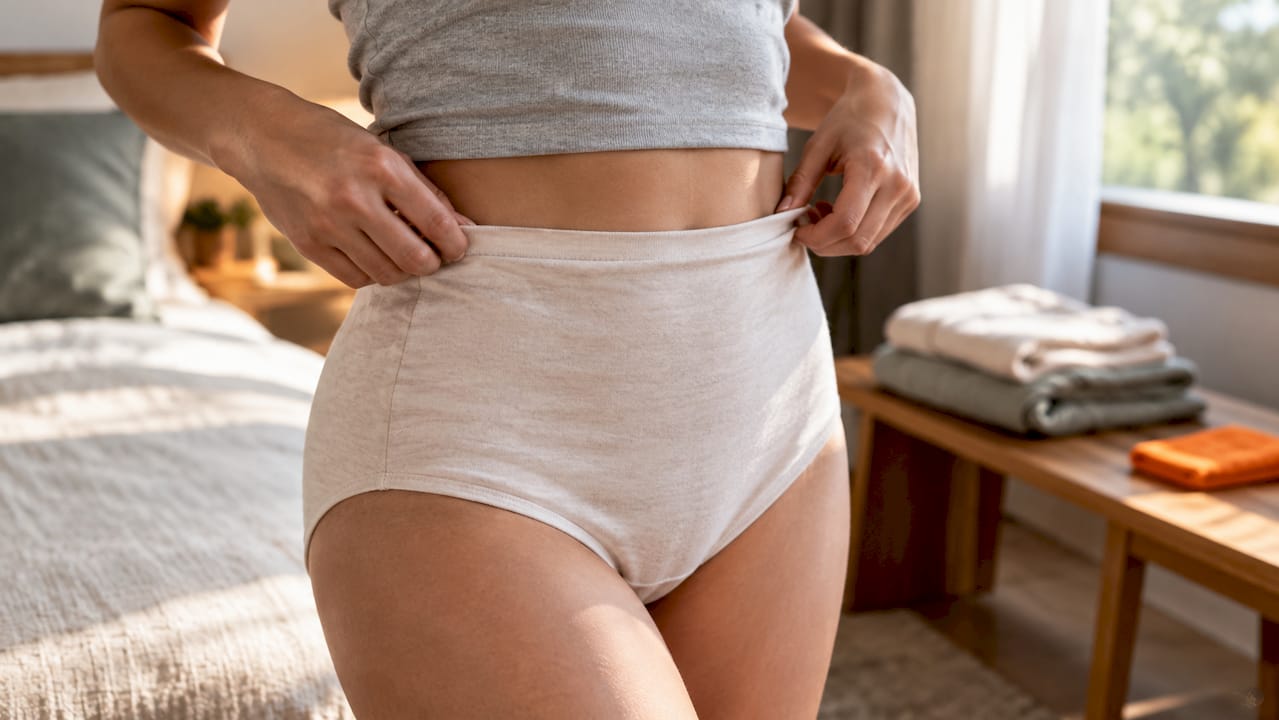
High-waisted, soft cotton underwear that sits above or well below the incision tends to work better than anything that lands directly on the scar line. Loose, breathable bottoms, think soft leggings or loungewear rather than jeans, reduce rubbing during the first several weeks. Postpartum recovery garments or high-waisted compression shorts designed specifically for C-section recovery can offer light support without digging into tender skin, but check that any compression garment sits above the incision rather than across it.
Fabric choice matters, too. Cotton and other breathable materials let the area stay dry and reduce the sweat-related irritation that synthetic fabrics can cause. As the scar matures over the following months, you’ll likely find you can tolerate more normal clothing choices, but during those early weeks, comfort and gentle coverage should guide what you reach for.
Recognizing Hypertrophic Scars and Keloids
Most C-section scars flatten and fade over months, but some develop into a raised, thick hypertrophic scar or, less commonly, a keloid that extends beyond the original incision line. The distinction matters: a hypertrophic scar stays within the boundaries of the original cut, while a keloid grows outward into surrounding skin and can keep enlarging for years.
Silicone sheeting, covered earlier, is a legitimate first-line option for both, but it isn’t the only tool available when a scar doesn’t respond as expected. Clinicians sometimes use corticosteroid injections directly into a raised or thickened scar to help flatten it over a series of sessions. Pressure garments, worn consistently over months, can also help manage thickened scar tissue by applying steady, even compression. For scars that don’t improve with these measures, laser therapy is another option some providers discuss, though availability and suitability vary by individual case.
If your scar keeps growing months after surgery, becomes increasingly itchy or painful, or extends noticeably beyond the original incision line, that’s a reason to bring it up with your provider rather than waiting to see what happens. Early intervention tends to produce better results than waiting for a keloid to fully establish itself.
Foods That Support Wound Healing After a C-Section
What you eat during recovery plays a direct role in how efficiently your body rebuilds tissue at the incision site. Protein is the foundation, since it supplies the amino acids your body uses to construct new collagen. Lean meats, eggs, beans, and dairy are practical, accessible sources that fit into the exhausting reality of caring for a newborn while also healing.

Vitamin C supports collagen formation directly, and citrus fruits, bell peppers, and leafy greens are reliable sources. Zinc, found in nuts, seeds, and whole grains, plays a role in the cellular processes that close wounds. Staying well hydrated also supports every one of these processes, since dehydrated tissue simply doesn’t repair as efficiently.
None of this requires a dramatic diet overhaul in the middle of newborn chaos. Simple additions, a handful of nuts, an extra serving of vegetables, a glass of water within reach while you’re breastfeeding, add up over the six weeks your body spends doing the heaviest lifting of the healing process.
A Realistic Take on Healing After a C-Section
Recovery after a C-section rarely looks like the tidy timeline in a discharge packet. You’re managing a healing incision while running on fragmented sleep, and that combination makes even simple wound care feel harder than it should.
What actually helps: short rest cycles instead of waiting for one long stretch of sleep, letting someone else handle stairs and lifting for the first couple of weeks, and choosing loose, soft clothing over anything that fights your body, as explained in this newborn care basics guide. Don’t treat asking for help as a failure. It’s part of giving the incision the calm environment it needs to close properly.
Follow your clinician’s guidance on timing, and layer in whichever gentle topical care feels right for you once the wound has closed. The two aren’t in competition.
— Kyle
A Plant-Based Option for Scar Care Once You’re Cleared
Once your incision has fully closed and your provider has given the go-ahead for topical care, a plant-based, petroleum-free ointment may support skin recovery. It is formulated without synthetic fillers found in many conventional ointments, appealing to those who prefer to avoid harsh chemicals on skin that’s still remodeling months after surgery.
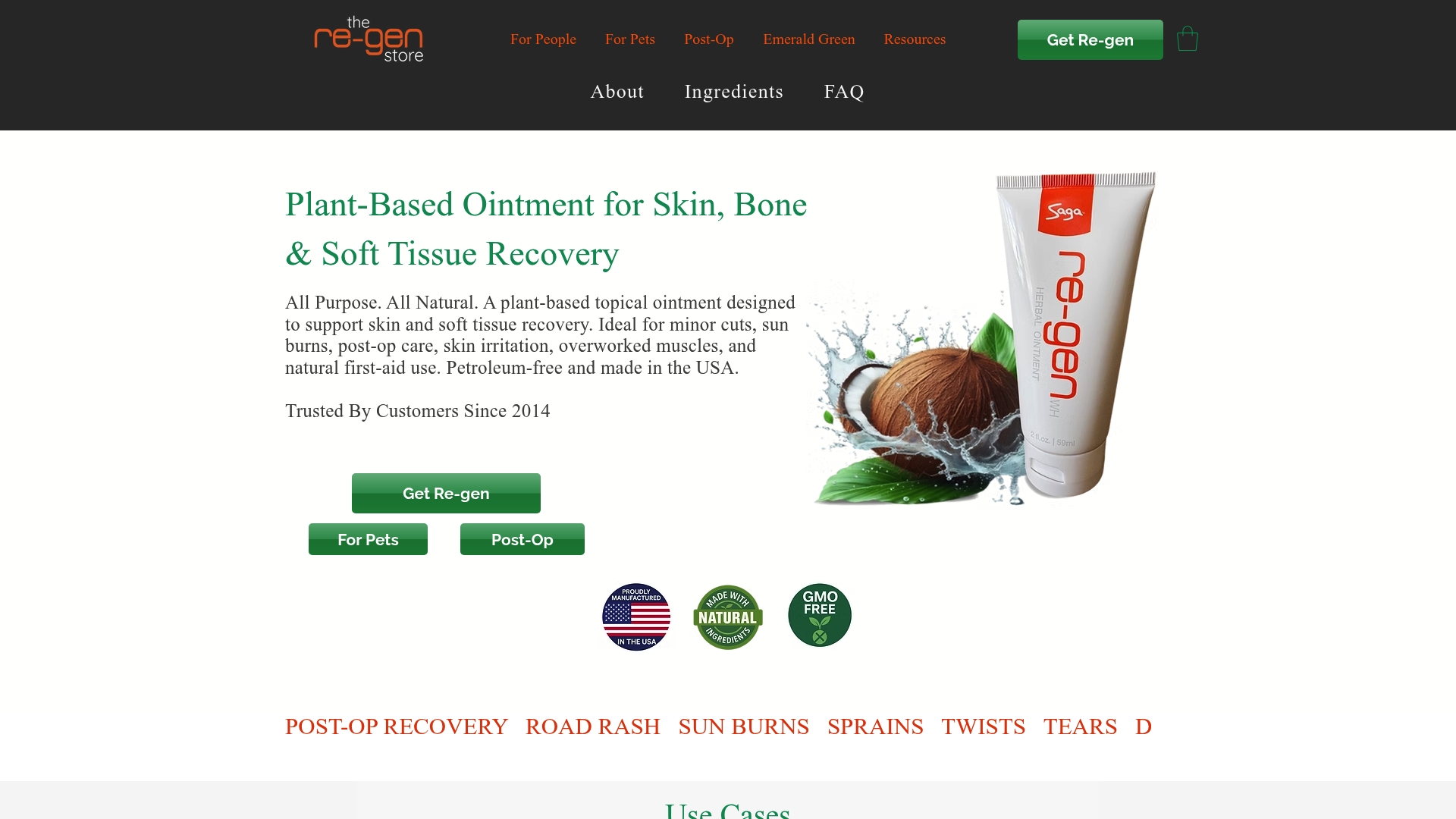
Using it safely means following the same rules as any new topical: patch test on a small area first, and wait until the wound is fully closed unless your clinician says otherwise. Some mothers use it alongside silicone sheeting once healing allows, applying it during the hours the sheet isn’t on. Browse the full Re-gen product line to see sizing and formulation options, and talk with your provider before adding it to your recovery routine.
Sources
This article is general information, not a substitute for advice from a qualified doctor. Consult a qualified healthcare professional about your own circumstances before acting on anything here.
FAQ
How long should I keep my C-section scar covered?
Keep the dressing on only as long as your provider instructs, often just the first day or two, since many incisions do better exposed to air once drainage stops. Once the wound is closed, covering it with clothing or SPF 30+ is mainly about sun protection for the first year rather than ongoing bandaging.
What are the hardest days after a C-section?
The first three to five days tend to be the toughest, when surgical pain peaks and every movement, coughing, standing, shifting a baby, pulls on the incision. Pain typically starts easing noticeably after the first two to three days, though tenderness can linger for two to three weeks, according to MedlinePlus.
How long does it take for a C-section scar to fully heal?
Primary healing usually takes about six weeks, but the visible scar keeps changing color and texture for months afterward as the tissue remodels. Full maturation, where color and texture settle into their long-term appearance, can take up to a year or more.
Can a healed C-section scar reopen?
Yes, though it’s uncommon once the incision has fully closed and matured. Reopening is more likely if the area takes direct trauma, gets infected, or faces excessive strain from heavy lifting too soon, so watch for any separation, drainage, or new pain and contact your provider immediately if you notice one.
Is Re-gen ointment safe to use on a C-section scar?
Re-gen is a plant-based, petroleum-free topical intended for use once the wound has fully closed, not on an open incision. Patch test first and check with your provider before adding it to your scar-care routine, especially if you’re also using silicone sheeting or another topical treatment.
Recommended
Comments