
Antiseptic vs Antibiotic: What Each One Does and When to Use It


An antiseptic is applied to skin to reduce germs on the surface. An antibiotic is a medicine that kills or stops bacteria, and only bacteria. For most minor cuts and scrapes, you need neither. Gentle washing, a moist covering and a clean bandage do most of the work.
This guide explains the difference in plain terms. It also covers how ointments and creams fit in, what the research says about topical products, and the signs that call for a doctor.
TL;DR
Antiseptics work on living skin and can act against bacteria, viruses and fungi. Antibiotics act only on bacteria.
Most minor cuts and scrapes need soap, water and a clean bandage, not an antibiotic.
Pus, spreading redness, red streaks, warmth or fever suggest infection. See a doctor.
Over-the-counter products carry a one-week limit on their labels, and allergic reactions do happen.
Pets need a veterinarian’s guidance before any antibiotic, including ones sold without a prescription.
Table of Contents
The core difference in plain words
According to Pharmacist.com, antiseptics inhibit the growth of bacteria on the skin’s surface, while antibiotics kill bacteria directly. Antiseptics can also act on viral species and fungi. Antibiotics are effective only against bacteria.
The FDA defines a first aid antiseptic as a drug product applied to the skin to help prevent infection in minor cuts, scrapes and burns. The word “prevent” matters. Antiseptics are for the surface, before an infection takes hold.
Antibiotics are for treating or preventing a bacterial infection. As Cleveland Clinic explains, topical antibiotics are only good for bacterial infections and do not help other kinds of infection.
Antiseptic | Antibiotic | |
Works against | Bacteria, viruses, fungi | Bacteria only |
Typical form | Liquids and sprays | Creams, ointments, pills |
Common ingredients | Alcohol, iodine, benzalkonium, hydrogen peroxide | Bacitracin, neomycin, polymyxin B |
Main use | Cleaning skin, reducing surface germs | Treating or preventing bacterial infection |
The ingredient and form details come from the same Pharmacist.com overview. Nonprescription antibiotics use one or more of three ingredients: bacitracin, neomycin and polymyxin B sulfate. Triple antibiotic ointment is the most common version.
Where “antibacterial” fits
People often ask about antibacterial products too. “Antibacterial” describes anything that acts against bacteria. That includes antibiotics, but it also includes soaps, wipes and cleaners. So an antibiotic is always antibacterial, but an antibacterial product is not always an antibiotic. An antiseptic can be antibacterial and also act on other germs.
A simple way to remember it: antibiotics are medicines aimed at bacteria. Antiseptics are skin-safe germ reducers with a wider reach. Disinfectants are the strong versions meant for surfaces, not skin.

Ointment, cream or liquid?
Form affects how a product behaves on a wound. Pharmacist.com notes that topical antibiotics come as creams or ointments, while antiseptics come as liquids and sprays. It adds that ointments suit minor burns and wounds with intact skin because they hold in moisture. Creams suit cuts and scrapes because they let some fluid pass through.
The moisture point is why petroleum jelly shows up in dermatology advice. The American Academy of Dermatology says that if a wound shows no sign of infection, you can skip antibiotics and use plain petroleum jelly to keep it moist, then cover it with an adhesive bandage.

What a minor cut actually needs
Harvard Health says the vast majority of cuts and scrapes just need a good washing with plain soap and water and a clean bandage. It adds that antibiotic ointment is usually not necessary and can contribute to antibiotic resistance, so it should be used sparingly.
A simple routine:
Wash your hands, then rinse the wound under clean running water.
Clean around it with mild soap. Avoid scrubbing inside the wound.
Apply a thin layer of ointment to keep the surface moist. Mayo Clinic suggests an antibiotic ointment or petroleum jelly.
Cover with a clean bandage and change it daily or when it gets wet or dirty.
Watch for changes over the next several days.
Strong antiseptics are not always the best choice for cleaning. Cleveland Clinic warns that pouring alcohol or peroxide into deep wounds or large burns can harm healing tissue. We cover this in more detail in our guide on why doctors say to skip hydrogen peroxide on wounds.
What the evidence says about topical antibiotics
The research is mixed, and that is useful to know. A systematic review and meta-analysis found fewer wound infections with topical antibiotics than with placebo. Compared with antiseptics, the relative risk fell, but there was no significant absolute risk reduction. In practical terms, the extra benefit over a good antiseptic was small.
The American Academy of Family Physicians takes a cautious view too. Its review states that topical antibiotics may reduce clinical infections in children with minor acute wounds. It also says some neomycin-containing products do not improve healing for biopsy wounds and may cause dermatitis and antibiotic resistance.
Allergy and resistance: using products safely
Skin reactions are the most common problem with topical antibiotics. The FDA-based consumer label for a triple antibiotic ointment on DailyMed says:
Do not use in the eyes or over large areas of the body.
Do not use if you are allergic to any ingredient.
Do not use longer than one week unless a doctor directs it.
Ask a doctor first if you have deep or puncture wounds, animal bites or serious burns.
Stop use and ask a doctor if a rash or other allergic reaction develops.
Irritation from repeated contact with an ingredient can look a lot like other skin problems. If you want to see how contact reactions develop on sensitive skin, this piece on contact dermatitis from irritants is a clear read. For ointment specifics, see our pages on antibiotic ointment risks and patch test results and bacitracin allergy signs.
Signs of infection: when to see a doctor
Antiseptics and ointments are for minor wounds. The American Academy of Dermatology lists these signs of infection: pus, yellow or golden crusts, pain, red, purple or brown skin, swelling or warmth, red or brownish-red streaks, feeling very hot or cold, and fever. Any of these means it is time to call a doctor, who can decide whether a prescription antibiotic is needed.
The label rules above also apply to antiseptics. The FDA monograph says to consult a doctor for deep or puncture wounds, animal bites or serious burns, and not to use the product longer than one week unless directed.
A note for pet owners
Pets add another layer of caution. The 2022 AAFP/AAHA antimicrobial stewardship guidelines state that owners should consult a veterinarian before any antibiotic use, even for products sold without a prescription. Animals also lick wounds, so choose products intended for pets and follow their directions. Our guides on cleaning a dog wound at home and cat wound care walk through the first steps.
Our perspective
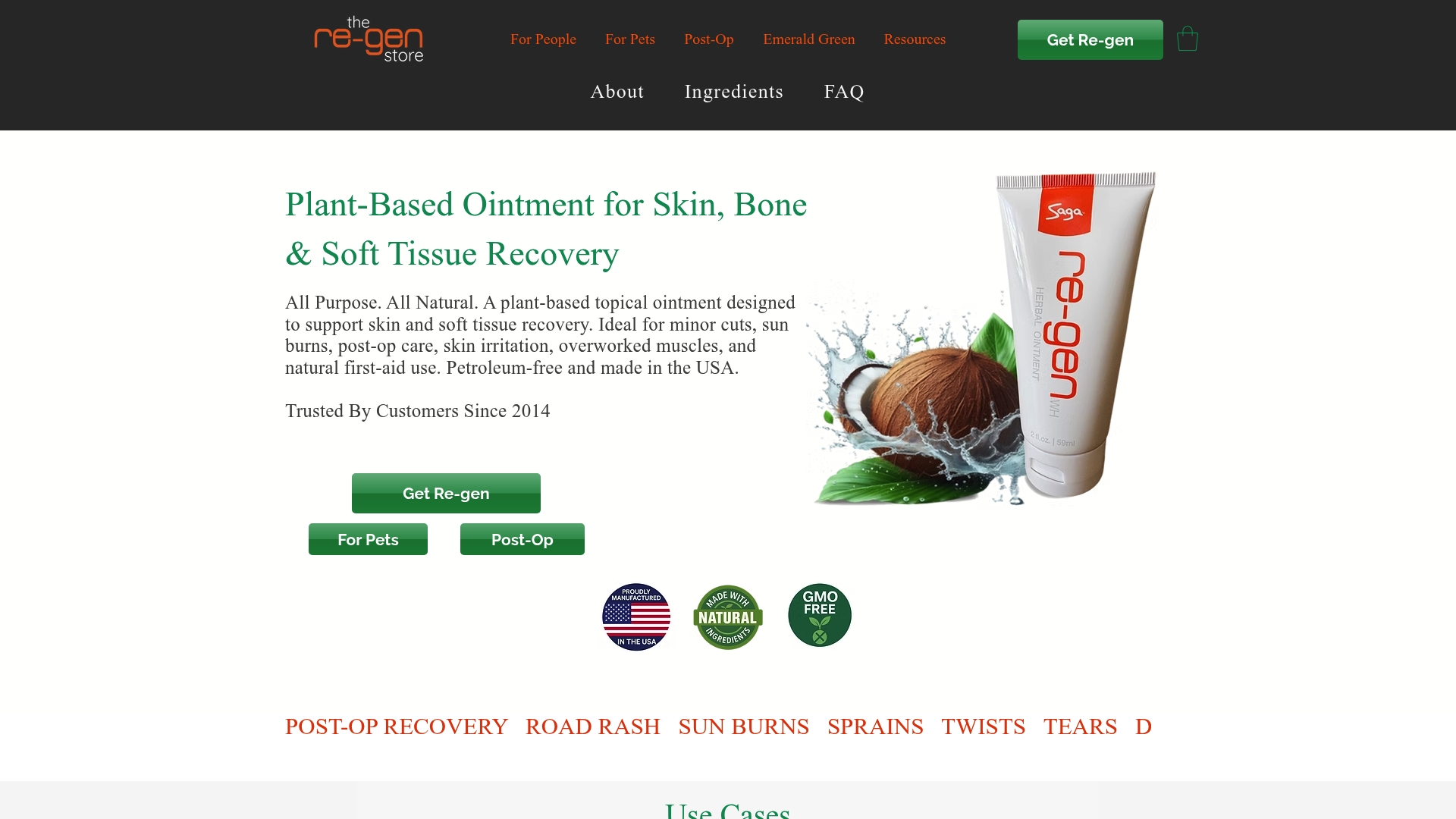
Many people think they have two choices for a cut: an antiseptic or an antibiotic. We see a third path that starts with the body itself. Skin repairs itself. Blood flows to the area, inflammation begins, and new tissue forms. Good first aid supports that process: a clean wound, a moist environment and a protective cover. That is the thinking behind Re-gen. It is a plant-based, petroleum-free ointment made with a blend of 10 herbal ingredients. We designed it to support recovery of skin, muscle and bone, for people and, with its own guidelines, for pets. It is our alternative to conventional antibiotic ointments and petroleum-based products for everyday injuries. If you prefer to avoid chemical ingredients, you can still care for a wound well. Clean it, keep it covered and watch it closely. Add a product you trust, and see a doctor when something looks wrong. Kyle
Plant-based options for everyday wound care
If you want a plant-based option for minor injuries, Re-gen is made for that purpose. It is formulated for cuts, scrapes, burns, sprains and post-operative skin. You can browse the Re-gen ointment range to see the available sizes. Emerald Green is also available as a spray, which suits larger or harder-to-reach areas, and shipping is a flat $3.
Recovering from a procedure? Our surgery recovery page explains how Re-gen fits into aftercare, always alongside your surgeon’s instructions. To learn more about plant-derived options first, read our guide to herbal antiseptics, or start at theregenstore.com.
FAQ
Is an antiseptic good for an infection?
Antiseptics are meant to reduce germs on the skin’s surface and help prevent infection in minor wounds. They do not treat an established infection. Cleveland Clinic notes that even with proper use, an antiseptic does not guarantee you will avoid infection. If you see pus, spreading redness or fever, see a doctor.
Can I use antibiotic ointment on every cut?
Usually you do not need to. Harvard Health says a little may help if the area looks red, but it is usually not necessary. Overuse can contribute to resistance and allergic reactions. Stop and ask a doctor if a rash develops or the wound gets worse.
Is antiseptic cream the same as antibiotic cream?
No. An antiseptic cream uses an ingredient that reduces germs broadly on skin. An antibiotic cream contains a drug such as bacitracin that targets bacteria specifically. Check the active ingredients on the label to know which you have.
How long can I use these products?
FDA labeling for both antiseptic and antibiotic first aid products says not to use them longer than one week unless a doctor directs it. If the wound is not improving within that time, get it checked.
Sources
Antiseptic: What Is It, Types and How It’s Used, Cleveland Clinic
When to Use (or Not Use) Antibiotics on Your Skin, American Academy of Dermatology
Systematic review and meta-analysis on topical antibiotics, Dove Press
Topical Preparations for Wound Healing, American Family Physician
Bacitracin, neomycin and polymyxin B ointment label, DailyMed
Recommended
Comments