
How to Treat a Nose Piercing Bump Effectively
- Sunny

- 21 hours ago
- 12 min read
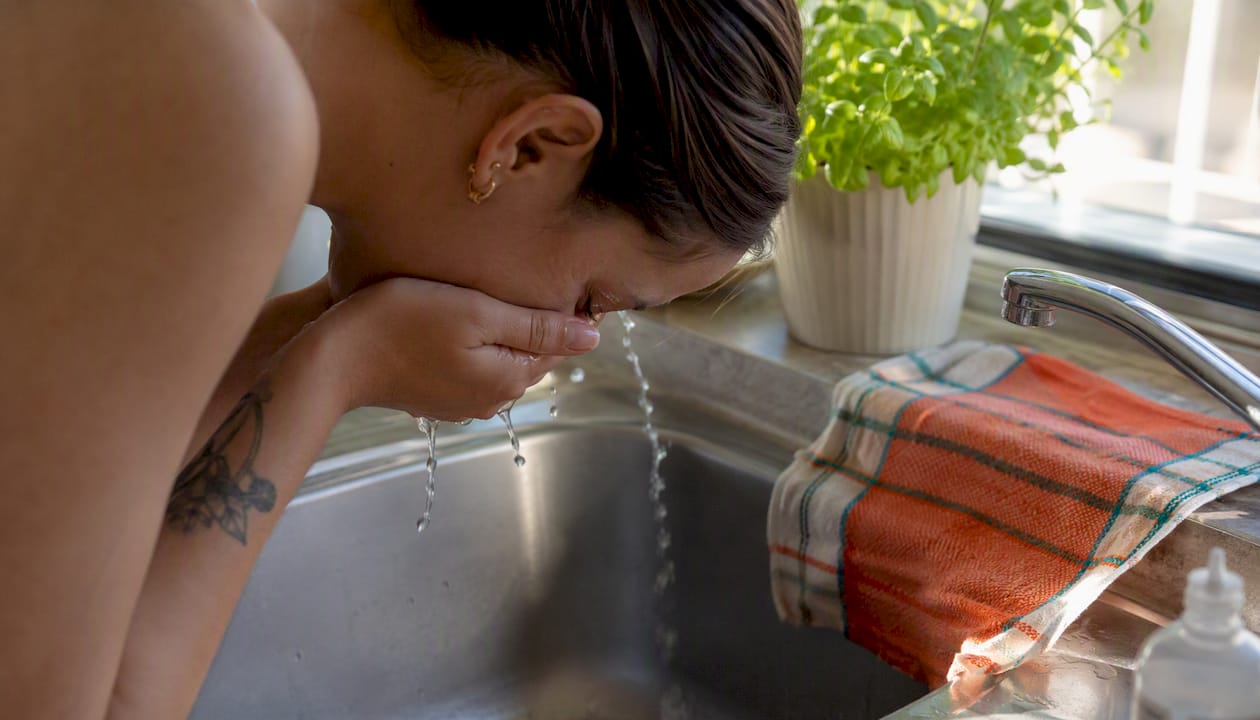
Start a sterile saline routine today, keep your hands away from the piercing, and reduce any friction against the jewelry. Those three steps resolve the majority of nose piercing bumps without any additional intervention. Rinse the area with sterile saline solution twice daily, apply a warm compress for a few minutes after each rinse, and leave the jewelry in place unless a professional advises otherwise.
Start here:
Spray or soak with sterile saline (0.9% sodium chloride) twice daily, morning and night.
Apply a clean warm compress for 3–5 minutes after each saline rinse to increase blood flow.
Keep the jewelry in. Removing it before the piercing heals can trap bacteria inside the tissue.
Stop and seek medical care immediately if you notice fever, rapidly spreading redness around the piercing, severe throbbing pain, or foul-smelling discharge. These signs point to a spreading infection that needs professional evaluation, not home care.
Key Takeaways
Consistent sterile saline care, friction reduction, and implant-grade jewelry resolve most nose piercing bumps within 2–6 weeks without medical intervention.
Point | Details |
Start with saline | Clean twice daily with sterile saline; this is the single most effective first step. |
Avoid harsh products | Skip alcohol, hydrogen peroxide, and undiluted tea tree oil, which damage healing tissue. |
Check your jewelry | Nickel alloys and poor-fitting posts sustain bumps; switch to implant-grade titanium or niobium. |
Know when to escalate | See a doctor if you have fever, spreading redness, or no improvement after 6 weeks. |
Theregenstore Re-gen | A petroleum-free, plant-based adjunct for soothing non-infected irritation after saline care. |
Table of Contents
What is a nose piercing bump, and what causes it?
Not every bump is the same, and the cause determines the right nose piercing bump treatment. Identifying your bump type before reaching for any product saves time and prevents making things worse.
Common bump types:
Pustule (infected bump): A fluid-filled pimple-like lesion caused by bacterial infection. Signs include warmth, pain, yellow or green discharge, and sometimes odor.
Irritation granuloma: A small, reddish, raised nodule that forms when tissue reacts to ongoing mechanical irritation or a foreign body. Usually soft, not painful, and without discharge.
Hypertrophic scar: A firm, raised scar that stays within the original wound boundary. Forms when the body overproduces collagen during healing. Common after trauma or repeated friction.
Keloid: A scar that grows beyond the original wound margin. Peer-reviewed research confirms keloids result from excess collagen deposition and often require professional treatment such as steroid injections, cryotherapy, or surgery.
Trapped fluid (seroma/cyst): A smooth, fluid-filled pocket under the skin, usually painless, caused by blocked drainage or early jewelry changes.
How to tell infection from irritation:
Sign | Infection | Irritation/Scar |
Pain level | Moderate to severe | Mild or none |
Skin temperature | Warm or hot | Normal |
Discharge | Yellow, green, or foul | Clear or none |
Texture | Soft, fluctuant | Firm, raised |
Fever | Possible | No |
Common triggers for any bump type:
Touching or rotating the jewelry with unwashed hands
Nickel or low-grade metal allergy causing localized inflammation
Friction from glasses, masks, or sleeping on the piercing side
Changing jewelry too early (before 4–6 months for a nostril piercing)
Over-cleaning or using harsh products that disrupt tissue repair
Pro Tip: If your bump appeared within the first few weeks and feels soft with no discharge, it is almost certainly an irritation response, not an infection. Consistent saline care usually resolves it.
How to treat a nose piercing bump at home, step by step
Most irritation bumps respond well to a consistent at-home protocol. Follow these steps in order before considering any topical product or professional visit.
Wash your hands thoroughly before touching anything near the piercing. This single step prevents the most common cause of secondary infection.
Rinse with sterile saline. Use a pre-made sterile saline spray (0.9% NaCl, no additives) or a DIY solution of 1/4 teaspoon non-iodized sea salt dissolved in 8 ounces of distilled water. The American Academy of Dermatology recommends sterile saline or wound washes and advises against harsh cleansers that dry tissue.
Apply a warm compress. Soak a clean cloth or gauze pad in warm (not hot) water and hold it gently against the bump for 3–5 minutes. Cleveland Clinic dermatologists specifically recommend warm compresses to increase blood flow and reduce mechanical trauma rather than defaulting to topical antibiotics.
Try a chamomile compress (optional). Steep a chamomile tea bag in hot water, let it cool to warm, and apply it as a compress. Chamomile has mild anti-inflammatory properties and is gentle on healing tissue.
Pat dry gently. Use a clean paper towel rather than a cloth towel, which can harbor bacteria and snag on jewelry.
Leave the area alone. No twisting, no rotating, no prodding the bump.
Repeat twice daily. Morning and night is the standard frequency. More than twice daily can over-dry the tissue and slow healing.
Do not pop, squeeze, or pick the bump. Breaking the skin introduces new bacteria, increases scarring risk, and can push an irritation bump toward a genuine infection. Patience with the saline routine is more effective than any mechanical intervention.
What to avoid entirely:
Rubbing alcohol or hydrogen peroxide on the piercing site
Antibacterial soap applied directly to the bump
Tea tree oil at full concentration (see topical cautions below)
Home remedies like toothpaste or crushed aspirin paste, which can damage tissue and worsen healing
Timeline to watch: Expect some visible reduction in redness or swelling within 2–3 days of consistent saline care. Many irritation bumps reduce noticeably within 2–6 weeks. If there is no improvement after two weeks of correct care, reassess your jewelry and consider a piercer consultation.
How jewelry material and fit affect your bump
Jewelry is one of the most overlooked factors in nose piercing irritation. The wrong metal or a poorly fitted post can cause or sustain a bump even when your cleaning routine is perfect.
Preferred implant-grade materials:
Implant-grade titanium (ASTM F136): The gold standard for sensitive skin. Lightweight, nickel-free, and available in anodized colors.
Niobium: Hypoallergenic and safe for most people, though slightly heavier than titanium.
Implant-grade stainless steel (ASTM F138): Generally safe, though it contains trace nickel; not ideal for confirmed nickel allergy.
14k or 18k solid gold: Safe when solid (not plated). Avoid gold-filled or gold-plated pieces, which shed base metals over time.
Nickel-containing alloys are the most common cause of allergic contact dermatitis at piercing sites. The reaction looks like persistent redness, itching, and a bump that never fully resolves despite correct cleaning. Switching to hypoallergenic jewelry is often the single change that clears a stubborn bump.
Fit issues that cause bumps:
A post that is too short presses the backing into the tissue, creating constant pressure.
A ring that is too small pulls inward and restricts swelling during the initial healing phase.
Loose or heavy jewelry moves excessively, creating micro-trauma with every facial expression.
Sleeping on the piercing side, wearing glasses that rest on the piercing, or pressing a face mask against the jewelry all create friction that sustains irritation.
When to let a professional swap your jewelry: Do not change jewelry yourself on a piercing that is less than 4–6 months old, inflamed, or possibly infected. A professional piercer can assess fit, downsize the post once initial swelling has resolved, and swap to implant-grade material without traumatizing the healing channel.
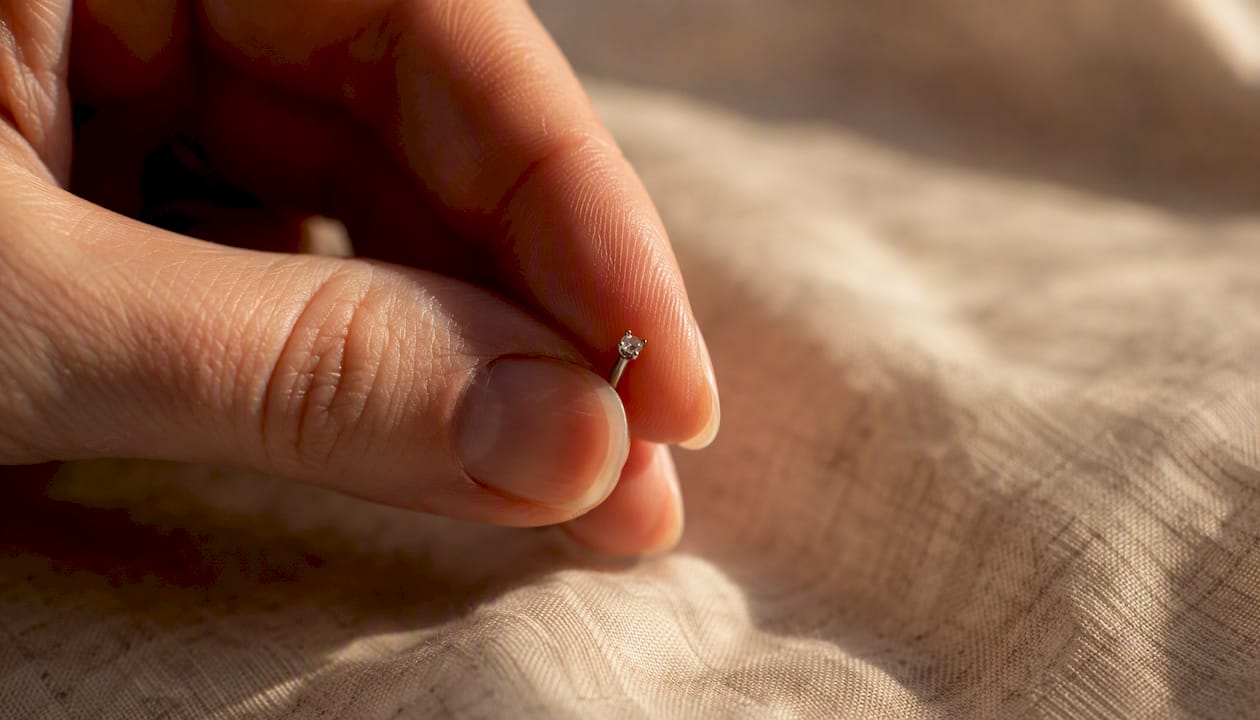
Pro Tip: Ask your piercer to “downsize” your initial jewelry at the 6–8 week mark. The longer post placed at the time of piercing accommodates early swelling but becomes a source of friction once that swelling is gone.
Topical treatments: what helps, what to avoid
The safest topical for any nose piercing bump is sterile saline. Everything else carries some degree of caution.
Sterile saline: Safe, effective, and recommended by the AAD as first-line daily care. No dilution needed. No risk of tissue damage.
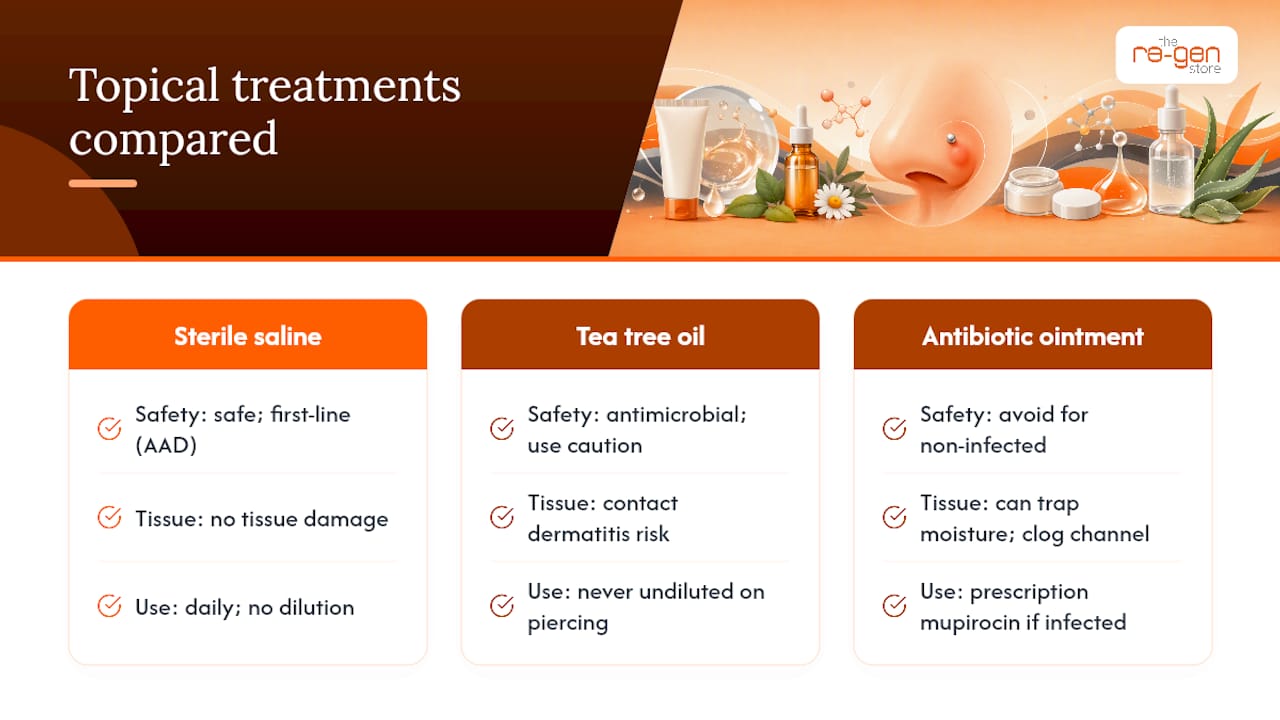
Tea tree oil: Has documented antimicrobial properties, but the National Center for Complementary and Integrative Health (NCCIH) notes it can cause contact dermatitis. Never apply undiluted tea tree oil directly to a piercing.
Over-the-counter antibiotic ointments: Products like bacitracin or triple-antibiotic ointment are not recommended for non-infected irritation bumps. They can trap moisture, clog the piercing channel, and are not designed for the type of deep-tissue inflammation that causes most bumps. Cleveland Clinic guidance reinforces that increasing blood flow through warm compresses is more effective for non-infected inflammation than reaching for a topical antibiotic.
Prescription topicals: If a clinician confirms a bacterial infection, prescription mupirocin (Bactroban) may be appropriate. Topical corticosteroids can help reduce inflammation in hypertrophic scars but should only be used under medical supervision to avoid skin thinning.
Avoid toothpaste, aspirin paste, and undiluted essential oils on your piercing. These home remedies are widely shared online but consistently flagged by piercing professionals as tissue-damaging. They can cause chemical burns, worsen scarring, and delay healing significantly.
For readers interested in a plant-based approach to soothing skin irritation, a petroleum-free ointment used after the saline routine and drying step can support the skin’s recovery environment without the risks associated with harsh chemicals.
When should you see your piercer versus a doctor?
Knowing which professional to contact saves time and gets you the right care faster.
See your piercer when:
The bump has not improved after 4–6 weeks of correct saline care.
You suspect the jewelry material or fit is the problem.
You want a professional downsize or jewelry swap.
The bump is firm and raised but shows no signs of infection (no fever, no spreading redness, no discharge).
See a doctor or dermatologist when:
You have a fever or feel systemically unwell.
Redness is spreading beyond the immediate piercing site (possible cellulitis).
Discharge is yellow, green, or foul-smelling.
Pain is severe or worsening despite home care.
A firm mass is growing rapidly and extending beyond the original wound margin (possible keloid).
Symptoms have not improved after 6 weeks of correct care.
The NHS advises against removing jewelry if infection is suspected, because closing the channel can trap bacteria inside the tissue and worsen the infection. Leave the jewelry in and get medical advice.
Professional treatment options, in typical order of escalation:
Piercer assessment: Jewelry swap, downsize, or material change.
Prescription topical antibiotic (mupirocin): For confirmed superficial bacterial infection.
Oral antibiotics: For spreading infection or cellulitis.
Corticosteroid injection: For hypertrophic scars or keloids that do not respond to conservative care. Research supports steroid injections as a standard treatment for excess collagen scars.
Cryotherapy or silicone/pressure therapy: For keloids, often used alongside steroid injections.
Surgical removal: Reserved for large, persistent keloids that have not responded to other treatments.
How long does a nose piercing bump take to heal?
Setting realistic expectations helps you recognize when care is working and when it is time to escalate.
Bump Type | Typical Improvement Window | When to Escalate |
Irritation bump (granuloma) | 2–6 weeks with consistent saline care | No change after 2 weeks: reassess jewelry |
Pustule (minor infection) | 1–2 weeks with correct cleaning | Worsening after 48 hours: see a doctor |
Hypertrophic scar | 2–6 months; may need intervention | No reduction after 6 weeks: see a dermatologist |
Keloid | Months to years; usually needs treatment | Any rapid growth: see a dermatologist promptly |
What improvement looks like:
Reduced redness and swelling around the jewelry
Less tenderness when the area is touched
No new discharge or crusting after the first week of correct care
The bump visibly flattening or shrinking
Two checkpoints to hold yourself to:
2 weeks: If redness and swelling have not reduced at all, reconsider your jewelry material and cleaning frequency.
6 weeks: If the bump is the same size or larger, book an appointment with your piercer or a dermatologist. Waiting longer without professional input rarely improves the outcome for hypertrophic scars or keloids.
How to prevent bumps and keep your nose piercing healthy
Prevention is simpler than treatment. These habits reduce bump risk from day one.
Daily aftercare:
Clean twice daily with sterile saline spray. The AAD’s aftercare guidance recommends sterile saline and warns against over-cleaning, which strips the skin’s natural barrier.
Wash your hands before any contact with the piercing.
Never twist or rotate the jewelry. This is an outdated practice that creates micro-tears.
Pat dry with a clean paper towel after cleaning.
Lifestyle adjustments:
Avoid submerging the piercing in pools, hot tubs, lakes, or oceans until fully healed (typically 4–6 months for a nostril piercing).
Sleep on a clean pillowcase, or use a travel pillow to keep pressure off the piercing side.
Be mindful of glasses frames, masks, and headphones that press against the jewelry.
Choosing the right piercer and jewelry:
Ask specifically for implant-grade titanium or niobium for the initial jewelry.
Choose a piercer who uses single-use, sterile needles and autoclave-sterilized equipment.
Confirm the gauge and placement are appropriate for your anatomy before the appointment.
For additional natural skin recovery tips that support healing from the outside in, consistent gentle care and ingredient-conscious products make a measurable difference over time.
Pro Tip: A clean pillowcase is one of the most underrated tools in piercing aftercare. Change it every 2–3 days during the first 8 weeks, or place a clean paper towel over your pillow as a quick alternative.
Re-gen as a plant-based adjunct for non-infected irritation
Once you have completed your saline rinse and the area is fully dry, a plant-based topical ointment can support the skin’s recovery environment. Re-gen from Theregenstore is a petroleum-free, chemical-free option designed to soothe irritation and support tissue recovery. It is appropriate as an adjunct for non-infected irritation bumps, not as a substitute for saline care or medical treatment.
How to use Re-gen alongside your routine:
Apply only after the saline rinse and thorough drying step.
Use a small amount. A thin layer is sufficient.
Apply once daily, or as directed on the product label.
Stop use and consult a clinician if the area shows signs of infection (spreading redness, fever, foul discharge).
Safety notes:
Do not apply to a clearly infected wound without clinician approval.
If you have known plant or herbal allergies, patch-test on your inner arm for 24 hours before applying near the piercing.
Re-gen is formulated without petroleum, synthetic chemicals, or antibiotics, making it a considered option for readers who prefer petroleum-free, plant-based wound care.
Re-gen works best as part of a consistent routine, not as a standalone fix. Saline care and friction reduction remain the foundation. A plant-based ointment supports the tissue environment once these fundamentals are in place.
For readers comparing natural topical options, this overview of plant-based alternatives for sensitive skin provides useful context on what to look for in a gentle, chemical-free formulation.
A note on patience and gentle care
The most effective approach to a nose piercing bump is also the least dramatic: consistent saline care, reduced friction, and time. Most bumps that appear in the first few weeks of a new piercing are irritation responses, not infections, and they respond well to gentle, hands-off care. If your bump is not improving after two weeks of correct care, or if any infection signs appear, see a professional rather than escalating your home treatment. Gentle, evidence-based care is the approach that works.
Re-gen: a plant-based option for piercing recovery support
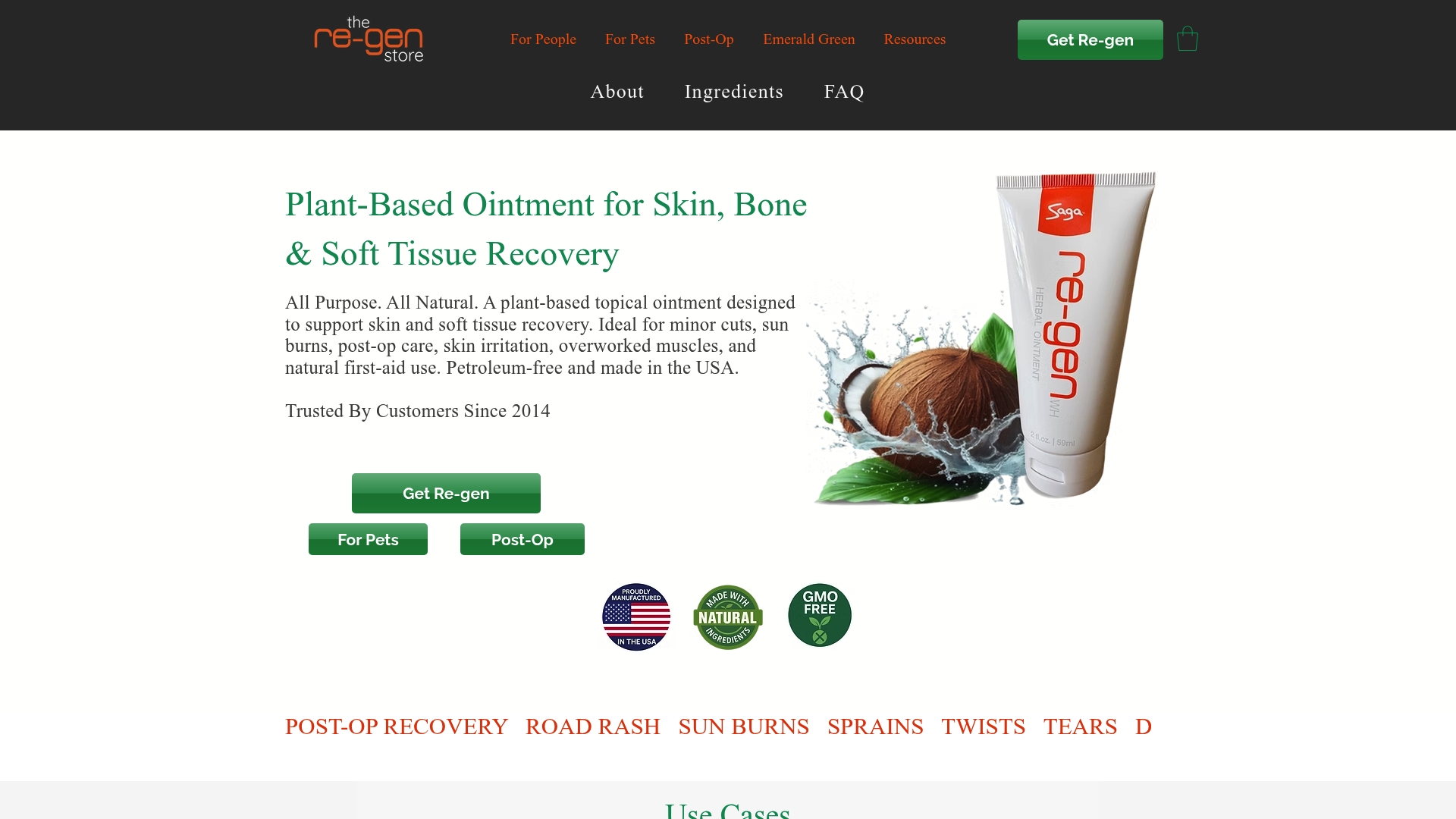
Re-gen from Theregenstore is a petroleum-free, plant-based regenerative ointment formulated to support skin and soft tissue recovery. For readers managing a non-infected nose piercing bump, it offers a chemical-free alternative to conventional ointments, applied after the saline routine as a supportive adjunct.
What Re-gen offers:
Petroleum-free and synthetic-chemical-free formulation
Designed to soothe irritation and support the skin’s natural recovery process
Suitable for use after saline cleaning and drying, once the area is confirmed non-infected
Available in multiple sizes through Theregenstore’s online store
Re-gen is not a treatment for active infection. Use it as a gentle, supportive step in your aftercare routine. If you have plant-based allergies, patch-test before applying near the piercing site.
Ready to add a plant-based regenerative ointment to your piercing care routine? Visit Theregenstore to learn more and order directly.
Sources
This article is general information, not a substitute for advice from a qualified doctor. Consult a qualified healthcare professional about your own circumstances before acting on anything here.
FAQ
How do I get rid of a nose piercing bump fast?
Start sterile saline rinses twice daily and apply a warm compress after each rinse. Many irritation bumps show visible improvement within 2–3 days of consistent care, with significant reduction over 2–6 weeks.
How long does a nose piercing bump last?
Irritation bumps typically resolve within 2–6 weeks with correct saline care. Hypertrophic scars can take 2–6 months and may need professional treatment; keloids often require medical intervention and can persist longer without it.
What cream can I put on a nose piercing bump?
Sterile saline is the safest first-line option. A petroleum-free, plant-based ointment like Re-gen from Theregenstore can be used as an adjunct after saline care on non-infected bumps. Avoid over-the-counter antibiotic ointments for non-infected irritation, and consult a clinician before using prescription topicals.
Should I take out my piercing if I have a bump?
Generally, no. The NHS advises against removing jewelry if infection is suspected, because closing the channel can trap bacteria inside. Leave the jewelry in and consult a piercer or doctor instead.
What causes a bump to keep coming back?
Recurring bumps usually point to an ongoing source of irritation: the wrong jewelry material (nickel allergy), a post that is too short, or repeated friction from glasses, masks, or sleeping position. Addressing the root cause, not just the bump itself, is what stops the cycle.
Recommended
Comments