
Split Knuckles Treatment: Fast Home Care Guide

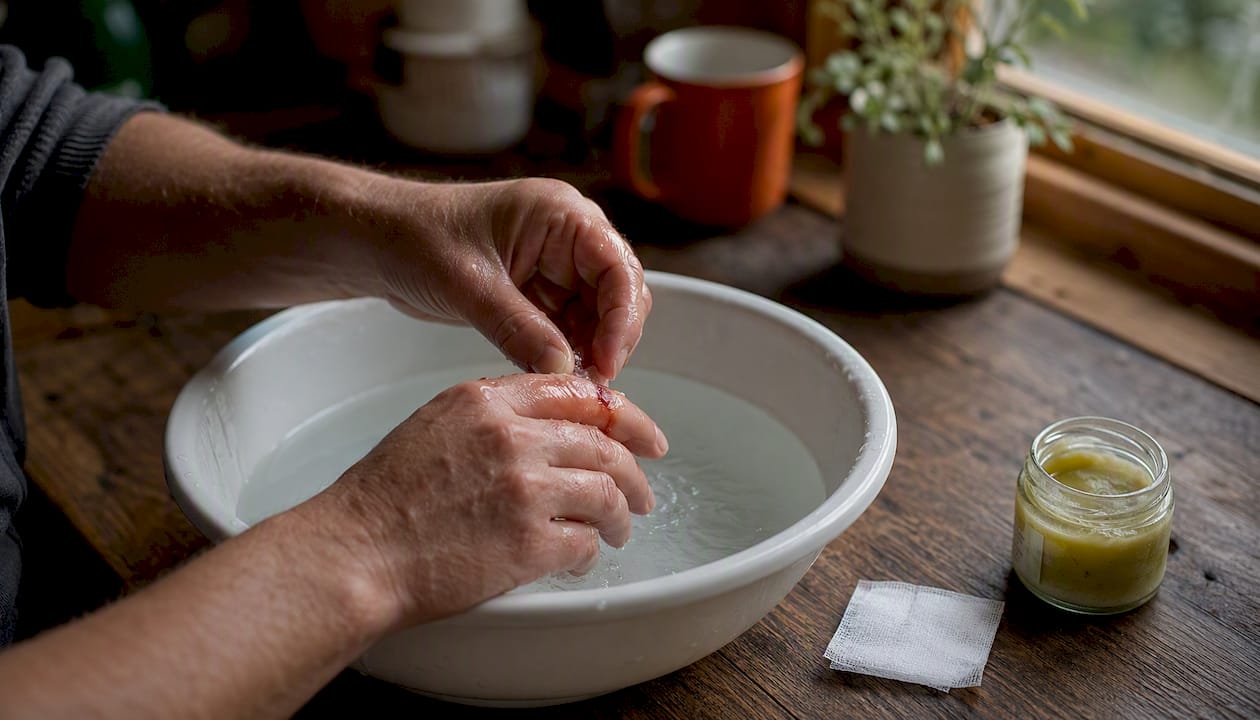
Stop the bleeding, clean the wound, and protect it. That is the core of split knuckles treatment in the first few minutes. Whether your knuckle cracked from dry winter skin or took a hard impact, the steps below will help you control the injury, reduce infection risk, and decide whether you need a clinician.
First 30 minutes: your action plan
Apply firm, direct pressure with a clean cloth for 5–10 minutes to stop bleeding.
Rinse the wound gently under clean running water or saline for at least 60 seconds.
Pat dry and apply a thin layer of antibiotic or plant-based ointment, then cover with a sterile adhesive strip.
Assess for red flags (see below) and go to urgent care if any are present.
Go to urgent care now if you notice:
Visible bone or tissue through the wound
Severe deformity or the finger sits at an abnormal angle
Uncontrollable bleeding after 10 minutes of pressure
Numbness, tingling, or inability to bend the finger
Signs of infection: spreading redness, warmth, pus, or fever
Pro Tip: If you hit someone or something with a closed fist and the skin broke over a knuckle, treat it as a potential open fracture and seek care the same day. “Fight bite” wounds carry a high infection risk and need professional cleaning.
Key Takeaways
Consistent occlusive wound care, applied within the first hour and repeated overnight, resolves most superficial split knuckles within one to two weeks.
Point | Details |
Stop, clean, protect | Apply pressure, rinse for 60 seconds, cover with ointment and a sterile dressing immediately. |
Know the fracture signs | Deformity, bone-level pain, or inability to bend the finger means get an X-ray, not home care. |
Bruises heal in 1–2 weeks | Rest, ice, and limited use resolve most bruised knuckles; fractures take 4–6 weeks or longer. |
Overnight occlusion works | Apply ointment, cover with a non-stick dressing, and wear a nitrile glove overnight for faster healing. |
Re-gen for superficial splits | Theregenstore’s plant-based Re-gen ointment supports dry skin knuckle care as a chemical-free topical option. |
Table of Contents
How to treat split knuckles: step-by-step first aid
Treating split knuckles correctly in the first hour reduces your infection risk and sets the wound up to heal cleanly. Follow these steps in order.
Wash your hands before touching the wound. Use soap and water for at least 20 seconds.
Apply direct pressure with a clean cloth or sterile gauze. Hold firm for 5–10 minutes without peeking. Lifting the cloth too soon restarts the clotting process.
Rinse the wound under clean running tap water or saline for at least 60 seconds. This removes debris and bacteria more effectively than a quick splash.
Avoid repeated hydrogen peroxide use. A single application can help on a heavily contaminated wound, but repeated use damages new tissue and slows healing. Clean water is safer for ongoing care.
Apply a topical ointment. A thin layer of petrolatum (such as Vaseline), a standard antibiotic ointment, or a plant-based alternative like Re-gen keeps the wound moist and creates a barrier against bacteria.
Cover with a sterile dressing. An adhesive bandage works for small splits. For larger wounds, use a non-adherent gauze pad secured with medical tape.
Consider liquid bandage for shallow, painful cracks that keep reopening. Products like New-Skin seal the fissure and allow movement. Note: they sting on application and are not appropriate for deep or infected wounds.
Buddy tape for associated finger injuries. If the finger feels unstable but you do not suspect a fracture, taping it to the adjacent finger provides light support. Do not tape tightly enough to cut off circulation.
Pro Tip: For overnight healing, apply a generous layer of occlusive ointment to the knuckle, cover with a non-stick dressing, and wear a nitrile glove over it while you sleep. Nitrile holds moisture better than cotton and does not absorb the ointment away from the skin.
How to tell a bruise or cracked skin from a broken knuckle
Not every painful, swollen knuckle is fractured, but the consequences of missing a fracture are serious enough that the distinction matters. Here is how to read the signs.
Superficial skin fissure (cracked skin)
The skin is split but the knuckle moves normally and without deep bone pain.
Swelling is minimal or absent.
Pain is sharp and surface-level, concentrated at the crack itself.
No deformity or change in finger alignment.
Bruised knuckle
Discoloration (purple, blue, or yellow as it fades) appears within hours.
Swelling is moderate; the joint is tender to touch.
You can still bend the finger, though it may be stiff and uncomfortable.
Bruised knuckles often resolve in 1–2 weeks with rest, ice, and limited use.
Suspected fracture: signs that require imaging
A “pop” or crack sound at the moment of injury.
Visible deformity, rotation, or shortening of the finger.
Severe swelling that develops rapidly.
Pain directly over the bone (not just the skin surface) when you press along the finger.
Inability to fully straighten or bend the finger.
Numbness or tingling in the fingertip.
A physical exam combined with X-ray confirms fracture location and severity. Do not rely on “I can move it” as proof there is no fracture. Many non-displaced fractures allow some movement.
Open fracture warning. When the skin is broken directly over the bone after a high-impact injury, treat it as a potential open fracture. These wounds carry a high risk of deep infection, including osteomyelitis. Go to an emergency room, not an urgent care clinic.
What clinicians may do for broken or badly split knuckles
Treatment depends on whether the fracture is displaced, whether the joint surface is involved, and whether the skin is intact. Here is a summary of the main clinical approaches.
Treatment pathways
Closed reduction: The clinician manually realigns the bone without surgery. This is used for displaced fractures that are not severely comminuted and do not involve the joint surface.
Immobilization: Splinting, casting, or buddy taping stabilizes the fracture while bone heals. Stable, non-displaced fractures are often managed this way alone.
Open reduction with internal fixation (ORIF): Surgery using wires or plates to hold the bone in position. Used when displacement risks joint deformity or permanent loss of function. Peer-reviewed hand-surgery literature supports this approach for unstable or severely displaced fractures.
Factors that guide the clinician’s choice include displacement, joint-surface involvement, open versus closed fracture status, and the number of knuckles affected. Medical News Today’s clinical overview notes that surgery with wires or plates is reserved for severe or displaced fractures.
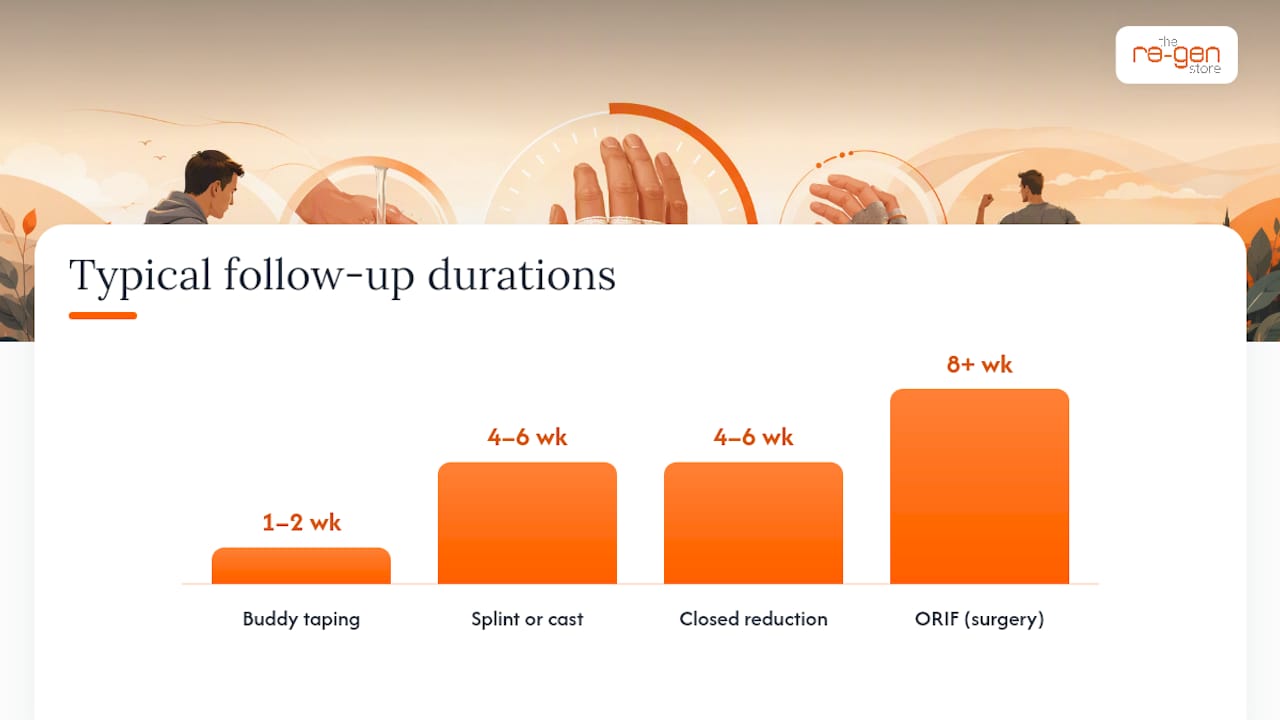
Treatment | Purpose | Typical follow-up |
Buddy taping | Stabilize minor, non-displaced fracture | 1–2 weeks; re-evaluate |
Splint or cast | Immobilize stable fracture | 4–6 weeks; X-ray at 2 weeks |
Closed reduction | Realign displaced fracture | 4–6 weeks immobilization |
ORIF (surgery) | Fix unstable or displaced fracture | 8+ weeks; hand therapy likely |
At the emergency visit, expect: an X-ray, a tetanus status check, thorough wound cleaning if the skin is broken, and possible oral antibiotics if contamination is a concern.
Practical wound care for split and cracked knuckles at home
Once you have ruled out a fracture or received clinical clearance, consistent home care is what drives healing. Here is a structured approach.
Cleaning protocol
Rinse with clean tap water or saline once or twice daily. A gentle antiseptic like dilute povidone-iodine is acceptable for a single initial clean on a contaminated wound, but plain water is safer for repeated use. If the wound is deep, has visible debris that will not rinse out, or shows signs of infection, seek in-clinic irrigation rather than attempting to clean it yourself.
Dressing options
Sterile adhesive strips for small, shallow splits.
Non-adherent gauze (such as Telfa pads) for larger wounds; these lift off without pulling new tissue.
Waterproof bandages or a waterproof cover when washing dishes or showering.
Change dressings once daily or whenever they become wet or soiled.
Topical products: what the evidence says
Occlusives are the workhorse of knuckle skin repair. Petrolatum (Vaseline) seals moisture in and creates a physical barrier. Thick occlusives and overnight glove occlusion are more effective than daytime-only application for healing fissures. Standard antibiotic ointments add antimicrobial coverage for wounds at higher infection risk.
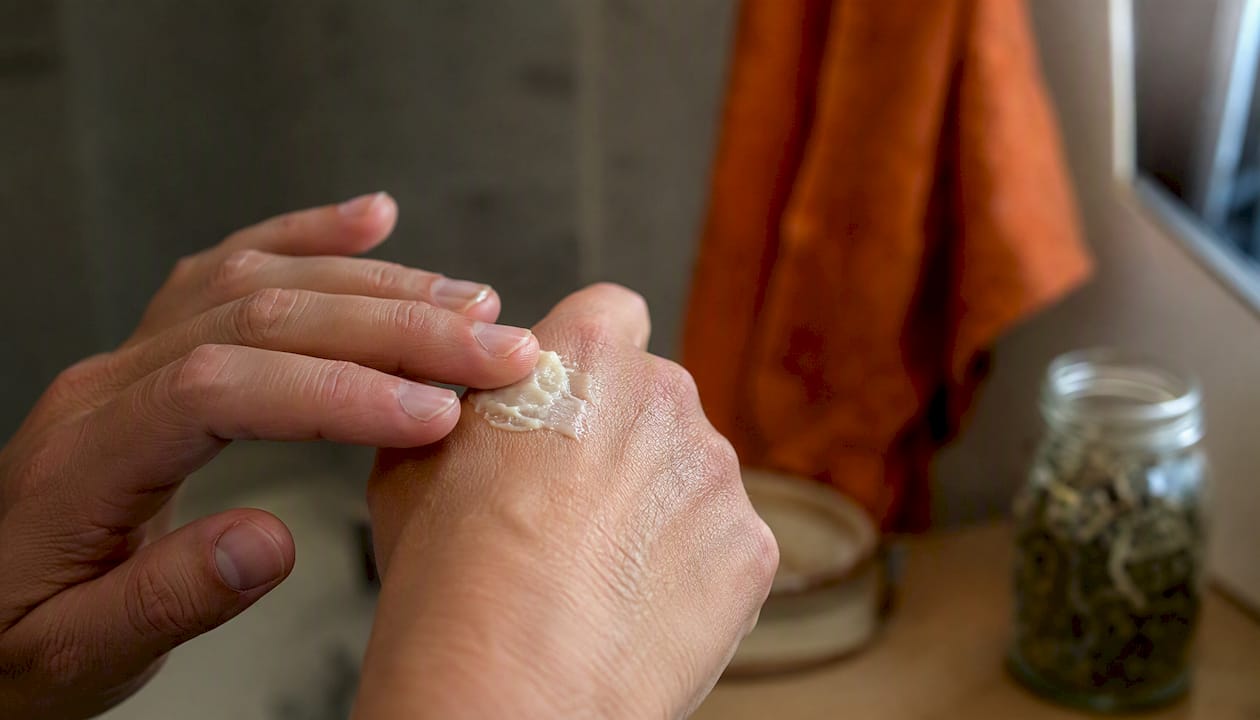
Plant-based ointments like Re-gen work on a similar occlusive principle and may deliver botanical anti-inflammatory compounds. Research on plant-based topicals shows they can support skin repair through occlusion and botanical activity, though comparative clinical evidence versus standard antibiotic ointments remains limited. For superficial splits and dry skin knuckle care, Re-gen is a reasonable option. Do not use any topical ointment on deep open wounds, suspected open fractures, or wounds showing active infection without clinician guidance first.
Product type | Best use | Caution |
Dry, cracked skin; overnight occlusion | Not antimicrobial; not for infected wounds | |
Antibiotic ointment | Shallow wounds with infection risk | Possible contact allergy (neomycin) |
Superficial splits; dry skin repair | Patch-test first; not for deep wounds | |
Liquid bandage | Painful, shallow cracks that reopen | Stings; avoid on deep or infected wounds |
For overnight healing, layer a thin moisturizer (one containing ceramides or glycerin) first, then seal with an occlusive ointment. See how ointments support injury recovery for a deeper look at the mechanism.
Pro Tip: Apply your ointment within 30 seconds of rinsing the wound while the skin is still slightly damp. The moisture trapped under the occlusive layer is what does the work.
Managing pain and realistic healing timelines
Pain from a split knuckle is usually sharpest in the first 24–48 hours and eases as the wound closes and inflammation settles. Here is what to expect and how to manage it safely.
OTC pain relief options
Acetaminophen (Tylenol): Effective for mild to moderate pain. Follow label dosing; do not exceed 3,000 mg per day if you drink alcohol regularly.
NSAIDs (ibuprofen, naproxen): Reduce both pain and inflammation. Take with food. Avoid if you have kidney issues, are on blood thinners, or have a history of GI bleeding. Follow label guidance or your clinician’s instructions.
Ice: Apply a cloth-wrapped ice pack for 15–20 minutes every 1–2 hours in the first 24 hours to reduce swelling. Do not apply ice directly to broken skin.
Healing timelines
Injury type | Typical healing range | Check progress at |
Superficial skin fissure | Days to 2 weeks | Day 3, Day 7 |
Bruised knuckle | 1–2 weeks | Day 3, Day 7 |
Non-displaced fracture | 4–6 weeks | Week 2 (X-ray), Week 4 |
Displaced fracture or post-surgery | 8+ weeks | Per clinician schedule |
Skin fissures that have not improved after one week of consistent wound care, or any wound where pain is increasing rather than decreasing, need a clinician’s evaluation. Increasing pain, warmth, and swelling after the first 48 hours are the clearest signals of infection or, in a fracture, possible non-union.
A bruised knuckle often resolves in about 1–2 weeks with rest, ice, and conservative care. A fracture takes significantly longer, and rushing return to activity is the most common reason healing stalls.
Red flags: when to get urgent or specialist care
Some signs mean self-care is not enough. Use this checklist to decide your next step.
Go to the emergency room now:
Visible bone or tissue through the wound
Uncontrollable bleeding after 10 minutes of direct pressure
Severe deformity or the finger is rotated or shortened
Numbness or complete loss of movement in the finger
Skin broken directly over the knuckle after a punch or impact (open fracture risk)
Go to urgent care or your doctor within 24 hours:
Moderate swelling that is worsening, not improving
Pain directly over the bone that does not ease with OTC analgesics
A wound that will not stay closed or keeps reopening
Schedule a clinic or hand specialist visit if:
Spreading redness, warmth, or red streaks moving up the hand
Pus or cloudy discharge from the wound
Fever above 100.4°F alongside a hand wound
No improvement after 7 days of home wound care
Stiffness or limited range of motion persisting beyond 2 weeks
What to bring to your visit: a photo of the injury taken at the time it happened, your tetanus vaccination history, a list of current medications, and any allergy information. Tetanus status is routinely checked for open wounds; if your last booster was more than 5 years ago, you may need one.
For fractures with joint involvement or persistent instability, a hand surgeon or orthopedic specialist is the appropriate referral. Imaging is required before any specialist can determine whether surgical fixation is needed.
How to prevent recurrence and care for your hands long-term
Knuckles re-split most often because the skin never fully recovered its barrier function between injuries. A consistent daily routine closes that gap.
Daily skin care
Use a mild, fragrance-free cleanser. Harsh soaps strip the skin’s natural oils and accelerate cracking.
Wash with lukewarm water, not hot. Hot water removes protective lipids faster.
Apply moisturizer within 30 seconds of washing while skin is still slightly damp. Frequent handwashing without immediate re-moisturizing raises the risk of dermatitis and fissures. Look for formulas containing ceramides, glycerin, or petrolatum.
At night, apply a thick occlusive ointment and wear lightweight gloves to lock in moisture while you sleep.
Work and home protection
Wear nitrile gloves for wet work (dishes, cleaning, gardening). Prolonged water exposure degrades the skin barrier as much as harsh soap.
Use insulated gloves outdoors in cold weather. Cold, dry air pulls moisture from the skin surface rapidly.
Apply a barrier cream before repetitive manual tasks. Products containing dimethicone create a physical shield between skin and irritants.
Avoid repetitive impact on the knuckles during the healing period.
Environmental adjustments
Run a humidifier indoors during winter months. Indoor heating drops relative humidity sharply, and dry air accelerates skin moisture loss.
Reduce alcohol-based hand sanitizer use when it is safe to do so. Repeated cleansing and sanitizing degrades the skin barrier and increases fissure risk.
Keep nails trimmed and cuticles moisturized. Torn cuticles create entry points for bacteria near the knuckle.
For a complete routine on healing dry, cracked skin naturally-naturally/), Theregenstore’s step-by-step guide covers product layering and ingredient choices in detail.
How this guidance was compiled and what it is based on
This article draws on clinician-reviewed and peer-reviewed sources to give you accurate, practical guidance.
Primary sources used:
NIH/NCBI peer-reviewed hand-surgery literature on fracture management and fixation
NIH/NCBI research on plant-based topical ointments and wound healing
Medical News Today clinical overview of broken knuckle symptoms, diagnosis, and treatment
Nebraska Medicine dermatology guidance on chapped hands and liquid bandage use
Slocum Center orthopedic guidance on knuckle fracture diagnosis
Borealis Dermatology on occlusion techniques for cracked skin
Product expertise and usage guidelines from Theregenstore
Medical disclaimer: This article is general health information, not a substitute for professional medical advice. If you have red-flag symptoms, an open wound, or a suspected fracture, consult a clinician before relying on home care alone.
Content was informed by clinician-reviewed sources and product expertise from Theregenstore. For a rehabilitation workflow after injury that covers recovery timelines and hand therapy steps, the Nortex Tissue Regeneration guide is a useful reference.
Why plant-based occlusion is worth taking seriously
Most people reach for whatever is in the medicine cabinet when a knuckle splits. That usually means a standard antibiotic ointment or nothing at all. Neither is wrong, but the choice deserves more thought than it typically gets.
The evidence on wound healing consistently points to one mechanism as the most important: keeping the wound moist and protected. Occlusion, not the specific active ingredient, is what drives the majority of healing in superficial skin fissures. That is why petrolatum, which has no antimicrobial properties at all, performs so well in studies. The barrier it creates prevents transepidermal water loss and keeps the wound environment stable enough for the skin to repair itself.
Plant-based ointments operate on the same principle, with the addition of botanical compounds that may support the inflammatory phase of healing. The clinical evidence for specific botanicals varies, and no plant-based product should be presented as equivalent to a prescription antibiotic for infected wounds. But for the typical split knuckle, which is a superficial fissure in dry, stressed skin, the occlusive function is what matters most, and a well-formulated plant-based ointment can deliver that.
What I find underappreciated is how much the application routine matters relative to the product choice. Applying any ointment once and covering it with a bandage is less effective than the overnight occlusion method: a generous layer, a non-stick dressing, and a glove to hold it all in place while you sleep. That routine, done consistently for three to five nights, resolves most superficial knuckle splits faster than sporadic daytime-only application of a “better” product.
The red-flag list in this article is not there to alarm you. It is there because the gap between a superficial fissure and an open fracture is not always obvious at first glance, and treating one like the other is where people get into trouble.
Re-gen ointment: a plant-based option for split knuckle care
For superficial knuckle splits and dry, cracked skin, Re-gen from Theregenstore is a plant-based, chemical-free alternative to conventional antibiotic ointments. It is formulated to support skin and soft tissue recovery through occlusion and botanical ingredients, without the synthetic chemicals found in standard first-aid products.

Re-gen is designed for superficial wounds, cuts, dry skin fissures, and minor abrasions. It is not a substitute for clinical care when you have an open fracture, a deep wound, or an active infection. Patch-test on a small area first if you have sensitive skin or known botanical allergies.
For readers who prefer a petroleum-free, plant-based wound treatment over conventional options, Re-gen is available directly through Theregenstore. Visit the Re-gen product page to review ingredients, sizing options, and usage guidance before you order.
Sources
Use these sources to verify specific details, check tetanus schedules, or research specialist referral criteria.
For tetanus booster schedules, check the CDC immunization schedule or confirm with your primary care provider.
FAQ
How do you heal split knuckles fast?
Clean the wound, apply an occlusive ointment (petrolatum or a plant-based alternative like Re-gen), and cover it with a sterile dressing. Repeat the overnight occlusion method, with ointment and a nitrile glove, for three to five nights to accelerate closure.
How long does it take for split knuckles to heal?
Superficial skin fissures typically close within days to two weeks with consistent wound care. Bruised knuckles often resolve in 1–2 weeks with rest and ice. Non-displaced fractures take 4–6 weeks, and displaced fractures or post-surgical recovery can require 8 weeks or more.
Why does my knuckle keep splitting in the same spot?
Repeated splitting usually means the skin barrier has not fully recovered between injuries. Dry air, frequent handwashing without moisturizing, and cold weather all thin the skin over time. A daily routine of fragrance-free cleanser, immediate moisturizer after washing, and overnight occlusion breaks the cycle.
Why does a knuckle split down the middle?
The skin over knuckles is under constant mechanical stress from bending and gripping. When the skin is dry or the barrier is compromised, that stress concentrates at the thinnest point, which is often the center of the joint crease, causing a fissure. Cold, dry conditions and frequent water exposure accelerate this process.
When should I see a doctor for a split knuckle?
See a doctor if you have visible bone, severe deformity, uncontrollable bleeding, numbness, or inability to move the finger. Also seek care if a superficial wound shows no improvement after seven days, or if you develop spreading redness, pus, or fever.
Recommended
Comments