
Natural Remedies for Cuts: Heal Faster at Home

Natural remedies for cuts are plant-based and nutrition-supported approaches that help your body repair skin tissue by maintaining a clean, moist wound environment while avoiding harsh chemicals that damage regenerating cells. Honey, aloe vera, and turmeric are among the most research-supported options for home wound care. When you combine these topical treatments with proper cleansing and targeted nutrition, minor cuts heal faster and with less scarring than wounds left to dry out or treated with chemical antiseptics. This article covers the full picture: step-by-step care, a comparison of top natural topicals, the nutrition your body needs, and clear signals that tell you when to see a doctor.
What are the best natural remedies for cuts?
The most effective natural wound care combines three things: a clean wound bed, a consistently moist healing environment, and plant-based topicals with documented antibacterial or anti-inflammatory properties. Each element supports a different phase of tissue repair, from stopping bleeding to rebuilding skin.
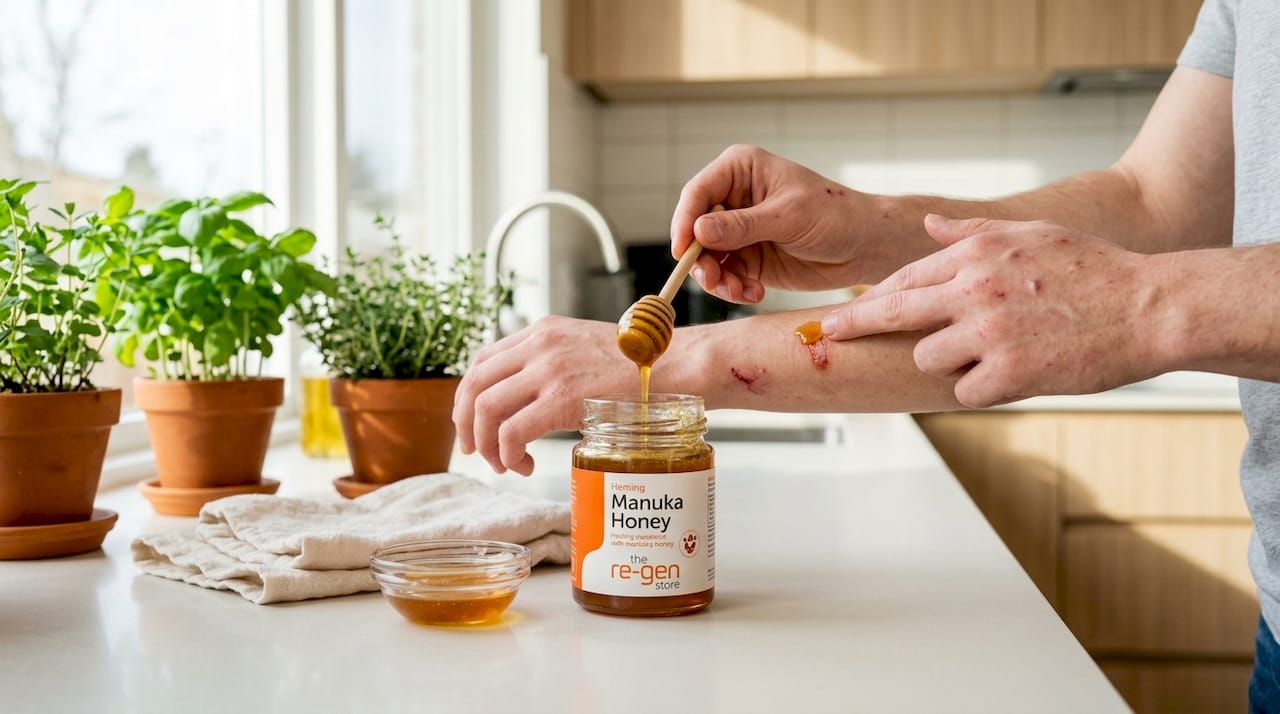
Manuka honey is the most clinically studied natural topical for wound care. Its methylglyoxal compound delivers unique antibacterial effects that standard honey cannot replicate. For home use, choose medical-grade Manuka honey and apply a thin layer directly to the wound before covering with a breathable dressing.
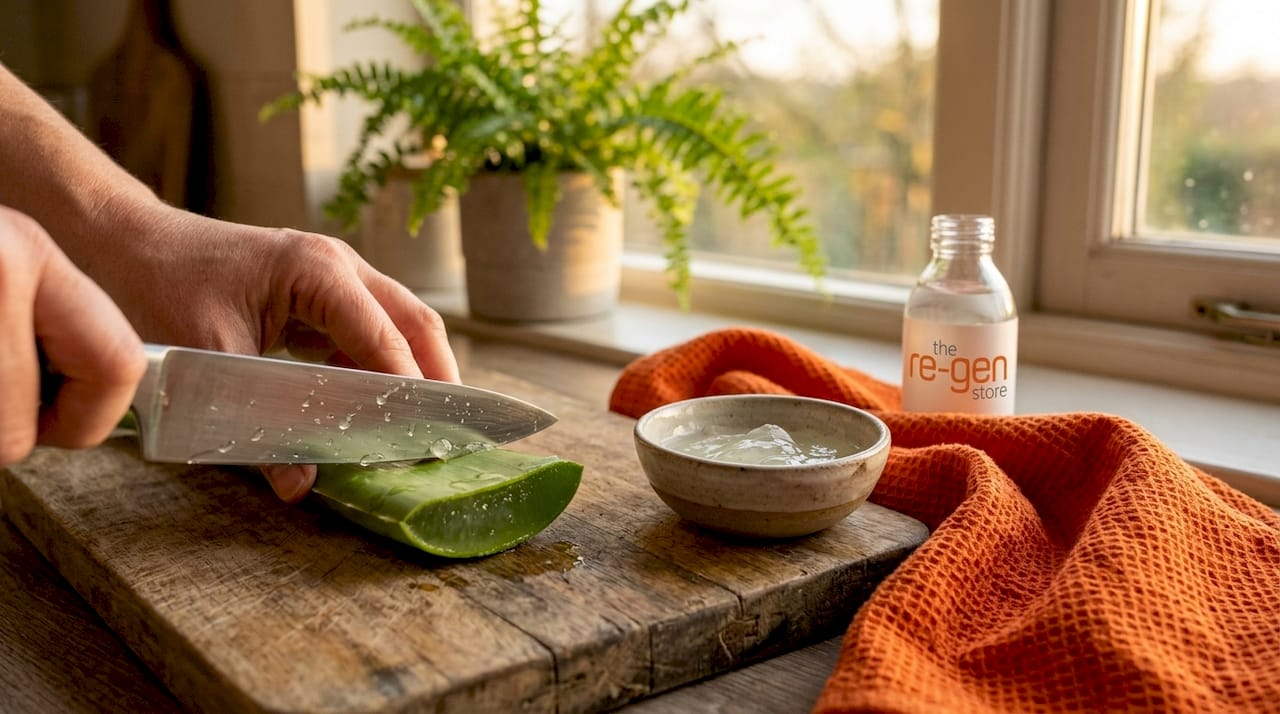
Aloe vera gel, taken directly from a fresh leaf, soothes inflammation and keeps the wound surface hydrated. It works especially well on shallow cuts and abrasions where the skin surface is irritated rather than deeply broken.
Turmeric paste (turmeric powder mixed with a small amount of coconut oil or water) provides antimicrobial coverage and reduces localized inflammation. Apply it to the wound edge rather than directly inside a deep cut, since it can stain tissue and make wound assessment harder.
Tea tree oil and calendula extract both reduce bacterial load on the skin surface. Tea tree oil must always be diluted in a carrier oil before touching broken skin. Calendula, used as a cream or infused oil, is gentler and well-tolerated even on sensitive skin.
Remedy | Primary benefit | How to use | Caution |
Manuka honey | Antibacterial, promotes tissue repair | Apply thin layer, cover with dressing | Use medical-grade only |
Aloe vera | Soothes inflammation, hydrates | Apply fresh gel directly | Avoid deep puncture wounds |
Turmeric paste | Antimicrobial, reduces swelling | Apply to wound edges | Stains skin and fabric |
Tea tree oil | Reduces surface bacteria | Dilute in carrier oil first | Never apply undiluted |
Calendula extract | Anti-inflammatory, gentle | Apply as cream or infused oil | Avoid if allergic to daisies |
Pro Tip: Never apply essential oils like tea tree directly to an open wound without diluting them first. A ratio of one drop of tea tree oil to one teaspoon of coconut or olive oil is a safe starting point.
How to treat cuts naturally at home: step-by-step care
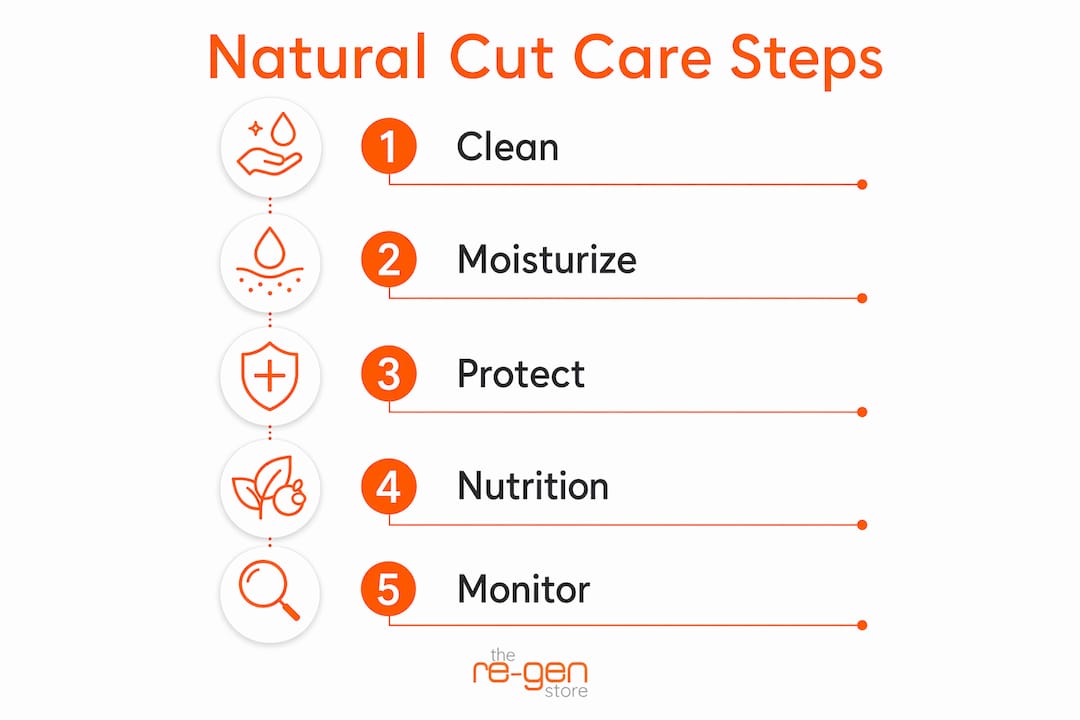
A consistent care routine is what separates a cut that heals cleanly in five days from one that becomes infected or leaves a scar. Follow these steps every time you treat a minor wound at home.
Stop the bleeding. Apply direct pressure with a clean cloth for 5 to 10 minutes. Avoid lifting the cloth to check progress, since disrupting the clot restarts the bleeding cycle.
Clean the wound gently. Rinse under cool running water, then wash with soap and water for about five minutes. This lowers infection risk and removes debris that causes dark spots as the skin heals.
Skip the hydrogen peroxide. Harsh chemical antiseptics like hydrogen peroxide and rubbing alcohol kill bacteria but also destroy the new cells your body is building. Soap and water does the job without the tissue damage.
Apply your chosen natural topical. Manuka honey, aloe vera gel, or a plant-based ointment all help maintain the moist environment that speeds repair.
Cover with a breathable dressing. A moist wound environment under an appropriate dressing promotes faster healing and reduces scarring compared to wounds left exposed to air.
Change the dressing once daily. More frequent changes cool the wound surface and slow epithelial migration, the process by which new skin cells move across the wound to close it.
Leave the scab alone. Picking disrupts the repair process and significantly increases scarring risk.
Pro Tip: Change dressings at room temperature and warm the new dressing in your hands for a few seconds before applying. Cold dressings lower wound temperature and slow the healing process.
How does nutrition support natural healing of cuts?
Your body cannot rebuild tissue without the right raw materials. Protein intake at every meal is the single most important nutritional factor in wound recovery. Amino acids from protein are the building blocks of collagen, the structural protein that closes and strengthens the wound.
Beyond protein, several micronutrients play direct roles in each stage of healing:
Vitamin C supports collagen synthesis and immune function. Sources include bell peppers, citrus fruits, and strawberries.
Vitamin A regulates cell growth and skin repair. Find it in sweet potatoes, carrots, and leafy greens.
Zinc accelerates tissue regeneration and reduces inflammation. Pumpkin seeds, beef, and chickpeas are strong sources.
Copper works alongside zinc to build connective tissue. Cashews, lentils, and dark chocolate provide it.
B-complex vitamins support energy metabolism at the cellular level, keeping repair processes running efficiently.
Hydration matters just as much as food. Drinking at least eight cups of fluid daily keeps blood volume up, which means oxygen and nutrients reach the wound site faster. Dehydration is one of the most overlooked reasons minor cuts heal slowly.
Pro Tip: Add a palm-sized portion of protein, such as eggs, Greek yogurt, or canned fish, to every meal while your wound is healing. This simple habit covers your amino acid needs without requiring any meal planning.
Malnutrition, even mild deficiency in a single nutrient like zinc, can delay all wound healing stages. If your diet is restricted or you are recovering from a larger wound, a short course of a broad-spectrum multivitamin is a reasonable support measure.
When should you stop using home remedies and see a doctor?
Most minor cuts respond well to natural care at home. Some wounds, though, signal that the body needs more help than plant-based topicals can provide.
Watch for these warning signs and seek medical attention if any appear:
Red streaks spreading outward from the wound edge
Fever above 100.4°F alongside a wound that is worsening
Increasing swelling, warmth, or pus after the first 48 hours
A wound that will not stop bleeding after 10 minutes of direct pressure
Deep cuts, wounds with jagged edges, or injuries that expose fat or muscle
Wounds that need stitches should ideally be closed within 6 to 8 hours of the injury. Waiting longer raises infection risk significantly and may mean the wound can no longer be sutured.
Chronic stress and nicotine also impair immune response and delay healing. If you smoke or are under sustained stress, your wound will take longer to close even with excellent topical care. This is worth factoring into your expectations and your monitoring schedule.
Key takeaways
Natural wound healing works best when cleanliness, moisture, plant-based topicals, and targeted nutrition work together from the first moment of injury.
Point | Details |
Clean gently, not aggressively | Soap and water for five minutes beats hydrogen peroxide every time. |
Keep the wound moist | A covered, moist wound heals faster and scars less than a dry, exposed one. |
Choose evidence-backed topicals | Manuka honey and aloe vera have the strongest research support among natural options. |
Nutrition drives repair | Protein at every meal and eight cups of fluid daily are non-negotiable for recovery. |
Know when to escalate | Red streaks, fever, or a wound needing closure require prompt medical attention. |
What I’ve learned from watching natural wound care work and fail
I have seen people get natural wound care exactly right and exactly wrong, often in the same week. The most common mistake is treating “natural” as a synonym for “harmless and unlimited.” Turmeric paste applied too thickly inside a deep cut, or undiluted tea tree oil on broken skin, can irritate tissue just as effectively as a chemical antiseptic. The mechanism is different, but the outcome is the same: delayed healing.
The other pattern I notice is people abandoning the routine too early. Natural topicals work through consistency. Manuka honey applied once and then forgotten does very little. Applied daily under a clean dressing for five to seven days, it creates a measurably better healing environment. The discipline of the routine matters as much as the remedy itself.
What I genuinely respect about plant-based wound healing is that it works with the body’s own repair mechanisms rather than overriding them. Moist dressings, gentle cleansing, and anti-inflammatory botanicals all support what your immune system is already doing. That alignment is why the results hold up in clinical research, not just in anecdote.
The limit I always communicate clearly: natural remedies are for minor wounds. A cut that is deep, gaping, or showing signs of infection is a medical situation. Knowing that boundary is not a failure of the natural approach. It is the mark of someone using it correctly.
— Kyle
Support your healing with plant-based wound care from Theregenstore
If you want a natural topical that goes beyond basic home remedies, Theregenstore offers Re-gen, a plant-based regenerative ointment formulated without petroleum, synthetic antibiotics, or harsh chemicals. It supports the moist healing environment that research consistently links to faster tissue repair and reduced scarring.

Re-gen is designed as a direct alternative to conventional antibiotic creams, using herbal ingredients to minimize infection risk while keeping regenerating tissue intact. You can explore the full range of petroleum-free wound treatments at Theregenstore, including spray formulations and options sized for travel or home first-aid kits. For anyone committed to natural healing, it is a practical upgrade from the kitchen-cabinet approach.
FAQ
What is the fastest natural remedy for a minor cut?
Manuka honey applied directly to a clean wound and covered with a breathable dressing is the most research-supported option for speeding natural healing. Its antibacterial properties reduce infection risk while maintaining the moist environment tissue repair requires.
Is hydrogen peroxide safe to use on cuts at home?
Hydrogen peroxide is not recommended for wound care. It damages the new cells your body produces to close the wound, slowing healing and increasing scarring risk. Soap and water for five minutes is the safer and more effective choice.
How often should I change the dressing on a cut?
Change dressings once daily under normal healing conditions. More frequent changes cool the wound surface and disrupt the repair process. If the dressing becomes soaked or visibly dirty, change it sooner.
Can diet really affect how fast a cut heals?
Yes. Protein, vitamin C, zinc, and hydration all directly support tissue repair. Eating protein at every meal and drinking at least eight cups of fluid daily gives your body the materials it needs to close and rebuild skin efficiently.
When does a cut need stitches instead of home care?
A cut needs medical attention if it is deep, gaping, will not stop bleeding after 10 minutes of pressure, or shows signs of infection like red streaks or fever. Wounds requiring closure heal best when treated within 6 to 8 hours of injury.
Recommended
Comments