
Pet Wound Healing Process: A Natural Care Guide

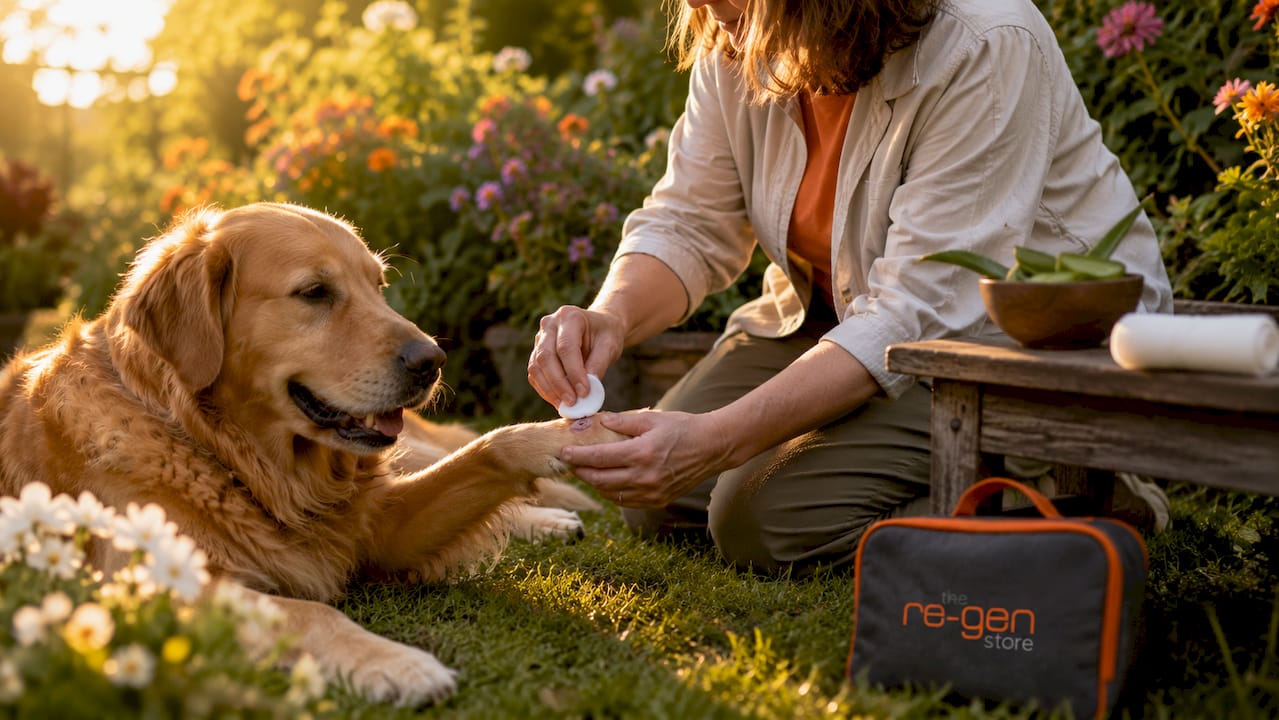
The pet wound healing process is a series of four sequential biological phases that restore damaged tissue and protect your pet from infection. Clinically, this is called wound healing by secondary intention when wounds close naturally without surgical closure. Understanding each phase helps you recognize what normal recovery looks like, apply the right natural treatments at the right time, and catch complications before they become serious. This guide walks you through every stage with practical, evidence-based steps you can take at home.
What are the four stages of the pet wound healing process?
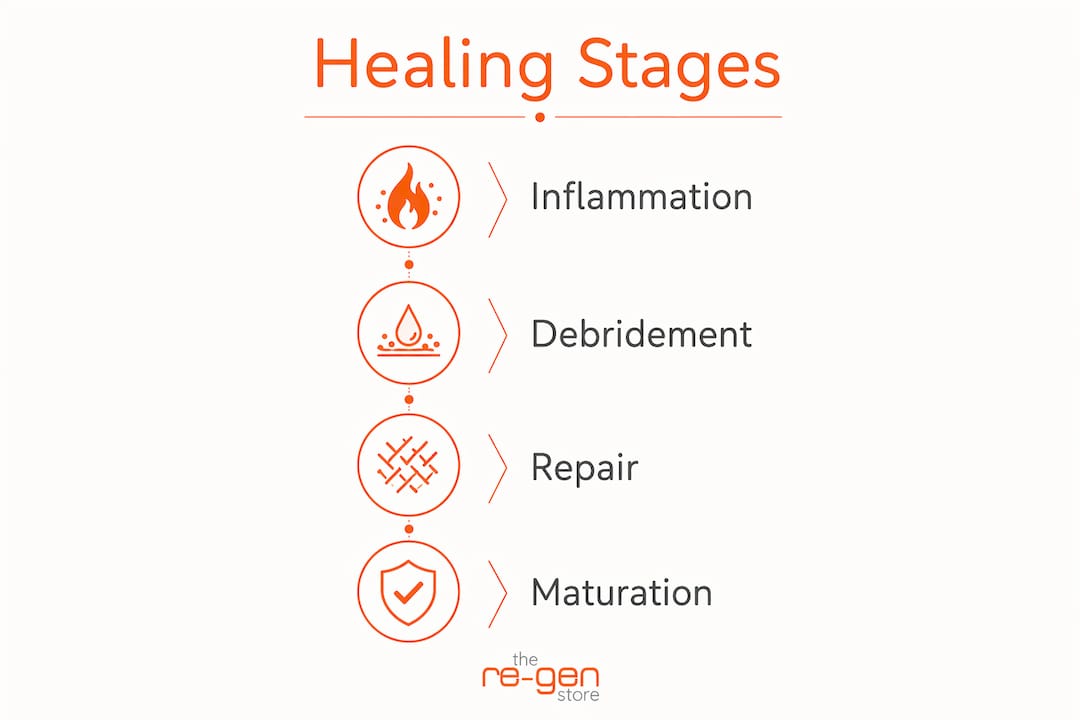
Every wound your pet experiences moves through the same four phases: inflammation, debridement, repair, and maturation. Each phase has a distinct biological purpose, and they must occur in sequence for healing to succeed.
Phase | Duration | Key Signs | Purpose |
Inflammation | 2–5 days | Redness, swelling, heat | Immune cells fight bacteria and clean the wound |
Debridement | Days 2–5 | Discharge, tissue sloughing | Dead tissue and bacteria are removed |
Repair (Proliferative) | Days 5–21 | New pink tissue forming | Collagen production and skin regrowth |
Maturation | Weeks to months | Scar fading, firming | Tissue remodeling and strength restoration |
Inflammation begins within 24 hours and typically lasts 2 to 5 days. You will see redness, warmth, and swelling around the wound. This is your pet’s immune system sending white blood cells to fight bacteria and prepare the wound bed for repair.
Debridement overlaps with inflammation. The body breaks down and removes dead tissue, bacteria, and debris. Lingering dead tissue prolongs inflammation and blocks the wound from advancing to the repair phase. This is why clean wound management matters so much in the first few days.
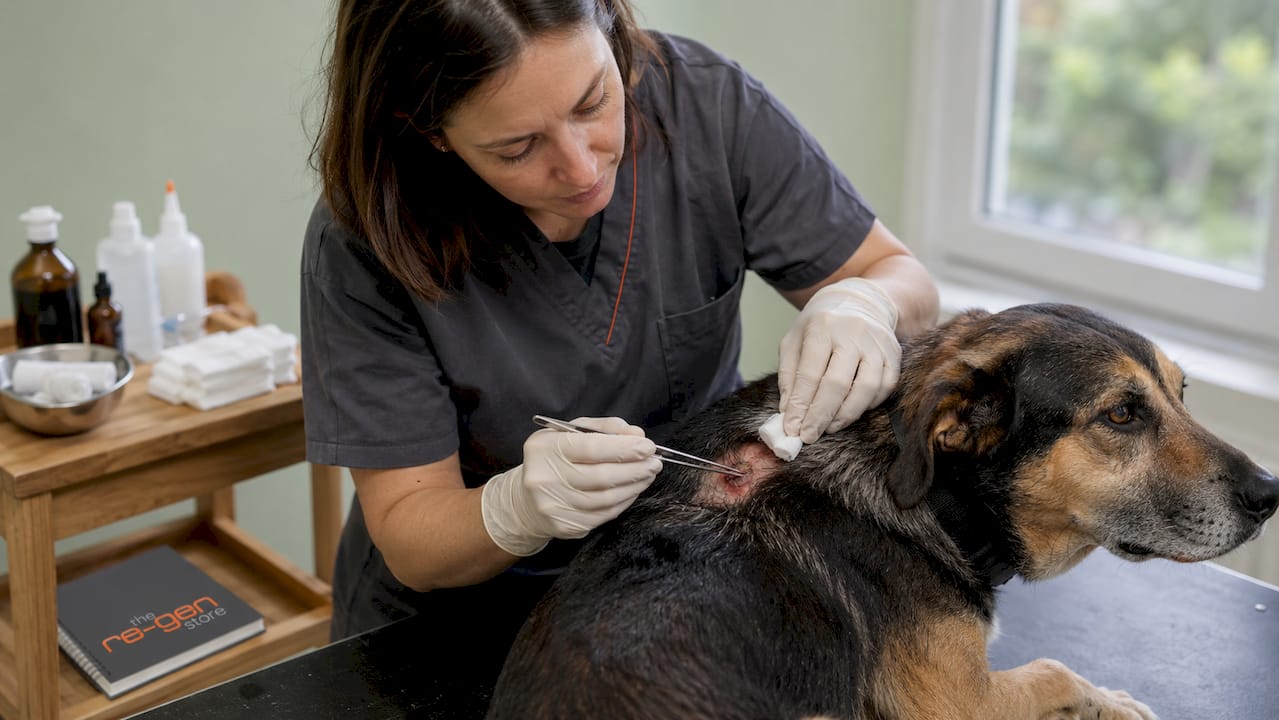
Repair is when you see visible progress. New granulation tissue forms, collagen fills the wound, and the skin edges begin to close. This phase can last up to three weeks depending on wound size and your pet’s age. Young pets under 6 months often heal faster through contraction because their myofibroblasts are more active than in adult animals.
Maturation is the final, longest phase. The scar strengthens and remodels over weeks to months. The wound may look healed on the surface while deeper tissue is still reorganizing.
How to support natural healing at home, phase by phase
Supporting your pet’s recovery naturally means matching your care to what the wound actually needs at each stage.
During inflammation (days 1–5):
Rinse the wound gently with a sterile saline solution to remove surface debris.
Do not use hydrogen peroxide or alcohol. Both damage healthy tissue and delay healing.
Apply a light, breathable bandage to protect the wound from licking and environmental contamination.
Restrict your pet’s activity to reduce stress on the wound site.
During debridement and repair (days 2–21):
Keep the wound environment moist. A moist wound environment supports epithelialization better than keeping wounds dry.
Apply medical-grade honey or aloe vera as a topical treatment. Both provide antibacterial and anti-inflammatory effects while maintaining moisture.
Change bandages regularly. Leaving a bandage on too long creates a damp, oxygen-poor environment that promotes bacterial growth.
Support healing from the inside with a protein-rich diet and fresh water. Collagen synthesis requires adequate protein and hydration.
During maturation:
Minimize scar disruption. Avoid picking at scabs or applying harsh topicals.
Continue monitoring for any signs of reopening or infection.
Gentle massage around the scar (not on open tissue) can support circulation.
Pro Tip: Over-bandaging is one of the most common mistakes pet owners make. Wounds need oxygen and moisture, not a sealed, airless wrap. Use breathable, non-stick dressings and change them every 24–48 hours.
For a broader look at natural wound care options that apply to both pets and people, Theregenstore has a detailed resource worth bookmarking.
Recognizing complications: when natural care is not enough
Not every wound heals on schedule. Knowing the warning signs of stalled healing or infection protects your pet from serious complications.
Signs that healing has stalled or infection has set in:
Persistent redness, swelling, or heat beyond 5 days
Pus or foul-smelling discharge
Wound edges pulling apart instead of closing
Your pet showing increased pain, lethargy, or fever
Pale, yellowish, or gray tissue in the wound bed
Healthy granulation tissue appears bright red or pink and slightly shiny. Pale, yellowish tissue signals infection or necrosis and requires professional debridement. You cannot treat necrotic tissue at home with natural remedies alone.
When to call your vet: If inflammation persists beyond 3–5 days without visible improvement, veterinary intervention is needed. Stalled inflammation blocks the proliferative phase entirely. No amount of home care will restart the process once it has become chronic.
Another complication to watch for is “proud flesh,” which is excessive granulation tissue that grows above the wound surface. It looks like a raised, fleshy mound and is more common in horses but can occur in dogs and cats. Proud flesh prevents normal skin closure and requires veterinary treatment.
Natural therapies that complement the healing process
Different healing phases have distinct biological needs. A single treatment approach rarely addresses all of them. Combining targeted natural therapies produces better outcomes than relying on one product alone.
Therapy | Primary Benefit | Best Phase |
Medical-grade honey | Antibacterial, moist environment | Inflammation, debridement |
Aloe vera gel | Anti-inflammatory, soothing | Inflammation, early repair |
Plant-based ointments | Moisture barrier, tissue support | Repair, maturation |
Low-level laser therapy (LLLT) | Improved circulation, reduced pain | Repair |
PEMF therapy | Cellular detox, reduced swelling | Inflammation, repair |
Ozone therapy | Oxygen delivery, antimicrobial | Debridement, repair |
Cold laser therapy, also called LLLT, improves blood flow and cellular energy to support tissue repair and reduce pain. It is increasingly available through integrative veterinary practices and is safe for most wound types. PEMF therapy supports cellular detoxification and reduces swelling, making it useful during the inflammatory phase. Ozone therapy delivers concentrated oxygen directly to the wound bed, which inhibits bacterial growth and accelerates tissue repair.
Natural treatments like honey and aloe vera are effective adjuncts, but they cannot replace physical wound management such as debridement. Think of them as support tools, not substitutes for proper wound cleaning and assessment.
Pro Tip: When choosing a plant-based topical for your pet, look for petroleum-free formulas with clearly listed ingredients. Petroleum-based products seal the wound surface and can trap bacteria underneath. Explore plant-based healing solutions to understand what ingredients actually support tissue recovery.
Key takeaways
The pet wound healing process requires phase-specific care: matching your treatment to the biological stage of healing produces faster, safer recovery than a one-size-fits-all approach.
Point | Details |
Four sequential phases | Inflammation, debridement, repair, and maturation each require different care strategies. |
Moist environment wins | Keeping wounds moist supports epithelialization better than keeping them dry. |
Watch for stalled healing | Inflammation lasting beyond 5 days signals a complication that needs veterinary attention. |
Natural therapies complement, not replace | Honey, aloe vera, and plant-based ointments support healing but cannot substitute for proper wound cleaning. |
Age affects healing speed | Pets under 6 months heal faster due to more active myofibroblasts driving contraction. |
What i have learned from watching pet owners navigate wound care
Most pet owners I have spoken with make the same two mistakes. They either do too much or too little. They pour hydrogen peroxide on a fresh wound because it “looks like it’s cleaning,” or they wrap the wound so tightly that no oxygen reaches the tissue. Both approaches work against the biology.
The most important shift in thinking is this: your job is not to heal the wound. Your job is to create the conditions where your pet’s body can heal itself. That means clean, moist, protected, and monitored. It means resisting the urge to change the bandage every few hours out of anxiety. It means knowing that some redness and swelling in the first 48 hours is not a crisis. It is the immune system doing exactly what it should.
The second thing I have seen consistently is that pet owners wait too long before calling a vet. If the wound looks worse at day 5 than it did at day 2, that is not normal. That is a signal. Chronic wounds are far harder to treat than acute ones. Catching a stalled wound early saves your pet pain and saves you money. Combine your natural care approach with regular visual checks and a low threshold for professional input. That combination works better than either approach alone.
For a deeper look at holistic wound care principles that apply across species, the Theregenstore resource library is worth exploring.
— Kyle
Natural pet wound care products from Theregenstore
Theregenstore offers a line of petroleum-free, plant-based wound treatments designed to support every phase of the healing process for pets and people alike.
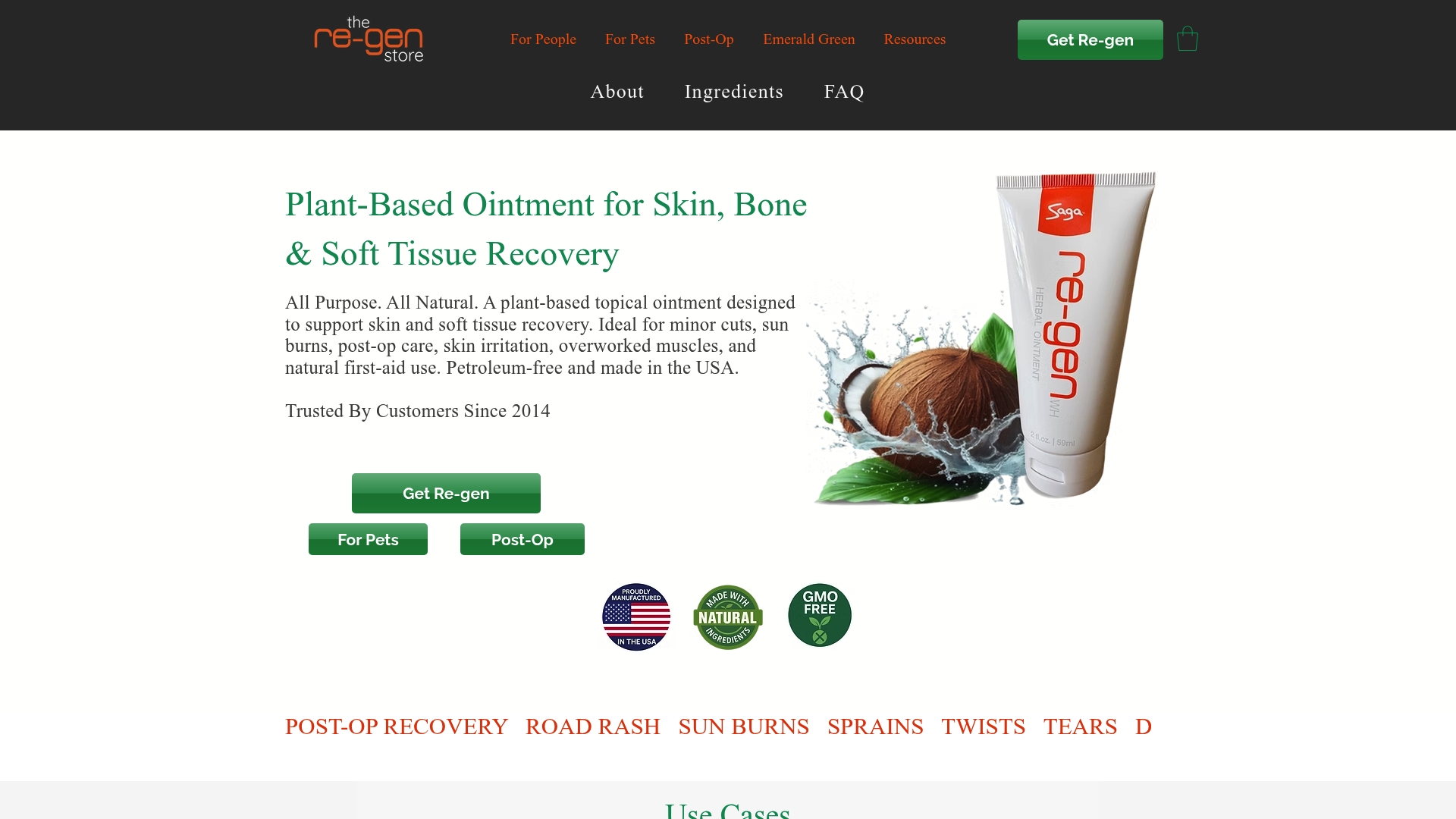
Re-gen, the flagship ointment from Theregenstore, is formulated without harsh chemicals and is designed to maintain the moist wound environment that supports tissue repair. It works as a natural alternative to Neosporin for pet owners who want antibacterial support without synthetic ingredients. For pet owners looking to support recovery at home, the plant-based wound treatment page at Theregenstore covers product options, usage guidelines, and ingredient details to help you make a confident choice.
FAQ
What are the four phases of wound healing in pets?
The four phases are inflammation, debridement, repair (proliferative), and maturation. Each phase has a distinct biological role and occurs in sequence for normal healing to progress.
How long does the pet wound healing process take?
Minor wounds may close within 2–3 weeks, but full maturation of deeper tissue can take several months. Healing speed depends on wound size, location, your pet’s age, and the quality of care provided.
Can i use honey on my pet’s wound at home?
Medical-grade honey is safe and effective for most pet wounds. It provides antibacterial protection and maintains a moist healing environment, but it should be used as part of a complete care routine, not as a standalone treatment.
When should i take my pet to the vet for a wound?
Seek veterinary care if inflammation persists beyond 5 days, if you see pus or foul odor, if the wound edges are pulling apart, or if your pet develops fever or lethargy. These signs indicate stalled healing or infection.
Is it better to keep a pet wound covered or open to air?
A light, breathable covering is better than leaving wounds fully open or sealing them airtight. Wounds need both moisture and oxygen to heal properly, so breathable non-stick dressings changed every 24–48 hours produce the best outcomes.
Recommended
Comments