
24–48 Hours to Tell If Ingrown Hair Infection Treatment Is Working

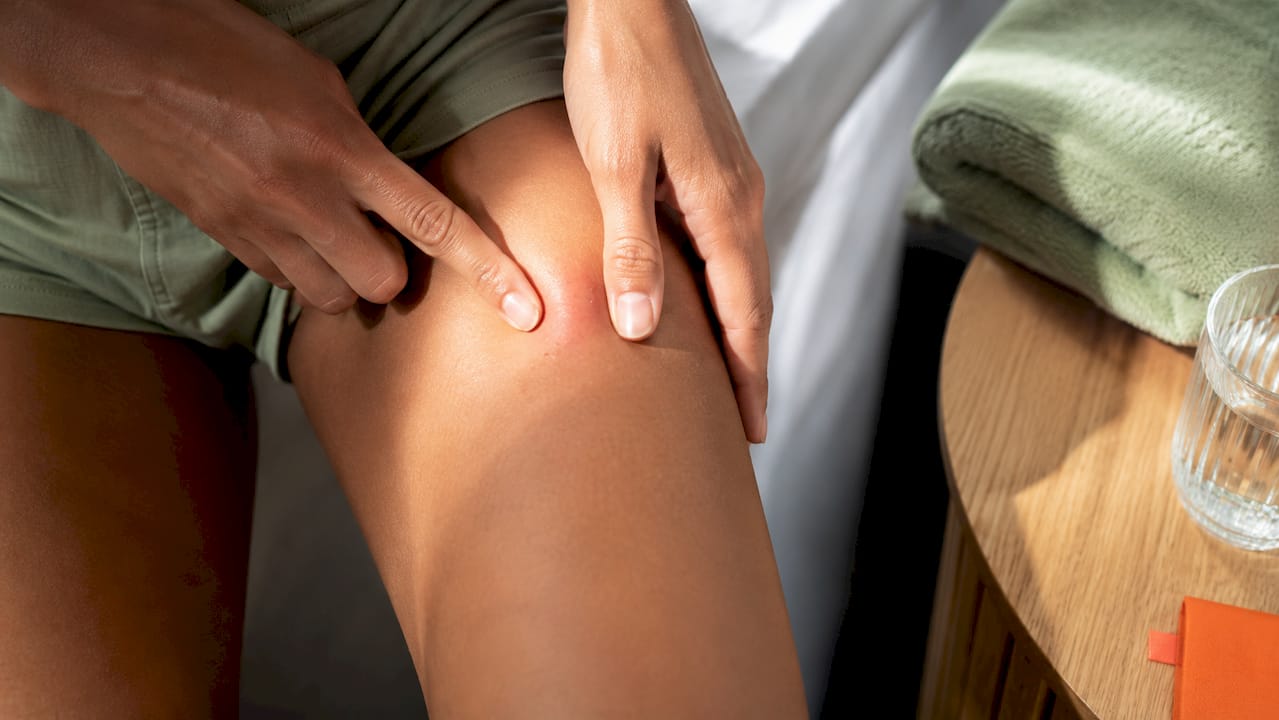
Stop shaving or waxing the area right away. Apply a warm compress for 10 to 15 minutes, three to four times daily, and keep the skin clean. Most mild cases improve within a week to 10 days. If redness spreads, you develop a fever, pain worsens, or the same spot keeps getting infected, see a clinician instead of waiting it out.
TL;DR:
Most mild infected ingrown hairs improve within 7 to 10 days with consistent home treatment, including warm compresses and gentle cleansing.
Signs that require prompt medical attention include spreading redness, fever, worsening pain, increasing pus, or rapid lump growth.
Home care should be paused for all hair removal in the affected area, and any visible hair should be gently extracted with sterilized tools if accessible.
Persistent or deep infections may need topical or oral antibiotics, plus procedures like incision and drainage for quick relief.
Preventing future ingrown hairs involves regular exfoliation, switching to less traumatic tools, and avoiding overly close shaves, with laser hair removal as a long-term option.
Table of Contents
What Does an Infected Ingrown Hair Look Like?
An infected ingrown hair usually shows a raised, pus-filled bump with visible tenderness and warmth around it. Look closely and you’ll often spot a dark coiled hair loop trapped just under the surface, which is the giveaway that separates this from other skin problems.
Pus or yellowish fluid at the center, sometimes with a small head like a pimple
Warmth and tenderness when you touch the bump, not just itching
Spreading redness beyond the immediate bump border
A visible coiled hair trapped beneath a thin layer of skin
Acne tends to cluster in oilier zones like the forehead and lacks the trapped hair loop. Cysts sit deeper and feel firmer, without the pinpoint tenderness. Hidradenitis suppurativa shows up as recurring, painful lumps in the armpits or groin that tunnel and scar over time. A bug bite, by contrast, usually itches more than it hurts and lacks pus. Ingrown hair infections recur most often on the neck, jawline, bikini line, and legs, wherever shaving or waxing is frequent.
When Should You See a Doctor for an Ingrown Hair?
Home care handles most mild infections, but certain signs mean it’s time to call a clinician rather than wait another day.
Redness spreading beyond the original bump, especially with red streaks
Fever, chills, or feeling generally unwell
A lump that’s rapidly enlarging or unusually painful
Heavy or increasing pus that isn’t draining with home care
A weakened immune system from diabetes, chemotherapy, or another condition
Give home treatment 24 to 48 hours to show improvement. If the bump is shrinking and less tender, keep going. If it’s the same or worse after two days, or you notice any red flag above, get seen. Infections that keep returning to the exact same spot deserve a proper evaluation. A clinician may culture the site to identify the bacteria involved or rule out a different diagnosis entirely, since recurring lesions sometimes point to something other than a simple ingrown hair.
How Do You Treat an Infected Ingrown Hair at Home?
For mild, non-spreading cases, a consistent routine over several days usually resolves the problem without antibiotics.
Stop all hair removal on the area immediately. Shaving, waxing, or tweezing nearby only reinjures inflamed skin. Apply a warm compress for 10 to 15 minutes, three to four times daily; the heat softens skin and helps trapped pus drain on its own.
Cleanse gently twice a day with a mild, fragrance-free cleanser. An over-the-counter antibiotic ointment can help after cleansing, but don’t layer it on thickly. A thin coat is enough.
Only extract the hair if you can see the tip. Sterilize a needle or fine tweezers with alcohol first, then gently lift the visible loop free. Never dig under intact skin chasing a hair you can’t see. Cleveland Clinic is explicit on this point: digging for a fully subdermal hair raises the risk of scarring and deeper infection rather than solving anything.
Use hydrocortisone sparingly for itch, not infection. It calms inflammation but does nothing against bacteria, and using it beyond four weeks can thin the skin and invite the next infection. Once the active infection clears, an OTC retinoid like adapalene may help exfoliate and prevent the next flare.
Cover loosely if needed and wash hands before and after touching the area to avoid spreading bacteria to other follicles nearby.
Pro Tip: Keep a clean washcloth dedicated to the compress routine and wash it after every use. Reusing a damp cloth across multiple sessions can reintroduce bacteria to skin that’s actively trying to heal.
What Medical Treatments Work for Persistent Infections?
When home care stalls or the infection is clearly spreading, clinicians have a few reliable next steps.
Topical prescription antibiotics for infections still confined to the surface, often the first line beyond OTC ointment.
Oral antibiotics when infection is deeper, spreading, or not responding to topical treatment.
Steroid injections or stronger prescription creams for severe inflammation or keloid-like scarring, particularly common on the neck and jawline.
Sterile incision and drainage, which rapidly relieves pain and clears trapped pus when a lesion is large or fluctuant.
Cultures for recurrent cases, helping identify the specific bacteria so antibiotic choice isn’t a guess.
Recovery after a minor in-office procedure is usually quick, with tenderness fading over a few days. Oral antibiotics typically run a week to 10 days, and mild side effects like stomach upset are common but manageable. The same soak-and-drain logic applies here that clinicians use for related follicular infections like paronychia, where warm soaks reduce swelling before any procedure becomes necessary.
How Do You Prevent Ingrown Hairs From Coming Back?
Preventing recurrence means changing two things: how you exfoliate and how you remove hair.
Exfoliate nightly with a gentle routine, and consider an OTC retinoid such as adapalene to keep dead skin from trapping new hairs.
Switch tools. Single-blade razors and electric clippers cause far less trauma than multi-blade cartridges, and shaving in the direction of hair growth (not against it) matters more than most people realize.
Skip the ultra-close shave. Pulling skin taut to get one more pass is exactly what drives hairs back under the surface.
Consider laser hair removal for chronic, recurring cases. It’s a longer-term investment with real trade-offs, including cost and multiple sessions, but it addresses the follicle directly rather than managing symptoms shave after shave.
Reduce friction. Tight clothing over the bikini line, waistband, or inner thighs keeps irritating healing skin.
One detail people consistently underestimate: skin can take one to six months to fully settle after you stop hair removal in a chronically affected area. Restarting shaving too soon is the single most common reason the same spot flares again.
If you’re rebuilding your skin barrier after switching techniques, a post-shave repair routine/) can help the area recover between sessions instead of staying perpetually irritated.
Where Do Plant-Based Ointments Fit in Recovery?
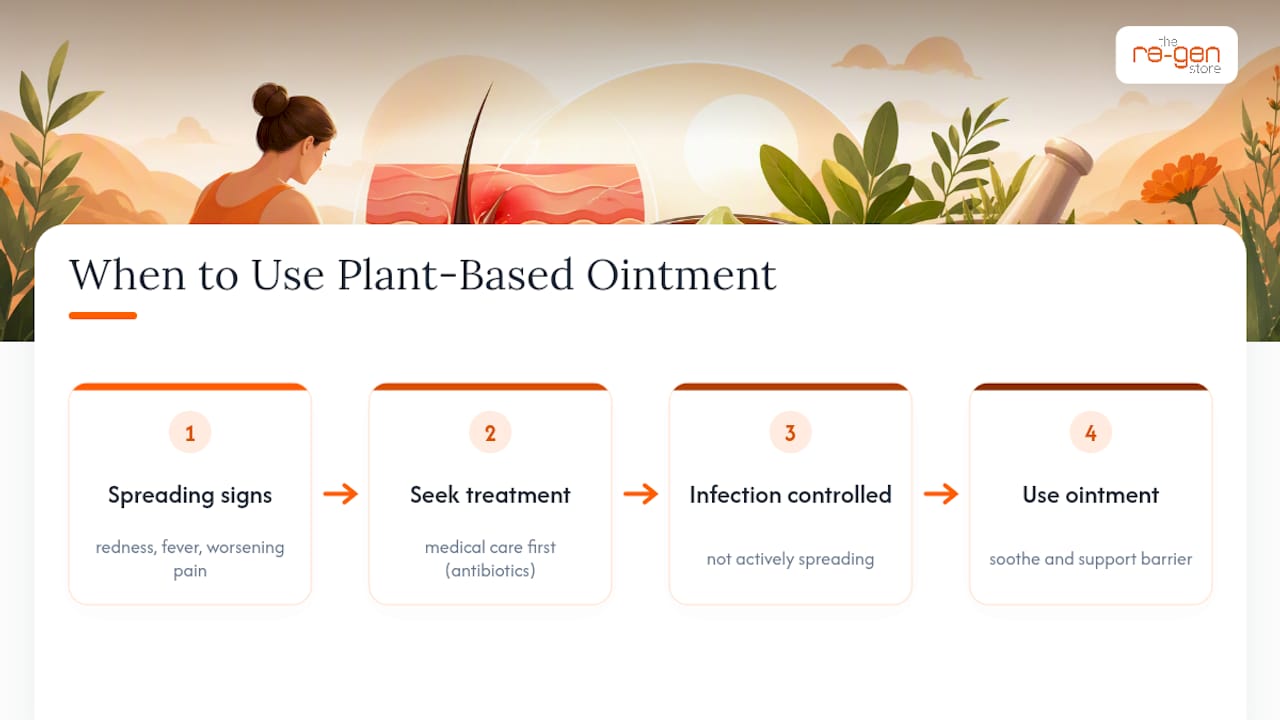
Once an infection is actually clearing, not actively spreading, the skin still needs support to close and rebuild its barrier, making a soothing and repairing sunscreen an ideal addition to your routine. That’s where a plant-based, petroleum-free ointment earns its place: as an adjunct to soothe irritation and support the skin’s own recovery process, not as a substitute for antibiotics when bacteria have taken hold. If you’re seeing spreading redness, fever, or worsening pain, that calls for medical treatment first. Once the active infection is under control, a natural approach to soothing irritated skin can genuinely make the healing window more comfortable, without the downsides some people experience from petroleum-based products or extended steroid use.
Where Can You Buy Re-gen for Ingrown Hair Recovery?
Theregenstore makes Re-gen for exactly this stage of recovery: after the infection risk has passed and your skin needs support closing up and calming down.
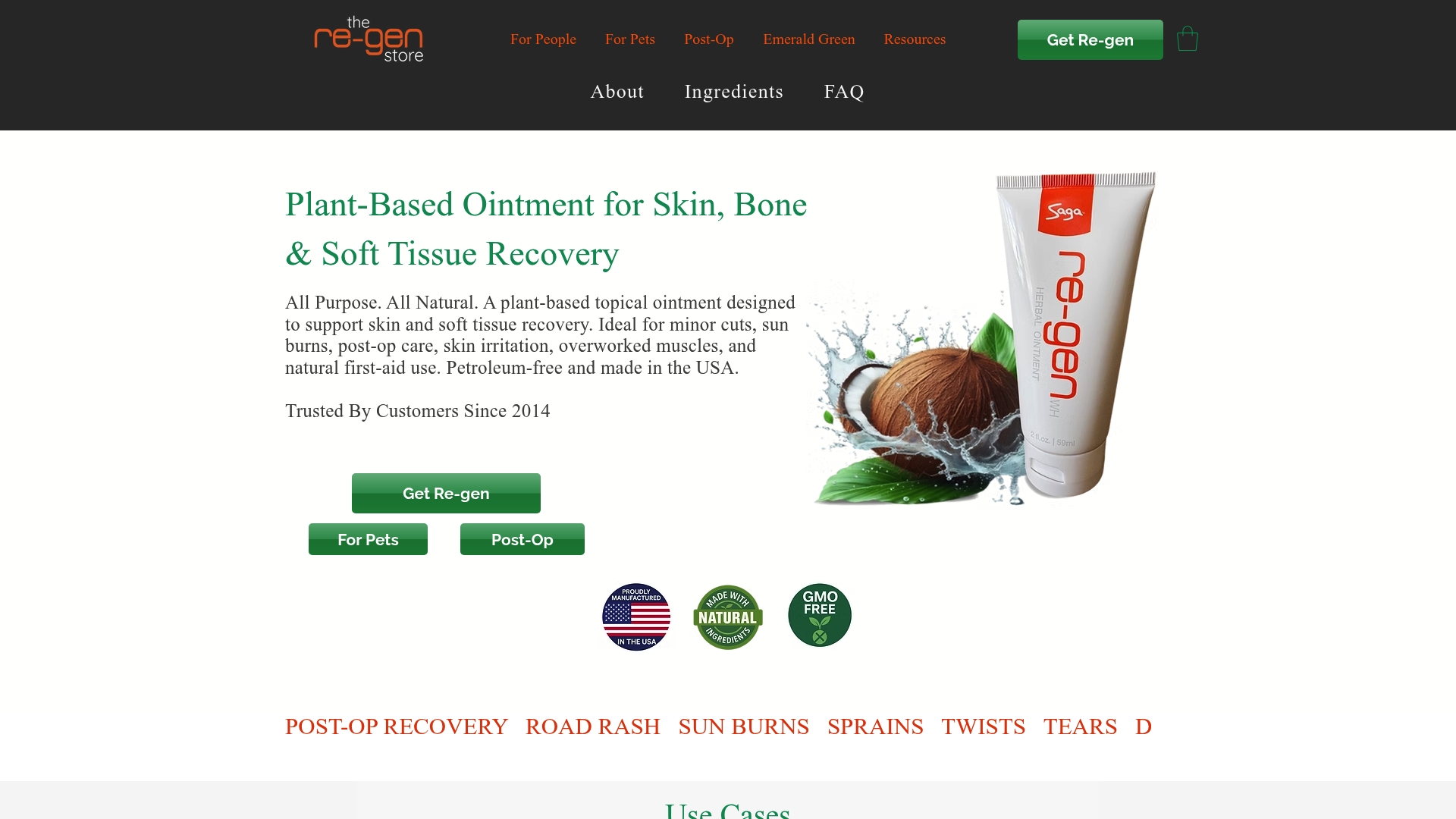
What it is: a plant-based, chemical-free ointment formulated to support skin recovery without petroleum or synthetic fillers.
When it helps: soothing irritated, healing skin and supporting the barrier once active infection is controlled, whether that’s from an ingrown hair, a minor cut, or general irritation.
How to use it: apply a thin layer to clean, dry skin as part of your daily routine while the area heals.
If redness is spreading or you have any red flag mentioned earlier, prioritize medical care first. Once you’re past that stage, the Re-gen plant-based ointment is worth adding to your recovery routine, and you can browse the full plant-based, petroleum-free product line at Theregenstore to find the right size for your situation.
Where This Guide’s Medical Information Comes From
This guide draws on established clinical resources rather than anecdotal advice.
Mayo Clinic covers diagnosis, warm compress protocol, and when retinoids or antibiotics are appropriate.
Cleveland Clinic details prevention strategies, safe home extraction technique, and laser hair removal as an option.
Healthline outlines typical healing timelines and when incision and drainage becomes necessary.
MedlinePlus provides comparable guidance on related follicular skin infections and soak protocols.
Consult one of these directly, or talk to a clinician, for advice specific to your situation.
My Take on Why People Mismanage This
Most people treat an infected ingrown hair like a pimple: pick at it, squeeze it, hope it resolves overnight. That instinct is exactly backwards. The single biggest mistake I see repeated in how people talk about ingrown hairs is underestimating the shaving pause. Everyone focuses on the compress, the ointment, the antibiotic, but almost nobody respects that skin needs one to six months to actually settle once you stop irritating a chronic site. You can do everything else right and still relapse in three weeks if you pick up the razor again too early out of habit.
The other overlooked piece is how casually people reach for hydrocortisone. It feels productive because the itch disappears, but it does nothing to the bacteria causing the problem, and overusing it for weeks sets you up for thinner, more vulnerable skin right where you can least afford it. Plant-based barrier support has a real, defensible role here, precisely because it doesn’t carry that same overuse risk. It’s not a replacement for antibiotics when you genuinely need them. It’s what you reach for in the weeks after, when the goal shifts from fighting infection to rebuilding skin that won’t just get reinjured next month.
— Kyle
This article is general information, not a substitute for advice from a qualified doctor. Consult a qualified healthcare professional about your own circumstances before acting on anything here.
Sources
FAQ
How long does it take for an ingrown hair infection to heal?
Mild infections typically clear within 7 to 10 days with consistent home care. Deeper or recurring infections can take several weeks, and full skin recovery after stopping hair removal in a chronic area can take one to six months.
What antibiotic is good for an ingrown hair infection?
Topical prescription antibiotics work for surface-level infections, while oral antibiotics are reserved for deeper or spreading cases. A clinician determines the right choice, sometimes after taking a culture for infections that keep recurring.
What does a badly infected ingrown hair look like?
A badly infected ingrown hair shows heavy pus, redness spreading well beyond the original bump, significant swelling, and pain that’s worsening rather than easing. Red streaks radiating from the site or fever are signs it needs urgent medical attention.
What ointment is good for infected ingrown hairs?
An over-the-counter antibiotic ointment applied in a thin layer supports mild, non-spreading infections during active healing. Once the infection has cleared, a plant-based ointment like Re-gen can help soothe the skin and support recovery as it closes.
Recommended
Comments