
Chemical-Free Healing Remedies List: What Actually Works


Natural healing remedies, often called “chemical-free,” are plant-based and minimally processed treatments that support recovery without synthetic additives. The term “chemical-free healing” is technically a misnomer. As scientific consensus confirms, every substance on earth, including Aloe Vera, water, and honey, is made of chemicals. What people genuinely mean when they search for a chemical-free healing remedies list is this: fewer synthetic additives, simpler formulations, and plant-derived ingredients with a lower risk of irritation or toxicity.
1. What “chemical-free healing” actually means
The phrase “chemical-free” is a marketing term, not a scientific category. Safety depends on ingredient-by-ingredient evaluation, dosing, and formulation quality, not on whether a label says “natural.” This distinction matters because it protects you from both over-trusting unproven remedies and dismissing genuinely effective plant-based options.
“Non-toxic and chemical-free labels often mislead consumers. Safety depends on ingredient-by-ingredient evaluation rather than broad marketing claims.” — Lab Muffin Beauty Science
What “chemical-free healing” practically means for you:
Fewer synthetic preservatives, dyes, and fragrances
Simpler ingredient profiles with recognizable plant sources
Lower allergen load for sensitive skin
Formulations that prioritize biocompatibility over shelf-life extension
Understanding this framing lets you shop and heal smarter. You stop chasing labels and start reading ingredient lists.
2. Wound cleansing and bed preparation
Proper wound bed preparation, including irrigation and debridement, is the non-negotiable first step before any topical remedy, natural or otherwise. Skipping this step means applying even the best plant-based ointment onto a contaminated surface where it cannot work effectively.
Cleansing with normal saline or a dilute antiseptic removes debris and reduces bacterial load. This creates the clean tissue environment that natural remedies need to support regeneration. Think of it as preparing soil before planting. The remedy is the seed, but the wound bed is the ground.
Pro Tip: Rinse minor cuts and abrasions with clean running water for at least 60 seconds before applying any topical treatment, natural or conventional.
3. Aloe Vera for burns and skin irritation
Aloe Vera is one of the most studied topical plants for skin recovery. Its gel contains compounds called acemannan and anthraquinones, which support tissue repair and reduce inflammation at the wound site. It is particularly effective for minor burns, sunburn, and dry, irritated skin.

Apply fresh Aloe Vera gel directly from the leaf or use a product with a high concentration of stabilized Aloe Vera extract. Avoid products that list Aloe Vera far down the ingredient list, as concentration determines efficacy. For best results, apply two to three times daily to clean skin.
4. Calendula for inflammation and minor wounds
Calendula officinalis, derived from pot marigold flowers, has a long track record in traditional wound care. Its active compounds, including flavonoids and triterpenoids, reduce inflammation and support new tissue formation. Clinical herbalists use Calendula in creams, tinctures, and salves for cuts, rashes, and post-operative skin care.
Polyherbal formulations that combine Calendula with other botanicals like Chamomile or Lavender can reduce wound closure time compared to single-plant applications. This synergy is one reason why well-formulated plant-based ointments outperform DIY single-herb remedies. Calendula is generally well tolerated, but patch-test first if you have ragweed allergies.
5. Honey (medical grade) for antimicrobial wound support
Raw honey, particularly Manuka honey from New Zealand, has documented antimicrobial properties. Its low pH, hydrogen peroxide content, and high osmolarity create an environment where bacteria struggle to survive. Medical-grade honey dressings are used in clinical settings for chronic wounds, leg ulcers, and post-surgical sites.
For home use, apply a thin layer of raw, unprocessed honey to a clean minor wound and cover with a breathable bandage. Do not use commercial table honey on open wounds. It lacks the standardized antibacterial activity of medical-grade products and may introduce contaminants.
6. Turmeric for its anti-inflammatory properties
Turmeric contains curcumin, a compound with well-documented anti-inflammatory and antioxidant effects. Topically, turmeric paste has been used in Ayurvedic medicine for centuries to reduce swelling and support skin healing. Modern research supports its role in modulating inflammatory pathways at the wound site.
Mix turmeric powder with a carrier oil like coconut oil to create a simple topical paste for minor bruises or inflamed skin. Be aware that turmeric stains skin and fabric yellow. For deeper wounds, curcumin-infused formulations from reputable manufacturers offer more consistent dosing than homemade pastes.
7. Lavender essential oil for minor cuts and skin repair
Lavender oil, derived from Lavandula angustifolia, has antimicrobial and skin-calming properties. It is one of the few essential oils considered safe for diluted topical use near wounds. Studies show it supports faster epithelialization, the process of new skin cells covering a wound.
Always dilute Lavender oil in a carrier oil such as jojoba or sweet almond oil at a ratio of 2 to 3 drops per teaspoon of carrier. Applying undiluted essential oils directly to broken skin can cause chemical burns and sensitization. Used correctly, Lavender is a practical addition to any natural healing workflow.
8. Myrrh resin for antimicrobial and tissue support
Myrrh, a resin from the Commiphora tree, has been used in wound care since ancient Egypt. Its active compounds, called terpenoids, demonstrate antimicrobial activity against common wound pathogens including Staphylococcus aureus. Myrrh tinctures and salves are used in traditional medicine for infected minor wounds and gum tissue repair.
Modern plant-based wound dressings increasingly incorporate Myrrh alongside other botanical extracts to leverage its antimicrobial properties within engineered delivery systems. This illustrates a key point: “more natural” does not mean “no chemistry.” It means the chemistry comes from plants rather than synthetic labs.
9. Chamomile for soothing inflamed skin
Chamomile, particularly German Chamomile (Matricaria chamomilla), contains the compound azulene, which gives it strong anti-inflammatory and skin-calming effects. It is widely used in topical creams for eczema, contact dermatitis, and minor skin irritation. Chamomile tea compresses applied to irritated skin offer a simple, low-cost home remedy.
For pets, Chamomile is one of the natural pet treatments considered safe for topical use on minor skin irritation when diluted appropriately. Always consult a veterinarian before applying any botanical remedy to an animal’s wound.
10. Debridement methods in a chemical-free healing workflow
Debridement method selection depends on wound severity and infection status, making clinical judgment the first step before any natural remedy.
Method | Speed | Best for | Limitation |
Sharp surgical | Fastest | Infected or necrotic wounds | Requires clinical setting |
Enzymatic | Moderate | Selective tissue removal | Cost and prescription access |
Mechanical | Variable | Accessible at home (wet-to-dry) | Risk of damaging healthy tissue |
Autolytic | Slowest | Clean wounds with moisture dressings | Not suitable for infected wounds |
Natural topical remedies belong after debridement, not instead of it. For infected or necrotic wounds, clinical care precedes any plant-based application.
11. Safety checklist for using natural remedies
Topical herbal remedies on full-thickness wounds can be absorbed systemically, making their effects pharmacologically significant. This is not a reason to avoid them. It is a reason to use them thoughtfully.
Before applying any natural remedy to a wound:
Confirm the wound is clean and free of debris
Patch-test new botanicals on intact skin for 24 hours
Avoid applying essential oils undiluted to broken skin
Do not use unproven remedies like potato juice as primary treatment on open wounds, as clinical evidence is lacking
Consult a healthcare provider for wounds larger than 2 centimeters, deep punctures, or any wound showing signs of infection
Pro Tip: Move toward ingredient literacy rather than label literacy. A product with five recognizable plant-derived ingredients is more trustworthy than one with a “chemical-free” badge and a 30-ingredient list.
Key takeaways
Natural healing remedies work best when you combine proper wound preparation, evidence-supported botanicals like Aloe Vera, Calendula, and Manuka honey, and a clear understanding that “chemical-free” means simpler formulations, not the absence of chemistry.
Point | Details |
Chemical-free is a marketing term | All substances are chemicals; focus on ingredient quality and formulation simplicity instead. |
Wound prep comes first | Cleanse and debride before applying any topical remedy, natural or conventional. |
Polyherbal synergy outperforms single herbs | Combinations like Calendula and Chamomile can accelerate healing better than either plant alone. |
Systemic absorption is real | Botanicals on open wounds enter the bloodstream; treat them as pharmacologically active. |
Patch-test every new remedy | Apply to intact skin for 24 hours before using on a wound to avoid sensitization. |
Why I think “chemical-free” is both a trap and an opportunity
I have spent years watching people swing between two extremes: blind trust in synthetic pharmaceuticals and equally blind trust in anything labeled “natural.” Both positions are wrong, and both can cause harm.
The “chemical-free” label is a trap when it stops you from reading ingredient lists or seeking clinical care for a wound that needs it. It becomes an opportunity when it pushes you toward simpler, cleaner formulations with fewer unnecessary additives. The best natural healing products I have seen do not claim to be chemical-free. They list their ingredients clearly, explain the plant sources, and acknowledge what the science does and does not support.
Plant-based wound care is genuinely advancing. Bioengineered dressings incorporating Myrrh, Calendula, and Aloe Vera extracts are moving from traditional medicine into clinical trials. That progress happens because researchers treat plant compounds as chemistry, not magic. You should too. Use natural remedies with the same critical eye you would apply to any other treatment: check the evidence, respect the dose, and get professional help when the wound is beyond home care.
— Kyle
Natural wound care products worth exploring
If you are ready to move beyond the label and toward genuinely plant-based wound support, Theregenstore offers a practical starting point. The Re-gen ointment is a petroleum-free, plant-derived formula designed to support skin, soft tissue, and muscle recovery without synthetic antibiotics or petroleum-based fillers.
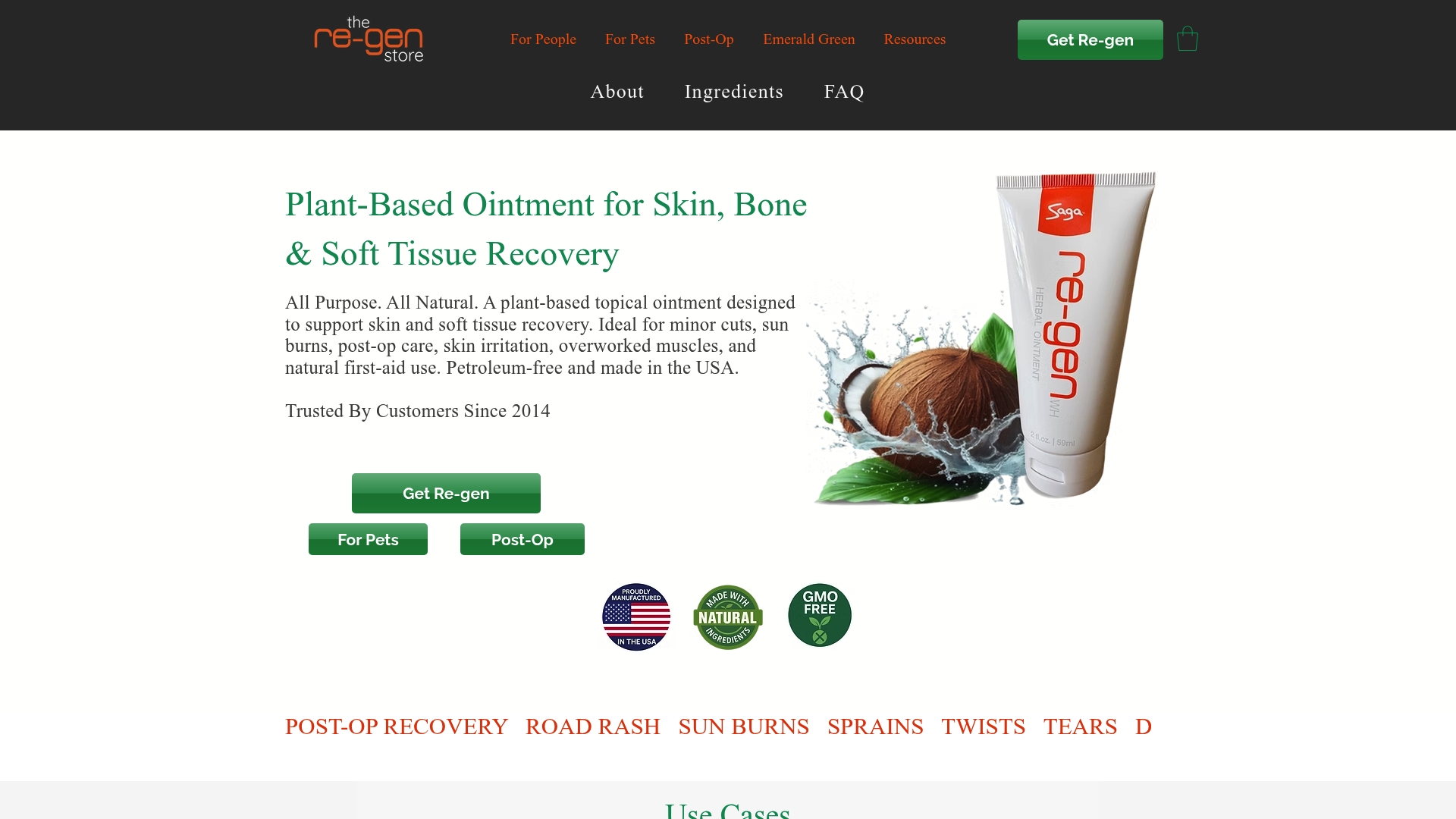
Whether you are managing a minor cut, a post-operative wound, or a skin condition that has not responded well to conventional products, Theregenstore’s plant-based wound treatments are formulated with the same principles this article outlines: clean ingredients, evidence-informed botanicals, and no unnecessary additives. You can also explore Re-gen as a natural Neosporin alternative if you are looking to replace synthetic antibiotic ointments with something gentler and plant-derived.
FAQ
What does “chemical-free healing” actually mean?
“Chemical-free healing” refers to using natural, minimally processed plant-based remedies with fewer synthetic additives. Truly chemical-free products cannot exist, since all matter is composed of chemicals, but the term signals simpler, lower-irritant formulations.
Which natural remedies have the strongest evidence for wound healing?
Manuka honey, Aloe Vera, and Calendula have the most consistent clinical support for topical wound care. Polyherbal formulations combining these and similar botanicals can further improve healing outcomes compared to single-plant applications.
Is it safe to use herbal remedies on open wounds?
Herbal remedies applied to open or full-thickness wounds can be absorbed systemically, so they carry real pharmacological effects. Always cleanse the wound first, patch-test new botanicals, and consult a healthcare provider for deep, infected, or slow-healing wounds.
Can natural remedies replace clinical wound care?
Natural remedies complement clinical care but do not replace it for serious wounds. Infected or necrotic wounds require debridement and professional assessment before any topical treatment, natural or conventional, can be effective.
Are chemical-free pet treatments safe to use at home?
Some botanicals like diluted Chamomile are considered safe for minor pet skin irritation, but you should always consult a veterinarian before applying any topical remedy to an animal’s wound. Pets metabolize plant compounds differently than humans, and some safe human remedies are toxic to animals.
Recommended
Comments