
Calendula for Wounds: What the Clinical Evidence Shows

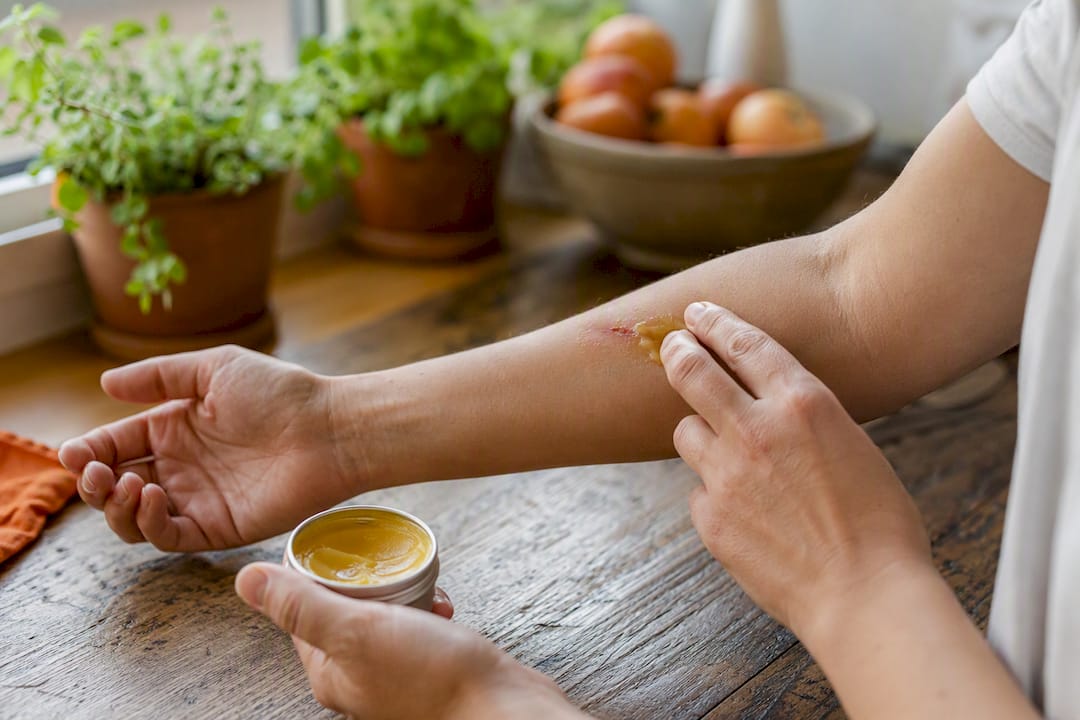
Calendula (Calendula officinalis) has real clinical support for speeding healing in select wounds, including acute skin injuries, episiotomy sites, and venous ulcers, though results for burns and diabetic ulcers are mixed. Most of the supporting research uses topical ointments or gels, with a handful of oral trials on burn patients. Calendula works best as an adjunct alongside standard wound care, not a replacement for it, and anyone dealing with a deep, infected, or slow-healing wound should still involve a clinician before relying on it.
TL;DR:
Calendula shows strong evidence for speeding healing in minor cuts, surgical incisions, and postpartum wounds when used as an adjunct to standard care.
Its benefits for burns and diabetic ulcers are inconsistent, and it should never replace professional treatment for deep, infected, or slow-healing wounds.
The evidence is primarily from animal studies and small human trials, with large standardization and outcome measurement gaps remaining.
Applying a 2% to 10% topical calendula ointment after proper wound cleaning, for up to two weeks, aligns with studied protocols for suitable wound types.
Individuals with allergies to plants in the Asteraceae family should avoid calendula and always test for skin sensitivity before use on open wounds.
Table of Contents
What the Research Actually Shows at a Glance
The evidence base for calendula and wound healing splits cleanly into two tiers: strong mechanistic and animal data, and thinner, more variable human trial data. A systematic review of Calendula officinalis extract for wound healing pooled 14 studies, seven in animals and seven in humans, and found the animal data remarkably consistent. Calendula extract sped up inflammation resolution and boosted granulation tissue formation across nearly every animal model tested. The human trials told a messier story. Results varied by wound type, extract concentration, and how the calendula was prepared, and several of the clinical trials were small enough that a single outlier patient could swing the results.
That gap between animal and human evidence isn’t unusual in herbal medicine research, but it matters for how you should weigh the claims you’ll read elsewhere online. A rat model healing faster under laboratory conditions doesn’t guarantee the same outcome in a person managing a real wound with real variables like nutrition, circulation, and infection risk.
Here’s how the evidence breaks down by category:
Animal studies: Consistently positive across the seven studies reviewed, showing increased granulation tissue and faster inflammation resolution.
Acute wounds (cuts, surgical incisions): Reasonably solid support from randomized trials, including faster epithelialization in hand and finger wounds.
Episiotomy and postpartum wounds: Positive signals from clinical trials, discussed further in the clinical evidence section below.
Venous ulcers: Some positive findings, but studies are fewer and smaller than for acute wounds.
Burns: Mixed. One well-controlled oral trial showed benefit; other burn trials found no meaningful difference from placebo.
Diabetic ulcers: Weakest evidence category, with some randomized trials showing no improvement over standard care.
The practical takeaway is straightforward: calendula has earned a place in your wound care toolkit for minor cuts, scrapes, and certain surgical or postpartum wounds, provided a clinician has already ruled out anything requiring more aggressive treatment. For burns and chronic ulcers, treat any benefit as possible rather than proven, and never let it replace the wound care your doctor has already recommended. This is also where the standard scientific term matters: what marketing copy calls “calendula ointment benefits” is, in the research literature, usually described as Calendula officinalis extract applied topically at a specified concentration. Knowing that distinction helps you read product labels and study summaries with the same vocabulary.
An updated review covering calendula’s phytochemistry and clinical applications reaches a similar conclusion: the plant has genuine therapeutic potential, but the field needs more standardized trials before doctors can recommend it with the same confidence as, say, silver sulfadiazine for burns. Until then, calendula sits in a well-supported but still-developing category of natural wound healing remedies.
How Calendula Works on a Healing Wound
Calendula’s effects on skin trace back to a specific set of plant compounds, not vague “natural healing energy.” The flower contains flavonoids, triterpenoids, and carotenoids, and each class does something measurable at the cellular level.
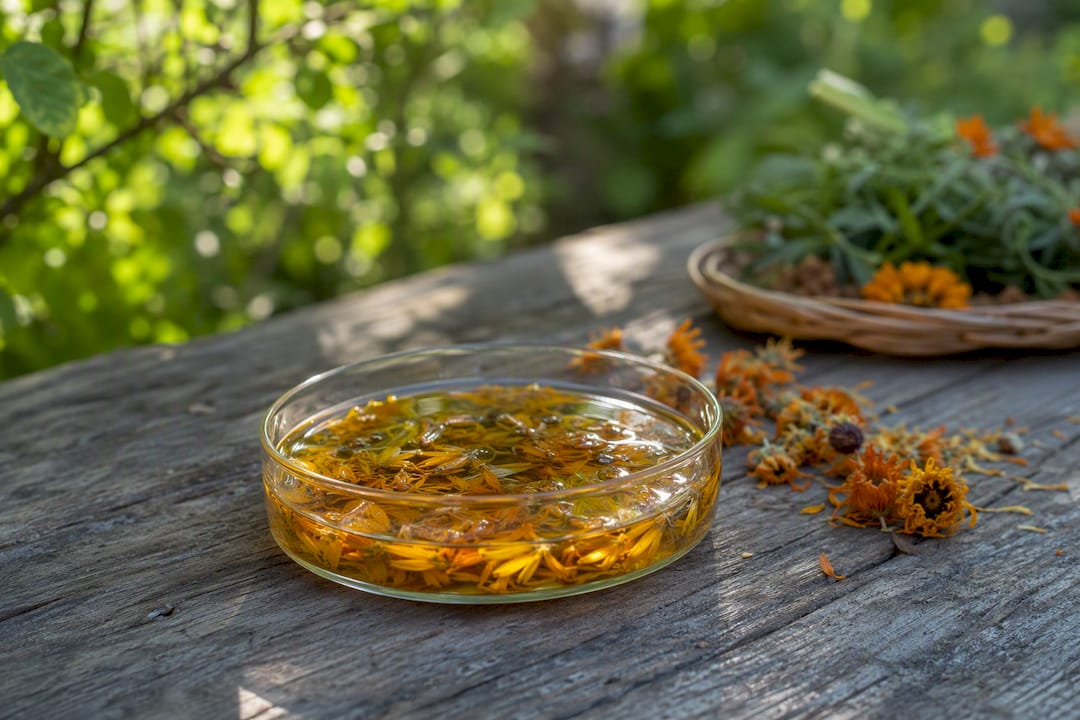
Flavonoids act as antioxidants and appear to calm the inflammatory cascade that, left unchecked, can prolong swelling and delay the transition from the inflammatory phase of healing to the rebuilding phase. Triterpenoids, particularly compounds like faradiol, show anti-inflammatory activity in laboratory models and may help reduce the swelling that keeps a wound from closing. Carotenoids contribute additional antioxidant capacity, mopping up the reactive oxygen species that accumulate around damaged tissue.
Put together, researchers believe these compounds drive four overlapping effects:
Anti-inflammatory action: Shortens the inflammatory phase so healing can move into the proliferation stage sooner.
Antimicrobial activity: Helps limit bacterial colonization on the wound surface, though it is not a substitute for antibiotics on infected wounds.
Angiogenesis support: Encourages new capillary formation, feeding the wound bed with oxygen and nutrients.
Collagen production: Stimulates fibroblasts, the cells responsible for laying down the collagen matrix that gives new skin its structure.
In vitro and animal studies back this up with observable results. Laboratory models have shown calendula extract accelerating fibroblast migration toward the wound site, meaning the cells that build new tissue arrive and get to work faster than in untreated controls. Animal studies have documented measurably more granulation tissue, the pink, bumpy tissue that fills in a healing wound bed, in calendula-treated wounds compared to controls.
Statistic callout: The 2018 systematic review found positive granulation and inflammation effects across all seven animal studies it examined, one of the more consistent findings in the entire body of calendula wound research. That consistency at the animal level is part of why researchers keep pursuing human trials, even when the clinical results so far have been more variable.
Here’s the honest caveat, and it’s an important one for anyone reading past the marketing copy: mechanistic plausibility is not the same thing as proven clinical benefit. Knowing that flavonoids reduce inflammation in a petri dish tells you calendula could help a real wound heal faster. It doesn’t tell you it will, in your specific case, with your specific wound. That’s why the clinical trials discussed in the next section carry more weight than the mechanism studies alone, even though the mechanisms help explain why the clinical results skew positive as often as they do.
This distinction also explains why calendula’s reputation as a natural antimicrobial needs a qualifier. Laboratory studies show activity against certain bacterial strains, but that’s a different claim than “natural antibiotic” in the way most people use that phrase, and it’s worth keeping straight before you decide how much protection to expect from it on a dirty wound.
Clinical Trials by Wound Type: What Actually Held Up
The clinical picture for calendula changes considerably depending on which wound you’re treating, and the highest-quality evidence clusters around a few specific categories.
Acute wounds: hands, fingers, and minor cuts
A randomized trial testing topical Calendula officinalis on acute hand and finger wounds healing by secondary intention (meaning the wound closes gradually from the inside out, rather than being stitched shut) found faster epithelialization in the calendula group compared to control. Patients also showed improved functional return, a meaningful outcome for hand injuries where stiffness or delayed healing affects grip strength and daily use. This is one of the cleaner pieces of evidence in the entire calendula literature: a defined wound type, a measurable outcome, and a result that favored the treatment group.
Episiotomy and postpartum wounds
Postpartum perineal wounds from episiotomy have been studied specifically because they’re common, painful, and slow to heal in a population that’s simultaneously managing a newborn. The broader review of calendula’s therapeutic applications summarizes clinical signals of benefit here, with topical calendula preparations associated with improved wound scores and reduced discomfort compared to standard care alone. This is one of the areas where the case for calendula as a topical adjunct is strongest, since the wound type is well defined and the outcome measures tend to be consistent across studies.

Venous ulcers
Venous ulcers, the slow-healing open sores that develop on the lower legs from poor circulation, represent a tougher test for any topical treatment because the underlying vascular problem doesn’t go away just because the wound surface gets treated. Calendula preparations have shown some positive results in this population, though the trial pool is smaller than for acute wounds, and standard compression therapy remains the backbone of venous ulcer treatment regardless of what topical is added.
Oral calendula for second-degree burns
The most methodologically rigorous trial in the entire calendula wound-healing literature tested an oral formulation, not a topical one. A triple-blind randomized controlled trial enrolled 60 patients with second-degree burns and gave the treatment group 2 grams of oral calendula daily for 14 days, while the control group received a placebo. Researchers tracked healing using the Bates-Jensen Wound Assessment Tool (BWAT), a standardized scoring system clinicians use to quantify wound size, depth, exudate, and tissue type rather than relying on subjective impressions.
The treatment group showed statistically significant improvement in BWAT scores at both day 7 and day 14 compared to placebo. That’s a meaningful signal: triple-blinding controls for bias on the patient, provider, and assessor side simultaneously, and a 60-person sample, while modest, is large enough to detect a real effect if one exists. It’s also a useful corrective to the assumption that calendula only works topically. An oral route delivering measurable systemic effects on burn healing suggests the active compounds are doing more than sitting on the skin surface.
That said, one well-designed trial doesn’t settle the question for burns generally. Other burn trials using different formulations and dosing have failed to find a benefit over standard care, which is part of why the systematic review flags burns as a mixed-evidence category rather than a clear win. If you’re managing a second-degree burn, oral calendula might be worth discussing with a clinician as an adjunct, but it should never replace standard burn wound management, especially for anything beyond a small, superficial area.
Where the evidence stands, wound by wound
Strong enough to consider as an adjunct: acute cuts and minor surgical wounds, hand and finger wounds healing by secondary intention, episiotomy and postpartum perineal wounds.
Reasonable but thinner support: venous ulcers, oral use for second-degree burns under supervision.
Needs considerably more data: diabetic ulcers, topical use for larger or deeper burns, any chronic wound with an underlying vascular or metabolic complication.
If you’re trying to use calendula’s healing properties for something in that first category, you’re on reasonably solid ground. If you’re dealing with anything in the last category, calendula might still be worth a conversation with your doctor, but it shouldn’t be the centerpiece of your treatment plan.
Who Should Avoid Calendula and What Red Flags Mean Stop
Calendula belongs to the Asteraceae family, the same botanical family as ragweed, chrysanthemums, and daisies. If you have a known allergy to any of those plants, you’re at meaningfully higher risk of a reaction to calendula, and that risk profile is worth taking seriously before you apply anything to broken skin.
Patch-test before applying to a wound. Apply a small amount of the product to intact skin on your forearm, wait 24 to 48 hours, and check for redness, itching, or swelling before using it anywhere near an open wound.
Watch for contact dermatitis. This is the most commonly reported adverse effect in both clinical trials and consumer reports, showing up as localized redness, rash, or irritation at the application site, per the health information summary on calendula.
Use extra caution during pregnancy and breastfeeding. Topical use on intact skin is generally considered lower risk, but oral calendula and use directly on postpartum wounds should be discussed with your provider first.
Check with a doctor if you’re immunocompromised. A weakened immune system changes the calculus on any topical product used near an open wound, natural or otherwise.
Never use calendula, or any topical remedy, on a deep, heavily contaminated, or actively infected wound without medical evaluation first. Surface treatments can mask a problem that needs debridement or antibiotics.
Pro Tip: Keep a small, untouched section of the product’s first application visible for 48 hours. If you don’t see redness or irritation there, you can reasonably extend it to the wound margin, but never test directly on the open wound itself.
Beyond allergy risk, watch for the standard red flags that apply to any wound, treated with calendula or not. Increasing pain instead of gradual improvement, spreading redness beyond the wound border, fever, or purulent drainage all mean it’s time to stop self-treating and get evaluated. These signs suggest infection or a healing process that’s stalled, and no topical botanical, calendula included, is designed to manage that on its own.
How to Use Calendula for Minor Wounds and Burns
The studies behind calendula’s reputation used fairly specific preparations, and matching your approach to what was actually tested gives you the best shot at the results those trials reported.
Topical concentrations studied in trials and reference summaries typically range from 2% to 10% in ointment or gel form, with tinctures used at concentrations up to 20% depending on the formulation and clinical context. Oral dosing, tested specifically in the burn trial discussed earlier, used 2 grams per day for 14 days under clinical supervision. That’s a meaningfully different use case than dabbing on a topical gel, and it’s not something to replicate without medical guidance, since oral herbal dosing carries different interaction and safety considerations than topical use.
For a minor wound where calendula might genuinely help, here’s an evidence-aligned routine:
Clean the wound first. Rinse with clean water or saline before applying anything. Calendula is not a substitute for basic wound hygiene.
Apply a thin layer of a calendula ointment or gel in the concentration range studied, roughly 2% to 10%, rather than a thick or excessive application.
Cover if the study protocol you’re following used occlusion, meaning a bandage or dressing over the treated area, since several trials applied the product under a covering rather than leaving it exposed.
Re-evaluate daily. Check for signs of improvement, and just as importantly, check for the red flags covered in the safety section.
Continue for the duration reflected in trial protocols, generally one to two weeks for topical use, and stop if you see irritation rather than pushing through it.
A quick reference for how the studied preparations line up:
Preparation | Concentration Studied | Typical Use Case |
Topical ointment/gel | 2% to 10% extract | Acute wounds, minor cuts, postpartum wounds |
Tincture | Up to 20% | Diluted topical application |
Oral capsule/preparation | 2 g/day | Second-degree burns, under medical supervision |
One caution worth stating plainly: don’t reach for a raw-plant poultice, meaning crushed calendula flowers applied directly to a wound, on anything deep or heavily contaminated. Trial-tested extracts go through processing that standardizes the active compound concentration and reduces contamination risk. A poultice made from your garden doesn’t offer either of those safeguards, and it introduces plant material and whatever’s on it directly into open tissue. For a full walk-through of safe topical application step by step, see this herbal remedy application guide, and if you’re specifically managing a burn, this herbal burn treatment guide walks through the process in more detail.
What Better Calendula Research Would Need to Show
The calendula wound-healing literature has a consistent set of weaknesses that show up across nearly every trial, and knowing them helps you read future headlines about calendula with the right amount of skepticism.
Small sample sizes. Many trials enroll a few dozen participants, which limits statistical power and makes it easier for random variation to look like a real effect, or mask one.
Unclear or inconsistent blinding. Topical trials are notoriously hard to blind well, since texture and smell can tip off patients or providers to which treatment they’re getting.
Extract standardization varies widely. One trial’s “calendula ointment” may not match another’s in active compound concentration, which makes comparing results across studies an approximate exercise at best.
Inconsistent outcome measures. Some trials track epithelialization time, others use BWAT scores, others rely on subjective healing ratings, making it hard to build a unified picture across the literature.
Stronger trials going forward would standardize the extract concentration, use validated tools like BWAT consistently, track clinically meaningful endpoints such as time to full closure, and enroll larger samples across multiple sites. Until that happens, the honest reader guidance is this: treat calendula as a reasonably well-supported adjunct for the wound types where trials have already shown benefit, hold a more cautious stance for the categories with mixed data, and don’t expect any single study, however well-designed, to settle the question definitively.
An Editorial Take on Where the Evidence Actually Points
The trial data on calendula deserves more credit than skeptics give it and less certainty than enthusiasts claim. That’s the honest middle ground once you’ve read the actual RCTs instead of the marketing summaries built on top of them.
What stands out most is how specific the strong evidence is. Calendula isn’t a universal wound healer, and treating it that way misrepresents what the trials actually found. It’s a plausible, mechanistically grounded adjunct for acute cuts, certain postpartum wounds, and, with real caveats, second-degree burns under medical supervision. That specificity is a feature of the science, not a limitation of the plant.
Theregenstore’s approach to this reflects that same evidence-first read: petroleum-free, plant-based formulations positioned as support for the body’s own repair process, not a replacement for clinical judgment on anything serious. If you’re dealing with a wound beyond minor cuts or scrapes, especially one that’s deep, infected, or slow to close, get it evaluated by a clinician before leaning on any topical remedy, calendula included.
— Kyle
How Re-gen Fits Into an Evidence-Based Wound Care Routine
If the research above left you wanting a topical option built around plant-based ingredients rather than petroleum jelly, Re-gen is Theregenstore’s answer to that gap, formulated as a petroleum-free adjunct for skin and soft-tissue recovery.
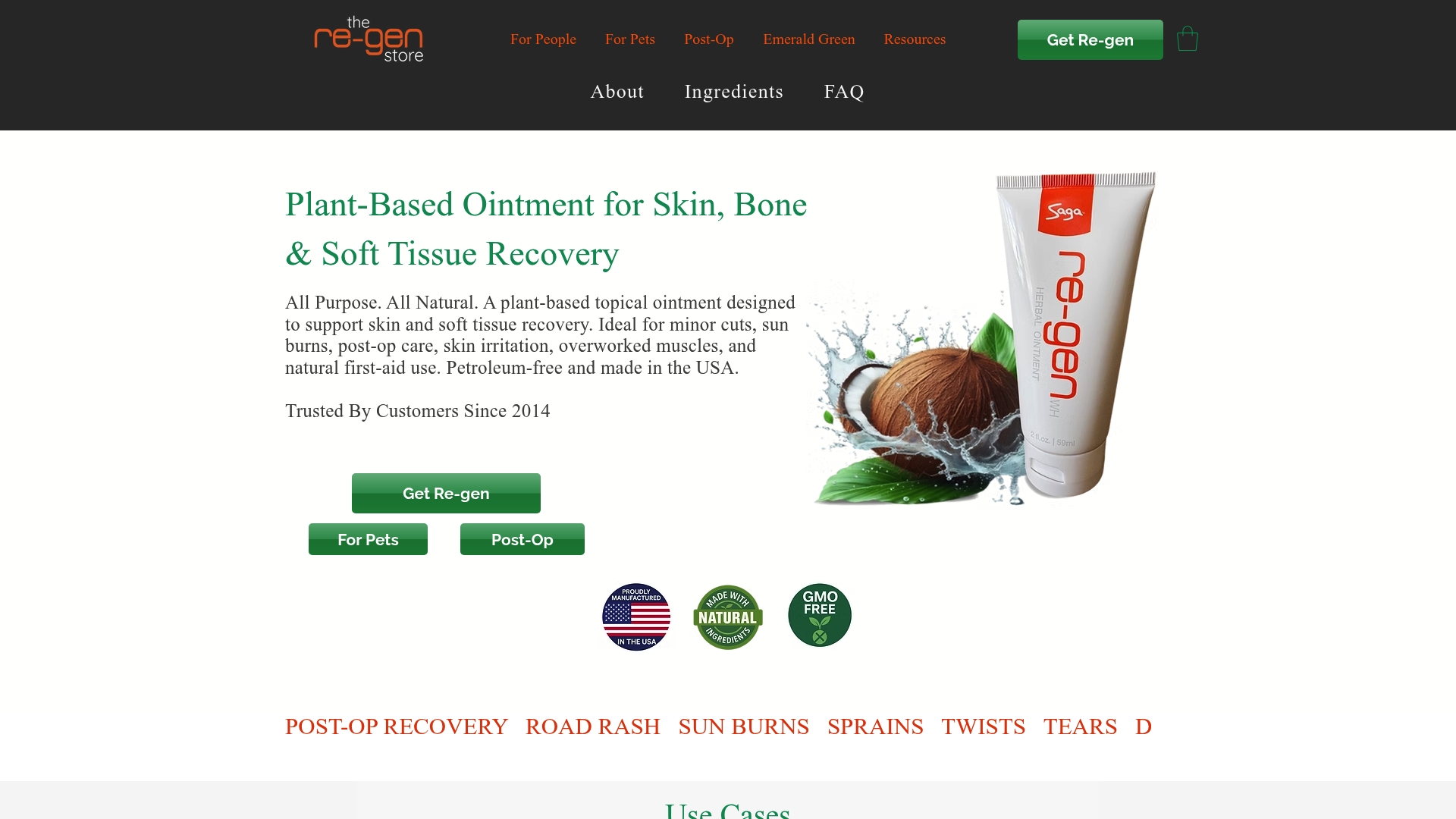
Re-gen is designed to support the same repair processes discussed throughout this guide: calming inflammation, supporting the skin’s natural rebuilding process, and giving minor cuts, scrapes, and irritated skin a chemical-free option instead of conventional antibiotic ointments. It fits the “topical adjunct” role this article has walked through, meant to complement basic wound hygiene, not replace it for anything deep, infected, or slow to heal. Follow the packaging directions for application frequency and layer thickness, and pair it with the daily wound checks covered in the safety section above. For the full ingredient breakdown and usage guidance, visit the Re-gen product page, or start with the plant-based wound treatment landing page to see which packaging size fits your situation and place an order.
Key Studies Worth Reading Next
The clinical case for calendula rests on a handful of well-designed studies rather than a large volume of weak ones, which makes each one worth reading in full if you want to verify the claims in this article yourself.
The systematic review of calendula extract for wound healing remains the best single overview of animal and clinical evidence combined, and it’s the source for the mixed-results framing used throughout this guide.
The updated therapeutic review covers the phytochemistry in depth, useful if you want to understand the mechanism side beyond a summary.
The oral burn RCT is the most rigorously designed trial in the field and the strongest single piece of clinical evidence available.
The hand and finger wound trial offers the cleanest acute-wound data point, with a straightforward outcome measure and a clear result.
For general aftercare context on topical healing products, the post-tattoo aftercare guide covers adjacent territory on supporting skin through a healing process.
Sources
FAQ
Can I put calendula on an open wound?
Yes, for minor open wounds like small cuts or scrapes, topical calendula in the 2% to 10% concentration range studied in trials is reasonable to use after cleaning the wound. Avoid it on deep, heavily contaminated, or actively infected wounds without medical evaluation first.
When should you not use calendula?
Skip calendula if you have a known Asteraceae family allergy (ragweed, daisies, chrysanthemums), and avoid it on deep or infected wounds, or if you notice increasing pain, spreading redness, fever, or pus, all signs that need clinical care instead.
Which herb has the best evidence for wound healing?
Calendula is among the more well-studied herbs for wound healing, with randomized trials supporting its use for acute cuts, hand wounds, and select burns, though evidence quality still varies by wound type, and no single herb has definitive, universal support across all wound categories.
Is calendula a natural antibiotic?
Calendula shows antimicrobial activity in laboratory studies, but calling it a “natural antibiotic” overstates the evidence. It may help limit surface bacterial growth on minor wounds, but it’s not a substitute for antibiotics on an infected wound.
Recommended
Comments