
Surgeon Cleared Incision Itching Relief in 3–4 Weeks; When to Call


Incision itching is usually a normal sign of healing, and you can relieve it right now with a few surgeon-approved steps. Wash your hands, check that your dressing is dry and intact, and hold a cool compress over the covered area for a few minutes instead of scratching. If you notice fever, spreading redness, pus, or pain that keeps climbing instead of easing, stop home care and call your surgical team.
TL;DR:
Incision itching is caused by inflammation, nerve regeneration, and scar tissue formation, typically peaking between days 3 and 28 after surgery.
Using cool compresses, keeping the area clean, and avoiding scratching are safe ways to manage it without risking wound reopening or infection.
Persistent or worsening redness, swelling, drainage, fever, or signs of allergic reactions require immediate medical attention and should not be managed at home.
Topical treatments or scar products can only be used once the wound is fully closed and approved by your surgeon, with unapproved products potentially hindering healing.
Habit modifications like wearing loose clothing, staying hydrated, and trimming nails help reduce irritation and minimize the urge to scratch during recovery.
Table of Contents
What Causes Incision Itching After Surgery
Itching happens because your body is actively repairing tissue, not because something has gone wrong. During the early healing phases, your immune system releases histamine and other inflammatory chemicals around the wound edges, and that chemical surge is one of the main reasons stitches feel itchy in the first place, according to guidance summarized in a wound healing overview from NCBI Bookshelf.
As healing progresses, new nerve endings start growing back into the area, and those regenerating nerves fire off sensations your brain often reads as an itch rather than pain. Scar tissue forming underneath the skin also pulls and stretches as it matures, which adds another layer of irritation.
Several outside factors make the itch worse:
Adhesive tape or dressing material reacting against your skin
Dry, tightening scabs as the wound closes
Friction from clothing rubbing against the incision site
Certain pain medications, especially opioids, which are known to trigger itch as a side effect
Timing: itch tends to ramp up once the wound starts actively closing, not necessarily on day one
Most postoperative itching peaks somewhere between day 3 and day 28, tracking with the shift from inflammation into the proliferation and nerve regrowth stages, per a surgical recovery breakdown from Centre for Surgery. Scar-related itch can linger on and off for months after that, long after the incision itself has closed.
Safe At-Home Ways to Relieve Incision Itching
You don’t need anything fancy to get through the itchiest stretch of recovery. You need a routine, some patience, and a firm rule against scratching. Here’s the order to work through it:
Wash your hands first. Every time you touch the area near your incision, clean hands come first.
Check the dressing. Look for wetness, odor, or loosening before you do anything else.
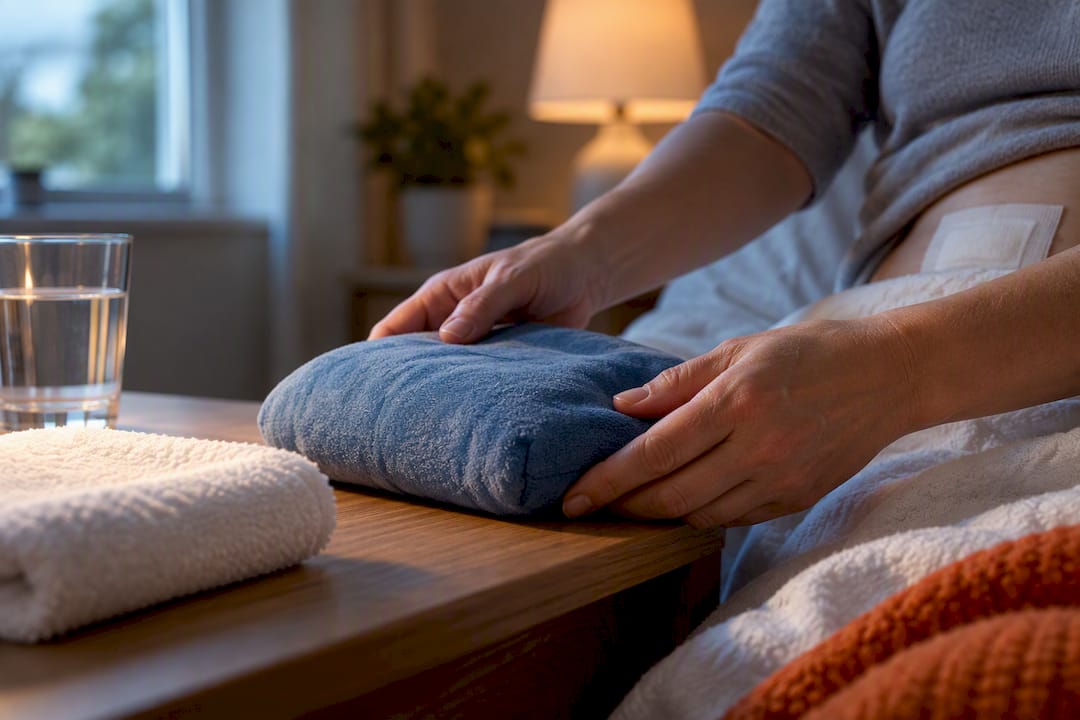
Apply a cool compress. Wrap ice or a gel pack in a thin towel and hold it over the dressing, never directly on skin, for 5 to 10 minutes. Cold temporarily numbs nearby nerve endings and eases itch without soaking the wound, a technique described in practical wound care guidance published on PMC.
Clean per your discharge instructions. A lukewarm shower and a mild, fragrance-free soap are usually all that’s approved. Pat the area dry rather than rubbing it.
Moisturize intact skin only. Once your surgeon clears it, a bland, fragrance-free emollient on the healthy skin surrounding the incision helps with dryness. Stay a finger-width away from the incision line itself.
Ask about oral antihistamines. Non-sedating options like cetirizine or loratadine work well during the day, while sedating ones like diphenhydramine may help you sleep through nighttime itch. Healthline’s guide to itchy stitches notes these are common choices, but your prescriber needs to check for interactions with any other medications you’re taking.
Fix friction sources. Swap in a clean, non-stick pad if the current dressing rubs, wear loose clothing, and change any wet dressing right away.
Skip anything that feels like a shortcut. Scratching can tear new tissue and reopen the wound, which raises infection risk and tends to leave a worse scar behind, according to MedicalNewsToday’s explanation of itchy stitches. Hot baths, strong antiseptics without guidance, and topical anti-itch creams on an open wound are all off the table until your surgeon says otherwise.
Pro Tip: Keep a small cooler pack in the fridge specifically for compress duty. Grabbing something already cold saves you from digging through the freezer at 2 a.m. when the itch wakes you up.
When Itching Signals Infection or an Allergic Reaction
Most itch is background noise during healing, but certain patterns mean it’s time to stop managing it at home. Watch for:
Redness that spreads outward instead of staying contained near the incision
Warmth, swelling, or pain that keeps getting worse instead of gradually easing
Drainage that turns cloudy, yellow, or green
Fever or chills
A tape-shaped rash, blistering, widespread hives, or any tightness in your throat points toward a contact or allergic reaction rather than normal healing, a pattern noted in clinical guidance on post-surgical itchiness. That calls for a dressing change and a call to your clinic, not a wait-and-see approach.
If a medication seems to be behind a systemic, all-over itch, don’t stop taking it on your own. Call the prescriber first. When you do reach out to your surgical team, have your surgery date, the type of closure (staples, sutures, glue), and a photo of the area ready. Until you’re seen, cover the spot with clean, dry gauze and leave it alone.
Reducing Itch Without Risking Your Scar
Small habit changes cut down on itch while keeping the incision protected. Loose, breathable cotton clothing avoids the rubbing that tight fabric causes, and a piece of clean, non-stick gauze over any spot that gets friction from a waistband or bra strap adds a buffer. Staying hydrated helps skin recover its normal texture faster, and it’s worth pulling back on alcohol early in recovery if you notice swelling or itch getting worse after a drink.
Hold off on silicone sheets, scar massage, or heavier moisturizers until the wound is fully closed and your surgeon has given the go-ahead. Applying them too early on skin that hasn’t sealed can invite irritation or infection instead of helping.
Trim your nails short so accidental scratching does less damage
Try thin cotton gloves at night if you tend to scratch in your sleep
Use a cool compress before bed to take the edge off
Ask your prescriber whether a short-term sedating antihistamine is appropriate for a rough night
What the Research Says About Itch and Topical Care
The consistent thread across peer-reviewed sources is that itch during healing is chemical and neurological, driven by histamine early on and nerve regrowth later, per the NCBI wound healing overview. That nerve-related itch doesn’t always respond fully to antihistamines, since it runs on a different pathway than typical allergic itch.
The rule that shows up everywhere, from patient guides to clinical resources, is simple:
Get your surgeon’s clearance before putting anything topical near a healing incision. Never apply creams, ointments, or scar treatments to an open wound. Strong topical steroids and unapproved products on unhealed skin can slow recovery instead of helping it.
Re-gen Plant-Based Regenerative Ointment is formulated to be petroleum-free and plant-based, and Theregenstore markets it for skin recovery support. If your surgeon has cleared a topical for the closed, intact skin around your incision, a thin film is the approach the site recommends, watching closely for any new redness or reaction afterward.
A Note From Kyle
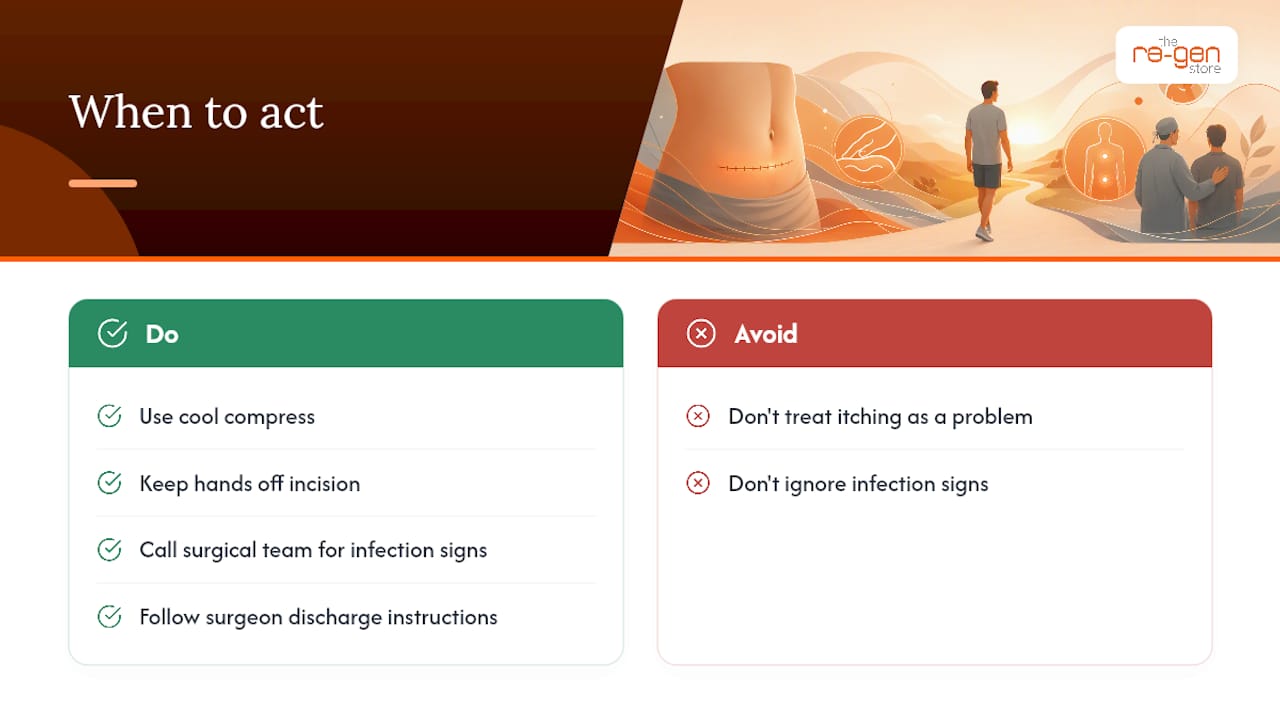
Itching during recovery is uncomfortable, and it’s tempting to treat it as a problem to fix rather than a sign your body is doing its job. In most cases, it’s the second thing. Try the cool compress, keep your hands off it, and give your surgical team a call the moment anything looks like an infection instead of routine healing.
Follow whatever discharge instructions your surgeon gave you over anything you read here.
— Kyle
A Gentle Option for Closed Scars and Surrounding Skin
Once your surgeon confirms your incision is fully closed and ready for a topical, there are plant-based, petroleum-free options built specifically for skin recovery, without the synthetic fillers found in a lot of conventional ointments.

This is a product for closed, incision-adjacent skin only. It is not meant for open wounds, and clinician clearance always comes first. Once you’re cleared, a thin layer applied to the healed area is the standard approach, and you can browse the full Re-gen product line or check the Emerald Green formulation if you’re looking for a specific option. For more on the day-to-day mechanics of recovery, Theregenstore’s post-operative wound care guide walks through the broader routine. Every order ships for a flat shipping fee, and you can place one directly through Theregenstore.
Sources
This article is general information, not a substitute for advice from a qualified doctor. Consult a qualified healthcare professional about your own circumstances before acting on anything here.
FAQ
How long does it take for a surgical incision to stop itching?
Most itching peaks within the first three to four weeks and eases as inflammation settles and nerve regrowth slows, according to surgical recovery timelines from Centre for Surgery. Scar-related itch can come and go for months after that as the tissue continues to mature.
Is it normal for a healing incision to itch?
Yes, itching is a common part of healing, driven mostly by histamine release early on and nerve regrowth as the wound closes. It only becomes a concern when it comes with redness, drainage, fever, or pain that keeps getting worse.
Why are my stitches super itchy?
Sutures and staples irritate the surrounding skin directly, and the healing tissue underneath is releasing histamine while new nerve fibers grow back in. Adhesive from tape or dressings can add to the irritation, especially if your skin reacts to the material.
What stage of wound healing is itchy?
Itch shows up most during the inflammatory and proliferative stages, when histamine is active and nerve regrowth is underway. This typically overlaps with the window from roughly day 3 through day 28 after surgery.
Can I put anything on my incision to stop the itching?
Only after your surgeon confirms the wound is fully closed and clears a topical for the surrounding skin. A bland, fragrance-free emollient or a surgeon-approved product like Re-gen can be used on closed, intact skin, never on an open incision.
Recommended
Comments