
Tissue Inflammation Explained: Causes, Types, and Healing
- Sunny

- 1 day ago
- 6 min read

Tissue inflammation is your body’s immune system responding to injury, infection, or harmful irritants by sending resources to protect and repair the affected area. The process is biological and purposeful. Inflammatory mediators like histamine and bradykinin cause small blood vessels to widen, flooding the area with immune cells and triggering the five classic signs you can feel and see: pain, redness, swelling, heat, and loss of function. Inflammation is not the same as infection. Infection is caused by a pathogen; inflammation is the body’s response to that pathogen, or to any other irritant, including a splinter, a burn, or a torn ligament.
Here is what that means in practice:
Pain acts as a protective signal, discouraging movement so the tissue can heal
Redness and heat result from increased blood flow to the damaged area
Swelling occurs when fluid and immune cells move into the tissue
Loss of function reflects a combination of edema, pain, and cellular damage
Inflammation can be beneficial or harmful depending on whether it resolves quickly or persists
The key distinction is duration. Acute inflammation resolves within days and restores normal tissue function. Chronic inflammation lingers for months or years and can turn the immune system against healthy tissue.
Table of Contents
What causes tissue inflammation?
Tissue inflammation starts when the body detects something harmful, whether that threat comes from outside or from within. Exogenous and endogenous triggers both activate the same core inflammatory pathway.
External (exogenous) causes:
Pathogens: bacteria, viruses, fungi, and parasites
Allergens: pollen, pet dander, certain foods
Chemical irritants: nickel, toxins, alcohol
Foreign bodies: splinters, silica, asbestos
Physical injury: burns, frostbite, trauma, ionizing radiation
Internal (endogenous) causes:
Dead or dying cells releasing distress signals
Damaged or malfunctioning tissue
Physiological stress responses
Autoimmune reactions where the immune system misidentifies healthy tissue as a threat
Physical injuries are among the most common triggers you will encounter day to day. A sprained ankle, a surgical incision, or a minor cut all activate the same cascade. The body does not distinguish between a bacterial invasion and a blunt-force impact at the cellular level. Both produce the same initial alarm signal, and both recruit the same first responders.
Acute vs. chronic tissue inflammation: what’s the difference?
Understanding the two main types of tissue inflammation helps you recognize what your body is doing and why it matters for recovery.

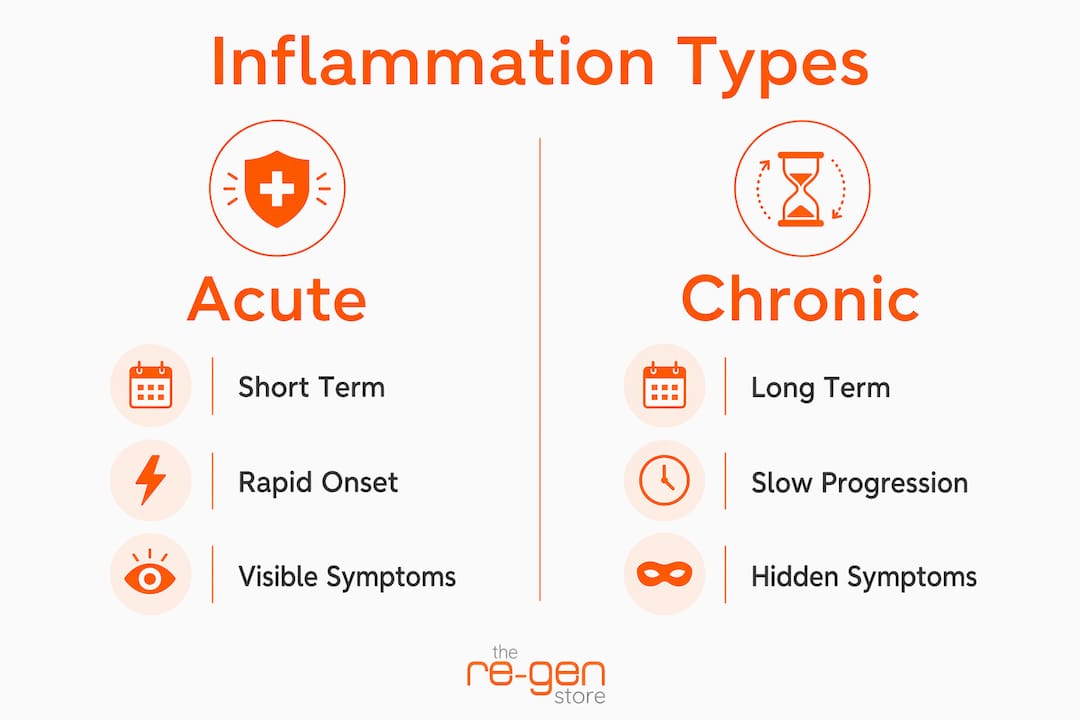
Acute inflammation
Acute inflammation begins within minutes to hours of an injury and typically resolves within a few days. Its goal is to eliminate the harmful agent and begin tissue repair. The cellular infiltrate is dominated by neutrophils, the immune system’s rapid-response cells. Once the threat is neutralized, the inflammatory process winds down and healing continues.
Symptoms of acute inflammation:
Localized redness and warmth
Swelling at the injury site
Pain or tenderness to touch
Reduced range of motion in the affected area
Possible fever if the cause is systemic
Chronic inflammation
Chronic inflammation persists for months or years when the initial trigger is not resolved or when the immune system stays activated without a genuine ongoing threat. T lymphocytes and plasma cells replace neutrophils as the primary immune cells at the site. Over time, the immune response begins damaging healthy tissue rather than protecting it.
Symptoms and signs of chronic inflammation:
Persistent fatigue and low energy
Ongoing pain or stiffness, often in joints
Skin changes such as rashes or persistent redness
Digestive discomfort or irregularity
Frequent infections due to immune dysregulation
Silent inflammation in internal organs, with no visible external signs
The absence of visible symptoms in internal chronic inflammation is clinically significant. Diagnosis often requires biomarkers and systemic symptom assessment rather than a visual exam alone.
Health complications linked to chronic inflammation
When inflammation does not resolve, the immune system’s sustained activity causes collateral damage. Unregulated chronic inflammation leads immune cells to break down healthy tissues, a mechanism central to many serious diseases.
Conditions and complications associated with chronic tissue inflammation:
Rheumatoid arthritis: immune cells attack joint tissue, causing progressive joint destruction
Type 2 diabetes: chronic low-grade inflammation impairs insulin signaling
Cardiovascular disease: inflammatory processes contribute to arterial plaque buildup
Autoimmune diseases: lupus, multiple sclerosis, psoriasis, and inflammatory bowel disease all involve chronic immune activation against the body’s own tissue
Fibrosis: prolonged inflammation replaces functional tissue with scar tissue, reducing organ capacity
Cancer: sustained inflammatory environments can promote abnormal cell growth
Alzheimer’s disease: neuroinflammation is increasingly recognized as a contributing factor
Medical terminology reflects this connection directly. Conditions ending in “-itis,” such as tendonitis, arthritis, and hepatitis, all indicate inflammation as a central feature of the disease process. Recognizing that suffix helps you identify when inflammation is the underlying driver.
Common lifestyle drivers of chronic inflammation include obesity, chronic stress, sedentary behavior, tobacco use, poor diet, and gut dysbiosis. These are modifiable, which means the trajectory of chronic inflammation is often within your control.
Standard treatments and management strategies
Managing tissue inflammation effectively means resolving the immune response without interfering with the healing it supports. Treatment depends on whether the inflammation is acute or chronic, localized or systemic.
Medical treatments:
Nonsteroidal anti-inflammatory drugs (NSAIDs) such as ibuprofen or naproxen for acute pain and swelling
Corticosteroids for more severe or systemic inflammatory conditions
Disease-modifying antirheumatic drugs (DMARDs) for autoimmune-driven chronic inflammation
Physical therapy to restore function and reduce mechanical stress on inflamed tissue
Ice and compression for acute localized injuries to limit swelling in the first 24–48 hours
Lifestyle interventions:
Anti-inflammatory diet: prioritize vegetables, fruits, omega-3 fatty acids, and whole grains; reduce processed foods and refined sugars
Regular moderate exercise, which lowers systemic inflammatory markers over time
Adequate sleep, since sleep deprivation elevates inflammatory cytokines
Stress management through practices like mindfulness or breathing exercises
Weight management, as excess adipose tissue produces pro-inflammatory compounds
Pro Tip: Suppressing inflammation completely is not the goal. Acute inflammation is a necessary part of healing. The aim is to support the process, reduce excessive or prolonged responses, and give your body the conditions it needs to recover fully.
Balancing treatment with recovery support is especially relevant for soft tissue injuries, where both inflammation control and tissue regeneration matter equally.
Natural approaches that support tissue healing
Natural and plant-based strategies can complement conventional care, particularly for localized tissue inflammation and recovery. Lifestyle factors including diet, sleep, and weight management significantly influence systemic inflammation levels, and topical plant-based products can offer additional support at the site of injury.
Practical natural approaches include:
Herbal topical ointments: plant-based formulas applied directly to inflamed tissue can support local healing without synthetic chemicals
Omega-3 fatty acids: found in fatty fish, flaxseed, and walnuts, these reduce the production of pro-inflammatory compounds
Turmeric (curcumin): a well-studied plant compound with anti-inflammatory properties, used both in diet and as a supplement
Magnesium: transdermal magnesium supports muscle recovery and may help modulate inflammatory responses
Adequate hydration: supports lymphatic drainage, which clears inflammatory byproducts from tissue
Gentle movement: low-impact activity like walking or swimming promotes circulation and reduces stagnation in inflamed tissue
Theregenstore’s Re-gen ointment is a petroleum-free, plant-based topical designed to support skin and soft tissue recovery naturally. It is formulated as a chemical-free alternative for cuts, burns, sprains, and post-operative wounds, working with the body’s own repair processes rather than against them. For those exploring herbal support, herbs in tissue repair have a long history of use and a growing body of research behind them.
For physical recovery, soft tissue therapy approaches such as massage, myofascial release, and instrument-assisted techniques can reduce localized inflammation and accelerate muscle recovery when used alongside medical care.
Explore natural tissue support: Theregenstore’s plant-based regenerative ointment is designed to support healing for cuts, burns, sprains, and post-operative wounds. It is petroleum-free, chemical-free, and formulated for both people and pets.
Key Takeaways
Tissue inflammation is a protective immune response that becomes harmful only when it fails to resolve, making the distinction between acute and chronic inflammation the most clinically important factor in understanding and managing it.
Point | Details |
Inflammation is purposeful | The body uses it to eliminate threats and repair tissue; suppressing it entirely interferes with healing. |
Acute inflammation resolves quickly | It begins within minutes to hours and typically clears within a few days. |
Chronic inflammation causes disease | Persistent immune activation is linked to rheumatoid arthritis, diabetes, and cardiovascular disease. |
Lifestyle drives chronic inflammation | Obesity, stress, poor diet, and sedentary behavior are key modifiable contributors. |
Natural support complements treatment | Plant-based topicals, anti-inflammatory diet, and adequate sleep all help modulate the inflammatory response. |
FAQ
What causes tissue inflammation?
Tissue inflammation is triggered by exogenous factors such as pathogens, allergens, chemicals, and physical injuries, as well as endogenous factors like damaged or dying cells releasing distress signals.
What does inflamed tissue feel like?
Inflamed tissue typically feels warm, tender, and swollen, often with a dull or sharp pain that worsens with pressure or movement. These sensations result from increased blood flow and the release of pain mediators like bradykinin.
What are five signs your body has inflammation?
The five classic signs are redness, heat, swelling, pain, and loss of function. Internal inflammation may not produce visible signs, making fatigue, persistent pain, and digestive changes important indicators.
How do you heal tissue inflammation?
Acute inflammation generally resolves on its own with rest, ice, and anti-inflammatory support. Chronic inflammation requires addressing root causes through lifestyle changes, medical treatment, and in some cases, natural topical or dietary support to reduce systemic immune activation.
Recommended
Comments