
Cracked Heels Treatment: A Natural, Chemical-Free Routine
- Sunny

- 2 days ago
- 13 min read
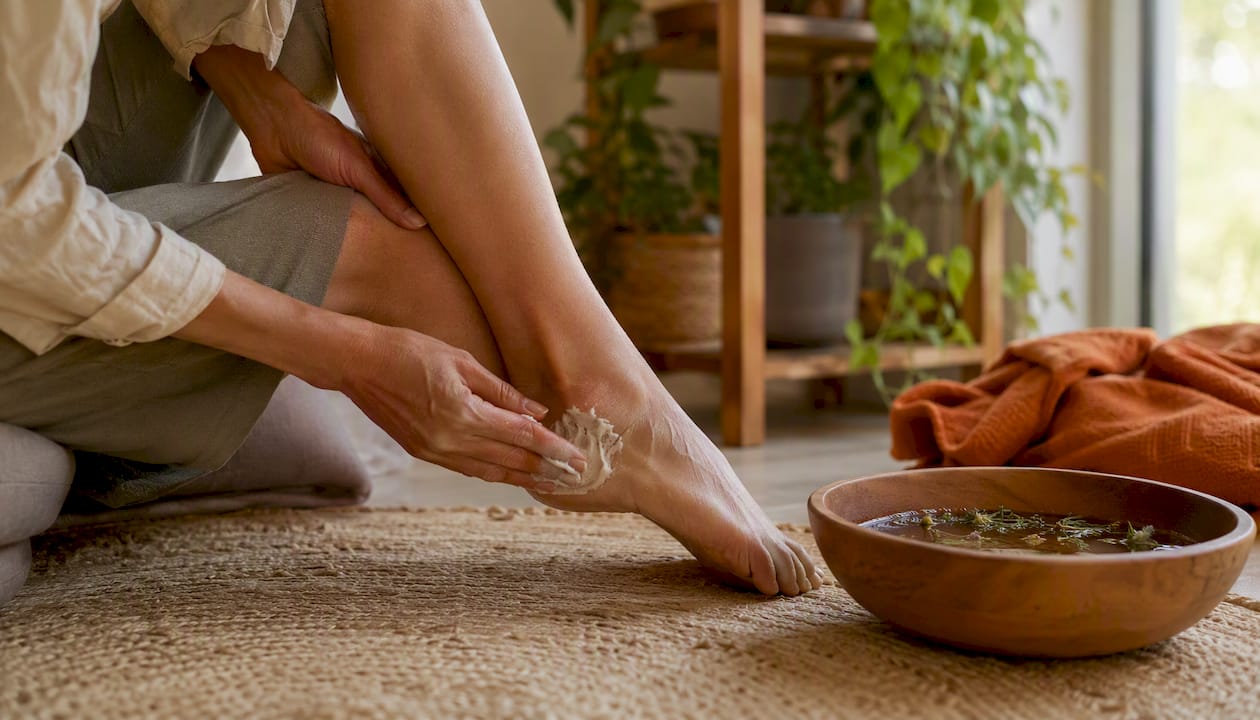
Fixing cracked heels comes down to three steps done in the right order: soften the skin with a short warm soak, break down the thickened callus with a keratolytic or gentle debridement, then seal in moisture with a heavy occlusive overnight. Skip the order and you waste your effort. Most lotions slide right off intact callus because there’s nothing to help them penetrate. A three-step protocol of debridement, keratolytic application, and occlusion produces visible change in Grade 1 or Grade 2 fissures in as little as 1 to 2 weeks.
Here’s what you need on hand tonight:
A basin for a 5 to 15 minute warm soak (not hot, and not longer than that)
A pumice stone or foot file for gentle debridement
A urea-based cream (20% or higher) or a plant-based occlusive ointment
Clean cotton socks for overnight wear
A liquid bandage for any deep, painful, or bleeding fissures
Pro Tip: Apply your keratolytic or occlusive within five minutes of finishing your soak. Damp skin absorbs active ingredients far better than dry skin, and waiting even ten minutes cuts into that window.
If you’re managing diabetes, poor circulation, or nerve damage in your feet, treat this as background reading and get a clinician to evaluate any fissure before starting a home routine on your own.
Point | Details |
Order matters | Soften, then debride, then occlude. Reversing the order wastes the keratolytic. |
Timeline | Expect visible softening in 7 to 14 days with a nightly routine. |
Diabetes caution | Skip self-treatment and see a podiatrist for any fissure if you have diabetes. |
Key Takeaways
Healing cracked heels naturally requires softening skin with a warm soak, breaking down callus with a keratolytic, and sealing moisture in with an occlusive every night.
Point | Details |
Follow the three-step order | Soak, then debride or keratolytic, then occlude. Skipping steps slows results. |
Add urea for thick callus | Use 20 to 40% urea cream when heels have visible hardened skin. |
Occlude overnight with socks | Seal in your ointment with cotton socks for 6 hours of uninterrupted moisture. |
Fix footwear first | Closed heels and cushioned soles reduce the mechanical stress behind fissures. |
Watch for red flags | Bleeding, spreading redness, or diabetes mean it’s time to see a clinician, not push through alone. |
Consider a plant-based occlusive | Theregenstore’s Re-gen ointment offers a petroleum-free option for the nightly sealing step. |
Table of Contents
What Is the Best Natural Cracked Heels Treatment Routine?
The most reliable cracked heels treatment natural to your skin’s own repair process still follows a clinical logic: soften, debride, treat, seal. Dermatologists and podiatrists agree on this sequence even when they disagree on brand names, and that consistency is worth paying attention to.
Here’s the five-step version you’ll actually repeat every night.
Wash and soak. Rinse your feet, then soak them in comfortably warm (not hot) water for 5 to 15 minutes. Cleveland Clinic specifically recommends brief lukewarm soaks over long ones, since prolonged soaking can actually weaken your skin’s moisture barrier.
Debride gently. Once the callus is softened, use a pumice stone or foot file in one direction with light pressure. Never attack dry, unsoftened skin. It just abrades the surface without loosening the thickened layer underneath.
Apply a keratolytic where needed. If your heels have visible thick callus or hard ridges around the crack, a urea cream (20 to 40%), lactic acid, or salicylic acid product breaks down that keratin buildup chemically instead of mechanically.
Layer a heavy moisturizer or occlusive. Petroleum jelly, shea butter, or a plant-based ointment goes on next, sealing in whatever the keratolytic and soak just accomplished.
Occlude overnight. Pull on a pair of clean cotton socks before bed. This traps moisture against the skin for hours instead of minutes.
During the day, keep it simpler: wash, apply a lighter moisturizer, and get your shoes on. Save the full five-step sequence for nighttime, when you actually have time for it to work uninterrupted.
A few things to avoid entirely: hot water (it strips natural oils faster than it hydrates), razor blades or metal graters on your heels, and aggressive filing on any fissure that’s already open or bleeding. If a keratolytic cream causes stinging, redness, or peeling beyond mild flaking, stop for two to three days and let your skin recover before trying again.
Pro Tip: Mark day 1 on your calendar. Most people following this nightly routine see noticeably softer, less painful heels by day 10, but deep, long-standing fissures can take 3 to 4 weeks to fully close.
Which Natural Ingredients Actually Help Heal Cracked Heels?
Not every remedy on this list does the same job, and knowing the difference saves you money and disappointment. Natural foot care ingredients generally fall into four working categories: humectants that pull water into skin, keratolytics that dissolve dead keratin, occlusives that seal moisture in, and emollients or antimicrobials that support the skin barrier without doing heavy lifting on their own.
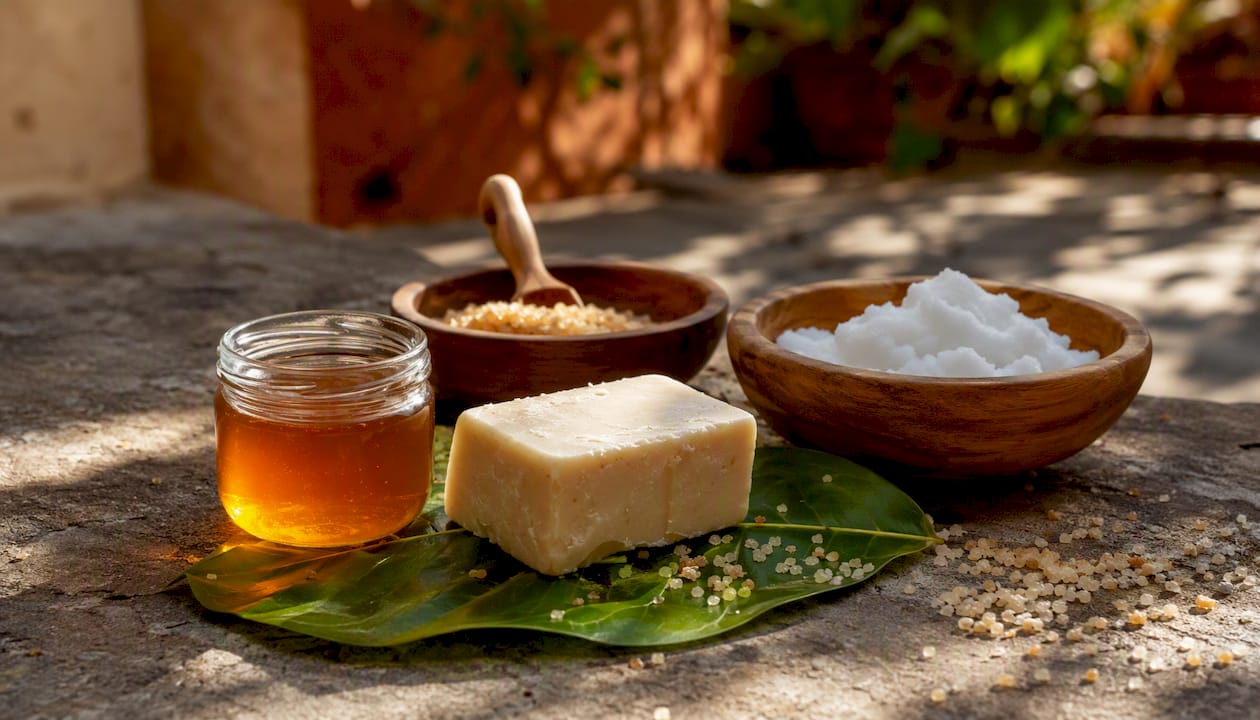
Urea deserves special mention here because it straddles two categories at once. It’s both a humectant and a keratolytic, meaning it draws moisture in while also softening thickened skin, which is part of why it shows up in nearly every clinical recommendation for cracked heels.
Ingredient | Category | What it does | How to use it |
Urea (20 to 40%) | Keratolytic + humectant | Softens thick callus, draws in water | Apply nightly to heels after soaking |
Coconut oil | Emollient + mild antimicrobial | Strengthens the skin barrier, feels soothing | Massage in after moisturizer, not as a replacement for it |
Raw or manuka honey | Antimicrobial | Supports healing, doesn’t dissolve callus | Apply as a mask under socks 2 to 3 times weekly |
Shea butter | Emollient/occlusive | Softens skin, moderate moisture seal | Layer over keratolytic cream at night |
Glycerin | Humectant | Draws water into upper skin layers | Mix into DIY foot creams or use standalone |
Petroleum jelly | Occlusive | Locks in moisture, reduces water loss | Apply as final layer before socks |
Coconut oil and honey have real, if limited, roles. Verywell Health notes that coconut oil has antibacterial properties and may support the skin barrier, and manuka honey carries similar antimicrobial qualities. Neither one breaks down thick, hardened callus the way urea or salicylic acid does. Think of them as supportive players, not the main event.
Before trying any new ingredient, patch-test it on a small area of skin for 24 hours. And if you’re managing diabetes or have any open fissure, skip salicylic acid entirely unless a clinician has approved it. Broken skin absorbs more of the active ingredient than intact skin, and salicylic acid toxicity, while rare, is a real risk in diabetic patients with impaired circulation.
How Do You Safely Exfoliate Thick Callus?
Exfoliation is where most people either help themselves or accidentally make things worse. The tools matter less than the timing and the pressure you use.
Pumice stones remain the gentlest option and work well for daily maintenance on mild to moderate callus. Foot files offer a bit more abrasive power for thicker buildup, while emery boards give you precision around the edges of a fissure without touching the crack itself.
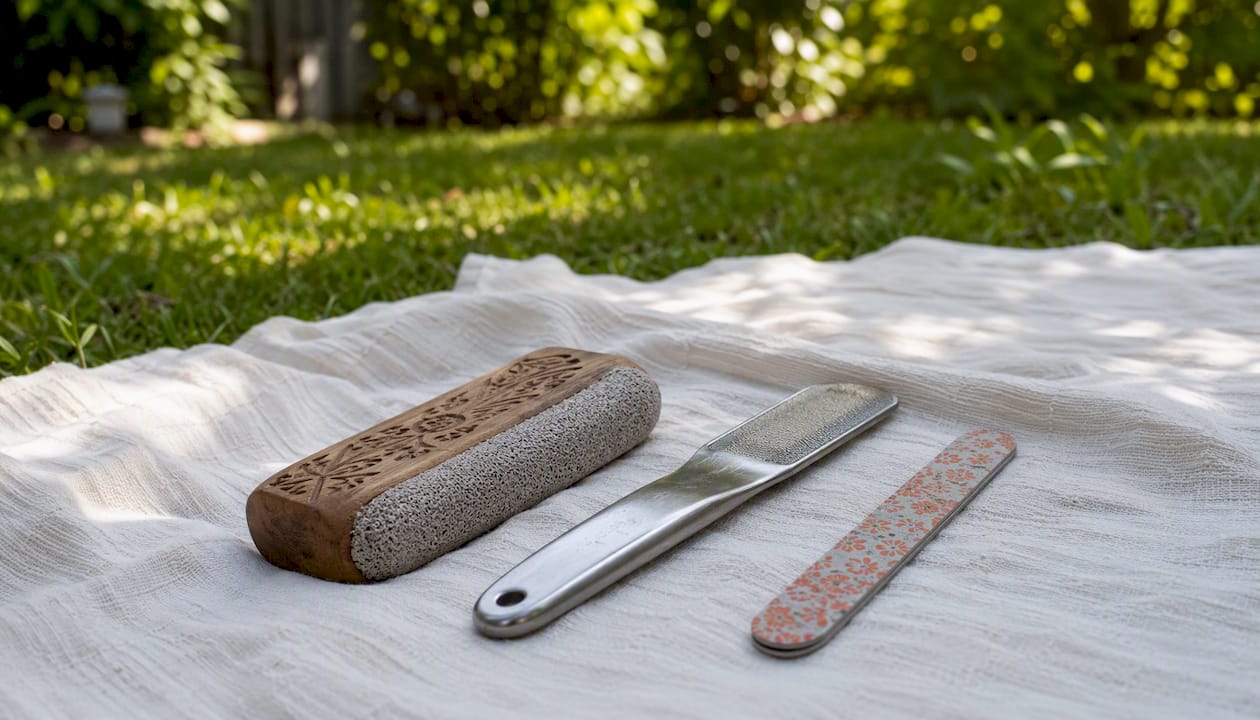
Tool | Abrasiveness | Best for | Safety note |
Pumice stone | Low to moderate | Daily maintenance, mild callus | Use only on softened, wet skin |
Foot file | Moderate to high | Thicker, more established callus | Limit to 2 to 3 sessions weekly |
Emery board | Low, precise | Edges around fissures | Never file into an open crack |
Razor blade or grater | Very high | Not recommended for home use | Risk of cuts, infection, over-removal |
Always work after your warm soak, never before. Dry callus resists the tool and forces you to press harder, which is exactly how people end up nicking healthy skin. Two to three gentle sessions a week is the right cadence for most people. Daily aggressive filing is a common mistake, and podiatry guidance points out that over-exfoliation can trigger rebound thickening, where your skin responds to the irritation by building even more callus.
A short list of what not to do:
Don’t file skin that’s dry, unsoftened, or already broken open.
Don’t share pumice stones or files with other people; they can harbor bacteria.
Don’t exfoliate feet that show signs of infection, swelling, or active bleeding.
Don’t use metal foot graters. The aggressive removal can go too deep too fast.
Pro Tip: Rinse your pumice stone or file under hot water after every use and let it air dry completely. A damp tool sitting in a humid bathroom is a breeding ground for the exact bacteria you’re trying to keep out of your fissures.
Why Does Occlusion Matter, and When Should You Use a Liquid Bandage?
Occlusion is the step people skip most often, and it’s arguably the one doing the most work overnight. Sealing your skin with a heavy ointment or occlusive dramatically slows transepidermal water loss, the process by which moisture evaporates out of your skin into the air. Petroleum jelly alone reduces that water loss by more than 98% when applied as a final layer, which is why it shows up in nearly every dermatology recommendation for dry, cracked skin.
Petrolatum isn’t the only option. Plant-based occlusive ointments and thick butters like shea can achieve a similar sealing effect without petroleum derivatives, which matters if you’re specifically looking for a chemical-free foot care routine. The tradeoff is usually texture and staying power. Some plant-based alternatives need reapplication or a slightly thicker layer to match petrolatum’s water-blocking performance.
Here’s how the two options compare for nightly use:
Occlusive type | Moisture sealing | Texture | Best for |
Petroleum jelly | Very high | Greasy, long-lasting | Deep, established callus and cracks |
Plant-based ointment | High | Lighter, often absorbs faster | Chemical-free routines, sensitive skin |
Shea butter | Moderate to high | Rich, semi-solid | Daily maintenance, mild dryness |
Layer your occlusive last, after any keratolytic cream has had a few minutes to absorb, then pull on cotton socks immediately. This traps warmth and moisture against your skin for six to eight hours, which is far longer than any daytime application gets to work uninterrupted.
Liquid bandage serves a different purpose. It’s meant for clean, dry fissures that are deep, painful, or actively bleeding, forming a protective seal that keeps out contamination while reducing pain from movement. Apply it only to a clean, completely dry crack. If the area shows any sign of infection, redness spreading outward, or drainage, skip the liquid bandage and see a clinician instead.
Pro Tip: For stubborn, deep fissures, try “wet wrapping”: apply a thick layer of ointment, then cotton socks, and leave it on overnight. This technique, borrowed from severe eczema care, markedly increases how well active ingredients penetrate the skin compared to daytime application alone.
What Footwear and Habits Prevent Cracked Heels From Coming Back?
Treating a fissure and preventing the next one are two different jobs, and footwear does more heavy lifting in prevention than most people realize. Dermatology guidance flags open-heeled shoes and worn-out soles as a repeated, often-overlooked driver of heel cracking. Every step in a flip-flop or backless sandal puts unsupported pressure directly on your heel pad, which encourages the skin to thicken defensively.
Look for these features in your everyday shoes:
A closed heel that fully supports and cushions your heel pad
A cushioned sole with enough shock absorption to reduce direct pressure
A firm heel counter that stabilizes your foot and limits lateral friction
Enough depth to accommodate a heel cup or silicone insert if you need one
Socks matter more than people expect. Moisture-wicking or antimicrobial fibers keep feet dry throughout the day, while sweat-trapping synthetic materials create the damp, friction-prone environment where cracks start. If you’re prone to heel fissures, consider silicone heel cups or gel inserts as daytime padding, and reassess your shoes and insoles every few months, since worn cushioning loses its shock-absorbing properties long before it looks obviously worn out.
A few habit changes round out the prevention side: keep showers warm rather than hot, moisturize daily even when your heels look fine, and stay ahead of hydration generally, since dehydrated skin loses elasticity and cracks more easily under normal daily pressure.
Pro Tip: Keep a travel-size occlusive ointment in your bag or car. Reapplying even once midday, especially after a long walk or a workout, cuts down on how much repair work your nightly routine has to do.
When Should You See a Doctor for Cracked Heels?
Most cracked heels respond well to two weeks of consistent home care. Certain signs mean it’s time to stop self-treating and get professional evaluation instead.
Watch for these red flags:
Bleeding that doesn’t stop with basic first aid
Spreading redness or visible swelling around the fissure
Persistent drainage, pus, or an unusual odor
Severe pain that interferes with walking
Numbness or tingling in your feet
Fever, which can signal a spreading infection
Certain groups shouldn’t wait for red flags at all. Anyone with diabetes, peripheral arterial disease, peripheral neuropathy, or a suppressed immune system should have any heel fissure evaluated by a clinician, since reduced circulation and sensation in these conditions raise the risk of a small crack becoming a serious wound before it’s even noticed.
In-office care typically goes beyond what you can do at home. A podiatrist may perform professional debridement with sterile tools, prescribe stronger urea or salicylic acid formulations than what’s available over the counter, apply medical-grade skin adhesives, or recommend custom orthotics to redistribute pressure away from problem areas long-term.
If you’ve followed a consistent nightly routine for 1 to 2 weeks with no improvement, or if things are visibly getting worse, that’s your signal to stop self-treating and book an appointment.
Why Does the Keratolytic-Plus-Occlusion Method Actually Work?
The science here is straightforward once you see it laid out. Keratolytics like urea (20 to 40%) and salicylic acid chemically break down the bonds holding thickened, dead keratin cells together, while occlusion traps moisture against the skin and improves how well those active ingredients penetrate. Neither step does much alone. Keratolytic without occlusion dries out again within hours, and occlusion over untreated thick callus just seals moisture on top of a barrier it can’t get through.
Many patients rely solely on simple oils for cracked heels, but oils alone fail to address the underlying thickened keratin. A keratolytic step followed by occlusion is what actually produces real improvement.
That framing, drawn from podiatric guidance on cracked heel treatment, explains why so many well-meaning home routines stall out. Coconut oil feels great and supports the skin barrier, but it was never designed to dissolve keratin bonds. It’s a finishing touch, not a treatment.
Pro Tip: If you’re combining a keratolytic cream with a natural occlusive, apply the keratolytic first and let it sit for two to three minutes before sealing over it. Layering them at the same time dilutes the keratolytic’s contact with your skin.
For most people with Grade 1 or Grade 2 fissures, meaning shallow to moderate cracks without significant depth or bleeding, this combined approach produces noticeable softening within 1 to 2 weeks. Deeper, chronic fissures take longer and sometimes need a clinician’s input to fully close.
What I’ve Learned About Natural Remedies vs. Real Results
Readers who search for natural cracked heel remedies often want to avoid anything that sounds clinical or synthetic, and I understand the instinct. But the honest answer is that “natural” and “effective” aren’t in tension here. Urea is derived from a compound your own skin already produces. Occlusion isn’t a chemical trick. It’s basic physics: block evaporation, and moisture stays where you put it.
Where I push back on a lot of casual advice is the oils-only camp. Coconut oil and similar remedies feel wonderful and genuinely support skin health, but treating them as a complete solution for thick, cracked callus sets people up to spend months disappointed with slow or nonexistent progress. The keratolytic step isn’t optional if you have real callus buildup. It’s the part of the routine that does the structural work, and the plant-based occlusives and soothing oils are what round out the experience and keep your skin comfortable while that structural work happens.
Stick with the nightly routine for at least two weeks before judging whether it’s working, and don’t hesitate to involve a clinician the moment something looks off.
A Petroleum-Free Way to Occlude and Protect Cracked Heels
If the occlusion step is where you’d rather avoid petroleum jelly altogether, Theregenstore’s Re-gen ointment gives you a plant-based option that seals in moisture without a single petroleum derivative in the formula. It’s built to support skin and soft tissue recovery generally, which makes it a natural fit for the final layer of your nightly heel routine.

Using it is simple: apply your keratolytic cream first if you’re working on thick callus, let it absorb for a few minutes, then layer Re-gen on top as your occlusive before pulling on cotton socks for the night. If your heels are only mildly dry with no significant callus, you can use it on its own as a nightly maintenance step. As with any new topical, patch-test it on a small area first, and if you’re dealing with an infected or actively draining fissure, get clinician approval before applying anything, including this.
The full ingredient list and usage guidelines are posted on the product page, and the same diabetes and red-flag warnings covered earlier in this article still apply. If you’re ready to add a petroleum-free occlusive to your routine, you can check out the product details and order directly at Theregenstore.
Sources
This article is general information, not a substitute for advice from a qualified doctor. Consult a qualified healthcare professional about your own circumstances before acting on anything here.
FAQ
How Do You Fix Cracked Heels Fast Naturally?
Soak your feet in warm water for 5 to 15 minutes, gently debride softened skin with a pumice stone, apply a urea-based or plant-based keratolytic, then seal with a heavy occlusive and cotton socks overnight. Most people see noticeable softening within 7 to 14 days of doing this nightly.
What Vitamin Deficiency Causes Cracked Heels?
Cracked heels are usually caused by mechanical and environmental factors like dry air, prolonged standing, and open-backed shoes rather than a single vitamin deficiency, though poor overall skin hydration and nutrition can make skin more prone to cracking. If your heels crack persistently despite good foot care, it’s worth discussing with a doctor rather than guessing at a supplement.
What Is the Root Cause of Dry, Cracked Heels?
The root cause is usually thickened callus combined with dehydrated skin, made worse by pressure from standing, open-heeled footwear, and low humidity. Once the skin around the heel loses elasticity and the callus thickens without adequate moisture, it eventually splits under normal walking pressure.
What Does Vinegar Do for Cracked Heels?
Vinegar’s mild acidity may soften surface skin slightly when diluted in a foot soak, but it isn’t a keratolytic in the same category as urea or salicylic acid and won’t break down thick, established callus on its own. It’s better used as a minor supportive step, not a replacement for the soften, debride, occlude routine.
Can You Use a Plant-Based Ointment Instead of Petroleum Jelly for Cracked Heels?
Yes. A plant-based occlusive ointment, like the one Theregenstore sells, can seal in moisture similarly to petroleum jelly when layered over a keratolytic cream and worn overnight with socks. It’s a solid option if you specifically want to avoid petroleum-based products in your routine.
Recommended
Comments