
Post-Op Recovery Checklist: A Print-Friendly Plan for Home
- Sunny

- 6 minutes ago
- 8 min read

Print this before you go to the hospital: confirm no driving, arrange an adult caregiver for at least the first 24 hours, follow your pain control plan, walk short distances on schedule, use your incentive spirometer, check your incision daily, take medications as prescribed, and book your follow-up appointment before you leave. Every item on this list traces back to ERAS guidelines, the recovery protocol most hospitals now use to cut complications and shorten healing time.
Here’s the copy-ready version for your phone or fridge:
No driving or major decisions for at least 2 to 3 days
Adult caregiver present, especially overnight
Pain medication on a regular schedule, not just “as needed” once pain builds
Short walks multiple times a day, starting as soon as cleared on the day of surgery
Incentive spirometer use every hour while awake
Incision check once daily for redness, swelling, or drainage
Follow-up appointment confirmed with date and time
Pro Tip: Anesthesia and pain medication can cloud thinking for two to three days. Skip anything that requires sharp judgment, from signing contracts to answering work email, until that window closes.
Key Takeaways
Safe recovery depends on following your surgeon’s written discharge instructions while actively doing the daily work of walking, breathing exercises, and wound checks.
Point | Details |
Follow written discharge orders | Your surgeon’s specific instructions override any general checklist, including this one. |
Move early and often | Aim for several short walks daily starting the day of surgery, as cleared. |
Watch for red flags | Fever, spreading redness, uncontrolled pain, or leg swelling warrant a call to your surgeon. |
Prep supplies in advance | Fill prescriptions and stage wound care items before surgery, not after. |
Consider gentle topical support | Theregenstore’s plant-based Re-gen ointment can offer skin comfort near incisions once your surgeon clears external care. |
Table of Contents
Building Your Pre-Op Recovery Plan Before Surgery
Three tasks make the biggest difference before you ever reach the operating room: a full medication review with your surgical team, a confirmed caregiver and ride home, and prescriptions filled ahead of time. Skip any one of these and discharge day gets harder, not easier.
At your pre-op visit, ask directly:
How long will I likely stay in the hospital?
What are my activity restrictions, and for how long?
How do I care for my incision, and when can it get wet?
What symptoms mean I should call you versus go to the ER?
Will I need a blood thinner, and for how long?
When is my follow-up, and who do I contact with questions before then?
Timing matters more than most people realize. Surgeons often ask patients to stop certain medications days ahead and use chlorhexidine wipes the night before as a skin-prep step, both drawn from standard pre-op preparation checklists. Pack your hospital bag and stage home supplies the week before, not the morning of.
Pro Tip: Fill your post-op prescriptions before surgery, not after. Pharmacies get backed up, and the last thing you want is a delay in pain control your first night home.
What Happens in the Hospital After Surgery?
Hospital staff focus on seven things immediately after your procedure: vital sign monitoring, pain control, blood clot prevention, early movement, breathing exercises, incision checks, and discharge planning. Your job is simpler but just as important: follow the written orders you’re given, exactly as written.
In the recovery unit, staff will watch your vitals closely, teach you to use an incentive spirometer, and likely start some form of DVT prophylaxis, whether that’s compression stockings, a blood thinner, or both. Before you leave, confirm three things out loud with your care team: that your prescriptions are ready, that you understand your wound-care instructions, and that someone will be with you at home.
“Get out of bed and start moving as soon as you’re able. Short walks several times a day, sitting up for meals, and steady spirometer use all lower your risk of blood clots and pneumonia in that first 24 hours.” This is the consistent guidance behind post-surgery mobility recommendations.
If anything about your discharge instructions seems unclear, ask before you walk out the door. That’s the cheapest insurance you’ll get all day.
Room-by-Room Home Safety Checklist for Recovery
Three things matter more than anything else once you’re home: clear walkways, supplies within arm’s reach, and an easy path to the bathroom. Fall risk peaks in the first week, and most falls happen reaching for something that should have been closer.
Bedroom: Raise the bed if getting up is difficult, keep a nightlight on, and leave your phone and water within reach of the bed.
Bathroom: Add a shower seat, non-slip mats, and a hand-held showerhead if you can. A raised toilet seat helps more than people expect.
Kitchen: Pre-make meals or freeze portions, keep snacks and a water bottle at counter height, and skip anything on a high shelf for now.
Living areas: Clear loose cords and rugs, and pick a chair with firm arms and good back support for daytime resting.
Room | Priority Fix |
Bedroom | Nightlight, phone, and water within reach |
Bathroom | Shower seat and non-slip mat |
Kitchen | Pre-made meals and reachable snacks |
Living area | Cleared walkways, supportive seating |
Tape this table to the fridge, or hand it to whoever is helping you those first few days.
What Should Your Daily Recovery Routine Look Like?
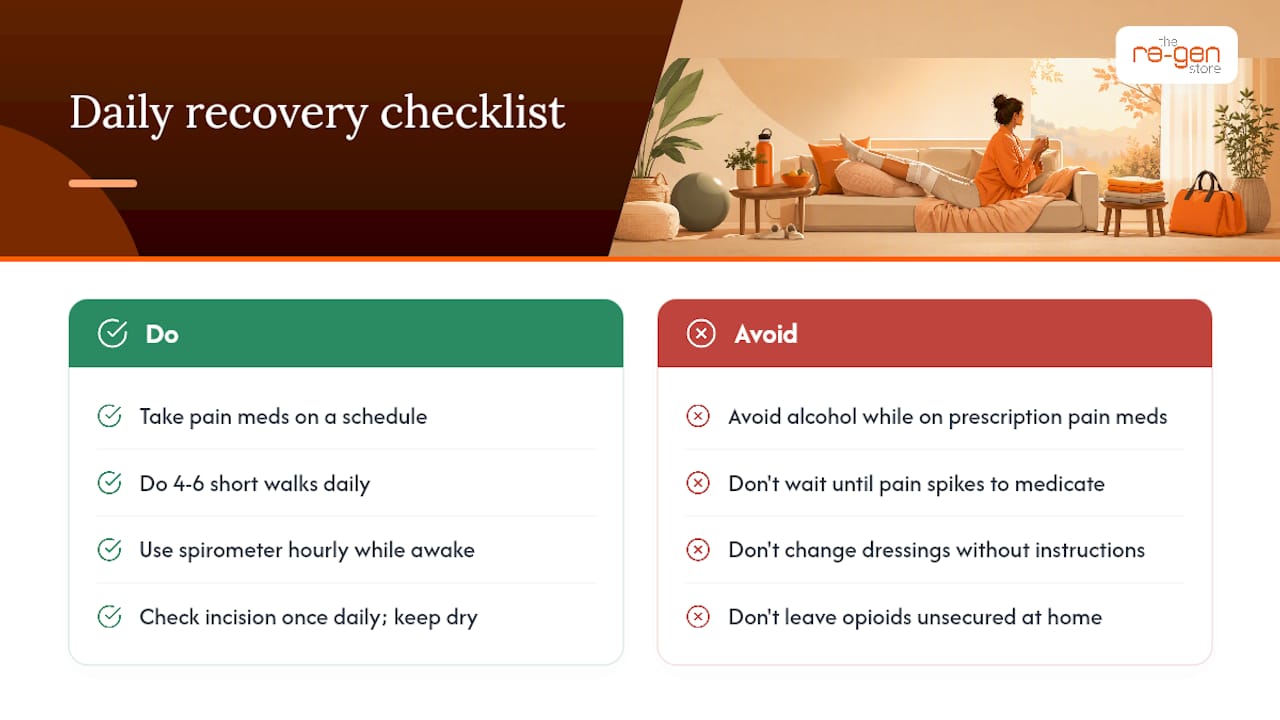
Five things anchor a safe recovery day: scheduled pain control, short walks spaced through the day, wound checks, breathing exercises, and steady nutrition. Miss one for a day or two and you’ll usually feel it in stiffness, nausea, or slower healing.
Take pain medication on a schedule for the first few days rather than waiting until pain spikes. Avoid alcohol while on prescription pain medication, and keep opioids stored securely, away from household members, with a plan to dispose of leftovers responsibly, per standard post-surgical medication guidelines.
Movement should start small and build. Many programs target four to six short walks daily beginning the first day, with sitting up for every meal instead of eating in bed. Use your incentive spirometer roughly once an hour while you’re awake. Constipation is common after surgery, especially with opioid use, so fiber, fluids, and a stool softener (if your surgeon approves one) belong on your daily list, not an afterthought.
Check your incision once a day. Keep it dry per your surgeon’s timeline, watch for spreading redness or new drainage, and change dressings on the schedule you were given, not on your own guess.
Pro Tip: Set phone alarms for medication times and spirometer use for the first week. Recovery fog makes it easy to lose track of time, and a schedule takes the guesswork out of it.
What Supplies Do You Need Before Surgery?
Twelve items belong on your pre-op shopping list: filled prescriptions, wound dressing supplies, antiseptic wipes, medical tape, a stool softener, an incentive spirometer if prescribed, a phone charger, comfortable loose clothing, snacks, a water bottle, a mobility aid if recommended, and a list of emergency contacts.
Hospital bag: filled prescriptions, phone and charger, loose comfortable clothes, insurance cards, a small snack, and a printed copy of your discharge questions.
Home supplies: dressing materials, antiseptic wipes, tape, stool softener, spirometer, mobility aid, and pre-made meals in the freezer.
Item Category | Get It Before Surgery |
Prescriptions | Fill early to avoid pharmacy delays |
Wound supplies | Dressings, tape, antiseptic wipes |
Mobility aids | Buy or rent a walker/cane if advised |
Comfort items | Loose clothing, phone charger, snacks |
Durable equipment like walkers or raised toilet seats is often cheaper to rent short-term than to buy, and many pharmacy and medical supply stores offer both options. A guide on common post-operative wound care can help you stock the right dressing supplies before discharge day.
When Should You Call Your Surgeon After Surgery?
Call your surgeon right away for a fever that won’t break, worsening drainage or redness at the incision, pain that isn’t controlled by your prescribed medication, shortness of breath, or leg swelling paired with pain. Go to the ER for symptoms that feel severe or are rapidly worsening; call 911 for chest pain, serious trouble breathing, or bleeding that won’t stop.
If in doubt, cover the incision, note the time symptoms started, and call your surgeon’s office first, per after-surgery guidance from MedlinePlus, unless you’re facing a clear emergency.
A fever above 101°F and any new or spreading redness at the incision site are the two signs that most commonly warrant a same-day evaluation.
What Does the Research Say About Recovery Timelines?
ERAS protocols treat mobility, breathing, and nutrition as prescribed treatments, not optional extras, because early recovery pathways measurably reduce complications and hospital stays. Expect anesthesia-related mental fog for two to three days, and plan on walking multiple times daily starting immediately, since hourly spirometer use and frequent walking are core parts of the protocol, not afterthoughts.
Recovery isn’t something that happens to you passively. Under ERAS, it’s something you actively do, one short walk and one spirometer breath at a time.
A Practical Note on Pacing Recovery
The single biggest factor in a safe recovery is planned early movement paired with clear discharge instructions and a caregiver who knows the plan. Use this checklist as a shared script with whoever is helping you, not just a personal reminder. For skin comfort around a healing incision, resources on post-op natural care from Theregenstore are worth a look, always alongside your surgeon’s wound-care orders, never instead of them.
A Gentle Skin-Comfort Option for Incision-Adjacent Care
A plant-based topical can offer a non-antibiotic option for comfort on the skin around a healing incision, used only as your surgeon directs and never in place of prescribed wound care. Theregenstore makes Re-gen, a chemical-free ointment formulated for skin, soft tissue, and muscle support, and many people reach for it as a gentler alternative to petroleum-based first-aid products once their surgeon clears external skin care.

If you’re comparing natural alternatives to conventional antibiotic ointments for the skin around an incision, start with your surgeon’s specific wound-care instructions first. Once cleared for topical skin support, you can explore petroleum-free wound treatment options on Theregenstore’s site and decide if it fits into your recovery routine alongside, not in place of, what your surgical team has prescribed.
Sources
This article is general information, not a substitute for advice from a qualified doctor. Consult a qualified healthcare professional about your own circumstances before acting on anything here.
FAQ
What Are the 5 P’s of Post-Op Care?
Definitions vary by hospital system, but common versions cover pain control, positioning, pulmonary care (breathing exercises), prevention of clots, and progress toward mobility.
Why Is Day 3 the Hardest After Surgery?
Anesthesia-related fog often lifts around day two or three, which is also when initial pain medication effects wear off and swelling frequently peaks, making discomfort feel more noticeable than day one.
What Is the Surgical Safety Checklist?
Hospitals use structured checklists before, during, and after surgery to confirm patient identity, procedure details, and post-op monitoring steps; your discharge checklist is the patient-facing version of that same principle.
What Should You Avoid in the Week Before Surgery?
Avoid starting new medications or supplements without surgeon approval, skipping pre-op instructions like stopping certain blood thinners, and delaying questions about your recovery plan until the day of surgery.
When Can I Expect to Return to Normal Activity?
Timelines vary widely by procedure type, but minor surgeries often allow a return to light activity within days, while major surgery frequently requires weeks of gradual increases in walking and activity, guided by your surgeon’s specific timeline.
Recommended
Comments