
Adhesive Allergy Rash Treatment: What to Do Right Now
- Sunny

- 1 day ago
- 10 min read
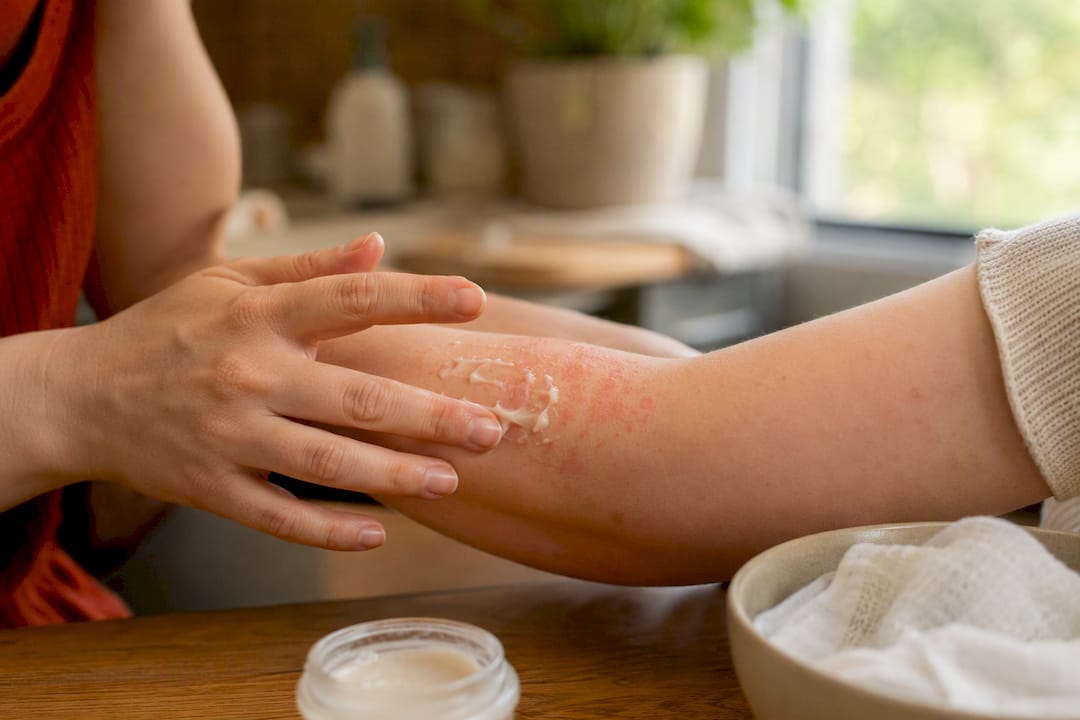
If a rash has formed under or around tape, a bandage, or a medical dressing, remove the adhesive, cleanse the skin with mild soap and lukewarm water, then apply a cool compress and, for mild cases, an over-the-counter 1% hydrocortisone cream. An oral antihistamine can calm the itch while your skin settles.
Peel the adhesive off slowly, using an oil or adhesive remover if it resists.
Wash the area gently. Skip scrubbing, alcohol, or acetone.
Cool the skin with a compress for 10 to 15 minutes, a few times a day.
Apply 1% hydrocortisone to reduce redness and swelling.
Take a non-sedating antihistamine if itching disrupts sleep or focus.
Call 911 or use epinephrine right away if you notice facial or throat swelling, trouble breathing, or dizziness after adhesive exposure. Anaphylaxis from adhesive chemicals is rare, but it happens, and it does not wait for you to finish reading an article.
Most mild reactions calm down within a few days of removing the adhesive. Some clinical estimates put adhesive-related skin complications at roughly 0.5% to 14% of patients depending on the product and setting, so a reaction like this is more common than most people assume. See a clinician if nothing improves within 5 to 7 days.
Key Takeaways
Adhesive allergy rash treatment works best as a sequence: remove the trigger, calm the inflammation with the right topical, and escalate to a clinician only when home care stalls.
Point | Details |
Act on removal first | Peel off the adhesive slowly and cleanse gently before applying anything else. |
Match treatment to severity | Start with 1% hydrocortisone; escalate to prescription steroids if it isn’t working within days. |
Know the red flags | Facial swelling, breathing trouble, spreading rash, or infection signs mean you need urgent or emergency care. |
Patch testing confirms the cause | A 48 to 96 hour patch test identifies the exact allergen when reactions keep recurring. |
Support recovery after inflammation settles | A plant-based option like Theregenstore’s Re-gen can complement aftercare once acute symptoms have calmed, alongside clinician-directed treatment. |
Table of Contents
What Causes an Adhesive Allergy Rash?
An adhesive allergy is allergic contact dermatitis, a Type IV delayed hypersensitivity reaction. Your immune system reacts to a specific chemical in the adhesive, not the adhesive itself, and that reaction takes time to build.
That timing separates it from irritant contact dermatitis, which shows up almost immediately from friction, moisture, or a harsh chemical rubbing the skin raw.
Onset: Allergic reactions typically appear 24 to 72 hours after contact; irritant reactions show up within minutes to hours.
Spread: Allergic rashes often extend beyond the exact contact area; irritant rashes usually stay confined to where the adhesive touched.
Mechanism: Allergic reactions involve immune cells recognizing the chemical as a threat; irritant reactions are direct physical or chemical damage, no immune memory required.
Culprit chemicals usually fall into a few groups: acrylates (the sticky polymer itself), colophony or rosin-based resins, and rubber accelerators used in some elastic tapes.
What Does an Adhesive Allergy Rash Look Like?
The rash usually mirrors the shape of the tape or bandage at first, then spreads outward as the reaction builds.
A red, itchy patch shaped roughly like the adhesive strip
Small raised bumps (papules) or fluid-filled blisters (vesicles)
Localized swelling and warmth
Dry, scaling skin as the reaction progresses
Darker or lighter patches (post-inflammatory pigment change) that linger after the redness fades
Timing matters here: expect symptoms to build over 24 to 72 hours rather than appearing instantly, and don’t be surprised if the rash creeps past the original tape outline. Reactions vary widely. Some people get a faint itchy strip that fades in a day. Others develop a raised, weeping plaque that spreads several inches past the original contact site.
What in Adhesives Actually Triggers This Reaction?
A handful of ingredients account for most adhesive allergies, and none of them are usually listed on the box.
Acrylates — the core adhesive polymer in most medical and consumer tapes
Colophony (rosin) — a resin derived from pine sap, common in older-style adhesives and some athletic tapes
Rubber accelerators and latex components — found in elastic bandages and some compression wraps
Tackifiers and added fragrances — sometimes present in “gentle” dressings marketed as skin-friendly
Manufacturers rarely print a full ingredient breakdown for adhesive backing. If you’ve reacted to one product but not another, the difference often comes down to one of these compounds, and figuring out which one usually takes a dermatologist and a patch test rather than label-reading.
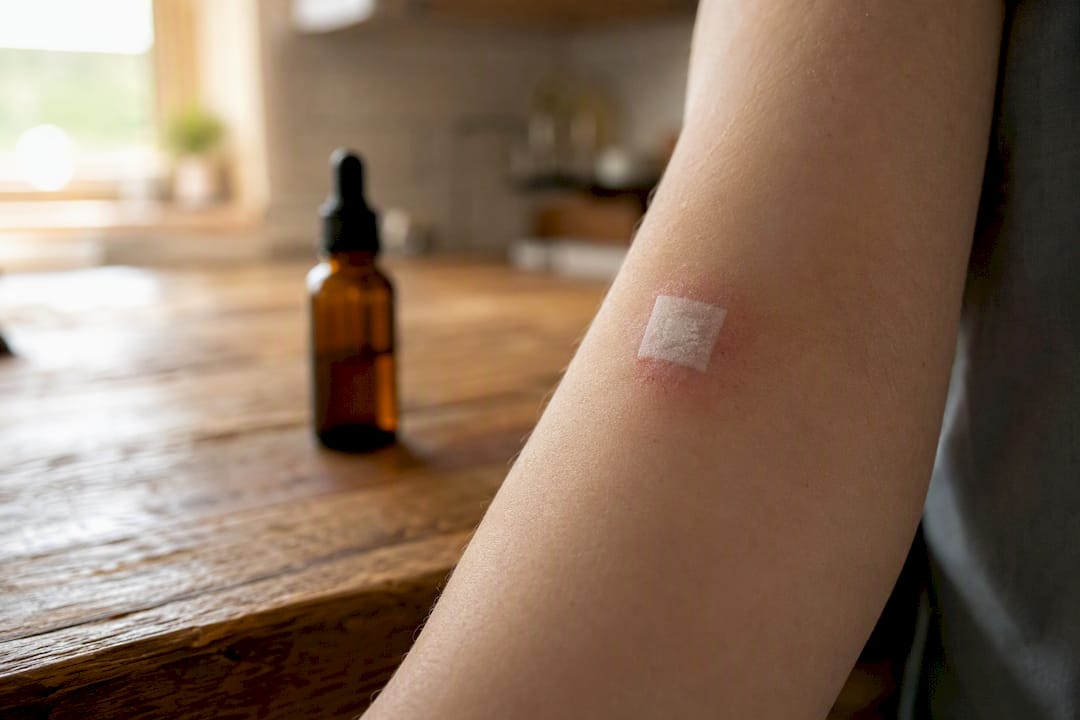
Pro Tip: Before trusting a new tape or dressing on a wound, stick a small piece on your inner forearm for 24 to 48 hours. Keep a simple log of which brands caused a reaction and which didn’t. It saves you from repeating the same mistake on a bigger patch of skin later.
How Is Adhesive Allergy Diagnosed?
Diagnosis usually follows a predictable sequence, starting with the least invasive step.
Your clinician reviews your exposure history: what product, how long it was on, how fast the rash appeared.
You try avoiding the suspected adhesive for a period to see if the rash resolves.
If reactions keep recurring or the rash is severe, your doctor may order patch testing.
Patch testing is the gold standard for confirming which chemical is responsible. Small amounts of suspected allergens are applied to your back under patches, left in place for 48 hours, then read again at 72 to 96 hours as the delayed reaction develops. Standard allergy blood tests that measure IgE antibodies don’t help here. Adhesive allergy is a T-cell driven reaction, and IgE tests are built to catch a completely different immune pathway.
Bring photos of the rash at different stages if you can.
Save the actual product packaging or a sample of the adhesive involved.
Ask your primary care provider for a dermatology referral if the reaction recurs more than once.
What Should You Do at Home in the First 48 to 72 Hours?
Your first move after spotting the rash sets the tone for how fast it resolves.
Remove the adhesive slowly. Baby oil, olive oil, or a commercial adhesive remover loosens the bond without tearing skin.
Cleanse with mild, fragrance-free soap and lukewarm water. Pat dry, don’t rub.
Apply a cool, damp compress for 10 to 15 minutes several times a day to calm swelling.
Use 1% hydrocortisone cream on the affected area twice daily for up to a week for mild cases.
Follow with a fragrance-free emollient to rebuild the skin barrier once acute redness eases.
A few things to avoid entirely:
Don’t scratch or pop any blisters that form; broken skin invites infection.
Skip alcohol, acetone, or vigorous scrubbing when removing residue.
Calamine lotion can help with itch if hydrocortisone isn’t available.
An oatmeal bath soothes widespread irritation better than a targeted compress for larger areas.
Pro Tip: A non-sedating antihistamine during the day and a sedating one at night (if itching is keeping you up) tends to work better than picking just one. Neither changes the underlying immune reaction, but both make the waiting period a lot more bearable. If a rash is barely responding to hydrocortisone after several days, that’s usually the signal you need a prescription-strength option, not a stronger dose of the same OTC cream.
When Do You Need Prescription Treatment?
Over-the-counter hydrocortisone handles most mild cases, but some reactions need more firepower.
Stronger topical steroids when hydrocortisone isn’t clearing things up. Potency should match the site: milder formulas for the face and skin folds, stronger ones for the trunk or limbs, and courses are kept short to limit thinning or discoloration.
Topical calcineurin inhibitors for sensitive areas like the face or flexural skin, where potent steroids carry more risk.
Short oral corticosteroid courses for widespread or particularly stubborn inflammation that isn’t responding to topical treatment alone.
Antibiotics if you see signs of secondary infection: increasing warmth, spreading redness, or pus from broken blisters.
Antihistamines relieve the itching that comes with an adhesive reaction, but they don’t touch the underlying Type IV immune mechanism driving it. Topical or oral steroids are what actually calm the inflammation.
If blisters have opened, gentle wound care and monitoring for infection matter more than the antihistamine you’re taking. A dermatology referral is worth requesting for anything that keeps recurring.
How Can You Prevent Repeat Adhesive Reactions?
Once you know adhesives are a problem, the fix is usually a different product, not toughing it out.
Silicone-based tapes are often tolerated by people who react to standard acrylate adhesives.
Hypoallergenic paper or cloth tapes skip some of the harsher tackifiers found in stronger adhesives.
Non-adhesive dressings — gauze secured with a tubular bandage — avoid direct adhesive contact with skin entirely.
Skin barrier films, sprayed or wiped on before the adhesive goes down, create a protective layer between your skin and the sticky surface.
Match the alternative to the job: a barrier film under a short-term bandage, silicone tape for longer catheter or tube fixation, and non-adhesive options for anyone managing recurring dressing changes after surgery. Patch test any new product on a small area first, and keep a written note of what’s caused problems before, so you’re not relearning the same lesson months later.
When Should You See a Doctor for an Adhesive Rash?
Most reactions resolve with home care, but a few signs mean it’s time to stop self-treating.
The rash keeps spreading despite removing the adhesive and treating it.
Pain feels out of proportion to what you’d expect from a rash.
Blisters cover a large area or the skin has broken open extensively.
You notice increasing redness, warmth, pus, or fever, all signs of infection.
Facial swelling or breathing trouble appears, which points toward a systemic allergic reaction.
If you’re seeing facial swelling or shortness of breath, that’s a 911 call, not a wait-and-see situation. Everything short of that usually starts with a call to primary care or urgent care.
Ask for a dermatology referral if this keeps happening. Recurring reactions are exactly what patch testing is designed to solve.
How Long Does an Adhesive Allergy Rash Take to Heal?
Recovery timing depends on how severe the reaction was and how quickly you removed the trigger.
Mild, localized reactions often clear within a few days once the adhesive is gone and you’ve started OTC treatment.
Moderate cases, especially with blistering or larger plaques, can take one to three weeks to fully resolve.
Post-inflammatory pigment changes, darker or lighter patches, sometimes linger for weeks after the rash itself is gone.
Reported rates of adhesive-related skin complications range from roughly 0.5% to 14% depending on the adhesive and population, so a slow-healing case isn’t unusual. See a clinician if there’s no improvement within 5 to 7 days, or if the rash worsens instead of fading.
A Practical Note on Pairing Medical Care With Natural Aftercare
Evidence-based steps come first: remove the adhesive, cleanse, treat with hydrocortisone or a prescription steroid if needed, and get patch testing if reactions keep recurring. Once the acute inflammation has settled, a gentle, plant-based topical can support the skin as it finishes healing. Prescription care takes priority whenever a rash is infected, spreading, or not responding to OTC treatment; natural aftercare is a complement to that process, never a substitute for it.

A Plant-Based Option for Skin That’s Still Settling Down
Once the redness has calmed and any prescribed treatment has done its job, the skin around an adhesive reaction often stays sensitive for a while. Theregenstore makes Re-gen, a plant-based, petroleum-free ointment built for exactly that window, when you want something supportive on the skin that isn’t loaded with synthetic fillers or occlusive petroleum bases.
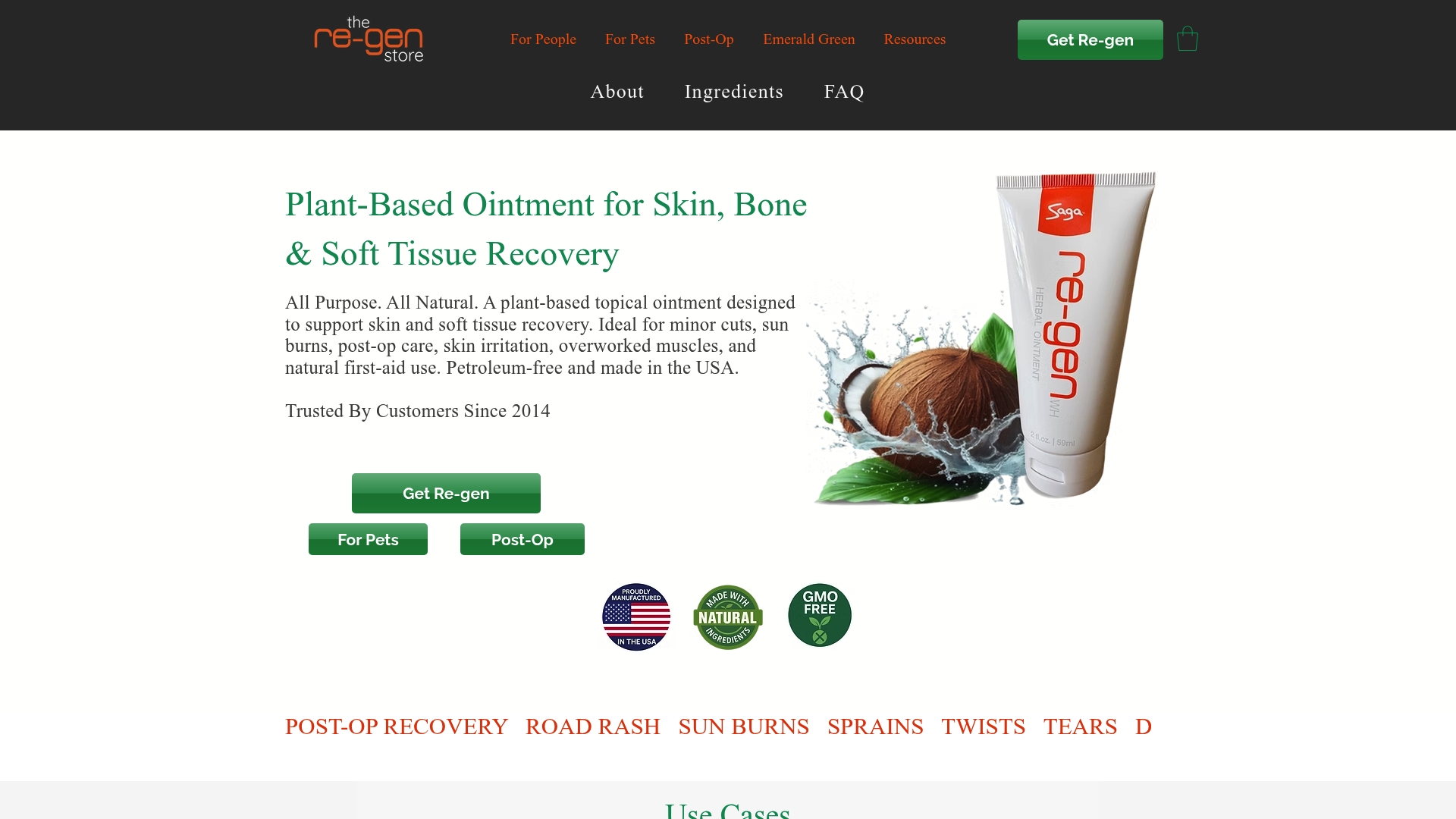
Re-gen is formulated to sit lightly on the skin rather than seal it off, which matters for skin that’s already been irritated by an adhesive. It’s not a treatment for active infection or open, unhealed wounds; if a rash is still weeping, broken, or shows any sign of infection, stick with clinician-directed care first and hold off on any topical until your doctor gives the go-ahead. Stop use if irritation increases at any point.
For skin that’s past the acute phase and just needs gentle support while it finishes recovering, you can explore Re-gen and Theregenstore’s full plant-based wound care line to see if it fits your aftercare routine.
Where to Learn More About Diagnosis and Treatment
Mayo Clinic covers patch testing and standard contact dermatitis treatment.
Bolt Pharmacy breaks down tape allergy symptoms and NHS-aligned treatment steps.
Healthline outlines treatment escalation and safer bandage alternatives.
PubMed reviews clinical literature on adhesive contact dermatitis management.
This article is general information, not a substitute for advice from a qualified doctor. Consult a qualified healthcare professional about your own circumstances before acting on anything here.
Sources
FAQ
What to put on an adhesive allergy rash?
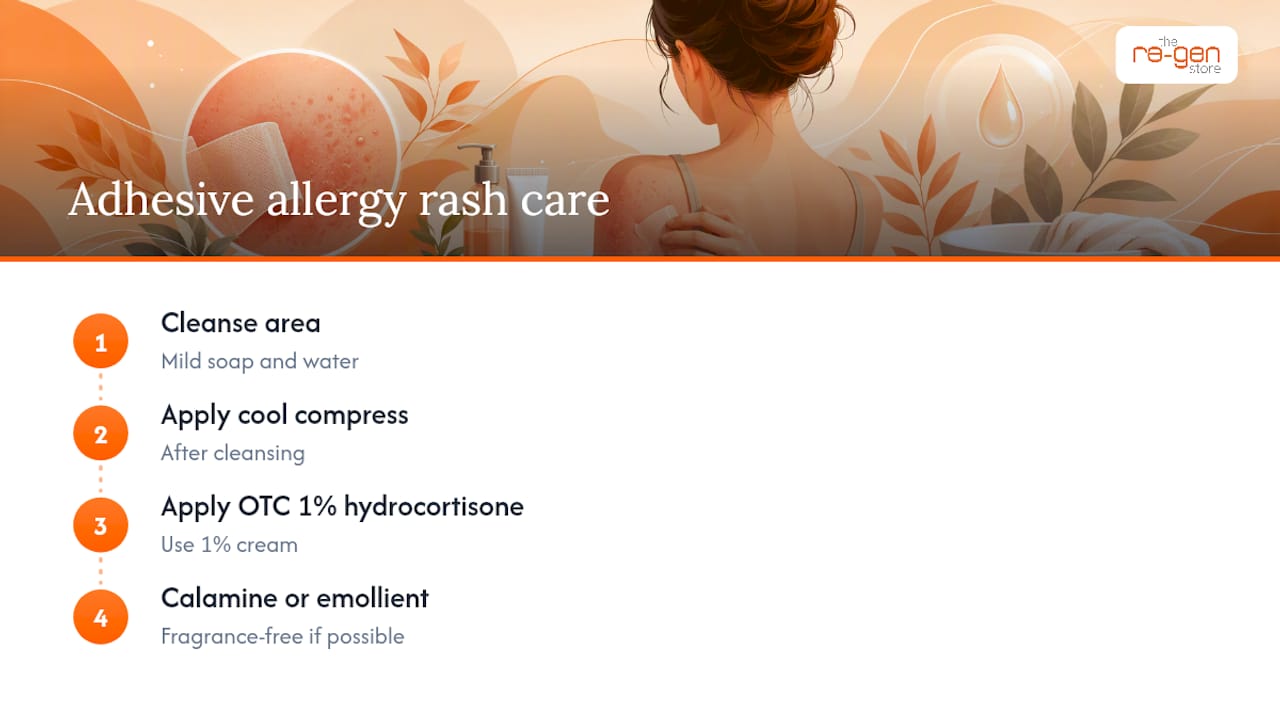
Start with a cool compress and over-the-counter 1% hydrocortisone cream after cleansing the area with mild soap and water. Calamine lotion or a fragrance-free emollient can help if hydrocortisone isn’t available.
How long does it take for an adhesive allergy rash to go away?
Mild cases often clear within a few days once the adhesive is removed and treated; moderate reactions with blistering can take one to three weeks. See a clinician if there’s no improvement within 5 to 7 days.
Will Zyrtec help with adhesive allergies?
A non-sedating antihistamine like Zyrtec can ease the itching, but it doesn’t address the underlying Type IV immune reaction causing the rash. Topical or oral corticosteroids handle the actual inflammation.
What does an adhesive rash look like?
It typically appears as a red, itchy patch shaped like the tape or bandage, sometimes with raised bumps or blisters, and it often spreads beyond the original contact area. Symptoms usually build over 24 to 72 hours rather than showing up right away.
Recommended
Comments