
Your Natural Burn Care Guide: Safe Home Remedies


Touching a hot pan, spilling scalding liquid, or brushing a curling iron against your arm — minor burns happen to most people at home. The immediate question that follows is almost always the same: what do you put on it? This natural burn care guide cuts through the confusion, separates the genuinely helpful from the quietly harmful, and gives you a clear path forward using evidence-based herbal and plant-based remedies. You’ll learn how to assess your burn, treat it correctly, support your body’s recovery, and know exactly when natural care is enough.
Table of Contents
Key takeaways
Point | Details |
Cool water first, always | Run cool water over a burn for 5 to 10 minutes before applying anything else. |
Know your burn type | First-degree burns respond well to natural care; second- and third-degree burns need medical attention. |
Some “remedies” cause harm | Butter, ice, and toothpaste trap heat and raise infection risk significantly. |
Blisters are protective | Leave blisters intact; breaking them introduces bacteria and slows healing. |
Nutrition accelerates recovery | Vitamin C, zinc, and omega-3 fatty acids support faster skin repair and reduce scarring. |
Understanding burn severity
Not every burn is the same, and knowing what you’re dealing with determines whether natural home care is appropriate or whether you need a doctor.
First-degree burns affect only the outer skin layer. You’ll see redness, mild swelling, and pain without blisters. Sunburns and brief contact with hot surfaces typically fall here. This is where natural skin healing works best.
Second-degree burns go deeper, producing blisters, intense redness, and wet-looking skin. Minor second-degree burns smaller than your hand can often be managed at home, but anything larger needs professional care.
Third-degree burns destroy all skin layers. The skin may look white, leathery, or charred. There is often no pain because nerves are damaged. This is a medical emergency. Do not attempt home treatment.
Warning signs that require a doctor regardless of burn size:
Burns on the face, hands, feet, genitals, or over a joint
Burns in children under 5 or adults over 60
Burns that show signs of infection: increasing redness, pus, fever, or worsening pain
Burns caused by chemicals or electricity
Pro Tip: Minor burns smaller than your hand are generally safe to treat at home. If you are unsure about the size or depth, always call a healthcare provider first.
Natural burn care supplies to have ready
Getting organized before the next minor burn happens makes a real difference. Here is what belongs in your natural burn care kit.
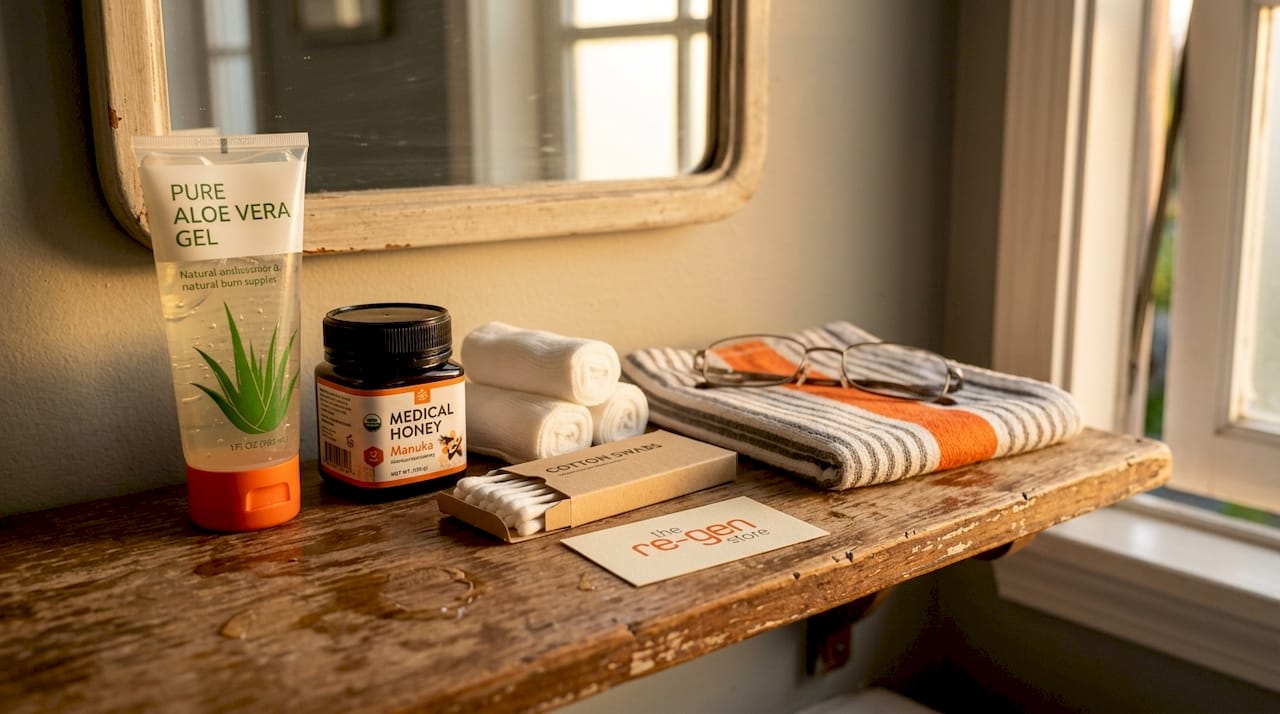
Supply | Purpose |
Cool running water | Immediate first aid to remove heat from tissue |
Aloe vera gel (pure) | Soothes skin, reduces inflammation, supports moisture |
Medical-grade honey | Antimicrobial, promotes moist healing environment |
Plant-based topical ointment | Protects skin, supports tissue repair without petrochemicals |
Sterile non-adhesive dressings | Covers burn without sticking to fragile new skin |
Loose gauze bandages | Holds dressings in place without compressing the burn |
OTC pain reliever | Manages discomfort and reduces inflammation |
What to keep out of reach of a burn:
Butter or cooking oils
Toothpaste or baking soda pastes
Ice or ice packs
Perfumed lotions or scented products
Raw egg whites
These substances trap heat, raise infection risk, and can introduce bacteria to open tissue. They feel intuitive in the moment, but every one of them slows healing.
Pro Tip: Stock your kit with a petroleum-free, plant-based ointment as a base layer for burn coverage. Products built around herbal ingredients provide antimicrobial protection without the chemical load of conventional ointments. Theregenstore’s Re-gen ointment is a solid option to keep on hand.
Step-by-step natural treatment for minor burns
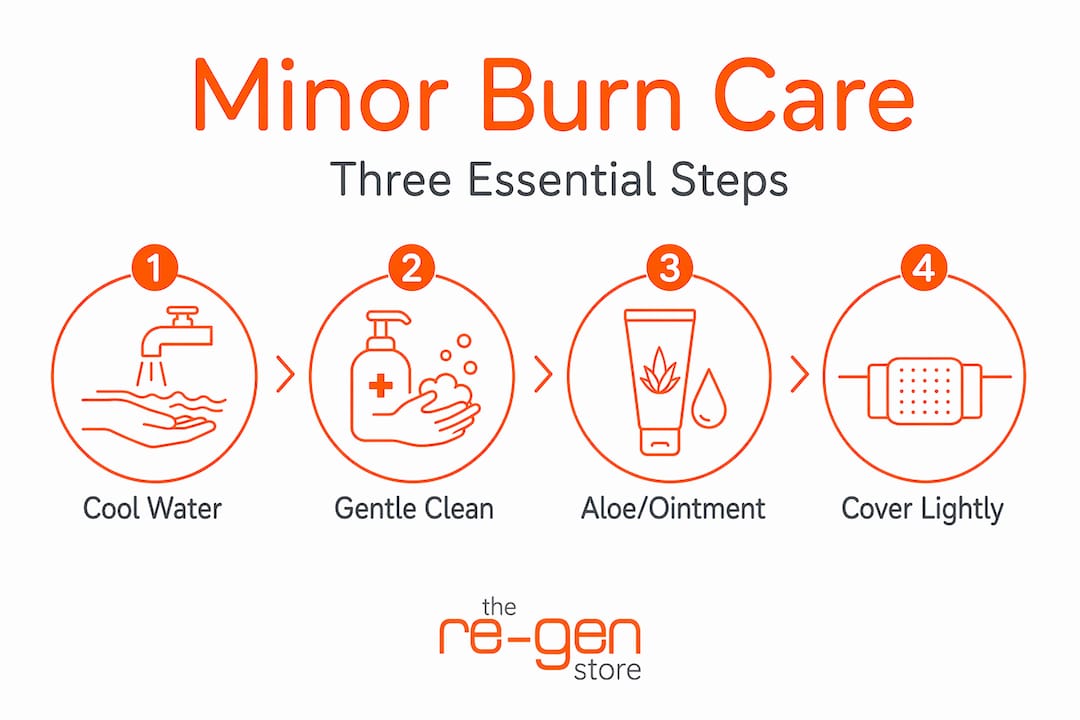
Follow these steps in order. Skipping steps or changing the sequence affects outcomes.
Cool the burn immediately. Hold the burned area under cool, not cold, running water for a full 5 to 10 minutes. This removes residual heat from deeper tissue. Do not use ice. Ice restricts blood flow and can cause additional tissue damage, similar to frostbite.
Remove jewelry and loose clothing. Remove rings and tight clothing near the burned area immediately, before swelling begins. If clothing is stuck to the skin, do not pull it off. Leave it and go to an emergency room.
Gently cleanse the area. Use mild soap and cool water to clean around the burn. Avoid scrubbing or using alcohol-based products. Pat the area dry with a clean cloth.
Apply a natural topical agent. Pure aloe vera gel is one of the most studied natural soothing agents for burns. Apply a thin layer directly to the burned skin. Alternatively, medical-grade honey provides an antimicrobial barrier. Natural agents like aloe vera and honey maintain a moist healing environment that supports tissue repair within approximately 10 days for superficial burns. You can also explore how aloe vera compares to plant-based ointments for your specific situation.
Cover the burn loosely. Cover with a sterile, non-adhesive dressing and secure it with loose gauze. The goal is protection and moisture retention, not compression. Change the dressing daily or any time it becomes wet or dirty.
Protect blisters. If blisters form, leave them alone. Blisters act as a sterile biological shield for the healing tissue underneath. Popping them removes that protection and significantly raises your risk of infection. If a blister breaks on its own, clean the area gently with mild soap and water, then cover it.
Manage pain safely. Over-the-counter pain relievers like ibuprofen or acetaminophen safely reduce burn pain and inflammation. Take them as directed on the label.
Pro Tip: Performing the cool-call-cover steps quickly limits tissue damage and improves healing outcomes. The first 10 minutes after a burn are the most critical for reducing injury depth.
Common mistakes that slow healing
Most burn care errors come from good intentions. Here are the most damaging myths worth clearing up.
Butter and oils: They feel soothing, but they trap heat in the tissue and create an ideal environment for bacterial growth. Butter and toothpaste dramatically increase infection risk and cause further tissue damage.
Toothpaste: Often recommended online, toothpaste contains chemicals that irritate open skin and block the wound from breathing.
Egg whites: Raw eggs carry salmonella. Applying them to broken or burned skin is a direct route for bacterial infection.
Breaking blisters intentionally: This removes the body’s own sterile dressing and exposes raw tissue to everything in the environment.
Skipping hygiene: Unwashed hands, unclean surfaces, and non-sterile materials all increase the chance of infection during dressing changes.
“The most dangerous burn remedies are the ones that feel like they should work. Heat-trapping foods and skin-irritating pastes are not shortcuts to relief. They are setbacks in disguise.”
Supporting the natural burn recovery process
Healing does not end when the burn stops hurting. The burn remodeling phase can last months as collagen reorganizes beneath the surface. What you do during recovery shapes how well your skin heals.
Key recovery support habits:
Eat for skin repair. Vitamin C, zinc, and omega-3 fatty acids promote faster tissue repair and reduce scarring. Think citrus fruits, pumpkin seeds, and fatty fish.
Stay hydrated. Burned skin loses moisture faster than healthy skin. Drink consistently throughout the day to support cellular repair.
Protect new skin from the sun. Newly healed skin has no UV protection. Keep it covered or use a mineral-based sunscreen for at least six months after healing.
Keep the wound moist. A moist wound environment reduces scarring and lowers infection risk compared to letting burns dry out. Continue applying your chosen natural topical until the skin is fully closed.
Watch for infection. Increasing redness, warmth, pus, or fever after the first two days signals infection. See a doctor immediately.
For deeper reading on herbal burn remedies and which plant-based ingredients have the strongest evidence behind them, that resource is worth bookmarking.
My take on natural burn care
I’ve seen a lot of well-meaning people make their burns worse in the first five minutes after injury. The instinct to reach for something, anything, from the kitchen is strong. In my experience, the single most valuable habit you can build is this: do nothing except cool water first. That 5 to 10 minutes of running water is not passive. It is actively removing heat from tissue that would otherwise keep burning from the inside.
What I’ve learned about herbal burn remedies is that the evidence-backed ones, particularly pure aloe vera and medical-grade honey, work because they support what your body is already trying to do. They maintain moisture, reduce surface bacteria, and keep the wound environment stable. They do not replace healing. They support it.
The pitfall I see most often in DIY burn care is impatience. People switch remedies every day, disrupt the dressing too frequently, and pop blisters because they look uncomfortable. Every one of those actions interrupts a process your body has been running successfully for your entire life. Respect the biology, use clean and plant-based materials, and give the wound time.
Natural care is legitimate and effective for minor burns. But it has limits. Knowing those limits is not a weakness. It’s the smartest part of the whole approach.
— Kyle
Ready to build your natural burn care kit?
If this guide has you rethinking what’s in your first aid supplies, Theregenstore has exactly what you need to replace petrochemical ointments with clean, plant-based options.
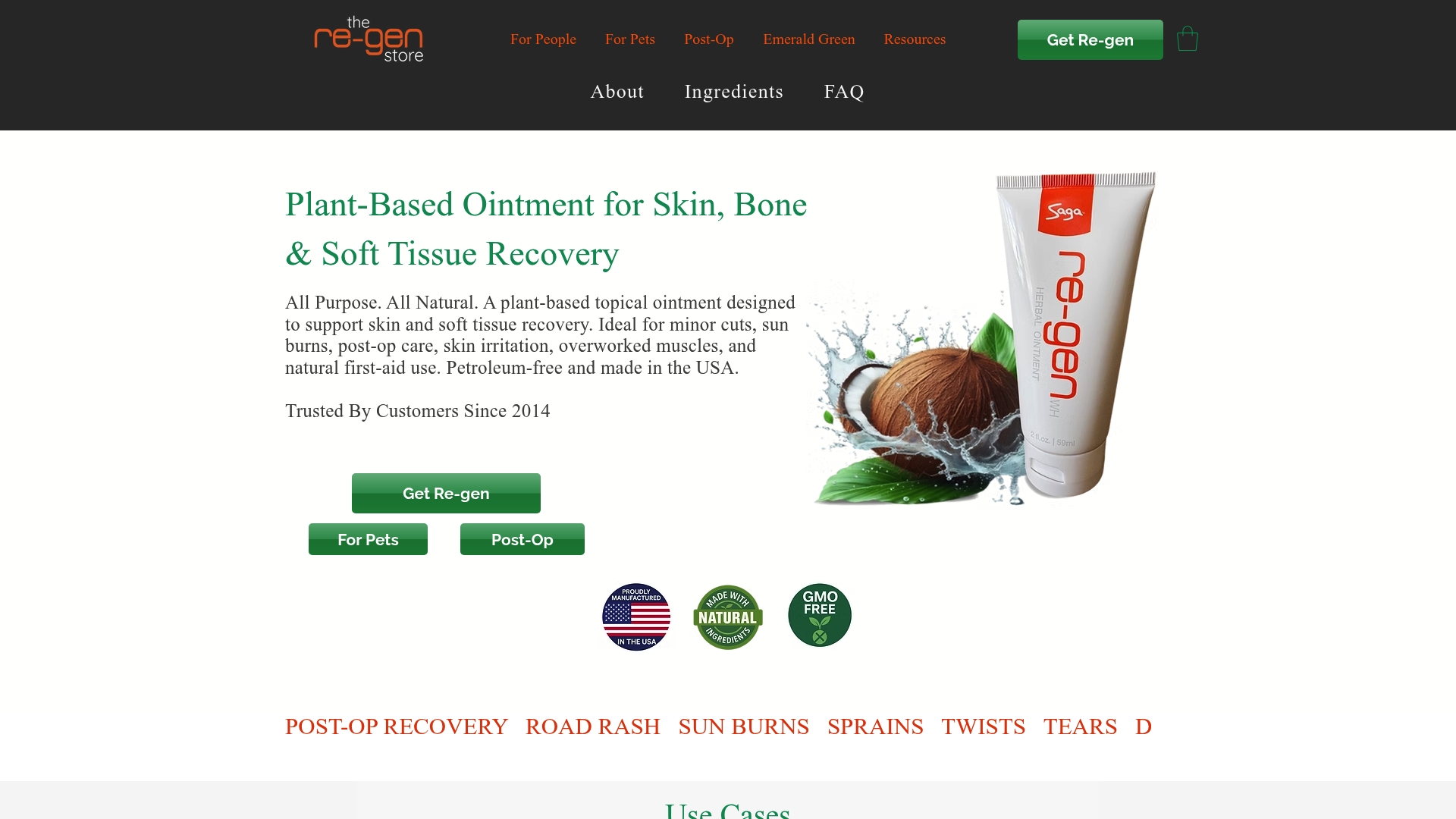
Re-gen is a petroleum-free, plant-based ointment designed to support skin and soft tissue recovery. It creates the moist, antimicrobial environment that minor burns need to heal well, without the synthetic ingredients found in conventional products. If you want a natural alternative to standard wound ointments, Re-gen is built for that role. You can also explore the full range of plant-based wound treatments to put together a complete, chemical-free care kit you can trust.
FAQ
What is burn care naturally?
Natural burn care means using plant-based, chemical-free remedies such as aloe vera, medical-grade honey, and herbal ointments to soothe, protect, and support healing of minor burns without synthetic medications.
How long does the natural burn recovery process take?
Most first-degree burns heal within 3 to 5 days. Superficial second-degree burns treated with natural protocols typically achieve full epithelialization within about 10 days, though deeper tissue remodeling can continue for months.
Can you use essential oils on burns?
Some burn care essential oils like lavender have mild soothing properties, but they should always be diluted in a carrier oil and applied only after the initial cooling phase. Avoid using essential oils on open blisters or broken skin.
Why is ice bad for burns?
Ice restricts blood flow to burned tissue and can cause frostbite-like damage on top of the existing injury. Always use cool running water instead, applied for 5 to 10 minutes.
When should you stop using natural care and see a doctor?
See a doctor if your burn is larger than your hand, involves the face or joints, shows signs of infection like pus or increasing redness, or if the pain is worsening after the first 48 hours.
Recommended
Comments