
Why use natural ointments? Real benefits for skin and pets

Reaching for a natural ointment feels like the sensible, safe choice. No harsh chemicals, no synthetic preservatives, nothing you can’t pronounce. But here’s the reality: not every product labeled “natural” works the same way, and some can actually slow healing or even cause harm if used incorrectly. Understanding which ingredients are backed by evidence, which ones to avoid, and how to apply that knowledge for both people and pets makes all the difference in getting the recovery you’re hoping for.
Table of Contents
Key Takeaways
Point | Details |
Not all ‘natural’ is safe | Some natural ointments can harm if misused, especially for burns or pets. |
Main benefits are moisture and barrier | Natural ointments promote healing primarily by keeping wounds moist and protected. |
Choose ingredients wisely | Plant oils, aloe, and medical-grade honey offer safe, proven options for many minor wounds. |
Check evidence and guidelines | Follow reputable, evidence-based recommendations for safe and effective use. |
What makes an ointment “natural”?
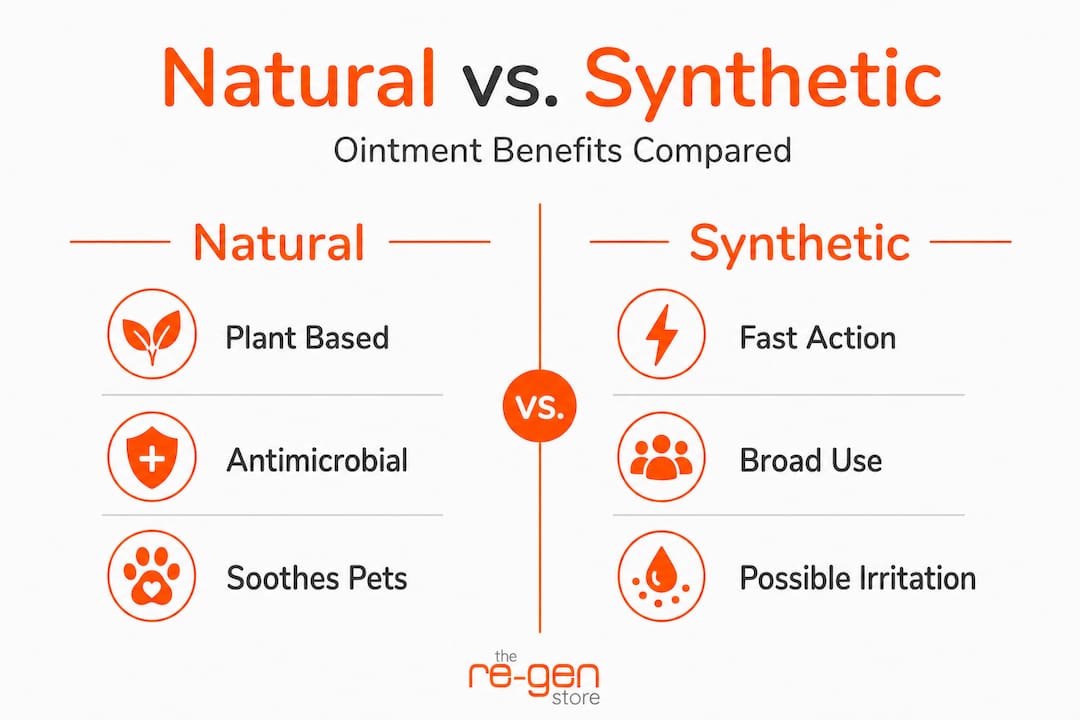
The word “natural” gets applied to products loosely, and that creates real confusion. A genuinely natural ointment contains no synthetic chemicals, preservatives, or petroleum derivatives. Its base is typically made from plant oils, butters, and waxes that support the skin’s surface while delivering active plant compounds.
Common ingredients you’ll find in authentic natural ointments include:
Aloe vera: Known for its soothing and anti-inflammatory properties
Coconut oil: Provides occlusion (moisture sealing) and has some antimicrobial activity
Honey (medical grade): Supports wound healing and resists bacterial growth
Calendula extract: Traditionally used to calm inflammation and support tissue repair
Beeswax: Creates a protective barrier without blocking oxygen exchange
Not all products that use “natural” as a marketing label actually qualify. Some contain a handful of plant extracts mixed into a synthetic base. Others add chemical preservatives to extend shelf life. Reading the ingredient list is the only reliable way to know what you’re actually putting on your skin.
Research confirms that herbal ointments offer anti-inflammatory, antimicrobial, antioxidant, and wound-healing properties, and that their natural bases can improve skin hydration and absorption. This is why base ingredients matter. A beeswax and coconut oil base doesn’t just carry active ingredients to the wound; it actively supports the skin’s recovery environment.
If you’re working through soothing skin irritation naturally or looking for science-backed skin healing tips, starting with a clear understanding of ingredients gives you a real foundation to make smart choices.
How do natural ointments support skin healing?
With a clear definition of natural ointments, we can explore exactly how these ingredients interact with your skin’s natural healing processes.
The first and most important mechanism is occlusion. Keeping a wound moist significantly speeds healing compared to letting it dry out. A natural ointment’s fatty base seals in moisture, reduces scab formation, and allows new skin cells to migrate across the wound surface more easily. This is basic wound biology, and natural ointments do it well.
Beyond moisture, active plant ingredients provide measurable support:
Ingredient | Key action | Evidence level |
Medical-grade honey | Antimicrobial, anti-inflammatory | Strong clinical support |
Aloe vera | Soothing, anti-inflammatory | Moderate support |
Calendula | Promotes tissue repair | Traditional with growing evidence |
Coconut oil | Antimicrobial, moisturizing | Early-stage evidence |
Beeswax | Barrier, mild antimicrobial | Supporting role |
Research shows that natural ointments aid wound healing by moisturizing tissue and supporting the penetration of active constituents, with anti-inflammatory and antimicrobial benefits adding further value.
One ingredient with particularly strong evidence is honey. Clinical data on honey in wound care shows it can reduce infection risk, support debridement (the removal of dead tissue), and accelerate healing in certain wound types. The key is using medical-grade formulations, not raw honey from your pantry.
“The most underrated factor in wound recovery isn’t the active ingredient. It’s the consistent, protected environment that allows skin cells to do their job.”
Pro Tip: When applying any natural ointment, use a clean applicator rather than fingers directly on the wound. This keeps bacteria out and the product uncontaminated.
To understand why natural healing matters at a deeper level, or to get practical steps for speeding up wound healing naturally, these resources expand on the principles covered here.
Beyond humans: Caring for pets with natural ointments
Natural wound care isn’t just for people. Many pet owners look for gentle options too. Let’s see how these principles work for our animals.
Pets get minor cuts, abrasions, hot spots, and small burns regularly. A calm, structured first-aid approach makes a real difference. Here’s what to do:
Gently rinse the wound with clean, lukewarm water to remove debris
Pat dry with a clean cloth or sterile gauze
Apply a pet-safe natural ointment such as pure aloe vera or medical-grade honey in a thin layer
Prevent licking using an e-collar or light bandage if needed
Monitor daily for redness, swelling, or discharge that suggests infection
Safe natural wound care for dogs supports the use of medical-grade honey and aloe vera for minor injuries. These are two of the best-studied options for pets. Both create a moist healing environment, and honey’s antimicrobial properties are particularly useful when you can’t fully control your pet’s environment.
What you need to avoid is equally important. Some “natural” items are genuinely toxic to dogs and cats:
Garlic and onion: Toxic even in small amounts; never use these in any home remedy for pets
Hydrogen peroxide: Damages healthy tissue and slows healing, despite being commonly used
Rubbing alcohol: Painful, drying, and toxic if licked
Essential oils: Many are dangerous to cats and dogs even in diluted topical use
Raw honey: Not sterilized and may contain spores harmful to some animals
Veterinary guidance recommends treating minor injuries at home but clearly reserving professional care for anything more serious. Red flags that mean your pet needs a vet include: deep puncture wounds, wounds that don’t stop bleeding within 10 minutes, signs of infection (heat, swelling, pus), or any injury near the eyes or joints.
For a fuller picture of holistic wound care for pets and natural healing examples that are evidence-based, these resources offer practical guidance you can apply with confidence.

Pro Tip: Always check the ingredient list of any ointment before using it on your pet. Products safe for humans can contain xylitol, tea tree oil, or other compounds that are harmful to animals.
Not all “natural” is safe: The limits and pitfalls
Even with the best intentions, “natural” does not equal “harmless.” It’s crucial to know when nature can help and when it can hurt.
This is especially true for burns. Many people instinctively reach for home remedies when a burn happens. Butter, toothpaste, and raw honey all get applied with good intentions. But medical guidance on burn first aid does not recommend any of these, and they can worsen the injury by trapping heat, introducing bacteria, or disrupting the skin barrier in a vulnerable area.
Substance | Safe for wounds? | Safe for burns? | Safe for pets? |
Medical-grade honey | Yes | No | Yes (dogs, with care) |
Pure aloe vera | Yes | Cool minor burns only | Yes |
Coconut oil | Yes | Not ideal | Generally yes |
Raw honey | Caution | No | Not recommended |
Toothpaste | No | No | No |
Butter | No | No | No |
Hydrogen peroxide | No | No | No |
Essential oils | Some | No | Many are toxic |
The concept of “medical grade” matters here. Medical-grade products go through testing to confirm sterility, standardized active compound levels, and safety for use on broken skin. DIY or kitchen versions of the same ingredient don’t carry those guarantees.
If you’re choosing products for wound care, petroleum-free wound options that are specifically formulated for topical healing use are worth exploring. And if you want to understand what actually separates a well-formulated natural product from a basic one, reviewing what makes a natural alternative to Neosporin effective gives you a clear benchmark.
The key takeaway: ingredients matter, grade matters, and context matters. A substance that supports healing in one situation can delay it in another.
The uncomfortable truth about natural ointments
Here’s something the natural wellness space rarely says out loud: the most important healing action in most topical ointments is not the herbal ingredient. It’s the base.
Moisture retention and occlusion drive the majority of the wound-healing benefit you get from applying any ointment, natural or not. The skin simply heals faster in a moist environment. The plant actives on top of that baseline are valuable, but they’re not working miracles on their own.
Marketing around natural products often overstates the role of exotic botanical ingredients while ignoring this foundational truth. A product with twelve “supercharged” herbal extracts in a poorly formulated base will underperform a simple beeswax and aloe formula that seals moisture effectively.
The second uncomfortable reality is that ingredient safety requires context. We’ve covered this throughout, but it bears repeating as a principle: your own experience of a product working does not mean it’s appropriate for a different wound type, a different person, or a different animal. Natural healing is not one-size-fits-all.
Our real-world perspective, drawn from working with people and pet owners navigating recovery: the best outcomes come from choosing simple, proven ingredients, reading labels carefully, and paying attention to how the wound responds. If something isn’t improving within two to three days, reassess. More product or more exotic ingredients is rarely the answer.
Smart, informed use of natural ointments is genuinely powerful. But it’s powered by knowledge, not hype. Resources like our guide on soothing irritation smartly reflect this grounded approach.
Looking for evidence-based natural ointments?
At TheRegenStore.com, we formulate with exactly this kind of clarity in mind. Re-gen is a plant-based regenerative ointment built for people and pets, free from petroleum, synthetic chemicals, and unnecessary additives.
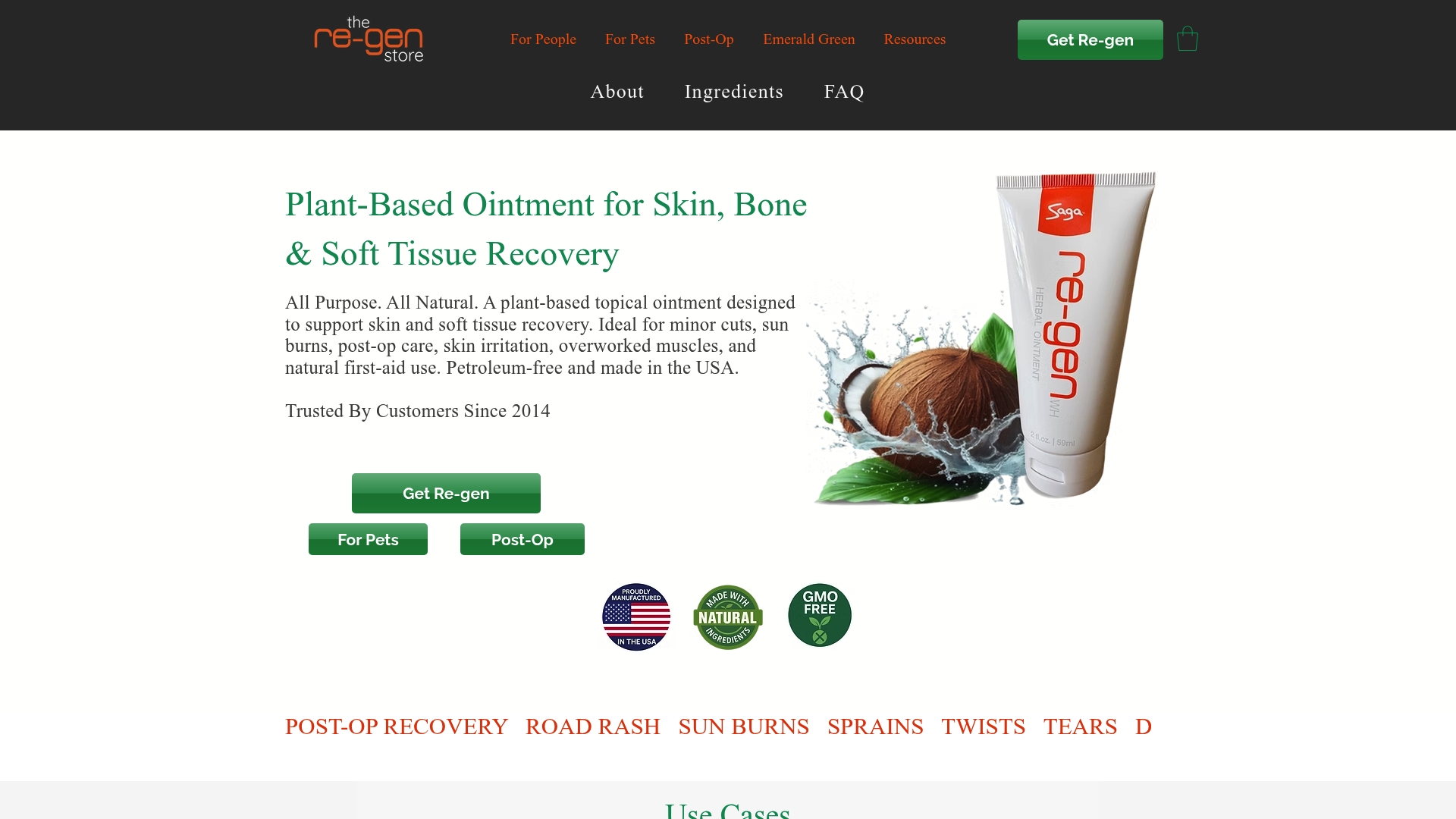
Whether you’re managing a minor cut, a post-operative wound, or a soft tissue injury on your dog, Re-gen is designed to support your body’s natural repair process without the guesswork. It’s a petroleum-free, plant-based ointment that aligns with what the evidence actually supports. Explore how it fits into your wound care routine, and learn more about natural wound healing approaches that work. Ready to try it for yourself? Visit our plant-based regenerative ointment page to see full ingredient details and usage guidelines.
Frequently asked questions
Are natural ointments always safer than synthetic ones?
Not always. Some natural ingredients can cause irritation or delay healing if used incorrectly, and certain “natural” remedies like butter or toothpaste can actually worsen burns and wounds.
What is the best natural ointment for minor burns?
Pure aloe vera gel is widely recommended for cooling and soothing minor burns. Medical guidance advises cooling with cold water first, then using aloe vera or a similar gentle product, while avoiding butter, toothpaste, or raw honey.
Can I use natural ointments on my dog’s wound?
Yes, but only use safe options like pure aloe vera or medical-grade honey. Veterinary sources warn against hydrogen peroxide, alcohol, garlic, onion, and most essential oils, which can be toxic or damaging.
Is honey safe for wound healing?
Medical-grade honey has meaningful clinical support for minor wounds, but evidence from wound care studies shows results depend heavily on standardization. Raw pantry honey does not carry the same benefits or safety profile.
When should I avoid using natural ointments?
Avoid applying any ointment to deep wounds, serious burns, or injuries that are worsening. Guidance for minor pet injuries is clear that home care is for minor wounds only, and anything severe needs professional medical or veterinary attention.
Recommended
Comments