
Top Tips for Wound Recovery That Actually Speed Healing


Wound recovery looks straightforward on paper: clean it, cover it, wait. But most people are working with outdated advice, using harsh cleansers that damage tissue, skipping the nutrition piece entirely, or checking the wound so often they disrupt healing before it starts. The top tips for wound recovery are not complicated, but they do require you to rethink a few assumptions. Whether you are healing from a surgical incision, a deep cut, or a burn, the habits you build in the first days and weeks make a measurable difference in how fast and how well you recover.
Table of Contents
1. Top tips for wound recovery start with the right cleansing approach
2. Embrace moist wound healing instead of letting it dry out
4. Load up on vitamins and minerals that support tissue repair
11. Consider natural alternatives to conventional topical antibiotics
Support your recovery with natural wound care from Theregenstore
Key takeaways
Point | Details |
Moisture speeds healing | Keeping wounds moist rather than dry can accelerate repair by 30 to 50% and reduce scarring. |
Protein is non-negotiable | Consistent protein intake across every meal supports collagen production and cell repair throughout recovery. |
Sleep and smoking matter more than most think | Poor sleep extends healing time significantly, and smoking can triple the time wounds take to close. |
Avoid harsh cleansers | Hydrogen peroxide and alcohol damage tissue and slow repair. Lukewarm water and neutral soap work better. |
Know your infection signs | Redness spreading beyond the wound, fever, and foul-smelling discharge all require prompt medical attention. |
1. Top tips for wound recovery start with the right cleansing approach
The most common wound care mistake is reaching for the strongest antiseptic you own. Hydrogen peroxide and alcohol-based cleansers feel like they are doing the job, but they damage the healthy cells your body is working to regenerate. Avoiding these cleansers is one of the most evidence-backed changes you can make. Gentle washing with lukewarm water and a neutral, fragrance-free soap removes bacteria and debris without undermining tissue repair.
Clean the wound once daily unless it becomes visibly dirty or the dressing saturates. Pat dry with a clean cloth and apply a fresh dressing promptly. Do not scrub. The goal is debris removal, not sterilization through force.
2. Embrace moist wound healing instead of letting it dry out
Generations of people were told to let wounds air out and form a scab. The science says otherwise. Moist wound healing speeds recovery by 30 to 50% compared to dry methods, reduces scarring, and lowers infection risk. Dry scabs actually create a physical barrier that forces new cells to work around rather than across the wound surface.
Modern dressings make this easy to manage at home:
Hydrocolloid dressings absorb excess fluid while maintaining the moisture balance tissue needs to repair
Foam dressings work well for higher-output wounds and provide cushioning against friction
Alginate dressings suit deeper or heavily draining wounds and are biodegradable
Pro Tip: Change your dressing every 24 hours or sooner if it becomes saturated. Dressing changes that happen too frequently disturb clot formation, while ones left too long risk maceration of surrounding skin.
3. Prioritize protein at every meal
Nutrition is where most people underinvest during wound recovery. Protein is the raw material your body uses to build collagen, repair damaged cells, and generate new tissue. Protein intake of 1.2 to 2.0g per kg of body weight daily is the evidence-based target during active healing.
The key is distributing that intake across meals rather than loading up at dinner. Your body can only utilize so much protein at once for tissue synthesis. Spreading it out gives your cells a consistent supply of building blocks throughout the day.
Good protein sources for recovery include:
Eggs, Greek yogurt, and cottage cheese for easy, high-bioavailability options
Chicken, fish, and lean beef for complete amino acid profiles
Lentils, chickpeas, and edamame for plant-based recovery support
Pro Tip: Protein intake should be consistent across meals rather than relying primarily on supplements. A shake can help fill gaps, but whole food sources provide cofactors that support absorption.
If you are recovering from a procedure and want guidance tailored to that context, Theregenstore covers nutrition for post-surgery healing in detail.
4. Load up on vitamins and minerals that support tissue repair
Protein does not work in isolation. Several micronutrients play direct roles in wound closure and immune defense:
Vitamin C drives collagen synthesis. 500 to 1000mg daily supports healing, and you can get there with citrus, bell peppers, strawberries, and leafy greens.
Zinc supports cell division and immune response. Found in meat, seeds, legumes, and shellfish.
Vitamin A aids skin cell turnover. Sweet potatoes, carrots, and eggs are reliable sources.
B vitamins contribute to energy metabolism during the high-demand repair process.
Focus on food first. Supplements can fill gaps, but they work best when your diet is already doing most of the work.
5. Stay hydrated throughout the day
Water delivers nutrients to your wound site and removes cellular waste produced during repair. Dehydration restricts this process. Most adults need at least eight cups of water daily, and more during active healing when your body is working harder than usual.

Avoid excessive caffeine and alcohol during recovery. Both increase fluid loss and caffeine can interfere with the sleep quality your body depends on for repair.
6. Protect sleep as your most powerful recovery tool
Your body does most of its tissue repair during deep sleep, when growth hormone levels peak. Poor sleep can extend wound healing time by 25% or more. Aim for seven to nine quality hours per night.
If pain or discomfort is disrupting your sleep, talk to your care provider about positioning or pain management options. Sacrificing sleep to manage discomfort is a trade-off that slows your overall recovery.
7. Quit smoking or pause it during recovery
This one is hard to overstate. Smoking can triple wound healing time by constricting blood vessels and reducing the oxygen supply to healing tissue. If you have ever wondered why surgeons ask patients to stop smoking before procedures, this is precisely why.
Even temporary cessation during the active healing phase has measurable benefits. Every day without smoking gives your circulatory system more capacity to deliver the oxygen and nutrients your wound needs.
8. Manage stress to reduce prolonged inflammation
Chronic stress keeps your body in a state of elevated cortisol, which prolongs inflammation and delays the transition into the repair phase of healing. Practical stress management does not need to be elaborate. Short walks, breathing exercises, and limiting news consumption during recovery all reduce cortisol load.
The goal is not to eliminate stress entirely but to prevent it from becoming a constant drag on your immune function and tissue repair capacity.
9. Move gently, but do not stay completely still
Gentle movement improves circulation and supports nutrient delivery to healing tissue. Light walking, when cleared by your care provider, prevents the stiffness and circulation problems that come from complete bed rest.
The line to watch: avoid any movement that pulls directly on the wound or increases local pressure. If you had surgery, follow the specific activity restrictions your surgeon provided. General mobility is healthy. Overexertion near the wound is not.
10. Monitor your wound and know when to get help
Effective wound management strategies include knowing what normal progress looks like. Healthy healing involves gradual reduction in redness and swelling, wound edges drawing closer together, and decreasing pain over time.
Watch for these infection signs and contact a medical provider if they appear:
Increasing pain rather than decreasing pain
Redness spreading beyond the wound margins
Warmth, swelling, or pus at the site
Fever above 100.4°F
Foul-smelling discharge
These infection signs require prompt medical attention. Early intervention prevents minor complications from becoming serious ones.
What you see | What it likely means |
Slight pinkness at edges | Normal healing response |
Clear or straw-colored fluid | Normal exudate |
Spreading redness with warmth | Possible infection, seek care |
Green or yellow pus | Infection, seek care promptly |
Fever with wound pain | Systemic infection risk, urgent care |
11. Consider natural alternatives to conventional topical antibiotics
Not every wound requires antibiotic ointment. Many conventional options like petroleum-based products contain ingredients that some people react to, and overuse of antibiotics contributes to resistance over time.
Medical-grade honey, particularly Manuka, offers proven antimicrobial properties while supporting natural tissue regeneration. Plant-based ointments formulated without petroleum provide a moist healing environment without the chemical burden.
Option | Strengths | Considerations |
Conventional antibiotic ointment | Broad spectrum, widely available | Petroleum base, resistance risk |
Medical-grade honey | Antimicrobial, supports tissue growth | Requires correct grade and application |
Plant-based topical ointments | Chemical-free, supports moist healing | Verify ingredient quality and sourcing |
Plain petroleum jelly | Maintains moisture, affordable | No antimicrobial properties, petroleum-based |
For wounds that do not require antibiotic treatment, a quality petroleum-free wound treatment can maintain the moisture balance you need without unnecessary chemicals.
My honest take on what actually moves the needle
I have spent a long time reading through the research on wound recovery, and the biggest gap I see is not about products. It is about patience combined with consistency. Most people check their wounds far too often, applying something new every time, disrupting the clot structure repeatedly, and wondering why healing feels slow.
What I have found to be true: removing dressings less frequently genuinely improves outcomes. Frequent removal disrupts clot formation and exposes the wound to contamination. The instinct to check on it constantly works against you.
I also think people overestimate what supplements alone can do. A zinc capsule will not compensate for low protein intake or poor sleep. The fundamentals, food, rest, hydration, and minimal disturbance, do more than any single product.
The other counterintuitive point: timeline expectations. Many people expect wounds to look dramatically better every few days. Real healing, especially for deeper wounds or post-surgery sites, is slow and not always linear. Trust the process, protect the wound, and let your body do what it is designed to do.
— Kyle
Support your recovery with natural wound care from Theregenstore
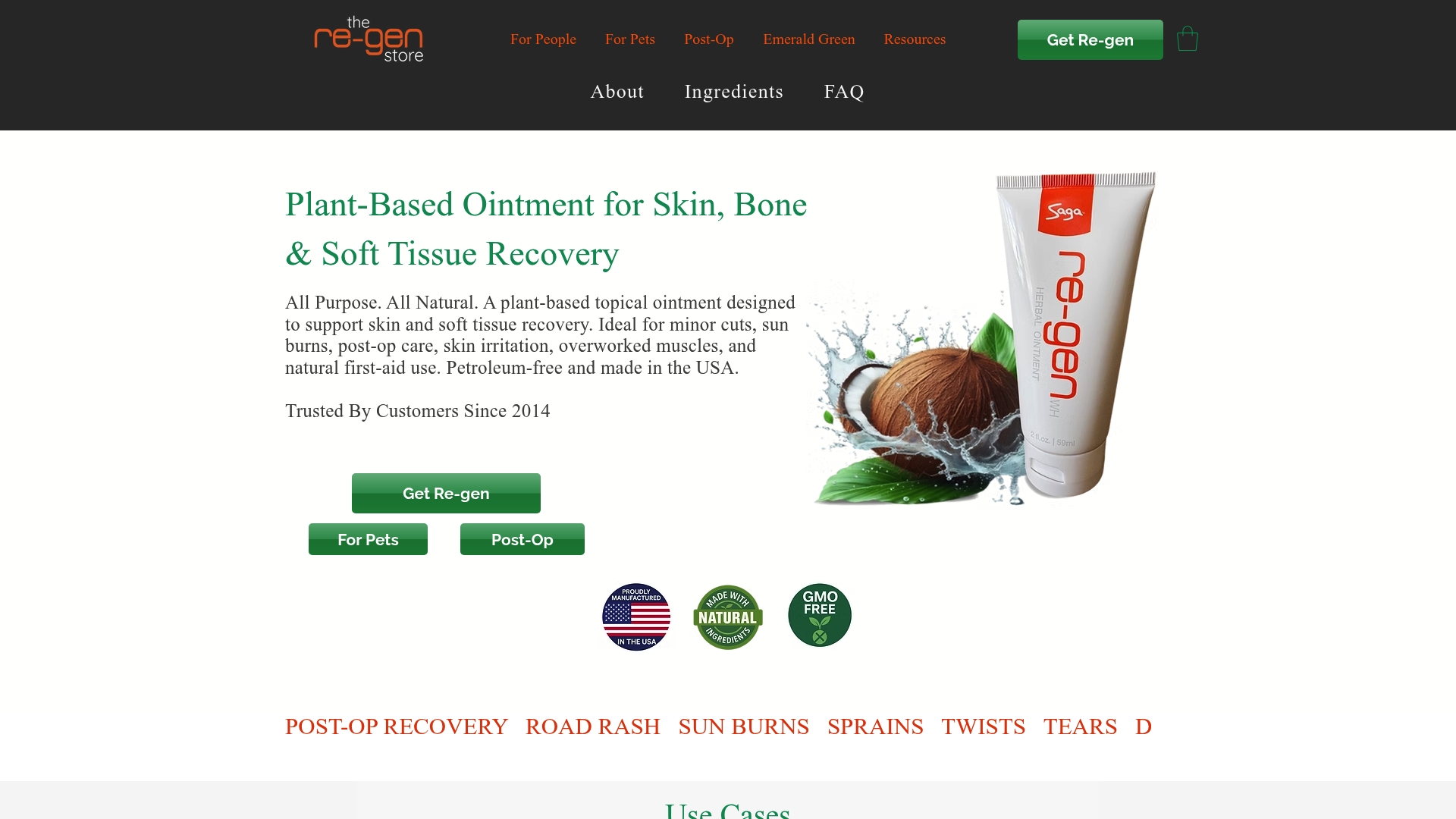
If you are looking for a product that aligns with the moist healing principles and natural care approach covered here, Theregenstore offers Re-gen, a plant-based regenerative ointment free from petroleum and synthetic antibiotics. It supports skin, soft tissue, and post-operative wound recovery using herbal ingredients without chemical additives. Whether you are healing from a cut, burn, or surgical wound, Re-gen provides a clean alternative to conventional options. Explore natural wound healing strategies and learn how Re-gen fits into a complete recovery plan, or go straight to the Re-gen ointment page to see full ingredient details and usage guidance.
FAQ
How can I heal wounds faster at home?
Keep the wound moist with a hydrocolloid or foam dressing, eat protein at every meal, sleep seven to nine hours nightly, and avoid harsh cleansers like hydrogen peroxide. These habits together produce the fastest natural recovery.
How often should I change my wound dressing?
Change dressings every 24 hours or when saturated. Changing them more frequently than necessary disrupts clot formation and slows healing.
What are the signs a wound is infected?
Watch for spreading redness, increased pain, warmth, fever above 100.4°F, and foul-smelling or colored discharge. Seek medical care promptly if any of these appear.
Does smoking really slow wound healing?
Yes. Smoking constricts blood vessels and reduces oxygen supply to tissue, which can triple wound healing time. Even short-term cessation during recovery improves outcomes.
Are natural ointments effective for wound care?
Medical-grade honey and quality plant-based ointments can maintain moist healing conditions and provide antimicrobial support without petroleum or synthetic chemicals, making them a practical option for minor to moderate wounds.
Recommended
Comments