
What Is Topical Magnesium? Benefits, Uses, and Safety


Topical magnesium is a mineral-based product applied directly to the skin to support pain relief, skin health, and general wellness. Sold as sprays, lotions, creams, and gels, these products are primarily magnesium chloride dissolved in water. Many people choose topical forms to sidestep the digestive side effects that oral magnesium supplements can cause, such as loose stools or cramping. The most widely recognized product type is magnesium oil, though the term “oil” is a misnomer. Products like Ancient Minerals magnesium spray and similar formulations feel slightly slick on the skin but contain no actual oil.
What is topical magnesium and how does it work?
Topical magnesium products deliver magnesium chloride through the skin rather than through the digestive tract. This delivery method is called transdermal magnesium application. The idea is that magnesium ions pass through the outer skin layer and enter local tissues or the bloodstream.
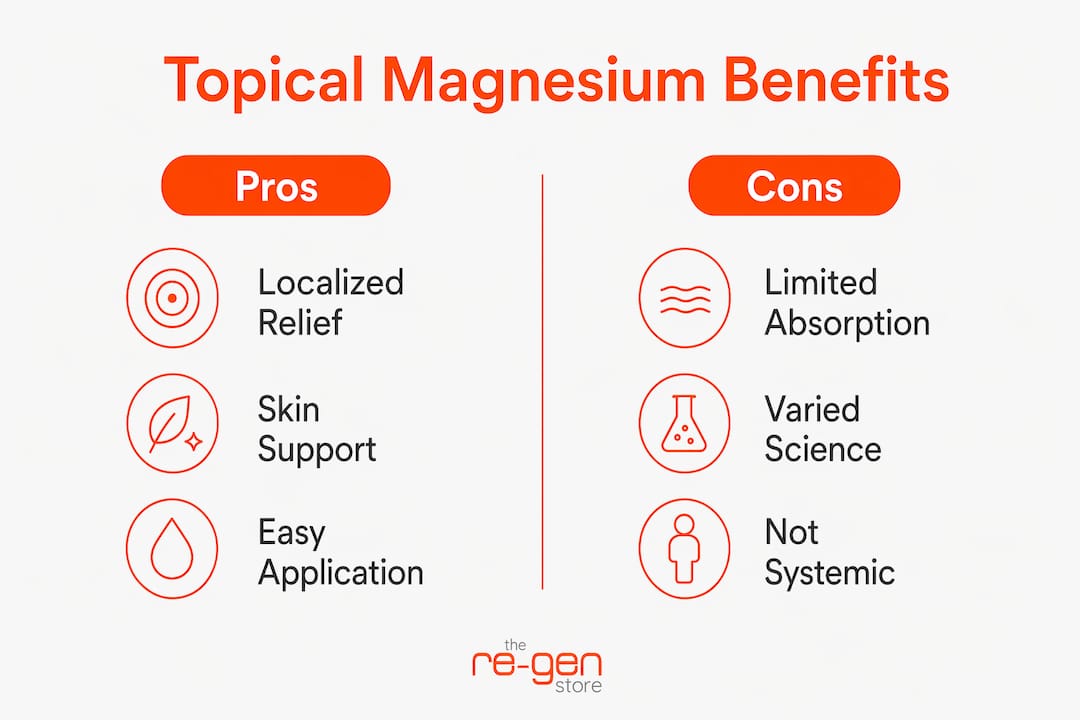
The science behind skin absorption is still debated. The skin’s outer barrier, the stratum corneum, is designed to keep most substances out. Researchers continue to study whether meaningful amounts of magnesium cross this barrier during typical use. What is clear is that the mineral reaches the skin surface and may support local tissue function even if systemic absorption is limited.
Key facts about topical magnesium composition:
Primary ingredient: Magnesium chloride dissolved in water
Common forms: Sprays, lotions, creams, bath flakes, and gels
“Magnesium oil” explained: The name refers to the slick texture, not oil content
Oral comparison: Oral supplements like magnesium glycinate or magnesium citrate absorb through the gut; topical forms bypass this route entirely
Pro Tip: Massaging topical magnesium into the skin rather than simply applying it increases local blood flow. That circulation boost may enhance how the mineral interacts with nearby tissue.

What does the science say about topical magnesium’s effectiveness?
The evidence for topical magnesium is promising in some areas and thin in others. Research on skin health shows magnesium supports barrier function and wound healing, though most studies are small. For pain relief in conditions like fibromyalgia or arthritis, user reports are positive, but large clinical trials are lacking.
The sleep benefit claim is the weakest. No robust evidence shows topical magnesium reliably raises systemic magnesium levels or treats sleep disorders better than placebo. That finding matters because sleep is one of the most common reasons people buy magnesium lotions.
“If topical magnesium products provide personal benefit without harm, continued use is generally safe despite limited proof.” — Medical experts cited by NPR, 2025
Part of the confusion comes from how these products are used. Benefits may stem from the moisturizing base or the massage action rather than magnesium absorption itself. Massaging any lotion into sore muscles increases circulation and reduces pain signals temporarily. Experts also note that standardized dosing regimens are lacking00096-0/fulltext), which limits topical magnesium’s status to adjunctive use rather than first-line treatment.
The bottom line: topical magnesium carries real potential for skin support and localized comfort. Treating it as a cure for systemic deficiency or a proven sleep remedy sets unrealistic expectations.
How to use topical magnesium safely and effectively
Correct application makes a real difference in what you get from these products. The most common mistake is washing the product off too soon. Leave topical magnesium on skin for at least 15 minutes before rinsing or dressing. Removing it earlier reduces any potential benefit.
Before applying widely, do a patch test. Test a small skin area for 24 hours before full use. Magnesium chloride can cause stinging or dryness on sensitive skin, and a patch test prevents a larger reaction.
Do’s and don’ts for topical magnesium use:
Do apply to clean, dry skin for better contact
Do massage the product in using circular motions for 1–2 minutes
Do wait at least 15 minutes before washing the area
Do dilute sprays with water if you experience stinging
Don’t apply to broken, irritated, or sunburned skin
Don’t use topical magnesium as a replacement for prescribed medications
Don’t skip the patch test if you have sensitive skin
Pro Tip: Apply magnesium spray or lotion after a warm shower. Warm skin has slightly more open pores and better circulation, which may improve how the product interacts with surface tissue.
Frequency varies by product and personal tolerance. Most formulations suggest once or twice daily on areas of discomfort or tension. Start with one application per day and adjust based on how your skin responds.
Topical magnesium vs. oral supplements and dietary sources
Each method of getting magnesium into your body has real trade-offs. Understanding those trade-offs helps you choose the right approach for your situation.
Oral supplements like magnesium glycinate, magnesium citrate, and magnesium malate absorb through the gut and raise systemic magnesium levels measurably. Dietary sources such as spinach, pumpkin seeds, almonds, and dark chocolate provide magnesium alongside other nutrients. Both routes have solid clinical backing for correcting deficiency.
Method | Absorption | Side effects | Best use case |
Topical magnesium | Localized, debated systemically | Skin irritation, stinging | Local pain relief, skin support |
Oral supplements | Systemic, well-documented | Digestive upset at high doses | Correcting deficiency |
Dietary sources | Systemic, gradual | None at normal intake | Long-term maintenance |
Topical magnesium fits best as a complement to diet and oral supplementation, not a replacement. For people who cannot tolerate oral magnesium due to digestive sensitivity, topical forms offer a low-risk alternative worth trying. For natural skin and soft tissue recovery, pairing topical magnesium with other plant-based treatments can support the body’s repair process from multiple angles.
Key takeaways
Topical magnesium is a low-risk, skin-applied mineral product best used for localized support rather than as a proven treatment for systemic deficiency or sleep disorders.
Point | Details |
Core composition | Topical magnesium products are magnesium chloride dissolved in water, not actual oil. |
Absorption is debated | Skin delivery may support local tissue, but systemic absorption is not reliably proven. |
Skin health support | Small studies show magnesium supports barrier function and wound healing. |
Safe application | Leave product on for at least 15 minutes and patch test before wide use. |
Best used as a complement | Topical magnesium works best alongside diet and oral supplements, not instead of them. |
My honest read on topical magnesium after years in natural wellness
The wellness market loves a simple story. Rub this on, feel better. Topical magnesium fits that narrative perfectly, which is exactly why you should slow down before buying into every claim.
What I’ve seen consistently is this: the massage matters as much as the mineral. The mechanical action of massaging any product into sore muscles increases local blood flow and reduces pain perception. That effect is real. Whether the magnesium itself crosses the skin barrier in meaningful amounts is still an open question.
That said, I don’t think topical magnesium is a scam. For skin health, the dermatological evidence00096-0/fulltext) is genuinely interesting, even if it’s early. For people who struggle with oral supplements, it’s a reasonable, low-risk option to try. The key is keeping your expectations calibrated. Use it for local comfort and skin support. Don’t use it as your only strategy for addressing a confirmed magnesium deficiency.
If you have a serious health concern, a healthcare provider can test your magnesium levels and recommend the most effective route. Topical products are a useful tool in a broader wellness plan. They are not a standalone fix.
— Kyle
Natural skin recovery products from Theregenstore
If you’re already interested in what topical minerals can do for your skin, you’ll appreciate what plant-based formulations bring to the table.
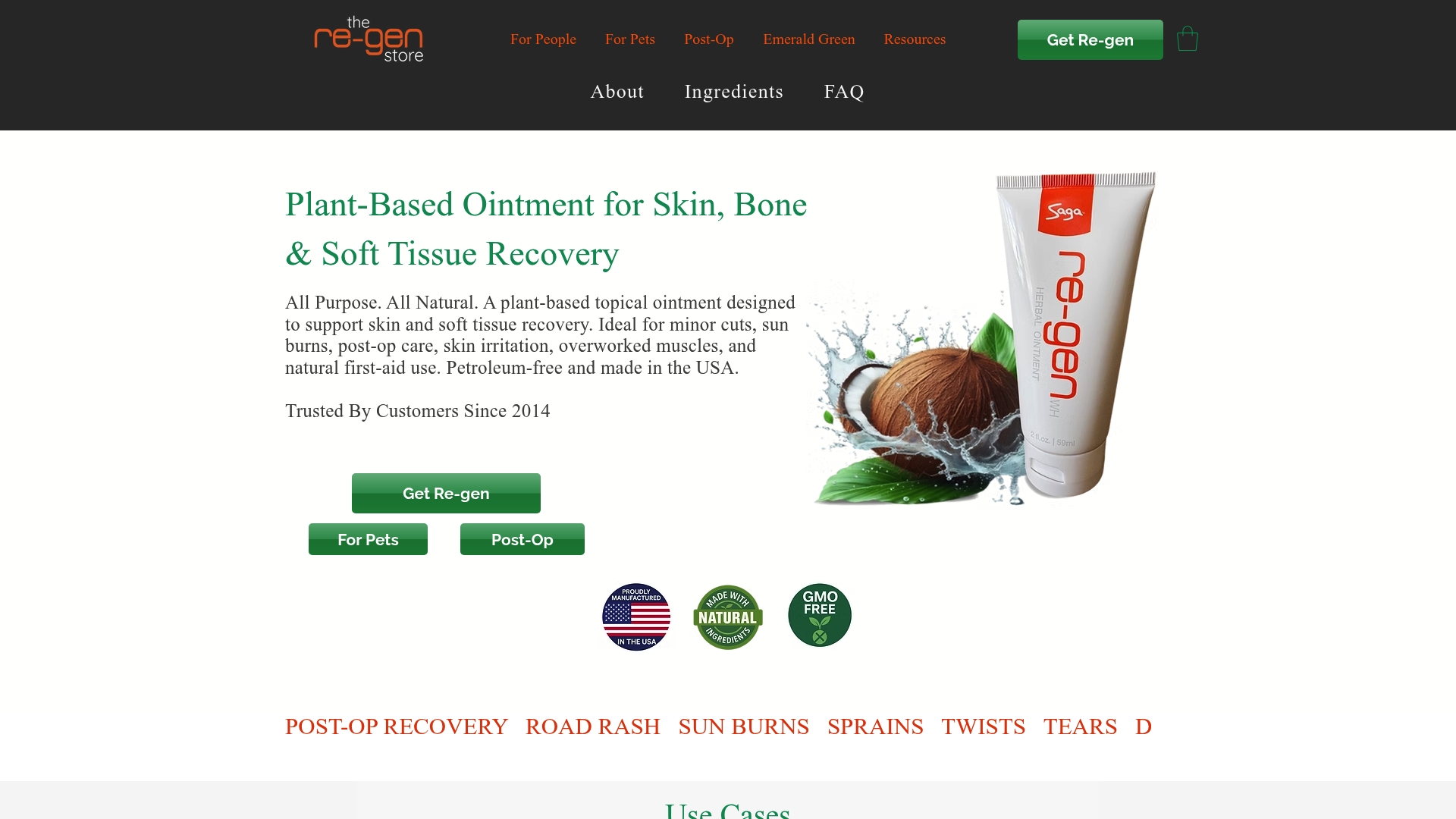
Theregenstore offers Re-gen, a petroleum-free, plant-based ointment designed to support skin, soft tissue, and wound recovery without synthetic chemicals. It works as a natural wound treatment for cuts, burns, sprains, and post-operative healing. For anyone building a natural skin care routine that goes beyond mineral sprays, Re-gen pairs well with topical magnesium’s skin-supporting role. You can also read more about plant-based topical healing to see how natural ingredients work together for skin and soft tissue recovery.
FAQ
What is topical magnesium used for?
Topical magnesium is used for localized pain relief, skin barrier support, and general wellness. Common applications include sore muscles, joint discomfort, and dry or irritated skin.
Is magnesium oil actually an oil?
No. Magnesium oil is magnesium chloride dissolved in water. It feels slightly slick on the skin, which is how it got the name, but it contains no actual oil.
Can topical magnesium raise your magnesium levels?
Current evidence does not confirm that topical magnesium reliably raises systemic magnesium levels. Oral supplements and dietary sources remain the most proven methods for correcting deficiency.
How long should you leave topical magnesium on your skin?
Leave topical magnesium on for at least 15 minutes before washing or dressing. Removing it sooner reduces its potential effectiveness.
Does topical magnesium cause side effects?
Magnesium chloride can cause stinging or dryness on sensitive skin. A 24-hour patch test on a small area before wide use helps prevent adverse reactions.
Recommended
Comments