
What is natural scar treatment? A guide for plant-based care

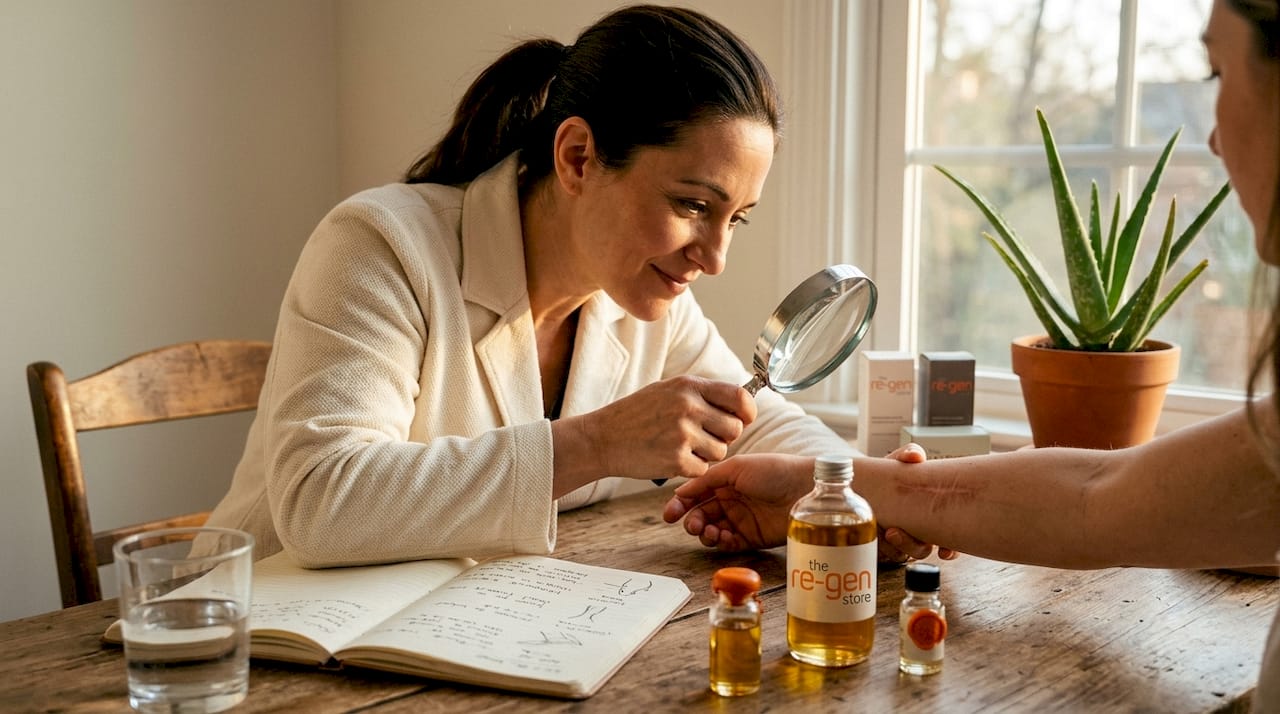
Scars are permanent. That’s the truth most people aren’t ready to hear when they reach for a bottle of vitamin E oil or a jar of coconut-infused cream. What is natural scar treatment, really? It’s not a way to erase what’s already there. It’s a set of supportive, consistent care practices that improve how a scar looks, feels, and behaves over time. Dermatology research backs several of these approaches, but the key word is improve, not eliminate. Understanding that distinction changes everything about how you approach your skin’s recovery.
Table of Contents
Evidence-backed basics of early scar care: clean, moisturize, protect, and massage
Natural plant-based scar treatments versus silicone and clinical evidence
Practical application: using natural scar treatments safely, including considerations for pets
Timeline and realistic expectations for natural scar improvement
Why supporting healing, rather than erasing scars, is the real goal
Explore safe, effective plant-based scar and wound care products
Key Takeaways
Point | Details |
Natural treatments support, not erase scars | Topical natural care mainly improves scar appearance through hydration and gentle massage but cannot remove scars completely. |
Silicone is clinically proven | Silicone gel remains the evidence-backed gold standard for raised scar management compared to most plant-based options. |
Early wound care is critical | Cleaning, moisturizing, covering, and sun protection after injury are foundational to minimizing scar formation. |
Safe application matters | Use fragrance-free, low-irritant products and avoid applying on open wounds or leaving residues pets might lick. |
Improvements take time | Scar appearance improves slowly over months with consistent care; immediate results are unrealistic. |
Understanding scars and what natural scar treatment means
Scars form when fibrous tissue replaces normal skin after an injury. Your body’s healing system is fast and efficient, but it’s not perfect. The replacement tissue, primarily collagen fibers, is structurally different from the original skin. It lacks hair follicles, sweat glands, and the flexible collagen weave that gives healthy skin its texture. That’s why scars look and feel different, and why scar tissue explained matters before you choose any treatment.
Natural scar treatment focuses on supporting that biological process with botanicals, moisture, and gentle physical stimulation. As Johns Hopkins Medicine notes, natural scar treatment typically means supportive, topical scar-minimization routines that aim to improve scar color and texture rather than erase scars. No plant oil changes the structure of mature fibrous tissue.
What natural scar care can do:
Hydrate the scar tissue, making it softer and more pliable
Reduce discoloration over time with consistent UV protection and moisturizing
Decrease itching and tightness through regular massage and moisture
Support the healing environment during early wound closure to minimize how severe the scar becomes
Improve texture gradually through massage and consistent botanical application
Setting realistic expectations from the start helps you stay consistent, and consistency is the actual driver of results.
Evidence-backed basics of early scar care: clean, moisturize, protect, and massage
Before a scar even forms, the choices you make about wound care shape the outcome. Dermatologist guidance is clear: keep wounds clean, moist, and protected from the start.
Here are the foundational steps for minimizing scarring from the beginning:
Clean gently. Wash with mild soap and water to prevent infection. Infection causes inflammation, and excessive inflammation increases scar thickness. Don’t scrub.
Moisturize consistently. Apply petroleum jelly or a petroleum-free plant-based alternative to keep the wound from drying out and forming a hard scab. A moist environment supports faster, cleaner healing.
Cover the wound. A bandage creates a barrier against bacteria, friction, and irritants. It also keeps moisture in.
Limit sun exposure. UV rays darken new scar tissue, making discoloration more pronounced. After the wound closes, use sunscreen or physical coverage on the area.
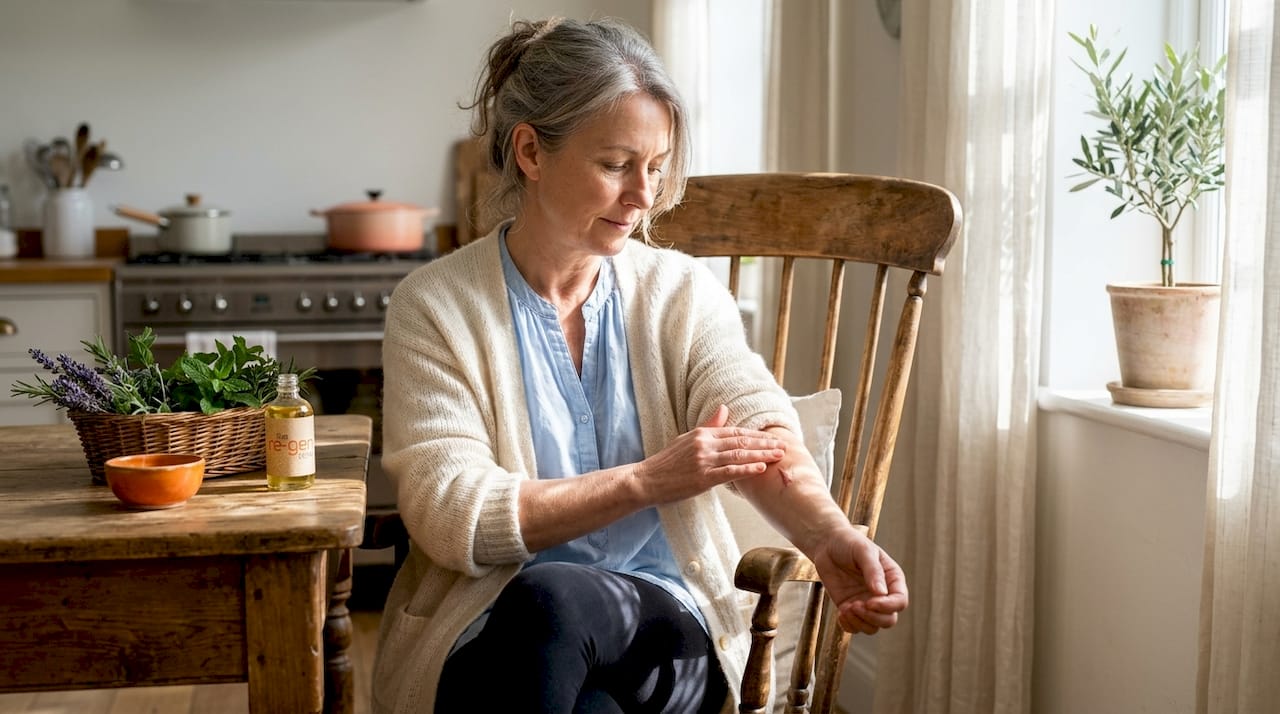
Massage once healed. Gentle massage with a moisturizer applied in circular or linear motions helps break down collagen bundles and improve scar texture. This is most effective within the first year of scar formation.
“Consistent wound care, including moisturizing and protecting the wound from sun exposure, remains one of the most effective strategies for minimizing scar appearance.” — American Academy of Dermatology
Pro Tip: Start the massage routine as soon as the wound is fully closed and no longer tender. Even two minutes per day makes a measurable difference over several months. Review the full skin healing steps for a sequenced approach.
Natural plant-based scar treatments versus silicone and clinical evidence
Not all topical scar treatments are created equal. Understanding the evidence helps you make smarter choices, not just hopeful ones.
Treatment | Mechanism | Clinical evidence | Best for |
Silicone gel or sheets | Hydration, occlusion, collagen regulation | Strong, multiple trials | Raised and hypertrophic scars |
Aloe vera | Anti-inflammatory, moisture | Moderate, modest improvement | Scar hydration, itch relief |
Centella asiatica | Collagen synthesis support | Moderate for keloids | Early scar modulation |
Vitamin E oil | Antioxidant | Weak, some studies show no benefit | Moisture only |
Onion extract gel | Anti-inflammatory | Mixed evidence | Scar texture, limited |
Silicone gel is the gold standard for raised scar improvement, backed by stronger clinical evidence than plant oils. It works through occlusion and hydration at a level most botanical products can’t replicate on their own.
That said, plant-based options offer real, if modest, benefits. Aloe vera and Centella asiatica show supportive research for symptom relief and some scar modulation, particularly for keloid size and hydration, but they’re not guaranteed to erase scars.
Key realities to keep in mind:
Plant oils without occlusion (a physical barrier that holds in moisture) address surface hydration only, not the deeper structural remodeling that changes a raised scar
The best healing herbs for skin work best as part of a broader care routine, not as standalone fixes
Natural and silicone treatments are not mutually exclusive; many people use both
Pro Tip: If you’re committed to a chemical-free scar reduction approach, pair your botanical treatment with consistent sun protection and massage. The combination outperforms any single product used alone.
Practical application: using natural scar treatments safely, including considerations for pets
How you apply natural scar treatments matters as much as which ones you use.
Wait for full wound closure. Applying any topical treatment to an open or partially healed wound can introduce irritation or infection.
Choose fragrance-free products. Fragrances are among the most common causes of contact dermatitis, especially on sensitive or healing skin. Look for hypoallergenic, low-irritant formulations.
Patch test everything. Apply a small amount to an inconspicuous area of skin 24 hours before full use. Even natural products can trigger reactions in sensitive individuals.
Apply consistently. Once or twice daily application, combined with massage, yields better results than sporadic use.
Prevent pets from licking treated areas. Some natural ingredients, including certain essential oils and citrus extracts, can irritate skin and pose risk if pets lick treated areas. If you’re treating a pet’s scar, use only products specifically formulated to be pet-safe, and consider a protective collar.
For pet owners specifically, the same core principles apply. Keep the area clean, moist, and protected. A product designed to soothe skin irritation naturally and free of toxic botanicals is a safer choice for animals than a general-purpose human product.
Pro Tip: For both humans and pets, simpler formulations with fewer ingredients reduce the risk of adverse reactions while still delivering the moisture and support the skin needs.
Timeline and realistic expectations for natural scar improvement
Patience isn’t just a virtue in scar care. It’s a requirement.
Timeframe | What to expect |
Weeks 1 to 4 | Wound closes; redness and slight firmness are normal |
Months 1 to 3 | Begin massage and topical care; texture may start to soften |
Months 3 to 6 | Gradual color change; scar begins flattening if treated consistently |
Months 6 to 12 | Visible improvement in texture and pigmentation with consistent care |
12 to 24 months | Maximum natural improvement; persistent raised scars may need clinical care |
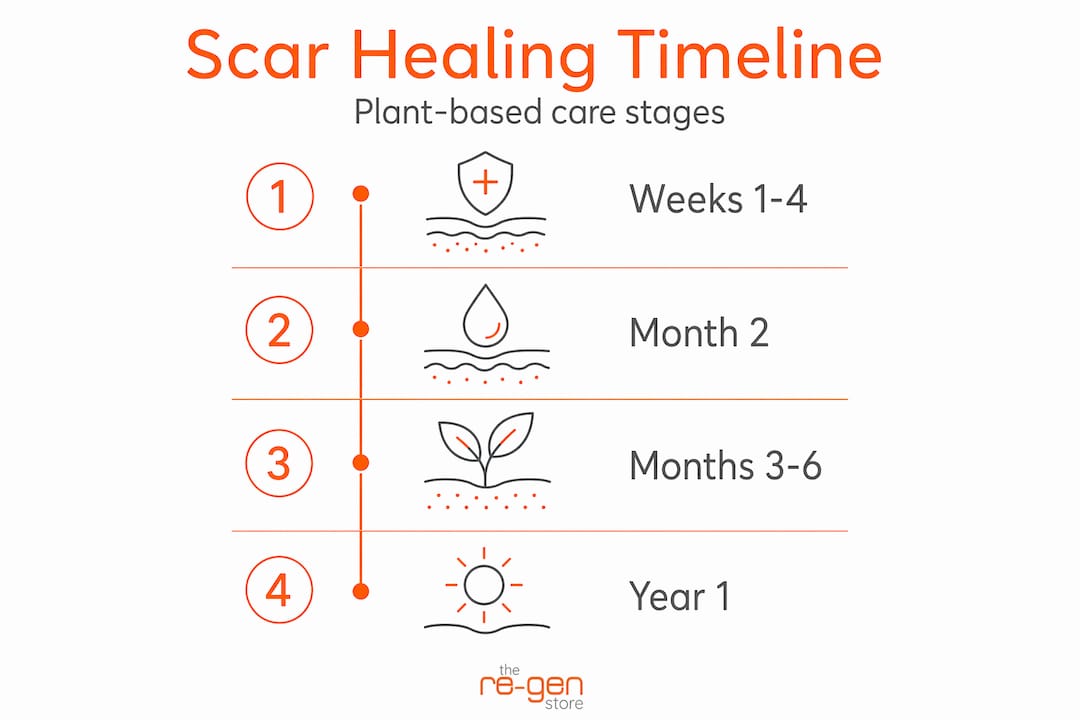
Scar improvement, according to the Cleveland Clinic, typically unfolds over months, with benefits from gentle massage visible within a year and silicone use sometimes recommended for 12 to 24 months. Natural treatments follow a similar timeline.
Follow these steps to stay on track:
Start treatment as soon as the wound is fully closed.
Apply your chosen product once or twice daily without skipping.
Massage for at least two minutes per session.
Protect from sun exposure every day the area is exposed.
Reassess every 90 days and adjust your routine based on visible progress.
For severe, raised, or keloid scars, consult a dermatologist. Natural care supports scar healing timeline progress, but some cases benefit from laser therapy, steroid injections, or surgical revision that topical treatments can’t provide.
Why supporting healing, rather than erasing scars, is the real goal
Here’s an opinion worth sitting with: the scar care industry, natural and clinical alike, has done a poor job of resetting expectations. Consumers reach for plant-based products because the marketing often implies transformation. In reality, even the most effective topical treatments are managing a biological process, not reversing it.
Scars are biological remodeling processes. Natural treatments support hydration, inflammation control, and UV protection rather than complete scar removal. That’s not a limitation to work around; it’s the actual mechanism of progress.
Two factors that get far less attention than they deserve: sun protection and the wound environment during the first 48 to 72 hours. Keeping a fresh wound moist and covered does more for long-term scar appearance than any botanical applied six weeks later. And consistent sunscreen use on a healing scar can prevent years of discoloration. These are free, accessible interventions. Yet most people skip them while spending money on expensive serums.
The smarter approach is to stop looking for the product that eliminates scars and start building the routine that steadily improves them. Gentle, natural healing principles applied consistently over months produce real, visible results. That’s not a consolation prize; it’s what biology actually allows.
Explore safe, effective plant-based scar and wound care products
If you’re ready to put these principles into practice, the right products make consistency easier. At The Re-gen Store, we offer plant-based, petroleum-free wound and scar care formulated for health-conscious individuals and pet owners who want effective care without harsh chemicals.
Our petroleum-free wound treatment aligns directly with dermatologist recommendations for moisturizing and protecting healing skin. The Re-gen plant-based regenerative ointment is designed to support the wound environment from the earliest stages of healing through scar maturation. It’s also a trusted natural alternative to Neosporin for those avoiding antibiotic-based treatments. Clean ingredients, no toxins, safe for the whole family including pets.
Frequently asked questions
What does natural scar treatment actually do?
Natural scar treatment helps support the skin’s healing process by moisturizing, protecting, and gently massaging scar tissue to improve appearance over time. As Johns Hopkins Medicine confirms, it aims to improve scar color and texture rather than erase scars.
Are plant oils effective for treating scars?
Plant oils like aloe vera and Centella asiatica can modestly improve scar symptoms and texture, but as Frontiers in Pharmacology research shows, they offer less certainty than silicone-based treatments for reducing raised scars.
When should I start using scar treatments?
Most treatments should begin after the wound is fully closed and healed, often about a week after injury or once stitches are removed. Topical interventions started after wound closure and used consistently for months produce the best results.
Are natural scar treatments safe for pets?
Some natural oils and citrus extracts may irritate skin and pose risks if pets lick treated areas. Use only low-irritant, fragrance-free products on closed skin, and as AAD guidance notes, choose formulations with minimal ingredients to reduce exposure risk.
How long does it take to see improvement with natural scar treatments?
Scar improvements occur gradually over months, often up to a year or more with consistent care. Cleveland Clinic guidance notes that benefits from massage appear within the first year, with some treatments extending to 12 to 24 months for full results.
Recommended
Comments