
What Are Eco-Friendly Healing Products? Your 2026 Guide


Reaching for a product labeled “natural” feels like the responsible choice. But what are eco-friendly healing products, really? The label rarely tells the full story. A moisturizer can list plant-derived ingredients while arriving in virgin plastic, manufactured with petrochemical solvents, and shipped with zero carbon offset. True eco-friendly healing products meet a higher bar. They consider sourcing, formulation, packaging, and lifecycle impact together. This guide breaks down what actually qualifies, which product categories deliver, and how to shop without falling for vague green claims.
Table of Contents
Key takeaways
Point | Details |
“Natural” is not enough | A product must meet criteria across sourcing, formulation, packaging, and lifecycle to qualify as truly eco-friendly. |
Certifications matter | Third-party labels like COSMOS, B Corp, and Ecocert provide verified benchmarks that cut through vague marketing language. |
Match product to need | Bandages, sunscreens, and repair creams each serve a distinct healing role. Selecting the right archetype improves both results and sustainability. |
Greenwashing is widespread | Consumers must look beyond front-label claims to ingredient lists, transparency reports, and independent audits. |
Plant-based formulas support recovery | Petroleum-free, botanically sourced healing products can support skin and tissue repair with a lower environmental footprint. |
What makes healing products truly eco-friendly
The word “eco-friendly” on a product label is a marketing choice, not a regulated standard. Measurable decisions across lifecycle are what separate genuine sustainable wellness items from products simply dressed up in green packaging.
Here is what actually counts:
Sourcing: Ingredients should come from sustainably and ethically harvested plant, mineral, or botanical sources. This includes fair labor practices and regenerative farming where possible.
Formulation: The product should rely on natural-origin compounds and avoid synthetic fragrances, parabens, petroleum derivatives, and endocrine-disrupting chemicals.
Packaging: Minimal packaging is the baseline. Recycled, recyclable, refillable, or biodegradable materials take it further. A small glass jar beats a multilayer plastic tube every time.
Lifecycle impact: This covers carbon footprint from manufacturing through transportation to disposal. Some brands now publish verifiable lifecycle assessments.
Certifications: COSMOS certification sets globally recognized standards for natural and organic cosmetics, requiring third-party audits and public registries. B Corp certification evaluates the entire company’s social and environmental performance. Leaping Bunny confirms no animal testing.
Transparency is the thread connecting all of these. A brand that publishes its ingredient origins, audit results, and sustainability metrics is a brand you can hold accountable.
Pro Tip: Search a product’s INCI ingredient list alongside the database at EWG Skin Deep to spot potentially harmful ingredients before you buy.
Eco-friendly healing product categories that deliver
Understanding the theory helps. Seeing it applied to real product categories makes it practical.
Bamboo bandages
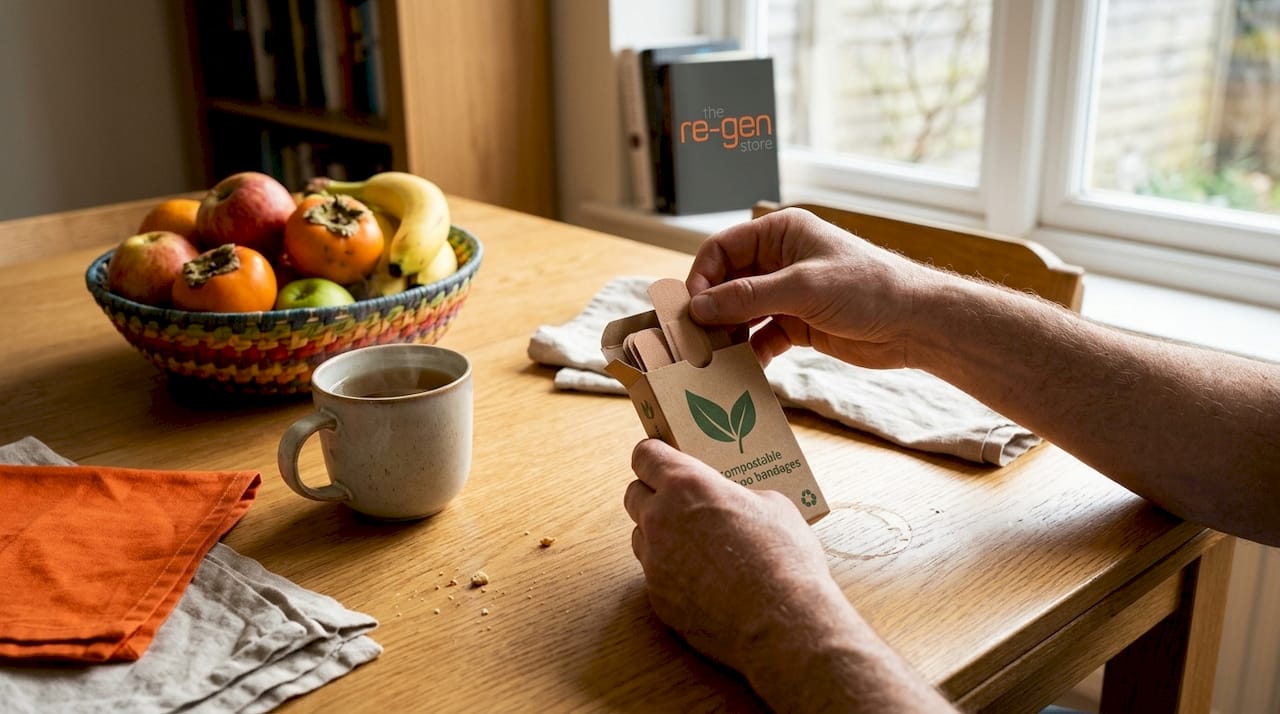
Bamboo bandages represent one of the clearest examples of environmentally friendly treatments in wound care. Bamboo fiber is organically sourced, biodegradable, breathable, hypoallergenic, and latex-free. The adhesive is non-toxic, which matters for people with sensitive skin or reactions to conventional bandage materials. After use, these bandages are compostable rather than contributing to landfill. PATCH, one of the most recognized names in this space, is also a Certified B Corp that ties every purchase to tree-planting and regenerative agriculture projects.
Mineral sunscreens
Zinc oxide mineral sunscreens skip chemical UV absorbers like oxybenzone, which have been linked to coral reef damage and skin sensitization. A well-formulated mineral sunscreen using zinc oxide provides strong UVB protection while remaining compatible with sensitive skin. Green People’s COSMOS-certified mineral sun cream, for example, combines SPF30 zinc oxide coverage with jojoba and aloe vera, offering a genuinely green health solution for daily skin protection.
Plant-based skin repair creams
This category covers the broadest range of eco-conscious remedies for recovery. Products like the Tata Harper Crème Supreme use 100% natural-origin formulas with COSMOS certification and clinically demonstrated results for skin hydration and barrier repair. For wound care and soft tissue recovery, plant-based ointments that skip petroleum ingredients entirely offer a meaningful alternative to conventional antibiotic ointments.
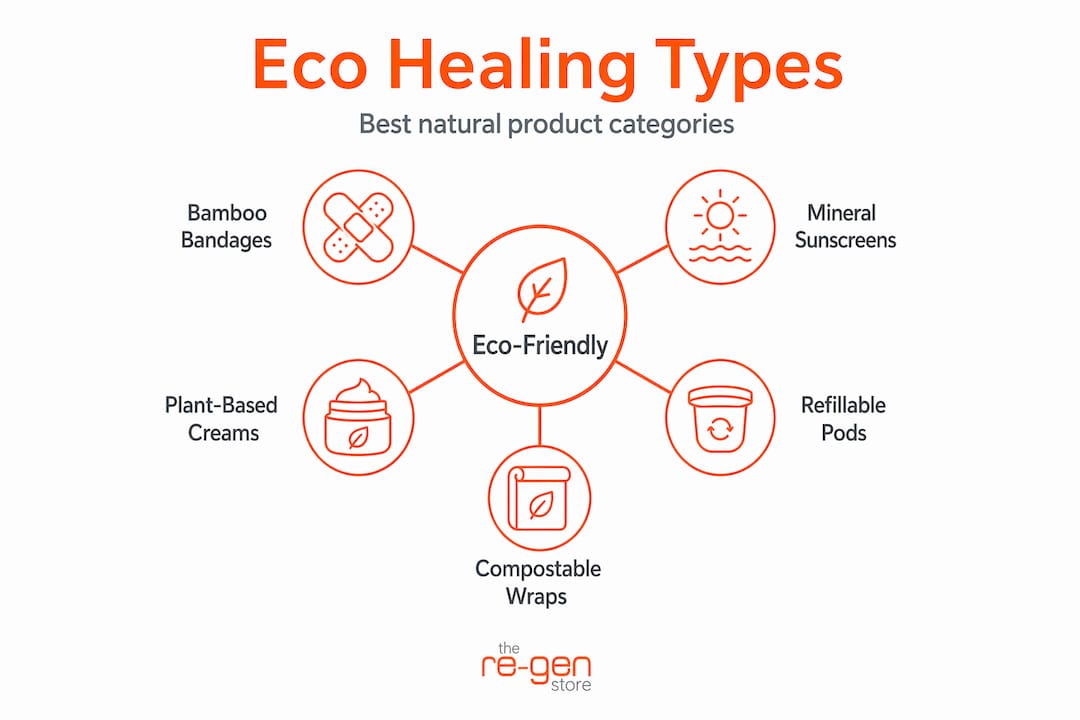
Pro Tip: Look for refillable formats when available. Brands offering refillable moisturizer pods can cut packaging waste by up to 70% compared to buying new units repeatedly.
Category | Key eco-attribute | Best use case |
Bamboo bandages | Biodegradable, compostable | Cuts, scrapes, minor wounds |
Mineral sunscreens | No chemical UV filters | Daily prevention, sensitive skin |
Plant-based repair creams | Natural-origin, petroleum-free | Skin repair, barrier support |
How to choose and use eco-friendly healing products
Knowing what qualifies is only half the work. Selecting the right product for your actual health need is where most people lose momentum. Product selection depends on symptom, not on finding one product that does everything.
Follow this process:
Identify what your body needs. Protection from further harm calls for a bamboo bandage or mineral sunscreen. Soothing irritated or damaged skin calls for a botanical repair cream or a plant-based ointment. Recovery from deeper tissue stress may call for transdermal mineral support.
Read the full ingredient list before you buy. Front labels are marketing. The INCI list at the back is the truth. Prioritize products where you recognize the majority of ingredients as plant or mineral derived.
Apply correctly for best results. Bamboo bandages work best on clean, dry skin for proper adhesion. Mineral sunscreen needs reapplication every two hours in direct sun. Plant-based repair creams typically absorb best on slightly damp skin after cleansing.
Build eco-friendly products into your daily routine. Replacing one product at a time is sustainable for both the environment and your budget. Start with the item you use most frequently.
Know when natural is not enough. Deep wounds, signs of infection, or severe burns require medical care. The best natural healing products are supplements to, not substitutes for, professional treatment when it is genuinely needed.
Spotting and avoiding greenwashing
Greenwashing is not a fringe problem. It is the default behavior of a market that profits from the appearance of sustainability without bearing its cost. Verification requires moving past vague claims to audits, certifications, and data.
Watch for these tactics:
Vague words without evidence: Terms like “eco,” “green,” “natural,” and “clean” have no legal definition in most markets. Any brand can use them freely.
Cherry-picked claims: A product marketed as “100% natural fragrance” may still contain synthetic preservatives or petroleum-based emulsifiers.
Misleading imagery: Green packaging, leaf graphics, and earth tones create an association with nature that has nothing to do with actual sustainability.
To verify a product’s real standing, check for third-party certifications like COSMOS, Ecocert, or B Corp on official registries rather than relying on the product label alone. Ask brands directly whether they publish supply chain traceability and sustainability KPIs. Consumer advocacy groups and social media communities that hold brands publicly accountable are also useful filters.
“The most sustainable product is not always the one with the most certifications. It is the one whose brand can clearly explain where every ingredient comes from and why it was chosen.”
Pro Tip: Before purchasing, search the brand name plus “sustainability report” or “B Corp profile” to find independently verified data rather than self-reported claims.
My honest take on navigating this space
I have spent years looking at natural healing products from every angle, and the single biggest mistake I see people make is trusting the label without checking the evidence behind it. Most product packaging is designed by marketing teams, not formulators or environmental scientists.
What I have learned is that the best eco-friendly healing products tend to come from brands that are almost reluctant to shout about it. They publish their ingredient sourcing in plain language. They use certifications you can verify in a public registry. They design packaging with end-of-life in mind from the start.
I also think people underestimate how much product effectiveness matters here. A genuinely eco-conscious remedy that does not support recovery is not a better choice. It is just a different kind of waste. The goal is healing products that work and align with your values. Those products exist. You just have to know what questions to ask before you put them in your cart.
— Kyle
Theregenstore’s plant-based approach to healing
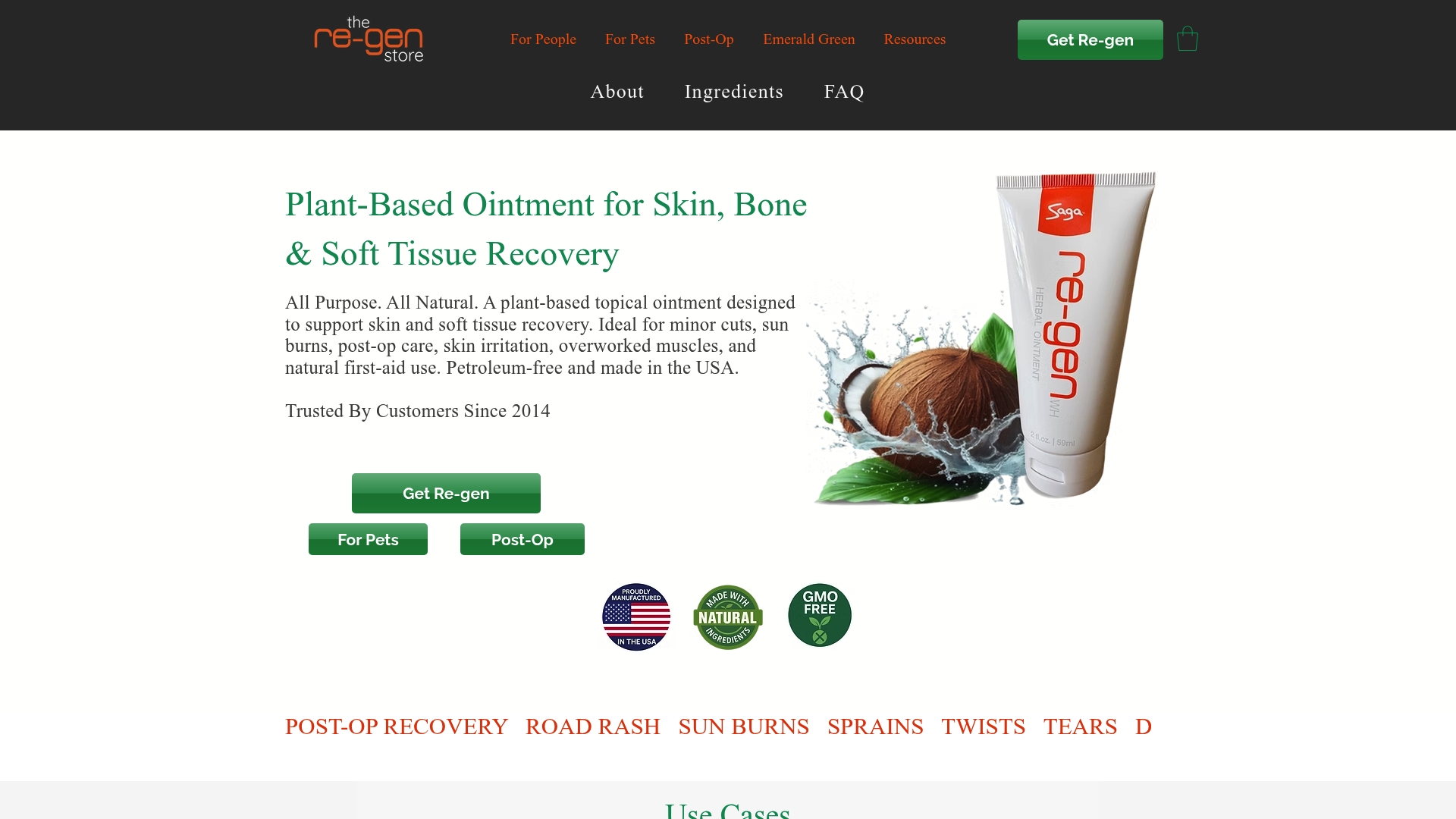
If you are ready to move beyond conventional ointments toward something that actually aligns with eco-friendly healing principles, Theregenstore is worth exploring. Re-gen is a petroleum-free, plant-based regenerative ointment formulated without synthetic chemicals, designed to support skin, soft tissue, and wound recovery. It was built as a natural Neosporin alternative for people who want effective wound care without the petroleum base or synthetic antibiotics. Whether you are dealing with cuts, burns, post-operative wounds, or general skin repair, Theregenstore’s approach prioritizes botanical ingredients and transparency. Explore the full plant-based wound care range to find the right fit for your healing routine.
FAQ
What makes a healing product eco-friendly?
An eco-friendly healing product uses sustainably sourced, natural-origin ingredients, avoids synthetic or petroleum-based chemicals, and comes in minimal or biodegradable packaging. Third-party certifications like COSMOS or B Corp provide verified confirmation of these standards.
How do I spot greenwashing in natural healing products?
Look past front-label words like “natural” or “clean” and check for third-party certification registries, full ingredient lists, and published sustainability reports. Brands with nothing to hide make this information easy to find.
Are bamboo bandages better than regular bandages?
Bamboo bandages are hypoallergenic, latex-free, biodegradable, and compostable, making them a lower-impact option than conventional plastic bandages. They perform comparably for minor wounds when applied to clean, dry skin.
Can plant-based products replace conventional wound care?
Plant-based ointments and eco-conscious remedies can effectively support healing for minor wounds, skin irritation, and soft tissue recovery. Serious infections, deep wounds, or medical conditions still require professional evaluation.
What certifications should I look for on eco healing products?
COSMOS and Ecocert certify natural and organic formulation standards. B Corp evaluates company-wide sustainability. Leaping Bunny confirms cruelty-free practices. Each certification is independently verifiable through public registries.
Recommended
Comments