
Trauma healing cream: Benefits, ingredients, and smart use


Walk into any pharmacy or natural health store, and you’ll find shelves full of creams labeled “trauma relief,” “tissue repair,” or “healing formula.” But most of these products sit in a gray zone, somewhere between cosmetics, herbal remedies, and first aid. No single regulatory definition governs what a trauma healing cream must contain or prove. That gap creates real confusion for anyone trying to find safe, effective support for bruises, sprains, soft tissue injuries, or minor wounds in people and pets alike. This article breaks down what these creams actually are, which ingredients matter, and how to choose and use them wisely.
Table of Contents
Key Takeaways
Point | Details |
Not a medical label | Trauma healing cream is a marketing term, not a regulated medical category. |
Key botanical ingredients | Common ingredients include arnica for bruises and comfrey for wound support. |
Check for PA-free comfrey | Always confirm comfrey creams are PA-free to avoid serious risks. |
Match cream to injury | Choose your product based on injury type and avoid use on open or infected wounds. |
Prioritize safety | Evidence-based wound care comes first; creams are only adjuncts for minor issues. |
What is trauma healing cream?
The term “trauma healing cream” is not a strict medical category. It refers broadly to topical creams or gels marketed for minor injuries such as bruises, sprains, contusions, and abrasions. As the European Medicines Agency notes, a trauma healing cream is “generally a topical cream or gel marketed for minor injuries related to trauma and for supporting symptomatic relief and healing of damaged skin/soft tissue.”
What sets these products apart is not a shared formula, but a shared purpose: supporting the body’s recovery from closed, minor soft tissue injuries. Most rely on plant-based ingredients, which is why they appeal strongly to people seeking natural alternatives and to pet owners looking for gentle, chemical-free options.
Here is what these products are typically used for:
Minor bruises and contusions
Muscle strains and sprains
Post-exercise soreness
Swelling from bumps and blunt impacts
Skin recovery after abrasions or chafing
Minor soft tissue trauma in pets
Important: Trauma healing creams are not replacements for medical care. They are most appropriate for closed, minor injuries. Never apply these creams to open wounds, infected skin, or injuries with significant swelling, bone involvement, or signs of serious tissue damage.
Exploring plant-based topical creams more broadly can help you understand why natural formulas have become a go-to for both personal and pet care.
Common active ingredients and how they work
With the basics defined, let’s look at what ingredients do the heavy lifting in these creams. Most trauma creams marketed as natural or herbal rely on a small set of well-known botanicals, each with a specific claimed role. Understanding what each one does helps you pick the right product for your situation.
Ingredient | Primary claimed benefit | Evidence strength |
Arnica montana | Reduces bruising and swelling | Mixed |
Comfrey extract | Supports tissue and muscle repair | Moderate |
Calendula | Soothes skin, reduces inflammation | Limited but positive |
Vitamin E | Skin recovery support | Limited |
Arnica montana is one of the most widely used ingredients in this category. It’s promoted mainly for bruising and hematoma resorption. However, arnica gel evidence is mixed, and some reviews conclude there isn’t compelling evidence to confirm meaningful benefit for bruising outcomes. That doesn’t mean it’s useless. Many people report real symptom relief. It means the science hasn’t caught up yet, and results vary by individual.
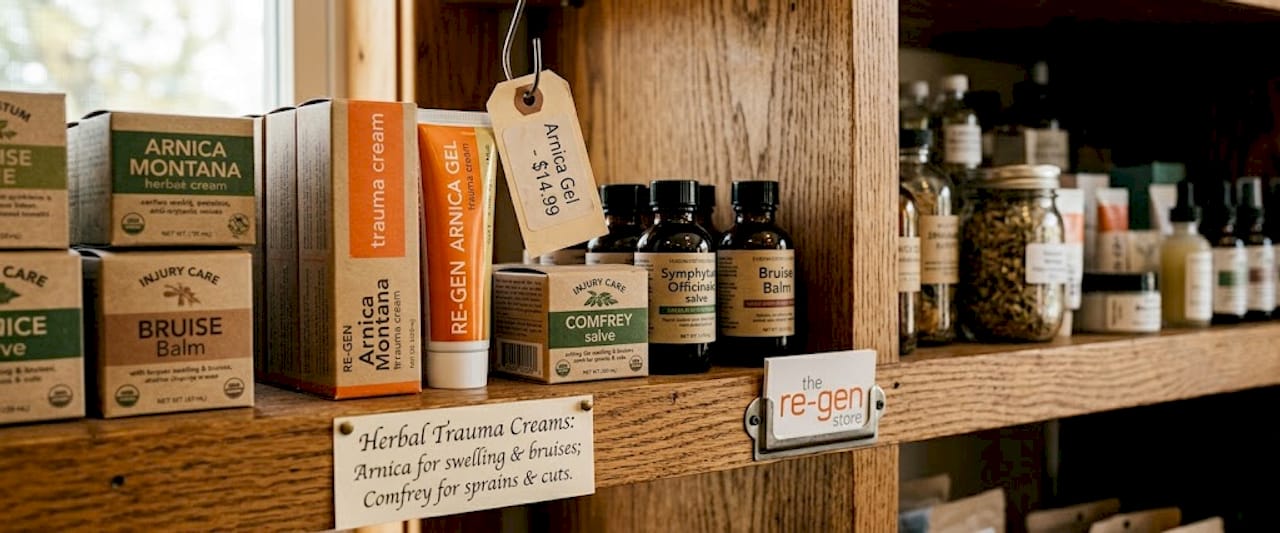
Comfrey extract is often considered stronger for soft tissue recovery. Products like Traumaplant rely on comfrey “for promoting wound healing/soft-tissue recovery,” making it a common choice for muscle strains and bruised muscles rather than surface skin injuries alone.
Supporting botanicals like calendula and vitamin E are sometimes added for their skin-soothing properties. They rarely carry the main therapeutic load but can contribute to overall skin comfort and recovery.
Pro Tip: If your main concern is a deep muscle bruise or strain, look for creams that lead with comfrey rather than arnica. If surface skin discoloration (bruising) is the focus, an arnica-forward product may fit better.
To dig deeper into how individual plants contribute to tissue recovery, check out these healing herbs for skin and explore natural healing for skin and pets.
Trauma healing cream: Choosing the right product safely
Knowing what’s inside, let’s see how to choose and safely apply the right solution for your specific needs. Safety is not an afterthought here. It’s the first filter when selecting a trauma cream.
Key safety steps before you buy:
Check the label for PA-free certification on comfrey products. Pyrrolizidine alkaloids (PAs) are naturally occurring compounds in comfrey that can be toxic to the liver when absorbed in quantity. Reputable sources recommend ensuring products are PA-free and note that oral comfrey carries far greater risks than topical use. Still, PA-free labeling on topical comfrey is a meaningful quality marker.
Match the product to the injury type. Comfrey for deep muscle soreness, arnica for surface bruising, calendula-rich formulas for chafed or irritated skin.
Do a patch test. Apply a small amount to the inner forearm and wait 24 hours. This is especially important if you are applying the cream to a pet or a child with sensitive skin.
Confirm the wound is closed and clean. These creams are for intact, minor injuries. If skin is broken, bleeding, or shows signs of infection, prioritize proper wound care first.
Seek medical evaluation if symptoms worsen, infection develops, or healing does not progress after several days.
Situation | Use trauma cream? | Notes |
Minor bruise, no broken skin | Yes | Choose arnica or comfrey |
Muscle strain, closed injury | Yes | Comfrey-based preferred |
Open wound or abrasion | No | Clean, protect, consider medical advice |
Infected wound | No | Seek medical care immediately |
Severe swelling or possible fracture | No | Emergency evaluation needed |
As wound care guidance confirms, open wound care should prioritize “cleanliness, protection, and infection risk management” over any particular healing cream, and severe or open wounds should receive medical attention.
Looking for options that skip petroleum and harsh chemicals? Explore petroleum-free wound treatment and learn more about soothing skin irritation naturally.
Practical uses: When and how to use trauma healing creams
You’ve got the facts. Here’s how to actually put trauma healing creams to safe, effective use in daily life for people and pets.
Best use cases:
Minor bruises from bumps or falls
Contusions and muscle soreness after activity or sports
Mild skin trauma from play or exercise in dogs and cats
Post-exercise muscle stiffness in adults
Skin recovery after minor abrasions that have already closed
How to apply:
Clean and completely dry the affected area before applying
Use a thin, even layer and gently massage it in
Do not apply under bandages unless the label specifically permits it
Reapply as directed, typically two to three times daily
Wash hands after application, especially if treating pets
When not to use:
Active bleeding or broken skin
Any wound showing redness spreading outward, warmth, or discharge (signs of infection)
Eyes or mucous membranes
Areas with unknown rashes or reactions
For practical guidance on speeding up recovery from bruising, visit healing bruises faster. If you’re looking to replace antibiotic ointments with natural options, read about the natural Neosporin alternative approach.
A closer look: Why the label matters less than smart selection
Stepping back from products, here’s what most articles on trauma creams leave out.
The phrase “trauma healing cream” is a marketing label, not a medical classification. Manufacturers use it because it evokes a sense of active, targeted repair. But the label itself tells you almost nothing about whether a product will work for your specific injury. What matters is reading past the marketing and looking directly at the active ingredient list.
Choosing a trauma cream wisely means evaluating “the active ingredient class, intended injury type, and safety constraints” rather than trusting any single brand’s headline claim. A cream labeled “trauma relief” that leads with fragrance and petroleum derivatives offers far less healing potential than a simpler, plant-forward formula with a proven botanical at an effective concentration.
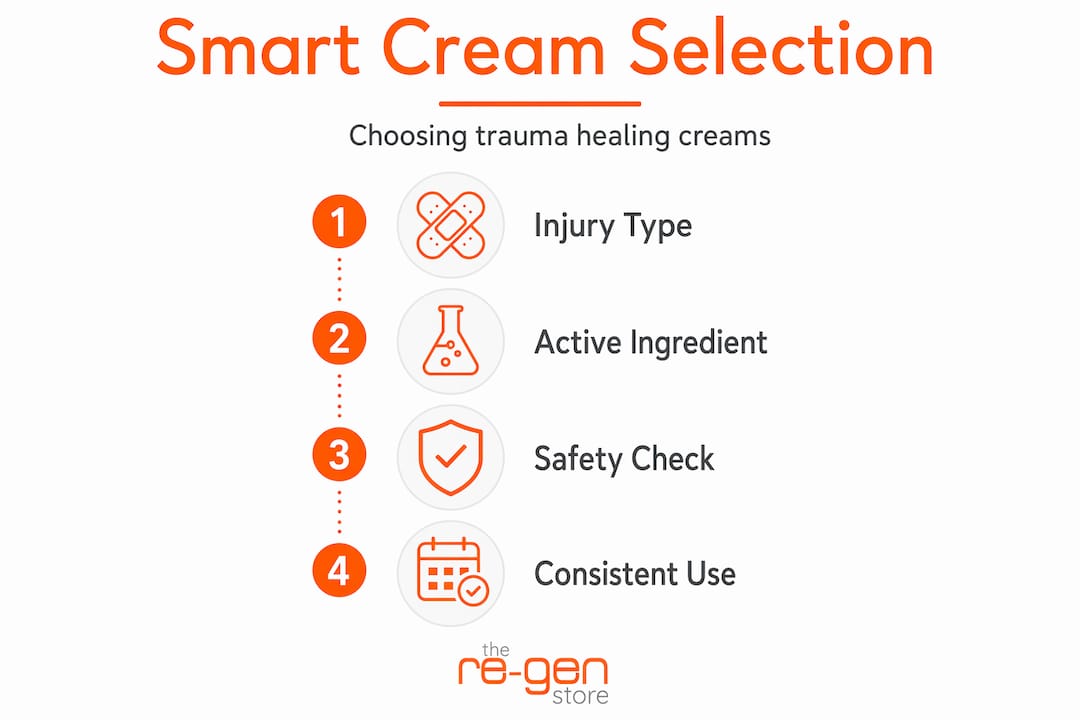
We also see this pattern with pet care. Many pet owners are drawn to trauma creams because they want to avoid harsh synthetic ingredients for their animals. That instinct is sound. But the same rules apply: check the active ingredient, match it to the injury, and patch test before wider use.
The other piece most articles skip: consistency matters more than the specific brand. Applying a reasonably formulated plant-based cream consistently, cleaning the area properly, and monitoring for progress will outperform any well-marketed cream used carelessly or irregularly.
For a broader view of how natural alternatives support both people and animals, explore natural alternatives to Neosporin.
Discover plant-based solutions for safer skin and tissue recovery
Armed with knowledge, here’s where you can find trusted plant-based options for your next step.
At TheRegenStore.com, we’ve built our approach around the exact principles this article covers: clean ingredients, matched to injury type, safe for sensitive skin and pets. Re-gen is a plant-based regenerative ointment formulated without petroleum, harsh preservatives, or synthetic additives.
Whether you’re supporting recovery from a bruise, a sprain, post-exercise soreness, or helping your pet heal from a minor skin injury, our formulas are designed to work with the body’s natural repair process. Explore our petroleum-free wound care options and find out why so many health-conscious users choose Re-gen as their natural Neosporin alternative for both people and animals.
Frequently asked questions
Can I use trauma healing cream on open wounds?
No, trauma healing creams are not recommended for open wounds. Prioritize cleaning, protection, and consult medical care for anything beyond a minor, closed injury.
What are the main risks with herbal trauma creams like comfrey or arnica?
Comfrey creams must be PA-free to reduce liver toxicity risk from pyrrolizidine alkaloids. Arnica may cause skin irritation in sensitive individuals, so always patch test before full application.
Do trauma healing creams help with bruising?
Some users report relief with arnica-based creams, but clinical evidence for faster bruise healing is mixed and varies by individual response.
Are these creams safe for pets?
Plant-based trauma healing creams are often chosen for pets because of their gentle, natural formulas, but always check ingredient labels, patch test on a small area, and watch for adverse reactions. Products that rely on plant extracts like comfrey are among the more popular choices for animal care.
Recommended
Comments