
Top Herbal Healing Creams: Best Natural Skin Remedies


For most minor wounds, burns, and skin recovery needs, a plant-based regenerative ointment like Re-gen from Theregenstore is a solid all-around choice. Its petroleum-free formula combines an occlusive olive oil and beeswax base with evidence-backed botanicals, and every ingredient is listed transparently. An occlusive plant-based base keeps debris out while maintaining the moist environment skin needs to repair itself, and pairing that base with active botanicals speeds the process further.
If Re-gen isn’t the right fit for your situation, three solid alternatives cover different needs:
Manuka honey-based balm — best for antibacterial wound support on minor cuts and abrasions
Comfrey-containing salve — best for tissue repair, bruising, and short-term muscle or joint pain
Calendula/aloe vera cream — best for sensitive, eczema-prone, or reactive skin
Table of Contents
Which herbal ingredients actually have evidence behind them?
A small group of botanicals stands out from the rest. Comfrey, manuka honey, propolis, calendula, arnica, and aloe vera each bring either clinical trial support or decades of mechanistic research. Most other popular herbs have traditional use and supportive data, but fewer high-quality randomized controlled trials.
Comfrey (Symphytum officinale) — Contains allantoin, which promotes cell proliferation. RCT evidence supports topical comfrey for reducing pain, inflammation, and swelling in degenerative arthritis, acute back pain, and sports injuries, including in children aged 3 and older.
Manuka honey — Its antibacterial activity is driven by methylglyoxal concentration. Higher methylglyoxal levels correlate with stronger antibacterial efficacy and support a moist wound environment that encourages cell growth.
Propolis (bee resin) — Clinical trials show topical propolis accelerates wound healing through antioxidant and anti-inflammatory pathways, with notable results in diabetic foot ulcers.
Calendula (Calendula officinalis) — Widely used for inflamed, itchy skin. Strong traditional and mechanistic support for antimicrobial and anti-inflammatory activity; fewer large RCTs than comfrey.
Arnica (Arnica montana) — Reduces bruising and swelling topically. Solid traditional use and supportive mechanistic data; most effective for blunt trauma rather than open wounds.
Aloe vera — Contains 75 identified constituents including vitamins A, C, E, and zinc. It supports hydration, soothes burns, and calms irritation. Best evidence is for superficial burns and dry, reactive skin.
Pro Tip: Comfrey products vary significantly by species. Symphytum officinale carries higher pyrrolizidine alkaloid (PA) levels than Symphytum tuberosum. For topical use, choose a PA-free or low-PA certified variety, and avoid applying comfrey to broken skin for more than 4–6 weeks consecutively. Do not use on children under 3.
You can learn more about how these botanicals are prioritized in herbal recovery practice and their specific role in tissue repair.
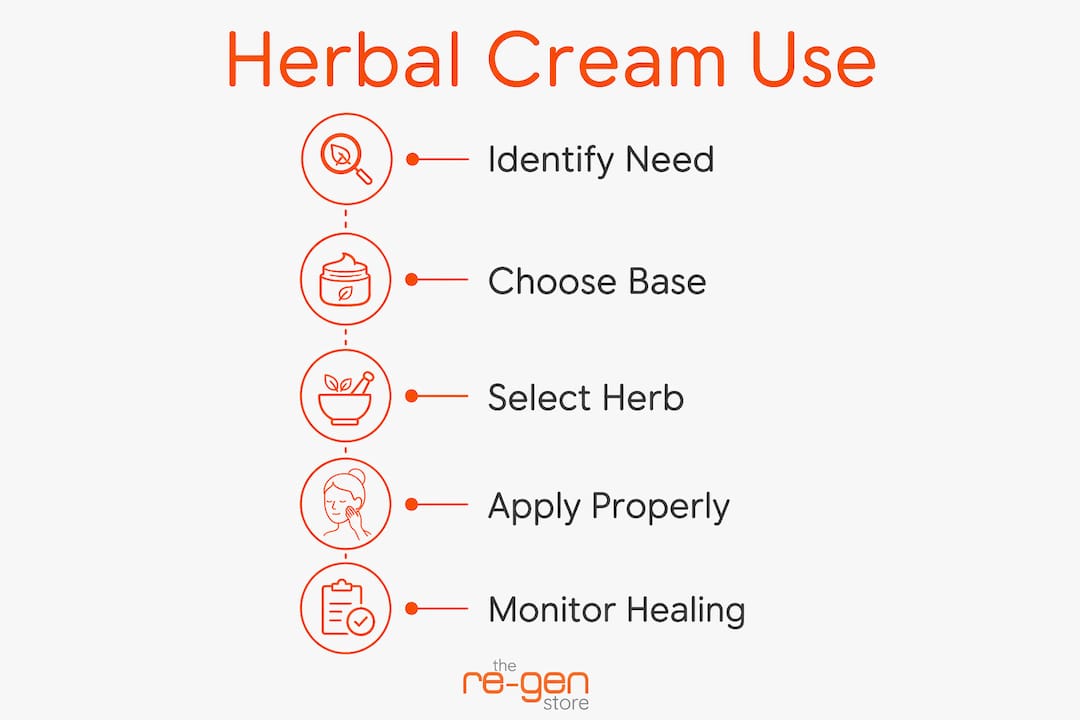
What’s the difference between an ointment, salve, cream, and gel?
Ointments and salves suit open wounds and dry, cracked skin best. Creams and gels work better for sensitive or eczema-prone skin where heavy occlusion feels uncomfortable.
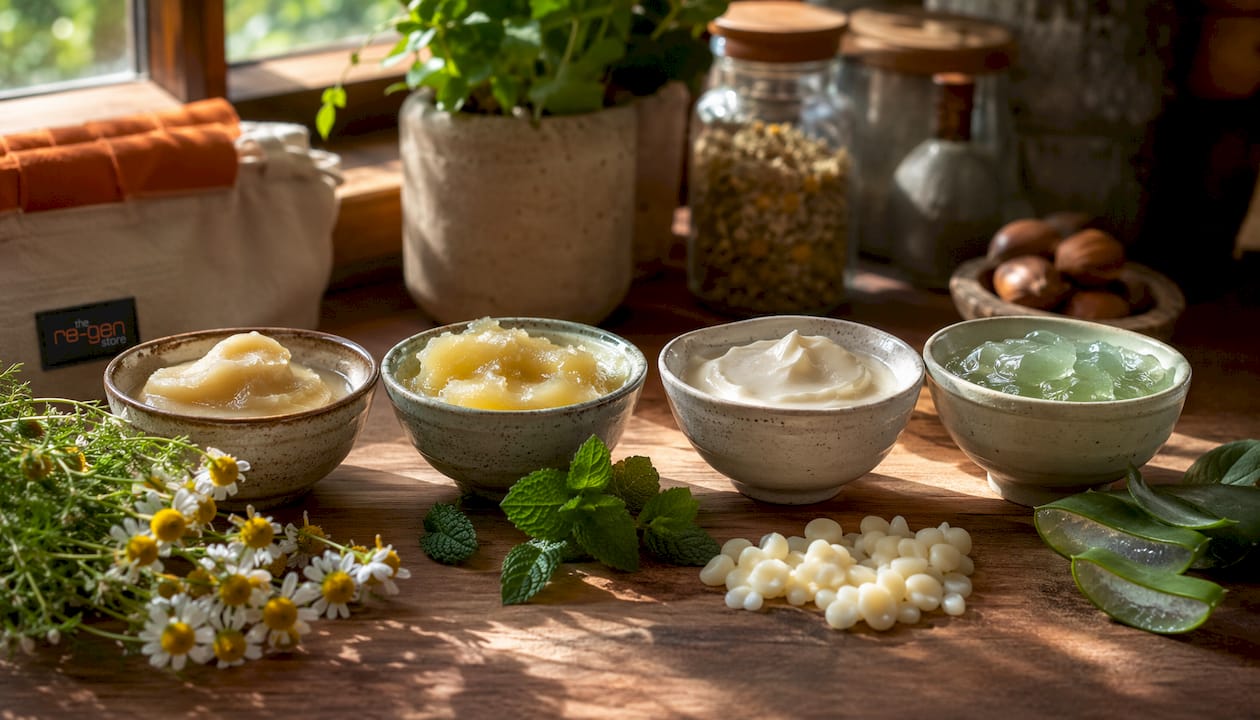
An occlusive base, typically olive oil and beeswax, mimics the skin’s lipid layer, reducing contamination while keeping the wound bed moist enough for re-epithelialization. Lighter emulsions (creams and lotions) absorb faster but offer less barrier protection. For natural topical ointments, the base choice matters as much as the active botanicals.
Form | Best uses | Pros | Cons |
Ointment | Open wounds, dry cracked skin, post-surgical care | Strong barrier, long-lasting moisture | Can feel greasy; requires periodic reapplication |
Salve | Bruises, muscle/joint pain, minor burns | Easy to apply; portable | Slightly less occlusive than ointment |
Cream | Eczema, sensitive skin, daily maintenance | Absorbs quickly; lighter feel | Less barrier protection on open wounds |
Gel | Superficial burns, sunburn, acute inflammation | Cooling; fast-absorbing | Dries out quickly; needs frequent reapplication |
When should you use herbal creams, and when should you stop?
Herbal topical creams work well for minor cuts and scrapes, superficial burns, eczema flare support, and muscle or joint discomfort. They are not a substitute for medical care when an injury is serious.
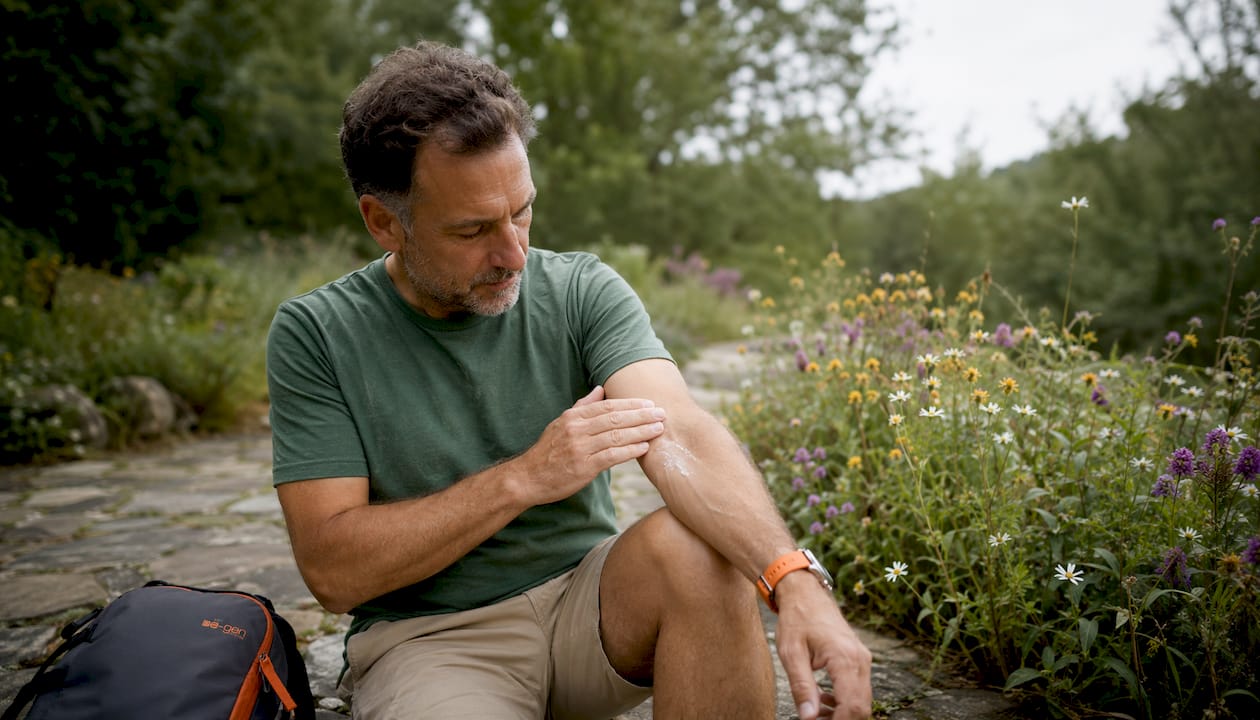
For minor cuts and scrapes, clean the wound first, then apply a thin layer of ointment or salve 2–3 times daily. Manuka honey or propolis-containing formulas add antibacterial support. For superficial burns, aloe vera gel or a calendula cream soothes immediately; switch to an occlusive ointment once the acute heat has subsided. Eczema flares respond well to calendula or aloe-based creams that hydrate without heavy fragrances. For muscle and joint pain, comfrey salves applied directly to the affected area have the strongest clinical backing. The herbal remedy application process covers patch testing and wound hygiene in detail.
Stop using a herbal cream and seek medical attention if you notice any of these:
Wound edges spreading red or warm beyond the original area
Pus, foul odor, or increasing pain after 48 hours
Fever above 100.4°F alongside a skin wound
Deep puncture wounds, animal bites, or wounds that won’t close
Uncontrolled diabetes, peripheral vascular disease, or immune compromise
Any wound that has not improved after 7–10 days of consistent care
How do you choose a safe, effective herbal healing cream?
The most important factors are active botanical evidence, a quality occlusive base, concentration transparency, and third-party testing. Everything else is secondary.
Shopping checklist:
Full botanical names listed (e.g., Calendula officinalis, not just “calendula extract”)
Occlusive base confirmed (beeswax, olive oil, shea butter, or similar plant lipid)
PA-free or low-PA certification if comfrey is an ingredient
No synthetic preservatives, parabens, or petroleum derivatives
Third-party testing or USDA Organic certification for purity assurance
Age and pregnancy guidance stated on the label
Batch codes present for traceability
Re-gen from Theregenstore meets these criteria as a petroleum-free, plant-based option with a transparent ingredient list and clear use guidelines for both humans and pets. For readers comparing plant-based ointments to conventional options, Theregenstore also offers a direct comparison with petroleum jelly that explains the practical differences.
Pro Tip: Multi-use ointments (cuts, burns, muscle pain) generally offer better value per ounce than single-use targeted creams. If you have pets, confirm the formula is labeled pet-safe before applying it to animals.
How do you make a simple herbal salve at home?
The safest and simplest DIY approach for most people is an herb-infused oil combined with beeswax. Three short recipes cover the core options.
Herb-infused oil
You need: 1 cup dried calendula flowers (or comfrey leaf), 1.5 cups extra virgin olive oil, a clean glass jar, cheesecloth.
Fill the jar loosely with dried herb.
Pour olive oil over the herb until fully submerged.
Seal and place in a warm spot (or a slow cooker on low) for 4–6 weeks (or 4–8 hours on low heat).
Strain through cheesecloth into a clean, sterilized jar. Discard plant material.
Label with the herb name and date. Store in a cool, dark place; use within 12 months.
Basic beeswax salve
You need: 1 cup herb-infused oil (above), 1 oz beeswax pellets, sterilized tins or jars.
Melt beeswax in a double boiler over low heat.
Add infused oil and stir until fully combined.
Pour into sterilized containers immediately before it sets.
Let cool completely before sealing. Shelf life: 12–18 months at room temperature.
Simple cream (oil-in-water emulsion)
You need: ½ cup infused oil, ¼ cup aloe vera gel, 1 tbsp emulsifying wax, sterilized jar.
Melt emulsifying wax into the infused oil over low heat.
Warm aloe vera gel separately to the same temperature.
Slowly pour the aloe into the oil mixture while stirring constantly until emulsified.
Cool, then transfer to a sterilized jar. Refrigerate; use within 4–6 weeks.
Pro Tip: Always patch-test any DIY preparation on the inner forearm for 24 hours before applying to a wound. Never apply a homemade cream to an infected or deep wound. If you include comfrey, use a low-PA variety and limit application to intact or minimally broken skin.
How long does healing take, and what do herbal creams cost?
Realistic timelines depend on wound type, severity, and how consistently you apply the product. You can find detailed natural wound care timelines at Theregenstore’s wound healing guide.
Minor scrape or small cut: 3–7 days with consistent twice-daily application
Superficial burn (first-degree): 5–14 days; aloe gel first, then occlusive ointment
Eczema flare: Varies widely; expect 2–4 weeks for noticeable improvement
Muscle or joint bruising: 5–10 days with comfrey-based salve applied 2–3 times daily
Post-surgical skin: 2–6 weeks depending on incision depth and individual recovery
On cost, small-batch artisan salves often fall into a moderate price range. Premium manuka honey-based balms tend to be pricier due to the quality of honey used. Pump dispensers may be more expensive per ounce but offer reduced contamination risk on open wounds.
Key Takeaways
Plant-based occlusive ointments with evidence-backed botanicals offer the most practical balance of wound protection and active skin support for everyday injuries.
Point | Details |
Lead with the base | An occlusive beeswax and plant oil base protects the wound and maintains moisture for faster repair. |
Prioritize proven herbs | Comfrey, manuka honey, and propolis have the strongest clinical trial support for topical healing. |
Match form to need | Use ointments or salves for open wounds; creams or gels for eczema and sensitive skin. |
Know the safety limits | Seek medical care for spreading redness, fever, deep wounds, or no improvement after 7–10 days. |
Ready-to-use option | Re-gen from Theregenstore is a petroleum-free, plant-based ointment with transparent ingredients for skin and soft-tissue recovery. |
Why plant-based ointments are worth taking seriously
The conventional wound care aisle is dominated by petroleum-based products and single-antibiotic ointments. That works for many people. But the case for plant-based occlusive ointments isn’t just about avoiding petroleum. It’s about what you get in exchange.
An olive oil and beeswax base does something petroleum jelly alone cannot: it delivers fat-soluble botanical actives directly into the skin barrier while maintaining occlusion. Comfrey’s allantoin, calendula’s flavonoids, propolis’s antioxidants — these compounds need a lipid vehicle to penetrate effectively. A well-formulated plant-based ointment provides both the carrier and the active at once.
What I find underappreciated is the concentration question. Most commercial herbal creams list botanical extracts far down the ingredient list, after water and emulsifiers. That positioning usually signals a low-concentration inclusion added for marketing rather than therapeutic effect. When evaluating any natural healing ointment, the active botanical should appear in the first third of the ingredient list. If it doesn’t, the formula is unlikely to deliver meaningful results.
Theregenstore’s Re-gen ointment is built around this principle: ingredient transparency, a plant-first base, and clear guidance on use.
Re-gen: a practical plant-based option for skin recovery
Re-gen from Theregenstore is a petroleum-free, plant-based regenerative ointment formulated for skin, soft tissue, and muscle recovery. Its base combines plant oils and beeswax to create a breathable occlusive barrier, and every active botanical is listed clearly on the label. It’s designed for minor cuts, burns, sprains, post-surgical skin, and general wound support, with specific guidance available for both human and pet use.
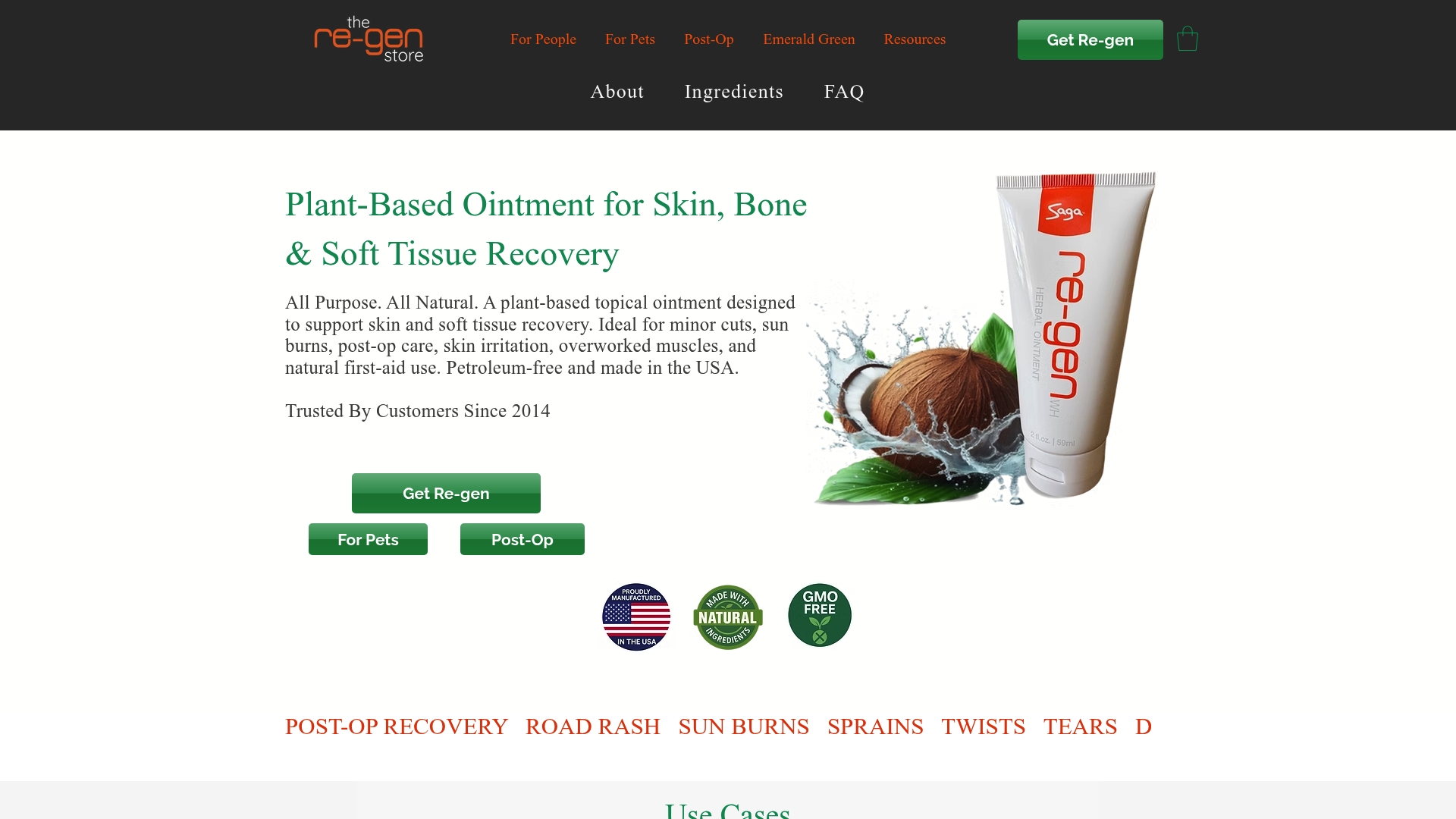
Apply a thin layer to clean skin several times daily as needed. Re-gen is available in multiple jar sizes, so you can start with a smaller format before committing to a larger supply. There are no petroleum derivatives, synthetic antibiotics, or hidden fillers. For readers who want a natural alternative to conventional antibiotic ointments, Re-gen is a straightforward, purchase-ready option backed by transparent ingredient sourcing. Visit Theregenstore to review the full ingredient list and choose the right size for your needs.
Useful sources
Comfrey RCTs and topical use (PMC) — Peer-reviewed summary of randomized controlled trials supporting comfrey for pain, inflammation, and swelling; covers pediatric safety data. Supports the evidence-backed herbs and uses sections.
Manuka honey antibacterial properties (PMC) — Explains the methylglyoxal mechanism behind manuka’s antibacterial activity and its role in wound healing. Supports the ingredient evidence section.
Propolis clinical effects on wound healing (PMC) — Clinical trial data on topical propolis for chronic wound healing, including diabetic ulcers. Supports ingredient recommendations.
Role of topical bases in skin protection (PMC) — Research on how occlusive plant-based bases mimic the skin’s lipid layer and support repair. Supports the forms section and product rationale.
Top healing herbs for skin (Theregenstore) — Brand-aligned overview of evidence-backed herbs for topical skin healing; supports the how-to-choose and perspective sections.
Herbal remedy application process (Theregenstore) — Practical step-by-step guidance on applying herbal topicals safely, including patch testing and wound hygiene.
FAQ
What is the most effective herb for topical skin healing?
Comfrey has the strongest randomized controlled trial evidence for reducing pain, swelling, and inflammation in topical use, while manuka honey leads for antibacterial wound support. The best choice depends on whether your priority is tissue repair or infection prevention.
What makes a herbal healing cream actually work?
An effective formula needs two things: an occlusive base (beeswax and plant oil) to protect the wound and maintain moisture, plus a meaningful concentration of an evidence-backed botanical like comfrey, propolis, or calendula. Low-concentration extracts listed near the bottom of an ingredient label rarely deliver therapeutic results.
What is the best herbal cream for skin healing?
For general skin and soft-tissue recovery, Re-gen from Theregenstore is a well-formulated, petroleum-free option with transparent ingredients and clear use guidance. For antibacterial wound support specifically, look for a manuka honey-based balm with a stated methylglyoxal rating.
Are herbal healing creams safe for children?
Most calendula and aloe-based creams are gentle enough for children, but comfrey-containing products should not be used on children under 3. Always patch-test first, and avoid applying any herbal cream to deep or infected wounds without consulting a clinician.
How long before a herbal cream shows results?
Minor scrapes typically improve within 3–7 days with consistent twice-daily application. Superficial burns may take 5–14 days, and eczema flares can take 2–4 weeks. If a wound shows no improvement after 7–10 days, or worsens at any point, seek medical attention.
Recommended
Comments