
The Role of Botanicals in Skincare: 2026 Guide

Botanicals in skincare are defined as plant-derived compounds that actively modulate skin biology through specific cellular pathways. The role of botanicals in skincare goes far beyond adding a natural label to a product. Ingredients like centella asiatica, calendula officinalis, and tree peony peptides each target measurable processes including oxidative stress, collagen breakdown, and barrier repair. These are not passive additives. They interact with your skin at the molecular level, and understanding how they work helps you choose products that actually deliver results.
How do botanical ingredients biologically affect skin?
Botanical ingredients modulate skin health via specific biological pathways rather than producing vague antioxidant effects. That distinction matters because it means the right botanical can target the exact process causing your skin concern.
Here is how the key mechanisms work:
Reactive oxygen species (ROS) control. Botanicals limit ROS, the unstable molecules that damage skin cells and accelerate visible aging. Reducing ROS protects collagen and slows the breakdown of healthy tissue.
Nrf2 pathway activation. Nrf2 is your skin’s internal defense switch. Botanical actives support its activation, which triggers the production of protective enzymes inside skin cells.
AP-1 and NF-κB inhibition. These two signaling pathways drive inflammation and collagen destruction. Restraining AP-1 and NF-κB signaling reduces redness, swelling, and long-term structural damage.
MMP reduction. Matrix metalloproteinases (MMPs) are enzymes that break down collagen. Botanicals that suppress MMPs protect the skin’s structural framework and support repair after injury or UV exposure.
Tree peony peptides are a strong example of multi-pathway action. In vitro studies demonstrated restored hyaluronic acid levels to approximately 70%, MMP-1 inhibition, and downregulation of tyrosinase and related proteins. That means one botanical source can address hydration, collagen protection, and pigmentation at the same time.
Pro Tip: When reading a product label, look for botanical actives listed with their Latin names and concentrations. A product listing “plant extract” without specifics gives you no way to evaluate whether the dose is meaningful.

What formulation technologies improve botanical skincare?
Even the most potent botanical extract fails if it cannot reach the right layer of skin. Modern formulation science solves this problem through delivery systems that protect and transport plant-derived compounds more effectively.
The most widely used technologies in 2026 include:
Nanoemulsions. These are fine oil-water mixtures that improve the solubility of fat-soluble botanical compounds and increase their absorption through the skin’s outer barrier.
Nanocarriers. Tiny particles that encapsulate botanical actives, protecting them from oxidation and degradation before they reach target skin cells.
Nanogels. Gel-based delivery systems that allow controlled, sustained release of botanical compounds over time, reducing the risk of irritation from concentration spikes.
Nanocarrier delivery systems enhance botanical bioavailability and skin penetration, improving therapeutic outcomes. That improvement is significant because many botanical actives are chemically unstable and break down before reaching deeper skin layers without protection.
The challenge is consistency. Extract variability in botanicals causes real problems for standardized dosing. The same plant species grown in different regions, harvested at different times, or processed differently can produce extracts with very different chemical profiles. Reputable manufacturers address this through standardized extraction protocols and batch testing.
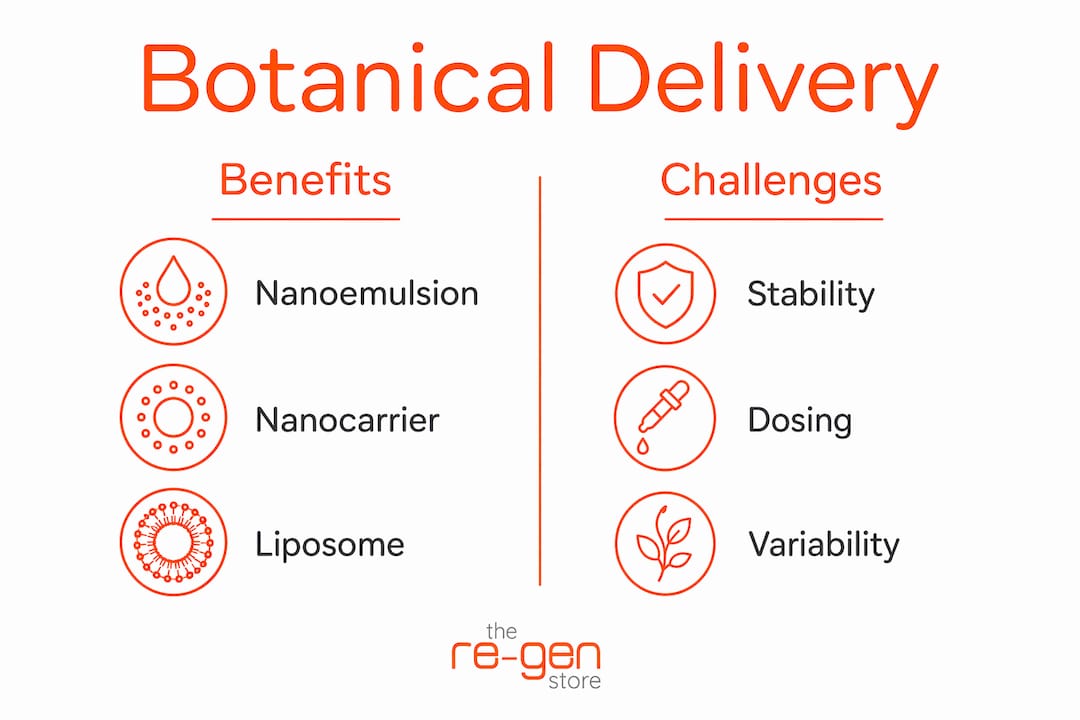
Delivery System | Primary Benefit | Key Challenge |
Nanoemulsion | Improved solubility and absorption | Stability over shelf life |
Nanocarrier | Protection from oxidation and degradation | Manufacturing reproducibility |
Nanogel | Controlled, sustained release | Formulation complexity |
Which botanical extracts deliver the most proven skin benefits?
Not all botanical ingredients in skincare perform equally. The extracts below have the strongest clinical and research support for specific skin concerns.
Centella Asiatica
Centella asiatica is rich in asiaticoside and madecassoside. These compounds stimulate collagen synthesis and hyaluronic acid production, supporting barrier repair and skin soothing without causing photosensitization. Centella is particularly effective after skin trauma, including minor wounds and post-procedure recovery.
Calendula Officinalis
Clinical data on calendula is among the strongest available for any botanical. A 1% supercritical CO2 extract added to an emollient cream lowered transepidermal water loss (TEWL) and improved objective skin barrier function in a double-blind randomized controlled trial. Lower TEWL means your skin holds onto moisture more effectively. That is a measurable, clinically verified outcome.
Beta-Sitosterol
Beta-sitosterol, found in Saussureae involucratae, reduces inflammation and protects the epidermal barrier by inhibiting NF-κB and reducing pro-inflammatory cytokines including IL-6 and TNF-alpha. It does this without disrupting the skin barrier itself, which makes it suitable for sensitive or reactive skin types.
Tree Peony Peptides
Tree peony flower peptides show antioxidant, anti-wrinkle, moisturizing, and whitening effects. They work by inhibiting melanin synthesis enzymes while protecting collagen structure. For anyone dealing with uneven skin tone alongside signs of aging, this is one of the more versatile herbal extracts for skin repair and brightening.
Are botanical skincare products always safe to use?
Natural does not automatically mean safe. Safety of botanical extracts depends on exposure and formulation, and each extract requires its own evaluation rather than a blanket assumption based on plant origin.
Sophora flavescens root extract, for example, requires in vitro irritation testing and margin of safety analysis because some of its components fall outside standard toxicological concern thresholds. That is not unusual. Many botanical compounds are biologically active precisely because they affect cellular processes, and that activity cuts both ways.
When choosing botanical skincare products, look for these indicators of quality and safety:
Standardized extracts with defined concentrations, not just “plant extract” on the label
Products from brands that publish safety testing or third-party certifications
Formulations that list individual actives with their percentage or concentration
Patch testing guidance included in the product instructions
Pro Tip: If you have sensitive skin or a history of contact dermatitis, introduce one new botanical product at a time and wait two weeks before adding another. Complex botanical mixtures increase the risk of identifying the source of any reaction.
Understanding how natural topical ointments work at the formulation level helps you evaluate safety claims more clearly. The safety framework for botanical cosmetics should integrate margin of safety calculations, history of use data, and exposure-level analysis rather than relying on ingredient origin alone.
Key takeaways
Botanical skincare works because specific plant-derived compounds target measurable biological pathways including ROS control, NF-κB inhibition, and MMP reduction, not because they are natural.
Point | Details |
Botanicals act on specific pathways | Effective botanical actives target ROS, NF-κB, AP-1, and MMPs rather than producing general antioxidant effects. |
Delivery systems matter | Nanoemulsions and nanocarriers improve absorption and stability, making botanical actives more effective in the skin. |
Clinical evidence varies by extract | Calendula, centella asiatica, and tree peony peptides each have distinct, research-supported benefits for specific skin concerns. |
Natural does not mean risk-free | Each botanical extract requires individual safety evaluation based on concentration, formulation, and exposure level. |
Standardization is the quality signal | Look for products with defined extract concentrations and published safety data, not just a plant name on the label. |
Why i think most people are choosing botanicals the wrong way
Most people shopping for plant-based skincare pick products based on ingredient names they recognize from social media. Centella asiatica is trending, so they buy anything with it on the label. That approach misses the point entirely.
What actually determines whether a botanical product works is whether the formulation targets connected biological pathways at a meaningful concentration. A product with 0.01% centella asiatica in a base of synthetic fillers is not a botanical skincare product in any functional sense. It is marketing.
The formulation science side of this is genuinely exciting. Nanocarrier delivery systems are solving problems that made botanical actives unreliable for years, specifically the stability and penetration issues that caused inconsistent results. That progress is real, and it means botanical skincare in 2026 is more effective than it was five years ago, but only from manufacturers who are actually using these technologies.
My honest recommendation: prioritize products that name specific actives with concentrations, show evidence of safety testing, and explain the mechanism they are targeting. If a brand cannot tell you which pathway their botanical addresses, they probably do not know themselves.
— Kyle
Plant-based skin healing from Theregenstore
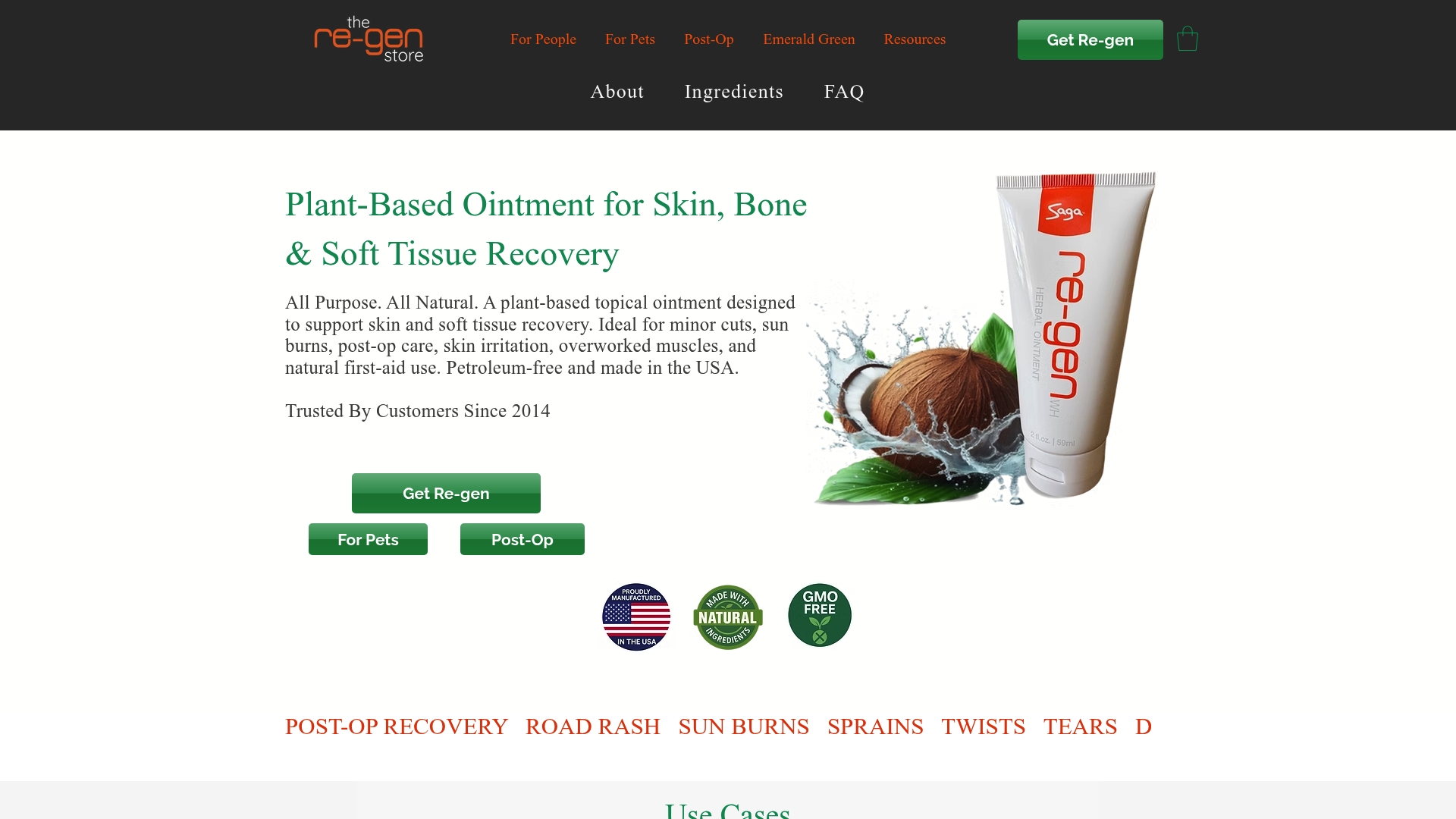
Theregenstore builds on exactly the science covered in this article. The Re-gen ointment is a petroleum-free, plant-based topical treatment formulated to support skin repair, wound healing, and tissue recovery without synthetic antibiotics or chemical fillers. It is designed as a natural alternative to Neosporin for cuts, burns, and post-operative wounds. If you want to put plant-based skincare benefits to work on real healing needs, the Re-gen plant-based regenerative ointment is a direct application of botanical science for skin recovery. Explore the full range of petroleum-free wound treatments at Theregenstore to find the right option for your skin.
FAQ
What is the role of botanicals in skincare?
Botanicals modulate skin health by targeting specific biological pathways including oxidative stress, inflammation, and collagen breakdown. They are active compounds, not passive additives, and their effectiveness depends on concentration and formulation.
Which botanical is best for skin barrier repair?
Centella asiatica and calendula officinalis are the most clinically supported options for barrier repair. Calendula’s 1% supercritical CO2 extract has been shown in randomized controlled trials to reduce TEWL and improve barrier function.
Are botanical skincare ingredients safe for sensitive skin?
Not all botanical extracts are safe for sensitive skin by default. Safety depends on the specific extract, its concentration, and the overall formulation. Introduce one new botanical product at a time and patch test before full application.
How do nanocarriers improve botanical skincare?
Nanocarriers protect botanical actives from degradation and improve their penetration into deeper skin layers. This increases bioavailability and therapeutic outcomes compared to conventional formulations.
Can botanicals replace conventional skincare actives?
Botanicals can match or exceed conventional actives for specific concerns like inflammation, hydration, and pigmentation when properly formulated and dosed. The key is selecting extracts with clinical evidence and using them at meaningful concentrations.
Recommended
Comments