
Treating Sunburn Blisters: 4 First Aid Steps and Plant Based Aftercare

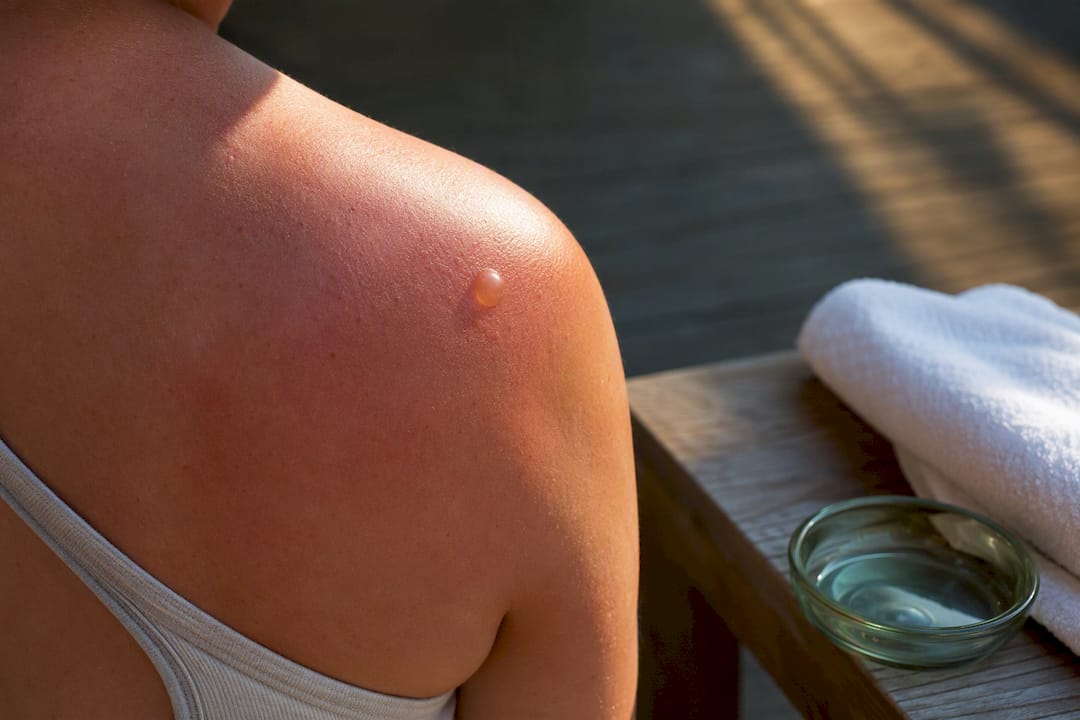
Cool the burn with lukewarm water, leave any blisters alone, take an over-the-counter pain reliever if you need it, and drink extra water while your skin recovers. Watch for red flags like a high fever, confusion, or blisters on your face, hands, or genitals, and get medical care right away if any of those show up. Everything else, from dressing a broken blister to picking the right moisturizer, builds on that foundation.
TL;DR:
Keeping blisters intact prevents infection and promotes faster healing by acting as a natural dressing, with broken blisters requiring cautious cleaning and antibiotic ointment.
Seek emergency care if large areas, face, hands, or genitals develop blisters, or if signs like high fever, confusion, or vomiting occur.
Use cool water compresses and over-the-counter pain relievers to reduce discomfort, while hydration and loose clothing support recovery.
Avoid topical products containing benzocaine, lidocaine, alcohol, or petroleum jelly, and opt for fragrance-free moisturizers or aloe vera instead.
Most sunburn blisters peak within 72 hours and heal within one to two weeks, but pigment changes can take longer, especially without proper sun protection during healing.
Table of Contents
How to Treat Sunburn Blisters in the First Few Hours
The first hours after you notice blistering set the tone for how fast you heal. Sunburn blisters mean the burn has gone deeper than the surface, classifying it as a second-degree burn rather than simple redness, according to the MSD Manual. That deeper injury needs more deliberate care than a bottle of lotion.
Start here:
Cool the skin. Apply a cool, damp compress or take a cool bath for a short time at a time, repeating several times a day. Skip ice or ice water. Extreme cold constricts blood vessels and can add tissue stress on top of the burn, according to Mayo Clinic.
Manage pain. Nonprescription ibuprofen or acetaminophen can ease swelling and discomfort. Follow the label directions or your clinician’s guidance rather than guessing on dosage.
Hydrate and rest. Sunburn pulls fluid to the skin’s surface and away from the rest of your body, so drink more water than usual for a day or two.
Cover thoughtfully. Loose, breathable clothing protects blistered skin from friction during the day. Save actual dressings for blisters that have already broken open; intact ones usually do better uncovered so air can reach them.
Pro Tip: Keep a spray bottle of cool water in the fridge. A light mist feels gentler on tender skin than pressing a wet cloth directly onto a fresh blister.
Should You Pop a Sunburn Blister?
No. Leave it alone. An intact blister works as your body’s own sterile dressing, sealing out bacteria while new skin forms underneath, per the MSD Manual. Popping it removes that barrier and opens the door to infection, a point dermatologists consistently emphasize.
If a blister breaks on its own, a small window of extra care prevents most problems:
Trim only the loose, dead skin with clean scissors. Never tear it off by hand.
Wash the area gently with mild soap and water.
Apply a thin layer of antibiotic ointment.
Cover with a nonstick bandage, per Mayo Clinic’s guidance.
Change the dressing daily and check for warmth, swelling, or odor each time.
More than half the surface protection your skin has is gone the moment a blister ruptures, which is why that daily check matters more than people expect. If the wound looks worse instead of better, or if a clinician needs to remove more damaged tissue, some cases call for professional debridement or a course of antibiotics, something a burn treatment guide can help you understand in more depth. When in doubt about whether a broken blister needs more than home care, a same-day visit to urgent care settles it fast.
When Does a Sunburn Blister Need Medical Care?
Most blistering sunburns heal at home. Some don’t, and knowing the difference protects you from a much worse outcome.
Head to the emergency room if you notice:
A high fever, confusion, fainting, or repeated vomiting.
Blisters covering a large portion of your body.
Call a doctor promptly, even without those emergency signs, if:
Blisters have formed on your face, hands, feet, or genitals.
You see pus, red streaks spreading from the wound, or pain that’s getting worse instead of better.
Children, older adults, and anyone with a weakened immune system should have a lower threshold for calling a doctor. A burn that a healthy adult could manage at home might progress faster or hit harder in those groups.
What to Put on Sunburn Blisters (and What to Avoid)
Choosing the right topical matters almost as much as choosing to cool the burn in the first place. Aloe vera gel and fragrance-free, water-based moisturizers are usually the safest starting point, and chilling the bottle in the fridge adds a cooling effect on top of the soothing one.
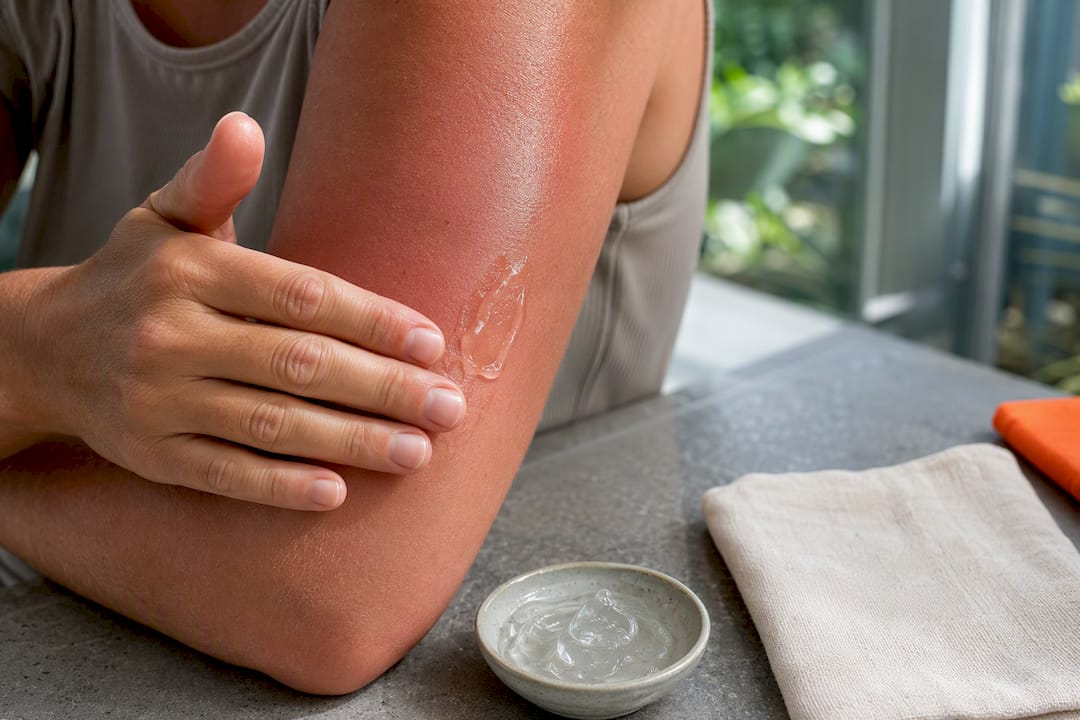
Short courses of over-the-counter a low concentration hydrocortisone cream can calm inflammation on unbroken skin, though Mayo Clinic notes it works better as a supporting measure than a primary fix, and it isn’t meant for long-term use.
What to skip entirely:
Products containing benzocaine or lidocaine. These numbing agents can irritate already-sensitized skin and sometimes trigger allergic reactions.
Anything with alcohol in the formula, for the same reason.
Petroleum jelly on more severe burns. It can trap heat against the skin instead of letting it dissipate, according to the MSD Manual.
Topical antibiotic ointment has its place, but save it for blisters that have already broken open, where it genuinely reduces infection risk rather than sitting on skin that doesn’t need it.
Pro Tip: If you’re testing a new gel or salve, like a calendula-based salve, patch-test on a small unaffected area first. Sunburned skin reacts to ingredients differently than it does at baseline.
How Long Do Sunburn Blisters Take to Heal?
Symptoms from a blistering sunburn typically peak within about 72 hours, even though the burn itself may have started producing blisters within an hour of overexposure, according to the MSD Manual. After that peak, most partial-thickness burns move through a fairly predictable recovery:
Peeling begins as the damaged top layer of skin sheds, usually within a few days.
New skin underneath looks pink or slightly different in tone for one to two weeks.
Gentle, fragrance-free moisturizer during this phase helps prevent excess dryness and supports smoother repair.
Strict sun avoidance on the healing area limits pigment changes that can otherwise linger for months.
Prevention beats treatment every time. Broad-spectrum sunscreen rated SPF 30 or higher, reapplied roughly every two hours, along with protective clothing, shade, and avoiding peak sun hours, prevents the repeat burns that do the most cumulative damage. If pigment changes or scarring haven’t faded after a few months, that’s a reasonable point to bring it up with a dermatologist.
A Publisher’s Honest Checklist for Blister Aftercare
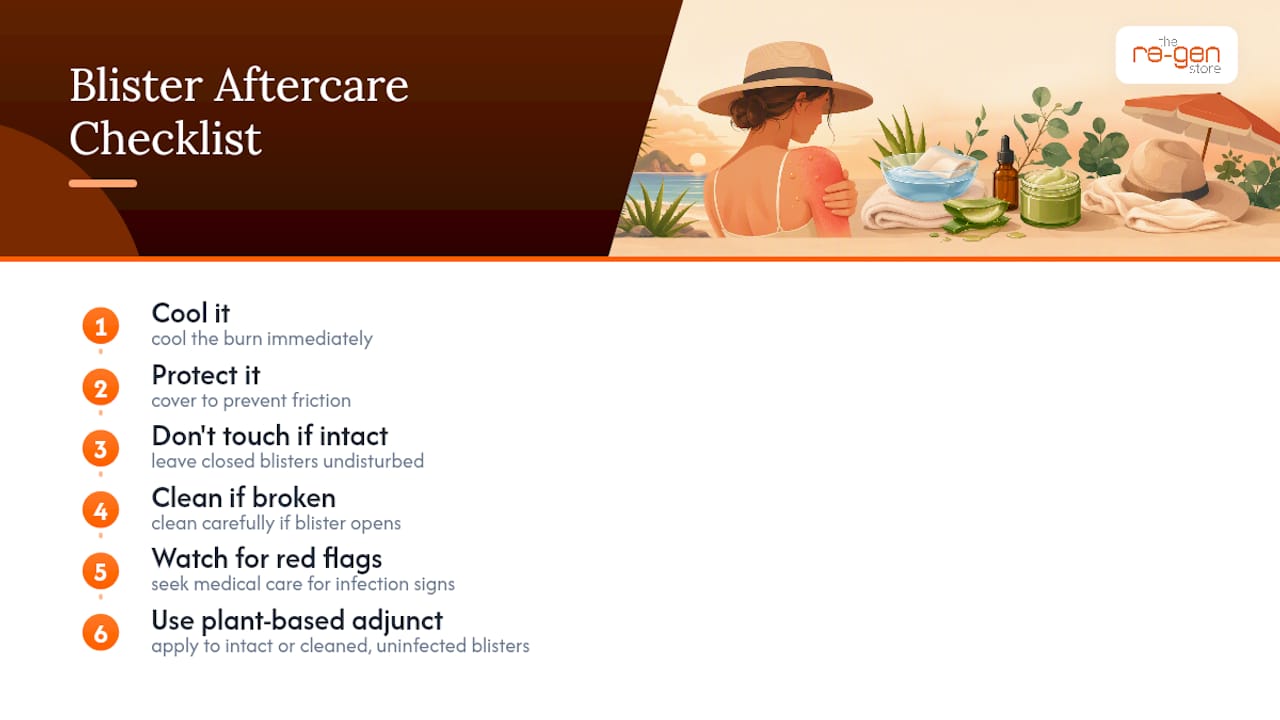
Strip away the medical jargon and blister care comes down to a short list: cool it, protect it, don’t touch it if it’s intact, clean it carefully if it isn’t, and watch for the signs that mean you need more than home care. That order rarely changes no matter how mild or severe the burn looks on day one.
Where a plant-based option like Re-gen fits, in our view, is squarely in that aftercare window, applied to intact skin or a broken blister that’s already been cleaned and shows no sign of infection, the same way you’d use any natural remedy for burns. It’s a complement to the steps above, not a substitute for antibiotic ointment on an open wound or a doctor’s evaluation when red flags appear. Treat every topical, plant-based or otherwise, as an adjunct to sound first aid rather than a shortcut around it.
— Kyle
Support Your Skin’s Recovery With Re-gen
Once a blister has been cleaned or intact skin is simply irritated and peeling, a petroleum-free, plant-based ointment can be folded into your aftercare routine.
Unlike petroleum-based ointments that can trap heat against already-stressed skin, plant-derived ointments are meant to support the skin’s own recovery process without that tradeoff. It’s designed as a natural alternative to conventional antibiotic ointments for straightforward aftercare, not as a replacement for antibiotic ointment on a wound that’s actively infected or for any red-flag symptom covered above. Check the Sunburn Relief & Skin Recovery page for usage guidance specific to sun-damaged skin, or go straight to the Re-gen product page to see packaging sizes and order one for your first-aid kit before the next beach trip. If you still see fever, spreading redness, or blisters on your face or hands, call a doctor first. Everything else, Re-gen can help you handle at home.
Where This Guidance Comes From
This article draws on first-aid and treatment guidance from Mayo Clinic, consumer-facing skin disorder information from the MSD Manual, and professional dermatologic reference material from the Merck Manual. Each source is worth bookmarking if a burn takes an unexpected turn.
Sources
FAQ
Should I Go to the ER for a Blistering Sunburn?
Go to the emergency room if you have a a high fever, confusion, fainting, or repeated vomiting alongside the burn, or if blisters cover a large area of your body. Blisters on the face, hands, feet, or genitals also warrant prompt medical attention even without those severe symptoms.
How Long Will It Take for a Sunburn Blister to Heal?
Symptoms typically peak within a few days, and most partial-thickness sunburns finish peeling and largely recover within one to two weeks. Pigment changes in the healed skin can take longer to fully fade.
What Ointment Should I Put on Sunburn Blisters?
For a broken blister, clean it and apply an antibiotic ointment before covering it with a nonstick bandage. For intact blisters or general aftercare, fragrance-free, water-based moisturizers, aloe vera gel, or a plant-based option like Re-gen are reasonable choices, while products with benzocaine, lidocaine, or petroleum jelly are best avoided.
How Serious Are Blisters From Sunburn?
Blistering means the burn has reached a second-degree depth, which is more serious than a simple red sunburn and carries a real infection risk if a blister breaks and isn’t cared for properly. Most cases heal fine with home care, but the red-flag signs above mean it’s time to see a doctor.
Recommended
Comments