
Caregivers: ISTAP Skin Tear Treatment with a Plant Based Option

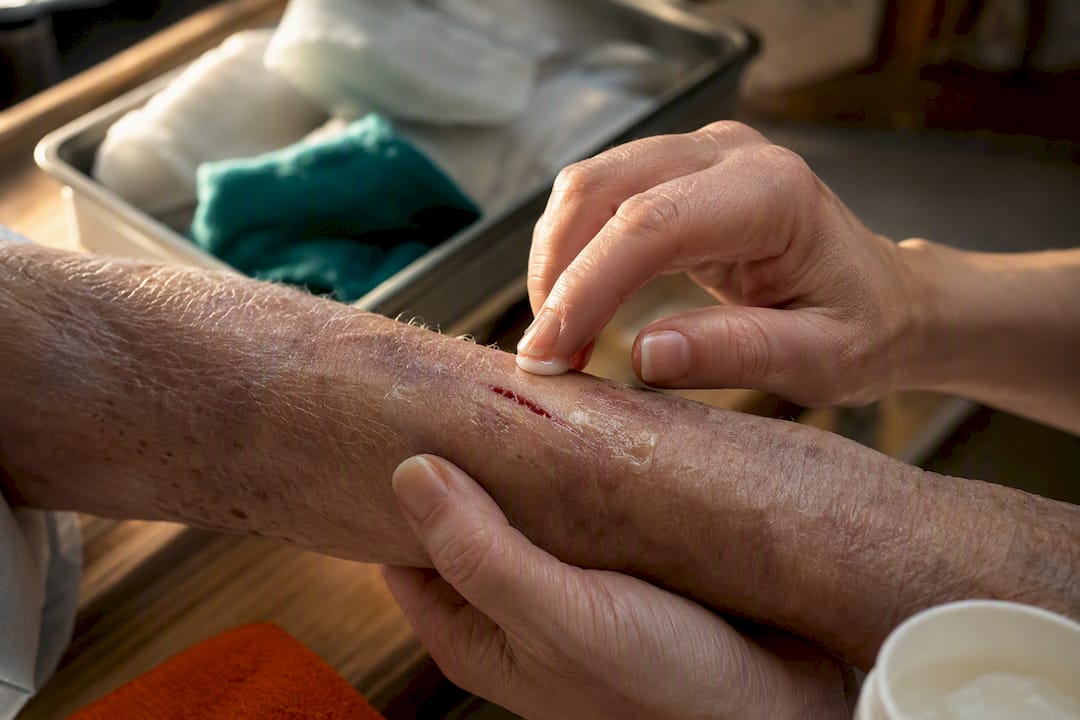
Control the bleeding with direct pressure, then rinse the area gently with clean water or saline. If the flap of skin is still attached, ease it back into place while it’s soft, and cover it with a non-stick, silicone-edge dressing rather than a strong adhesive bandage. Most uncomplicated tears close on their own within a few weeks; see a clinician if bleeding won’t stop, the flap looks gray or dead, or you notice fever or spreading redness.
TL;DR:
Silicone contact layers and lipidocolloid dressings are recommended for fragile skin tears, while strong adhesives and iodine-based products should be avoided to prevent additional damage.
Most uncomplicated tears heal naturally within 7 to 21 days if kept moist, undisturbed, and properly dressed, but larger or tissue-loss wounds require early professional evaluation.
Elevating the limb and controlling bleeding with steady pressure are critical first steps, followed by gentle cleaning with saline or water, and careful repositioning of the skin flap.
Re-approximating the skin flap with saline-moistened dressing and marking the dressing helps prevent re-injury during dressing changes.
A consistent reassessment around day 5 can identify stalled healing early, helping prevent minor tears from becoming chronic wounds.
Table of Contents
Understanding Skin Tear Treatment: What Makes These Wounds Different
A skin tear happens when friction or a blunt bump separates the epidermis from the layer beneath it, often without breaking through to deeper tissue the way a laceration does. That distinction matters for skin tear treatment because the skin involved is frequently thin, fragile, and slow to reattach, especially in older adults or anyone on blood thinners.
The International Skin Tear Advisory Panel (ISTAP) developed the STAR classification system to help caregivers and clinicians gauge severity at a glance:
Type 1: No skin loss. The flap can be repositioned to cover the wound bed completely.
Type 2: Partial flap loss. Some skin is missing, so the flap covers only part of the wound.
Type 3: Total flap loss. The skin flap is absent entirely, leaving the wound bed exposed.
Type 1 tears usually close fastest since the body’s own skin is doing the covering. Type 3 tears heal slower and carry a higher infection risk because there’s no native tissue protecting the wound bed. Risk climbs with thin, sun-damaged skin, corticosteroid use, and repeated minor trauma from transfers or falls.
First Aid Steps: Stop the Bleeding, Clean, and Realign
The sequence matters as much as the individual steps. Rushing to bandage a tear before the flap is properly positioned is one of the most common mistakes people make, and it often leads to a worse scar or a longer healing process.
Control the bleeding. Apply firm, direct pressure with a clean cloth or gauze pad. Elevate the limb above heart level if it’s an arm or leg. Call 911 if bleeding soaks through dressings repeatedly or won’t slow after 10 minutes of steady pressure.
Cleanse the wound. Rinse gently with potable water or 0.9% saline, using low-pressure irrigation rather than a hard stream. Skip hydrogen peroxide, alcohol, and iodine scrubs. These are cytotoxic and slow healing rather than speeding it. Avoid scrubbing at debris; gentle flushing is enough for most tears.
Rehydrate and re-approximate the flap. If the skin flap has curled or stiffened, soak it with saline-moistened gauze for 5 to 10 minutes to soften it. Then use a damp cotton applicator or a gloved fingertip to gently roll or slide the flap back over the wound bed. Work slowly. Forcing a dry, brittle flap can tear it further.
Assess flap viability. A flap that stays pale, dusky, or clearly dead after repositioning may need a clinician to trim it rather than leave necrotic tissue in place. This is one judgment call better left to a wound-care professional if you’re unsure.
Dress and leave it alone. Cover with an atraumatic, non-adherent dressing sized to extend about an inch beyond the wound edges. Resist checking it daily. Undisturbed healing, where the dressing stays put for several days, reduces trauma to the fragile wound bed and often shortens overall healing time.
Pro Tip: Keep the flap moist during transport to care, whether that’s a bathroom sink or an urgent care visit. A dry flap becomes brittle within minutes and is far harder to reposition successfully.
This stepwise approach, control bleeding, cleanse, re-approximate, dress, mirrors the clinical protocol described in wound-care case series.
Which Dressings Actually Work for Skin Tear Care
Not every bandage in your medicine cabinet belongs on a skin tear. ISTAP’s product-selection guidance draws a clear line between dressings that protect fragile skin and dressings that damage it further on removal.
What to reach for:
Silicone contact layers or silicone-bordered foam dressings, which grip the wound edges without bonding aggressively to skin.
Lipidocolloid mesh dressings, useful for weeping wounds that still need a gentle, non-stick interface.
Non-adhesive foam as a secondary layer when the wound produces more drainage.
What to avoid:
Strong acrylic film or hydrocolloid adhesives, which can rip the flap away entirely during removal.
Iodine-based dressings, which dry out fragile tissue and can slow closure.
Plain gauze pressed directly onto an open flap, since fibers stick to raw tissue and cause pain on removal.
ISTAP’s best-practice recommendations specifically flag strong adhesives and iodine products as agents that increase secondary trauma in aged or fragile skin, a distinction many first-aid kits simply don’t account for.
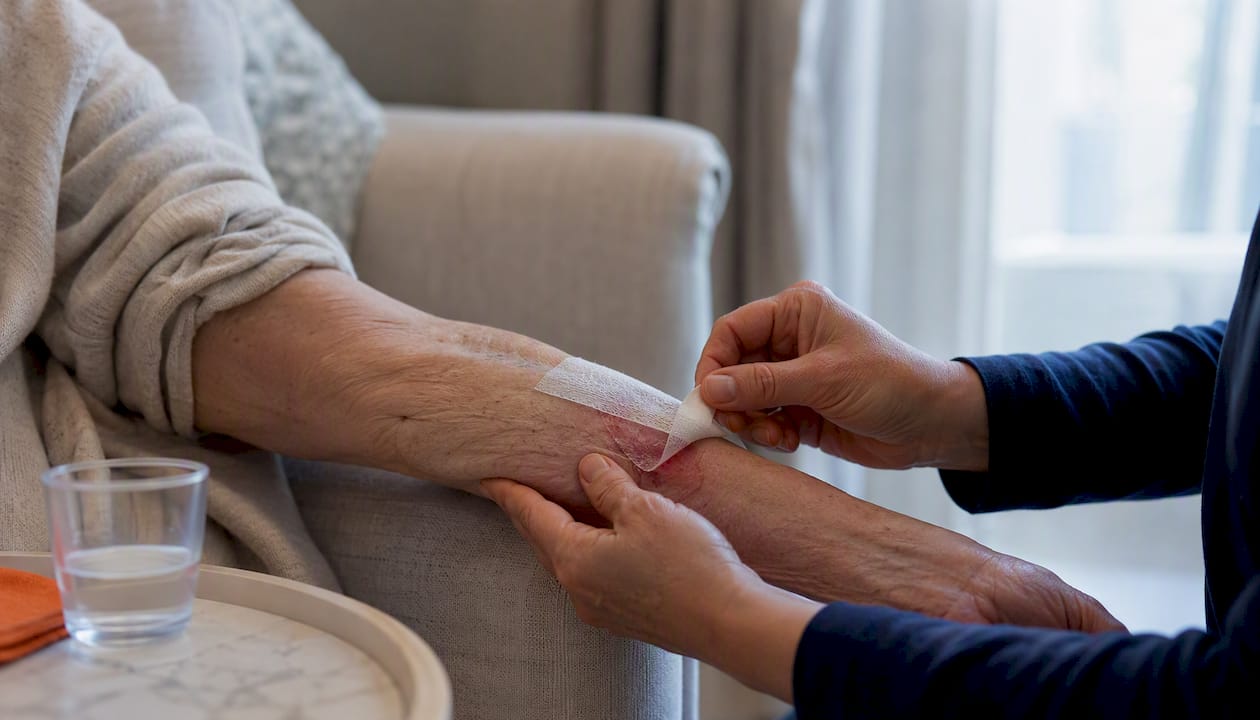
Aim to leave the dressing in place for 5 to 7 days if the wound isn’t draining heavily and there’s no sign of infection. Change it sooner if you see saturation, strike-through (fluid visible on the outer dressing surface), or increasing pain. When it is time to remove a dressing, mark an arrow on the outer layer pointing toward the direction the flap folds, then peel gently in that same direction. If it resists, soak it with saline or use an adhesive remover rather than pulling.
When Does a Skin Tear Need Professional Care?
Most skin tears are manageable at home, but certain signs mean self-care isn’t enough. Recognizing these early prevents a minor injury from becoming a serious one.
Seek emergency care immediately if you see:
Bleeding that won’t stop after 10 minutes of firm pressure
Exposed tendon, bone, or muscle beneath the tear
A large, rapidly expanding hematoma (blood pooling under the skin)
Loss of feeling, color, or pulse below the injury site
Schedule a clinician visit within a day or two if you notice:
The flap turning dusky, gray, or black (signs of poor blood flow)
Fever, spreading redness, or warmth around the wound
Pain that’s increasing rather than easing
Persistent or foul-smelling drainage
You take blood thinners and bleeding control feels harder than usual
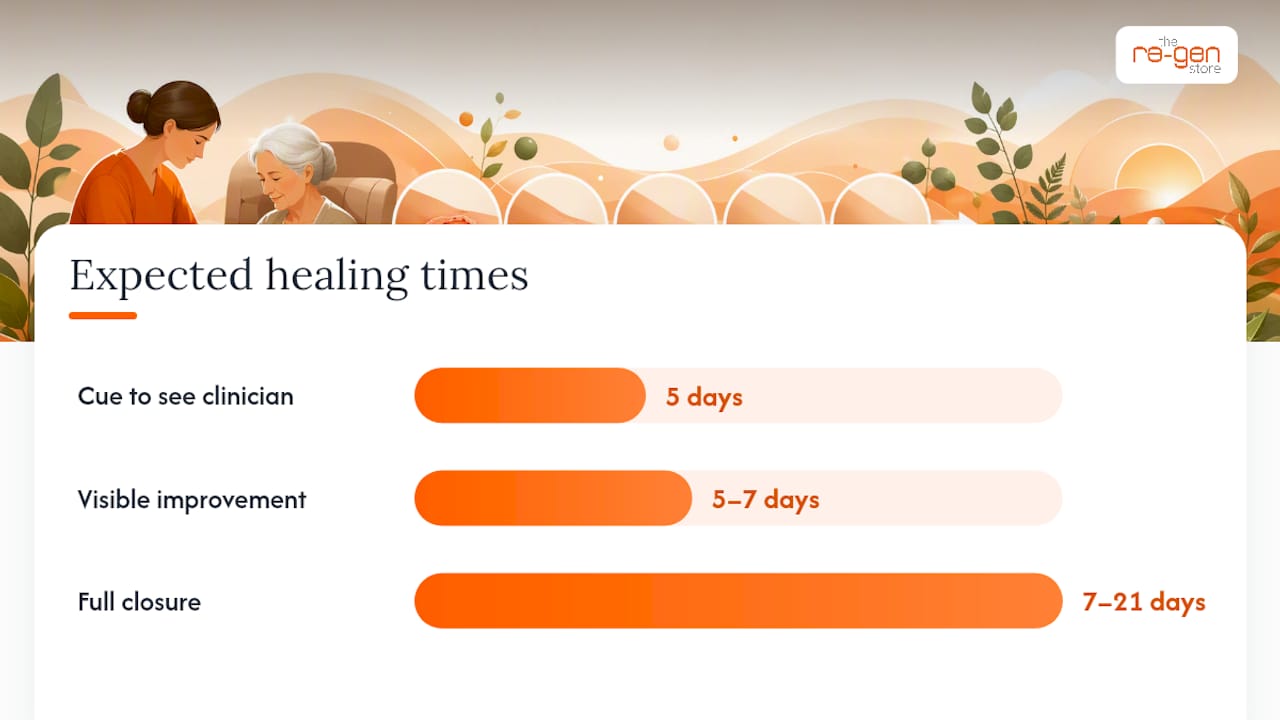
For uncomplicated tears, expect visible improvement within 5 to 7 days and closure somewhere between 7 and 21 days. If a wound hasn’t started shrinking by day 5, that’s your cue to get it looked at rather than wait another week. Lower-leg tears deserve extra caution since reduced circulation there slows healing more than tears on the arms or hands.
Preventing Skin Tears Before They Happen
Prevention does more heavy lifting than any treatment step, particularly for older adults and anyone with thin, fragile skin. The research on this is more encouraging than most people expect.
A twice-daily emollient routine, using moisturizers with humectants like urea or glycerin, cuts skin tear incidence by roughly half in older adults according to wound-care reviews. That’s a meaningful reduction from a habit that costs a few minutes a day.
Beyond moisturizer, a few environmental changes lower risk substantially:
Pad sharp furniture corners, bed rails, and wheelchair armrests in the home of anyone prone to falls or bumps.
Dress in long sleeves and pants during activities with higher contact risk, and consider protective arm sleeves for frail or elderly people.
Clear trip hazards like loose rugs and cords, since falls account for a large share of tears in older adults.
Train caregivers in safe transfer techniques (bed to chair, chair to shower) to avoid dragging or gripping skin during moves.
Review medications with a doctor. Long-term corticosteroid or blood-thinner use thins skin and slows clotting, both of which raise tear risk.
Some hospitals and care facilities keep dedicated “skin tear boxes” stocked with saline, silicone dressings, and documentation forms so staff can respond consistently. Home caregivers can build a smaller version of the same kit. A guide to caring for sensitive or fragile skin covers additional daily habits worth adopting if skin tears are a recurring issue in your household.
Where a Plant-Based Topical Fits Into Skin Tear Care
Once bleeding is controlled, the wound is cleansed, and the flap is re-approximated, some caregivers look for a topical that supports the skin around the wound without introducing harsh chemicals. This is where a product like Re-gen, Theregenstore’s plant-based wound treatment, fits as an adjunct, not a replacement for the core steps above.
A few honest guidelines for using any plant-based topical around a skin tear:
Apply it to intact peri-wound skin to support hydration and barrier function, following the product’s usage instructions for open or fragile skin.
Don’t skip bleeding control, cleansing, or clinician review just because a topical is in the mix. Those fundamentals still come first.
If you’re applying anything near an open flap, check the product label and ask a clinician when the wound is deep, draining heavily, or shows infection signs.
To be transparent: there’s no randomized clinical trial data specific to Re-gen in the resources reviewed here. For complex or high-risk wounds, always loop in a clinician alongside any home care routine. You can read more about natural wound care approaches for context on how plant-based options generally support, rather than replace, standard first aid.
What Experienced Caregivers Do Differently
The gap between adequate skin tear care and genuinely good care usually comes down to a few small habits, not dramatic interventions. Marking the dressing with an arrow before you ever apply it sounds almost too simple, but it prevents the single most common cause of re-injury: someone yanking a dressing off perpendicular to the flap instead of along it.
Saline soaks get skipped constantly, mostly because people assume a stiff flap is a lost cause. It usually isn’t. Five to ten minutes of moisture buys enough flexibility to reposition tissue that looked hopeless on first glance.
The habit that separates good outcomes from mediocre ones, though, is the reassessment schedule. Set a mental or written checkpoint for day 5. If the wound hasn’t started visibly improving by then, that’s not a wait-and-see situation. It’s a referral trigger. Caregivers who document wound size and color changes at each check catch stalled healing weeks before it would otherwise become obvious, and that early catch is often what keeps a minor tear from becoming a chronic wound.
— Kyle
Adding Re-gen to Your Skin Tear First-Aid Kit
Re-gen is a plant-based, chemical-free ointment designed to support skin hydration and tissue recovery on the skin surrounding a healing tear, without the petroleum-based ingredients found in many conventional first-aid ointments.
Use it as directed on intact peri-wound skin once your dressing routine is underway, and always consult a clinician for wounds that are open, deep, heavily draining, or showing infection signs. If you’re comparing it to what’s already in your medicine cabinet, the natural alternative to Neosporin page walks through the ingredient differences directly. Ready to see how it fits your first-aid kit? Visit the Re-gen product page to review ingredients, sizing options, and usage guidelines before your next order.
Sources
This article is general information, not a substitute for advice from a qualified doctor. Consult a qualified healthcare professional about your own circumstances before acting on anything here.
FAQ
What is the best thing to put on a skin tear?
An atraumatic, silicone-based dressing is the top choice after bleeding is controlled and the wound is cleansed, since it protects the fragile flap without sticking aggressively on removal. Avoid strong acrylic adhesives and iodine dressings, which ISTAP specifically warns against for fragile skin.
Can a skin tear heal on its own?
Yes, most uncomplicated skin tears heal on their own with proper cleansing and dressing, often closing within 7 to 21 days. Larger tears or those with tissue loss take longer and benefit from a clinician’s evaluation early on.
How can I make torn skin heal faster?
Keep the wound bed moist under an appropriate dressing, avoid disturbing it daily, and control any environmental risk factors like friction or repeated bumping. Undisturbed wound healing, leaving a suitable dressing in place for several days, tends to speed closure more than frequent rebandaging.
Should I put Vaseline on a skin tear?
Petroleum-based products like Vaseline aren’t part of standard ISTAP dressing guidance and can trap moisture in ways that don’t match evidence-based recommendations for fragile skin. A plant-based option such as Re-gen is designed as a petroleum-free alternative for supporting skin around a healing tear.
How long does skin tear recovery typically take?
Simple, Type 1 tears with good flap coverage often heal in about a month, according to Kaiser Permanente’s patient guidance, while more severe Type 3 tears with tissue loss take longer and need closer monitoring for infection.
Recommended
Comments