
Scab Care: How to Help a Scab Heal Without Scarring


The best scab care is simple: clean the wound gently, keep it moist and covered, and leave the scab alone. A scab is your body’s natural bandage, but dermatologists say a wound kept moist can heal better than one left to dry out. Here is how to care for a scab at each stage, what to put on it, and the signs that mean it is time to call a professional.
TL;DR
Wash a minor wound with cool or lukewarm water and mild soap. Skip hydrogen peroxide and iodine.
Keep the wound moist and covered with a clean bandage, changed daily.
Do not pick or scratch the scab. It can slow healing and cause scarring.
Expect a scabbed wound to take at least a week, and the scar to fade over months.
Call a professional for spreading redness, increasing pain, drainage, warmth, swelling or fever.
Table of Contents
What a scab is and why it forms
When your skin is cut or scraped, the area bleeds, and blood components clump together to seal it. That clot dries into a hard crust: the scab. Its job is to protect the wound while new skin forms underneath, as Cleveland Clinic explains.
The scab is a sign that repair has started. It is not the finished repair. The real work happens beneath it, where new cells build tissue.
Scab healing stages and how long they take
MedlinePlus describes healing in broad phases:
Immune response (about 2 to 5 days). The area flushes with blood, and inflammation brings white blood cells to clean up and defend the wound. You may see redness, mild swelling and tenderness.
Rebuilding (about 3 weeks). New tissue grows. The scab dries, tightens and starts to lift at the edges.
Remodeling (up to 2 years). The scar can take as long as two years to fade fully.
A wound with a scab generally takes at least one week to heal enough that it no longer needs the scab for protection. Most minor scrapes heal faster, and deeper ones take longer.
Some things slow the process. Cleveland Clinic lists poorly managed diabetes, smoking and a weakened immune system. If any of these apply to you, watch a wound closely and ask your clinician about it early.
How to care for a scab, step by step
Start with a gentle clean
The American Academy of Dermatology (AAD) advises cleaning a minor cut with cool or lukewarm water and mild soap or cleanser to remove dirt and debris. Pat the skin dry around it and do not scrub the scab itself.
Avoid hydrogen peroxide and iodine. Mayo Clinic notes that both can irritate the wound.
Keep it moist, not dry
Many of us grew up hearing that a wound should be “aired out” so a scab forms. Dermatologists now say otherwise. The AAD says there is no need to keep a wound dry, and that moisture supports faster healing. It also notes that wounds with scabs take longer to heal than wounds kept moist with petroleum jelly.
This is why a moist, covered wound often ends up with a thinner scab or none at all. If you want to understand how a barrier differs from a plain moisturizer, this look at petroleum jelly versus moisturizer is a helpful starting point.

Cover it
The AAD recommends applying a moisturizing ointment, then covering the wound with a sterile bandage and changing it daily. A bandage also helps protect the wound and keeps it from reopening. If the bandage gets wet or dirty, change it sooner.

We look at this more closely in Is a Bandage Enough? Why Covering a Wound Isn’t the Same as Healing It.
Do you need an antibiotic ointment?
Not always. The AAD says that if you clean the wound daily, antibacterial ointments are not necessary. What matters is a clean, moist, protected wound.
Can you soften a scab?
Yes, and it is usually the same thing as keeping the area moist. A dry, tight scab cracks easily, pulls at the new skin and itches. A thin layer of ointment, applied to the scab and the skin around it under a clean bandage, helps keep it flexible.
Do not pull, peel or soak a scab off. A scab that is ready will come off by itself once the skin underneath has closed. If it comes off early, the skin underneath looks pink or shiny and is more fragile. Keep protecting it.
What to put on a scab
The common choices fall into a few types:
Type | What it does | Good to know |
Petroleum jelly | Seals in moisture. The AAD recommends it for minor cuts. | Petroleum-based. Some people prefer to avoid it. |
Plant-based ointment | Keeps skin moist and protected using herbal ingredients. | Look for a petroleum-free formula if that matters to you. |
Antibiotic ointment | Targets bacteria. | Not necessary for a wound cleaned daily, per the AAD. |
Plain lotion | Soothes dry skin around the wound. | Choose fragrance-free, and keep it off open skin. |
If you want a petroleum-free option, our guide on petroleum-free and plant-based wound treatment explains what to look for. You can also read our comparison of Re-gen and petroleum jelly.
What to do when a scab itches
Itching is common and usually a good sign. Cleveland Clinic says scabs can itch because the body releases histamine during inflammation, and because the skin is dry.
Try these instead of scratching:
Keep the area moisturized under a bandage.
Wear loose clothing over it so fabric does not rub.
Cover it at night so you do not scratch in your sleep.
Press lightly on the bandage if the itch is strong.
MedlinePlus is clear that picking or scratching a scab can interfere with healing and cause scarring. For more ideas, see our guide to itchy healing wounds.
If you pick scabs compulsively and cannot stop, talk to a doctor. That is a recognized, treatable pattern.
When to call a professional
Most scabs need nothing more than patience. The AAD says to contact a professional for any of these:
Redness or skin discoloration that is expanding
Pain that is increasing
Drainage from the wound
Warmth or swelling around it
Bleeding that does not stop after 10 minutes of direct pressure
MedlinePlus adds that a fever of 100°F (37.7°C) or higher for more than 4 hours can be a sign of infection. A wound that is not improving after a week or two, or any deep, dirty or animal-bite wound, also deserves a clinician’s look. The same goes for wounds on people with diabetes or a weakened immune system.
If your wound is from surgery, follow your surgeon’s instructions first. Our page on surgery recovery covers how we think about supporting the skin during that time.
Our perspective on scab care
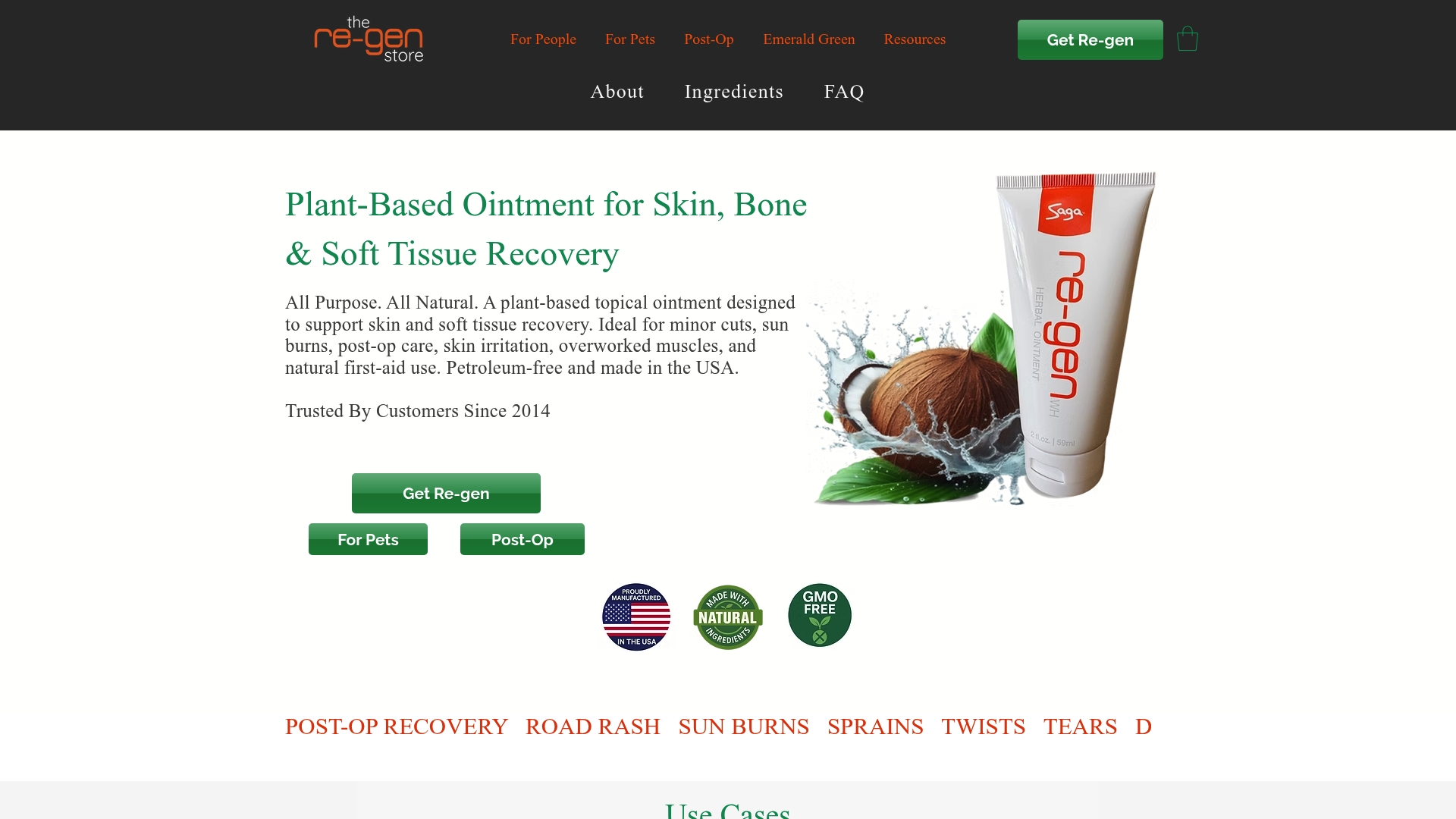
Most people think of a scab as the finish line. We see it differently: it is a temporary shield, and the best results come from supporting the tissue underneath. That is why we formulated Re-gen as a plant-based, petroleum-free ointment with a blend of 10 herbal ingredients. It is designed to keep skin moist and protected while the body regenerates skin, muscle and bone, for people and for pets. Our approach to scab care is the same as the dermatology basics: clean gently, keep it moist, cover it, and do not pick. We built Re-gen for people who want that routine with a natural, chemical-free ointment. Kyle
Support your skin with Re-gen
If you want a plant-based ointment for your scab care routine, Re-gen is made for minor cuts, scrapes, burns and post-operative skin. Apply a thin layer, cover it and repeat when you change the bandage. Shipping is a flat $3 per order.
FAQ
Should you keep a scab moist or dry?
Moist. The AAD says moisture supports faster healing and there is no requirement to keep a wound dry. A covered, moisturized wound heals faster than one left to form a thick scab.
Should you moisturize a scab?
Yes, with a thin layer of ointment under a clean bandage. This keeps the scab flexible and reduces itching and cracking. Use products without fragrance, and do not rub or pick at the scab.
How long does a scab take to heal?
A wound with a scab generally takes at least a week before it no longer needs the scab. Deeper wounds take longer, and tissue rebuilding runs about three weeks. The scar can keep fading for up to two years.
What should you put on a scab wound?
Clean it with mild soap and lukewarm water, apply a moisturizing ointment, and cover it with a sterile bandage changed daily. Avoid hydrogen peroxide and iodine, which can irritate the wound.
How can you stop picking scabs?
Keep the area covered, moisturized and out of sight, and wear clothing over it. Itching is the usual trigger, so treating the dryness helps. If you cannot stop, talk to a doctor.
Sources
Recommended
Comments