
Reef Rash Treatment: Clean It Fully, Then Support Skin Recovery


A reef rash is usually a coral scrape that was not fully cleaned, or a reaction to coral or fire coral contact. The best treatment is thorough cleaning first, then protecting the skin while it heals. Coral tissue left in a scrape prolongs healing, so the cleaning matters most. Once the wound is clean, a plant-based, petroleum-free ointment like Re-gen gives you a way to support recovery.
TL;DR
Scrub with soap and water and flush well. Coral fragments left in the skin cause inflammation and slow healing.
Fire coral is not a true coral. Rinse it with household vinegar and do not pop the blisters.
Clean and re-dress the area twice a day, and keep it clean and dry between changes.
A rash that fades and returns days later may be a delayed reaction that needs a physician.
Red streaks, pus, fever or swollen glands mean see a health professional promptly.
Table of Contents
What a reef rash looks like
“Reef rash” is a common name for scrapes and irritation from coral. Divers Alert Network (DAN) reports that cuts and scrapes are the most common injuries among divers and snorkelers. Burning, pain and itching are typical. Fire coral and similar stinging organisms can add a rash and blistering. Retained debris can cause an itchy rash or small bumps.
The American Academy of Dermatology adds that coral contact can also cause stinging, burning and hives.
The healing time surprises people. DAN notes that coral scrapes can take weeks or months to heal, because torn coral tissue can get into the wound and keep it inflamed. A small scrape deserves more care than its size suggests.

Step-by-step first aid for coral scrapes
This is the routine DAN describes. Each step has a place where it goes wrong.
Scrub with soap and water. Be thorough. Coral tissue and sand hide in the edges of a scrape. Rushing here is the most common mistake.
Flush with plenty of water. Use large amounts, not a quick splash.
Flush with half-strength hydrogen peroxide, then rinse again. This is part of DAN’s coral scrape protocol. Rinse afterward so no residue stays on the skin.
Apply an ointment and cover. DAN’s guidance is an antiseptic ointment under a dry, sterile, non-adherent dressing. If you have neither, leave the scrape open and keep it clean.
Re-dress twice a day. Clean the area each time. If a crust forms, DAN suggests wet-to-dry dressings with saline or 1% to 5% povidone-iodine.
The AAD also recommends rinsing with cold water and asking a doctor about a tetanus shot. See a physician if coral fragments remain stuck in the skin.
Our own step-by-step on coral cut treatment covers the cleaning in more detail.
If it is fire coral
Fire coral is a stinging hydrozoan, not a true coral. For these stings, DAN’s envenomations chapter says to rinse with household vinegar. It also says not to puncture the redness and blisters, and to keep the area clean, dry and aerated.

The burning can last several hours, and the rash can appear minutes to hours after contact. It can take several days to resolve and may reappear days or weeks later.
An open wound from fire coral needs a medical evaluation. DAN notes that the venom can damage tissue at the wound edges, and antibiotics and a tetanus booster may be needed. Tell the physician it was fire coral, especially before anyone tries to suture the wound (DAN Boater).
For pain and itching, DAN Southern Africa describes vinegar soaks and hot water immersion as ways to reduce symptoms. Oral antihistamines can sometimes ease itching or burning.
When the rash goes away and comes back
Some people see a rash fade after a day or two and return two to five days later, confined to the injury site. DAN Southern Africa, citing a board-certified dermatologist and dive physician, calls this a delayed hypersensitivity reaction. Once it appears, the recommendation is a physician evaluation, because oral steroids may be needed. Without treatment, symptoms can last weeks or longer.
If you want to read about caring for irritated skin after it has settled, this skin aftercare guidance explains how to protect healing skin.
Signs you need a health professional
Contact a qualified health professional if you see:
extreme redness or red streaks on the limb
increasing pain or swelling around the cut
pus or continued drainage
fever, chills or fatigue
swollen lymph glands
a wound that is healing poorly
DAN warns that Vibrio bacteria can cause serious illness in people with impaired immune systems, such as those with diabetes or chronic liver disease. If that describes you, do not wait. A physician decides whether antibiotics are needed.
Supporting skin recovery after the wound is clean
Once the scrape is clean and there are no signs of infection, the goal shifts to keeping the skin protected and comfortable while it repairs. This is where many people reach for a petroleum-based ointment out of habit.
Re-gen is a plant-based, petroleum-free ointment made with a blend of 10 herbal ingredients. It is formulated to support recovery of skin, soft tissue, muscle and bone. There is also a version for pets, useful if a dog came along on the beach trip.
For other irritation that looks similar, see our guides to contact dermatitis home treatment and swimmer’s itch. You can also read how to speed up wound healing naturally.
Our view on reef rash
Most reef rashes we hear about start the same way: a small scrape, a quick rinse, and a week of itching afterward. The cleaning is what decides how the next few weeks go, so give it the time it deserves. After that, we believe the skin does best with simple, protective care. That is why Re-gen is built around plant-based ingredients and no petroleum. Our formula is designed to support the body’s own recovery, whether the scrape is on your shin or your dog’s paw. Keep the area clean, re-dress it twice a day, and watch for the warning signs above. Those are the habits that get you back in the water. Kyle
Re-gen for your recovery routine
Re-gen Plant-Based Regenerative Ointment is a petroleum-free, chemical-free topical made with 10 herbal ingredients, sold in several package sizes. We also carry Emerald Green, available as a 4 oz spray and an 8 oz press cap. Shipping is a flat $3.
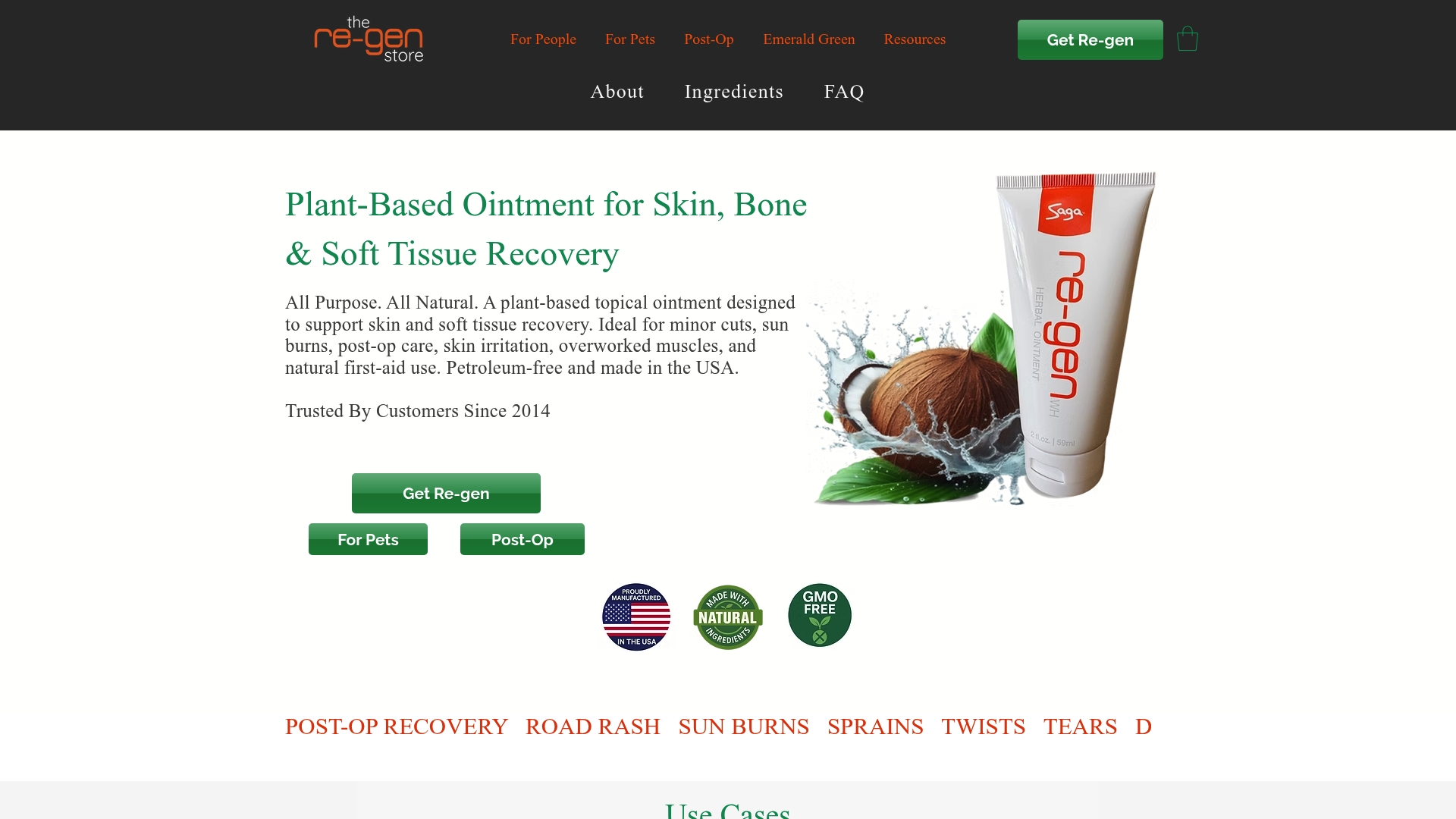
Browse all Re-gen products and pack one for your next reef trip.
FAQ
How do I get rid of a coral rash?
Clean the area thoroughly with soap and water, flush it, and keep it covered and re-dressed twice a day. If the rash fades and returns after a few days, see a physician. That pattern can be a delayed reaction that needs medical treatment.
Can salt water cure a reef rash?
Salt water is not part of DAN’s first aid. Their steps use soap, fresh water and the cleaning agents described above. Sea water can carry bacteria, so rinse the scrape with clean water as soon as you are out.
What does a coral sting look like?
Expect redness, burning and itching, sometimes with hives, blisters or small bumps. Fire coral reactions can appear minutes to hours after contact and last several days.
How long does a coral scrape take to heal?
DAN says it can take weeks or months, particularly if coral tissue stays in the wound. Thorough cleaning at the start gives the skin the best chance to recover.
Sources
Recommended
Comments