
Ointment or Cream: Which One Should You Use?
- Sunny

- Aug 6
- 10 min read
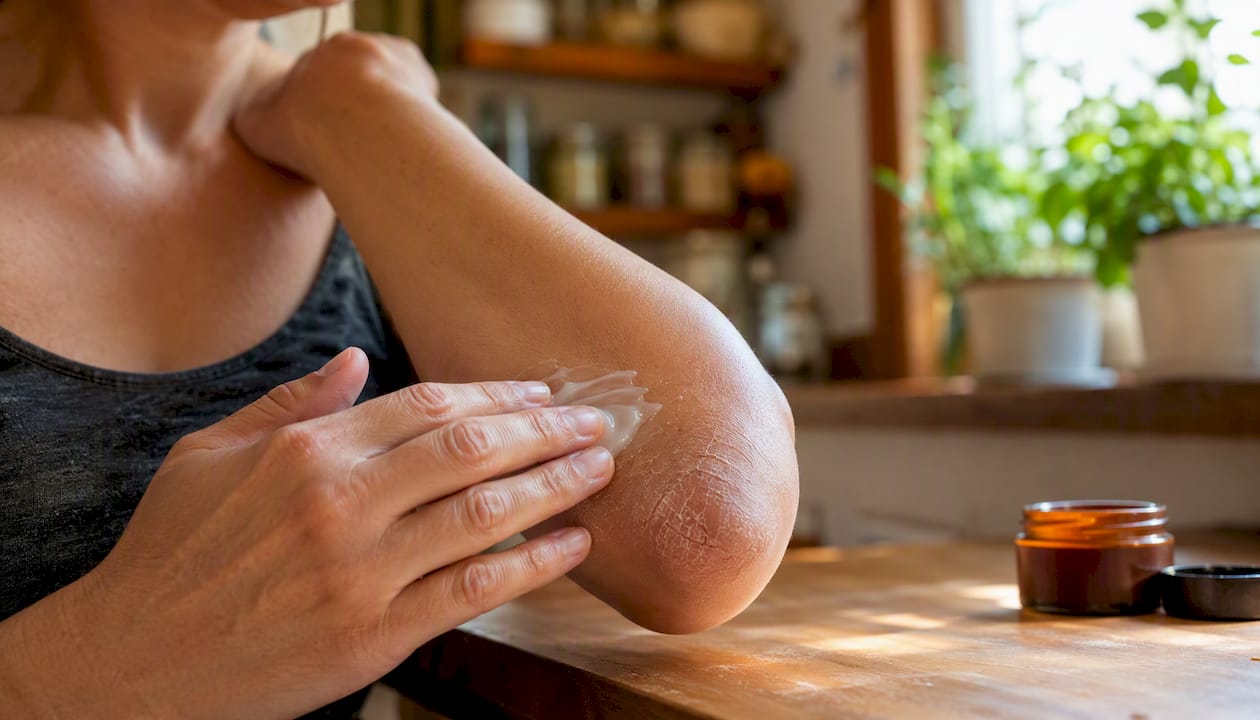
Choose an ointment for small, very dry, or cracked areas where you need a strong moisture barrier. Choose a cream for daytime use, large-area hydration, or any spot where a greasy feel is a problem. That single rule covers most decisions.
The chemistry behind it is straightforward. Ointments run with a high oil content, which makes them highly occlusive: they seal the skin surface and dramatically reduce transepidermal water loss (TEWL). Creams sit closer to a 50/50 oil-to-water split, so they absorb faster and feel lighter. Both formats are available as medicated topicals, meaning the same active ingredient can be delivered in either base depending on what your skin needs.
Quick orientation before you read further:
Ointment: thick, greasy, best for severe dryness, eczema patches, cracked heels, and nighttime use
Cream: lighter, faster-absorbing, better for daytime, facial skin, and large body areas
Medicated versions: topical corticosteroids and antibiotics come in both bases; the base affects how deeply the drug penetrates
Plant-based option: if you prefer petroleum-free care, Theregenstore’s Re-gen ointment offers a natural alternative for wound care and skin recovery
Table of Contents
How do ointments and creams actually compare?
The table below maps the five dimensions that matter most when choosing a topical skincare product.
Dimension | Ointment | Cream | Lotion / Gel (for context) |
Oil:water ratio (approx.) | ~80% oil | ~50% oil / 50% water | Mostly water; gel is water + polymer |
Occlusivity / barrier effect | High — seals surface, reduces TEWL | Moderate — some barrier, breathable | Low — minimal occlusion |
Absorption / feel | Slow; stays greasy on skin | Moderate; absorbs within minutes | Fast; lightweight, non-greasy |
Best for (conditions) | Eczema, psoriasis, cracked heels, wounds, chapped lips | Daytime moisturizing, rashes, sensitive skin, face | Oily skin, large areas, scalp, acne-prone skin |
Medicated availability | Yes — topical steroids, antibiotics, antifungals | Yes — same actives, often preferred for large areas | Yes — some steroids and antifungals available |
Practical takeaways at a glance:
Use an ointment at night when your skin can absorb moisture without the greasiness being a problem
Use a cream during the day, especially on the face or any area covered by clothing
Lotions and gels work well for scalp treatments or large body areas where an ointment would feel suffocating
For medicated use, the base your clinician prescribes matters as much as the active ingredient itself
When should you pick an ointment vs. a cream?
Matching the base to the condition and body area is where most people go wrong. Here is a condition-by-condition guide:
Use an ointment when you have:
Eczema patches or psoriasis plaques (thick, scaly, or severely dry skin needs maximum occlusion)
Cracked heels or severely chapped lips (the skin barrier is broken; you need a seal, not just hydration)
Minor cuts, scrapes, or post-operative wounds (a thin ointment layer under a nonadherent dressing supports moist wound healing and prevents the bandage from sticking)
Nighttime skin recovery on hands or feet
Use a cream when you have:
Daytime dryness on the face or neck (lighter feel, no shine)
A rash covering a large body area (spreading ointment over a wide surface is uncomfortable and can trap heat)
Sensitive skin that reacts to preservatives in heavier formulas — though check the label, since some creams contain more preservatives than ointments
General daily moisturizing for normal-to-dry skin
Area-specific guidance:
Face: cream or lotion almost always; heavy ointments can clog pores and worsen acne
Hands and feet: ointment at night, cream during the day
Large body areas (back, legs): cream or lotion for comfort and coverage
Lips and cuticles: ointment, no question
Pro Tip: Apply a thick ointment to severely cracked hands or feet right before bed, then slip on a pair of cotton gloves or socks. The occlusion amplifies moisture absorption overnight, and you will notice a difference within two or three nights.
The American Academy of Dermatology recommends ointments and creams over lotions for people with dry or sensitive skin, specifically because of their higher oil content and stronger barrier support.
Do medicated creams and ointments work the same way?
Not quite. The same active ingredient behaves differently depending on its base. DailyMed records show that betamethasone dipropionate, a potent topical corticosteroid, is available as a cream, ointment, and lotion with identical active-ingredient concentrations. Yet clinicians choose between them deliberately.
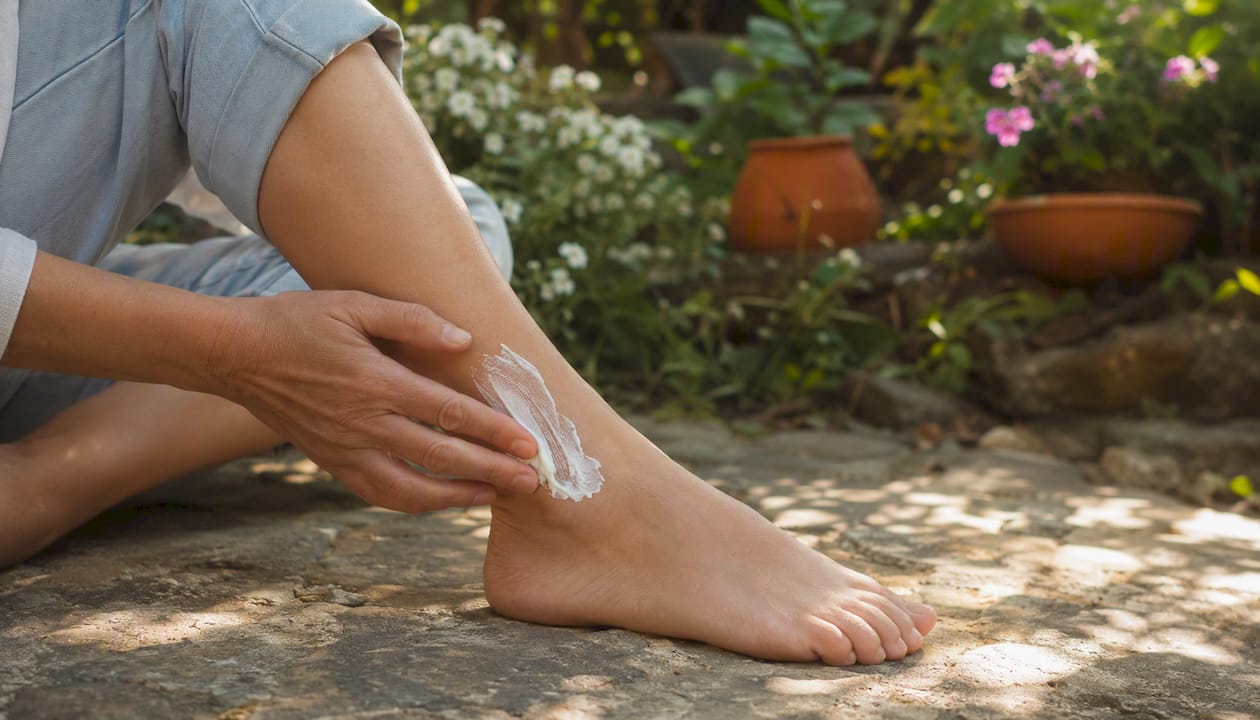
An ointment base increases drug penetration because occlusion softens the stratum corneum (the outermost skin layer), allowing the active molecule to pass through more easily. That means an ointment formulation of a corticosteroid can be more potent in practice than the same concentration in a cream, even at the same labeled strength. The AAAAI’s topical drug guidance notes this distinction directly and advises patients to follow clinician or label instructions precisely.
Practical consequences:
Ointment-based steroids are often preferred for thick, scaly plaques (psoriasis, chronic eczema) where penetration is the challenge
Cream-based steroids suit moist, weeping, or intertriginous areas (skin folds) where occlusion could worsen maceration
For large-area use, creams reduce the risk of systemic absorption from an overly occlusive base
Safety note: Overusing potent topical steroids, regardless of base, can cause skin thinning, stretch marks, and in rare cases systemic effects. Always follow the label or your clinician’s instructions. The FDA’s product labeling records for topical products include specific application frequency and duration guidance that is worth reading before starting any medicated course.
How do you apply ointments and creams safely?
Application technique affects both results and safety. These steps apply to most over-the-counter and prescription topicals:
Clean the area first. Wash gently with mild soap and water, then pat dry. Applying any topical to dirty or wet skin can trap bacteria or dilute the product.
Use a thin layer for creams. A small amount goes further than most people expect. Rub in until absorbed.
Use a slightly thicker layer for ointments on wounds. A thin, even coat over the wound surface is enough. You do not need to pack it on.
Follow label frequency. Most medicated topicals specify once or twice daily. More is not better and can increase side effects.
Bandage only when directed. Covering an ointment with an occlusive dressing increases penetration significantly. For non-medicated ointments on wounds, a nonadherent dressing is appropriate. For medicated steroids, avoid occlusive dressings unless your clinician specifically instructs it.
Red flags that mean you should stop and consult a clinician:
The rash spreads or worsens after 48–72 hours of treatment
You see signs of infection: increased redness, warmth, swelling, or discharge
Skin becomes thin, shiny, or develops stretch marks (a sign of steroid overuse)
You are applying a potent steroid to a child’s face or skin folds
Pro Tip: The fingertip unit is a simple dosing guide: one fingertip unit (the amount squeezed from the tip of your index finger to the first crease) covers roughly two adult palms of skin. Use it to avoid over-applying medicated creams or ointments.
Healthline’s topical comparison points out that one of the most common misuses is spreading a heavy ointment over a large body area, which causes discomfort and can trap heat. Match the base to the area size.
How do ingredients and lifestyle help you choose?
Reading a label takes two minutes and can save you a reaction. Here is what to look for:
Ingredient cues:
Petrolatum, mineral oil, paraffin: occlusives; signal a heavy, sealing ointment
Lanolin, shea butter, cocoa butter, fatty acids: emollients; softer feel, good for dry skin
Glycerin, hyaluronic acid, urea, lactic acid: humectants; draw moisture in; more common in creams
Preservatives (parabens, phenoxyethanol): more common in creams because water-based formulas need them; can trigger sensitivity in some people
Fragrance or essential oils: a common allergen trigger, especially on broken or inflamed skin
Lifestyle filters to apply before you buy:
Daytime use on the face: choose a non-comedogenic, fragrance-free cream or lotion
Nighttime repair: an ointment or rich cream with emollients and occlusives
Petroleum-free preference: look for plant-based occlusives like beeswax, carnauba wax, or plant butters; see the guide to mineral oil alternatives for a breakdown of plant-based swaps
Pet-safe formulas: check that every ingredient is non-toxic to animals if your pet might lick the area
Travel and storage: ointments are generally more stable and have longer shelf lives than creams because they contain little to no water; creams can degrade faster in heat or humidity
For readers interested in natural ingredients in recovery, plant-based emollients and occlusives have a strong track record in both cosmetic and wound-care applications.
When does a plant-based ointment make sense?
Conventional petrolatum-based ointments are effective, but they are not the only option. Plant-based ointments can substitute well when you need targeted occlusion without petroleum derivatives, when you are managing a wound or skin condition and prefer chemical-free ingredients, or when you are treating a child or pet and want to minimize synthetic additives.

The key is that the plant-based formula still needs to provide genuine occlusion. A thin, watery “natural” product will not perform like a proper ointment. Look for formulas built on beeswax, plant butters, or similar occlusive plant-derived ingredients. Theregenstore’s Re-gen ointment is formulated on this principle: plant-based, petroleum-free, and designed for wound care, soft tissue recovery, and skin repair. It fits the same use cases as a conventional ointment for minor wounds, cuts, burns, and post-operative skin care. You can review the full ingredient list and usage guidelines on the Re-gen product page.
Before using any ointment, plant-based or conventional:
Check the full ingredient list for known allergens
Do a small patch test on intact skin before applying to broken or inflamed areas
Follow the product’s usage guidelines; plant-based does not automatically mean suitable for every condition
Consult a clinician for infected wounds, widespread rashes, or any condition that has not improved within a few days
Pro Tip: If you are switching from a petrolatum ointment to a plant-based one for wound care, apply it the same way: thin layer, clean area, covered with a nonadherent dressing. The application method matters as much as the formula.
For a direct comparison with conventional antibiotic ointments, Theregenstore’s natural alternative to Neosporin page walks through the differences in ingredients and use cases.
Key Takeaways
Ointments seal and protect; creams hydrate and absorb — matching the right base to your skin condition and body area is the single most important decision in topical skin care.
Point | Details |
Base determines barrier strength | Ointments (~80% oil) seal moisture in; creams (~50% oil) absorb faster and suit larger areas. |
Match base to condition and timing | Use ointment for severe dryness, wounds, and nighttime; use cream for daytime and large-area hydration. |
Medicated bases are not interchangeable | The same active ingredient penetrates more deeply in an ointment base, so follow label or clinician instructions exactly. |
Read labels for allergens and preservatives | Fragrances and preservatives in creams can trigger sensitivity; petroleum-free options exist for those who need them. |
Theregenstore Re-gen | A plant-based, petroleum-free ointment for wound care and skin recovery, suitable as a conventional ointment alternative. |
A clinician’s perspective on choosing between bases
The conventional framing of this debate, “ointment for dry skin, cream for everything else,” undersells how much the base choice matters in clinical practice. Dermatologists and primary-care clinicians think about it differently: they start with the wound or condition, not the product.
The real decision tree looks like this. How large is the affected area? A small eczema patch on the elbow tolerates an ointment well. A full-back flare does not. Is the skin intact or broken? Broken skin benefits from the occlusive protection of an ointment, but only if there is no active infection. Is the patient applying this during the day or at night? Cosmetic acceptability is a real compliance factor. A patient who hates the feel of petrolatum will not use it consistently, and inconsistent application is worse than a slightly less occlusive cream used correctly.
The potency question with medicated topicals is where I see the most confusion. People assume that a higher-concentration cream and a lower-concentration ointment of the same steroid are equivalent. They often are not. The ointment base can effectively amplify delivery, which is why clinicians sometimes step down the concentration when switching a patient from cream to ointment. That nuance rarely makes it into consumer-facing guides.
For readers who want to avoid petroleum entirely, the plant-based ointment category has matured considerably. The key question is whether the formula provides real occlusion, not just a pleasant texture. Check the ingredient list for beeswax or plant-derived waxes and butters near the top. If the first few ingredients are mostly water and light oils, it is a cream or lotion in disguise, regardless of what the label says.
Re-gen: a plant-based ointment built for recovery
If you have been looking for a petroleum-free ointment that performs like a conventional one for wound care and skin recovery, Re-gen from Theregenstore is worth a close look.
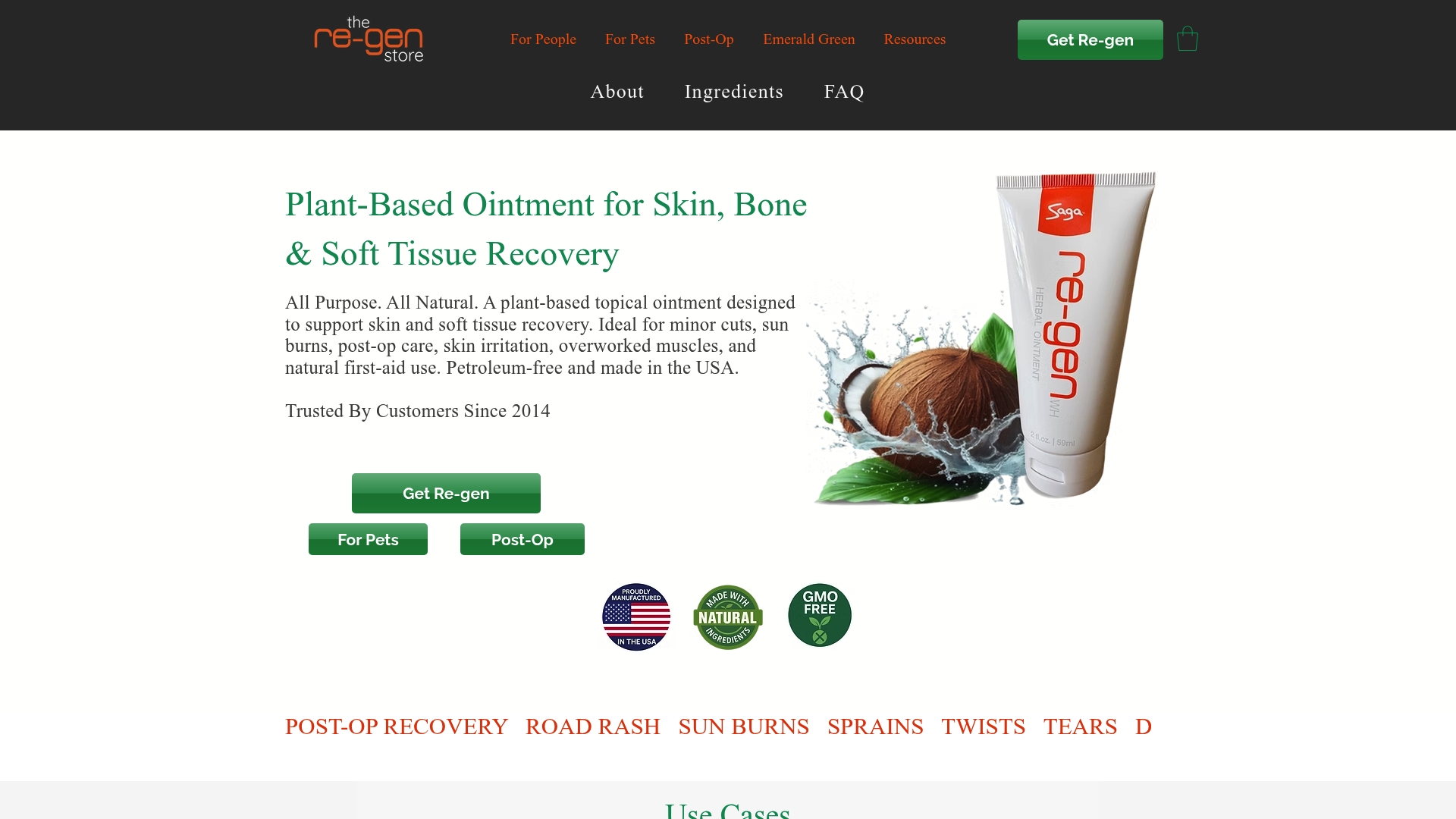
Re-gen is formulated with plant-based, chemical-free ingredients designed to support healing for cuts, burns, scrapes, sprains, and post-operative skin. It provides the occlusive barrier function you need from an ointment without petrolatum or synthetic additives, making it a practical option for health-conscious adults, children, and pet owners. Unlike a standard first-aid ointment, Re-gen is positioned for both surface wound care and soft tissue recovery, covering a broader range of healing scenarios.
Visit the petroleum-free wound treatment page to review ingredients, usage guidelines, and appropriate use cases, then pick up Re-gen directly at theregenstore.com.
This article provides general information, not medical advice. Consult a qualified clinician or pharmacist before starting any medicated topical or if your condition does not improve.
Useful sources and further reading
FAQ
Which is better, an ointment or a cream?
Neither is universally better. Ointments provide stronger moisture sealing and suit very dry, cracked, or wounded skin; creams absorb faster and work better for daytime use, large areas, and facial skin.
When should you apply a cream instead of an ointment?
Use a cream during the day, on the face, or over large body areas where a greasy feel would be uncomfortable or impractical. Creams are also the better choice for moist or weeping skin conditions.
Why would a clinician choose an ointment over a cream for medication?
An ointment base increases drug penetration by softening the outer skin layer through occlusion, making it more effective for thick, scaly conditions like psoriasis. The same active ingredient can deliver a stronger clinical effect in an ointment than in a cream at the same labeled concentration.
Is cream or ointment better for eczema?
For thick, dry eczema patches, an ointment is generally preferred because its high oil content seals moisture and reduces TEWL more effectively. Creams may be more practical for large-area or daytime eczema management, and some clinicians use both depending on the site and severity.
Can a plant-based ointment replace a conventional petrolatum ointment?
Yes, for many use cases, provided the plant-based formula contains genuine occlusive ingredients like beeswax or plant-derived waxes. Theregenstore’s Re-gen ointment is designed for wound care and skin recovery as a petroleum-free alternative, though you should always check the ingredient list for allergens and follow the product’s usage guidelines.
Recommended
Comments