
Surgeon Approved Ointment on Stitches: Use a Thin Film, Avoid Neosporin

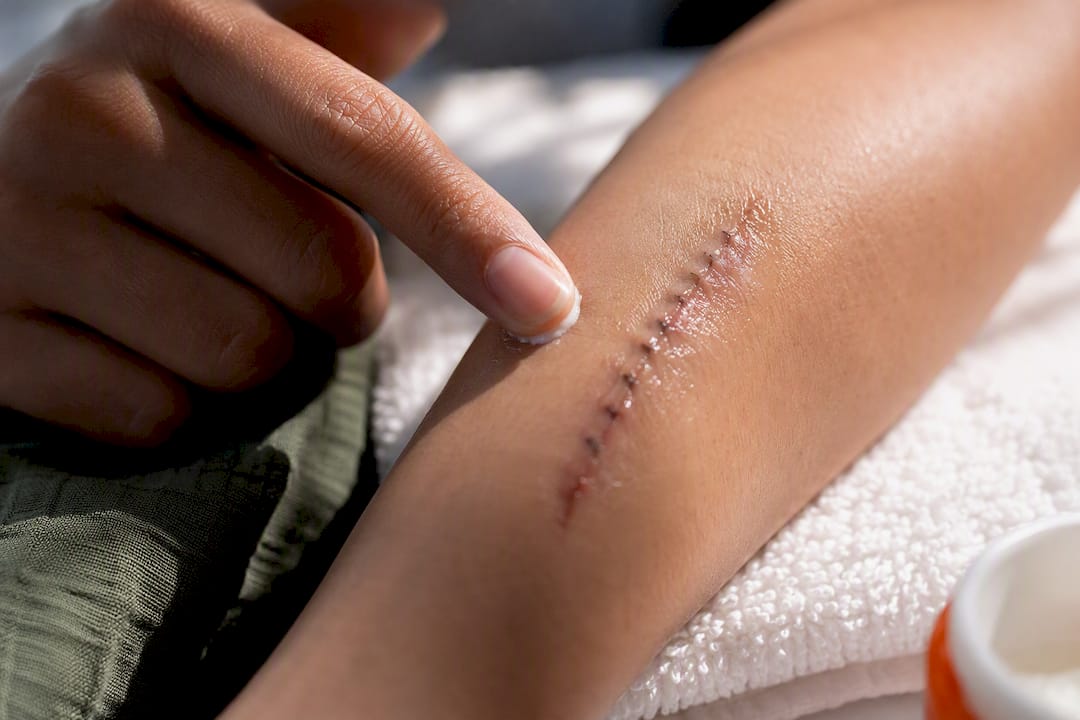
Follow your surgeon’s discharge instructions first. If no antibiotic ointment was prescribed, a thin layer of plain petroleum jelly is usually the safest default because it keeps the wound moist and reduces crusting. Skip hydrogen peroxide and alcohol entirely, and don’t reach for antibiotic ointments containing neomycin unless your clinician specifically told you to use one.
TL;DR:
Petroleum jelly is the safest default ointment for stitches unless your clinician explicitly prescribes an antibiotic topical.
Use a very thin layer of ointment, no more than a film, and avoid hydrogen peroxide or alcohol during wound cleaning.
Antibiotic ointments like Neosporin should only be used if directed by a healthcare provider, due to allergy risks and limited added benefit.
Dressings should be changed daily or sooner if wet or soiled, and water exposure should be limited to brief rinses after the first day.
Watch for signs of infection such as spreading redness, increasing pain, pus, or fever, and contact your provider if these occur.
Table of Contents
Ointment on Stitches: Checklist
Before you touch the wound, this is the routine most surgical teams want you following in the first days after stitches go in.
Wash your hands with soap and water, then gather your supplies: mild soap, sterile gauze, a nonstick dressing, and tape.
Clean gently with soap and water if your clinician has approved it, then pat the area dry with clean gauze. Don’t rub.
Apply a very thin layer of petroleum jelly, or the specific ointment your clinician prescribed. A film you can barely see is the goal, not a visible coating.
Cover with nonstick gauze if you were told to, and change the dressing daily or sooner if it gets wet or soiled.
Check for red flags every time you change the dressing, including spreading redness, new drainage, or rising pain (more on that below).
That sequence covers the vast majority of clean, uncomplicated closures, whether they came from a scheduled surgery or a trip to urgent care after a kitchen accident. Cleveland Clinic’s own surgical incision guidance backs this exact approach: a thin layer, then coverage as directed, with dressing changes following your surgeon’s specific timeline rather than a generic schedule.
Pro Tip: Keep your supplies in one small bag near the bathroom sink for the first week. Fumbling through drawers with wet hands is how people end up touching the wound with an unwashed finger.
Which Ointment Should You Use on Stitches?
Three categories of product show up in stitches care, and they are not interchangeable.
Petroleum jelly (Vaseline or generic soft paraffin) is the low-risk default that most surgeons reach for first. It has no antibiotic ingredients, so it carries almost no allergy risk, and its job isn’t to fight bacteria. It keeps the wound bed moist, which Kaiser Permanente’s aftercare guidance notes helps prevent the wound from drying into a hard scab that can crack, split, and slow healing.
Over-the-counter antibiotic ointments, like bacitracin or Neosporin, sometimes get recommended for wounds at higher contamination risk. But the American Academy of Family Physicians points out that many cuts and stitches heal perfectly well without any antibiotic at all, and clinicians weigh that against a real downside: allergic contact dermatitis. Triple-antibiotic formulas contain neomycin, a common allergen that can trigger a red, itchy rash that looks a lot like infection but is not fixed by more ointment. Plastic surgeons treating facial incisions are often the most conservative here, since an allergic reaction on visible skin can affect the final cosmetic result.
Prescription topicals, such as mupirocin (Bactroban), come into play when a clinician has a specific reason to want antimicrobial coverage: a culture-confirmed organism, a contaminated wound, a patient on immunosuppressive medication, or a surgical site with elevated infection risk. These are prescribed for a defined duration, not for open-ended daily use.
The practical rule that ties all three together: don’t start an antibiotic ointment on your own initiative. Ask your clinician before switching from whatever you were told to use, even if a pharmacy shelf makes Neosporin look like the obvious upgrade. A closer look at how these two categories stack up is in this comparison of Re-gen and Neosporin for readers weighing their options.
How Do You Clean and Redress Stitches at Home?
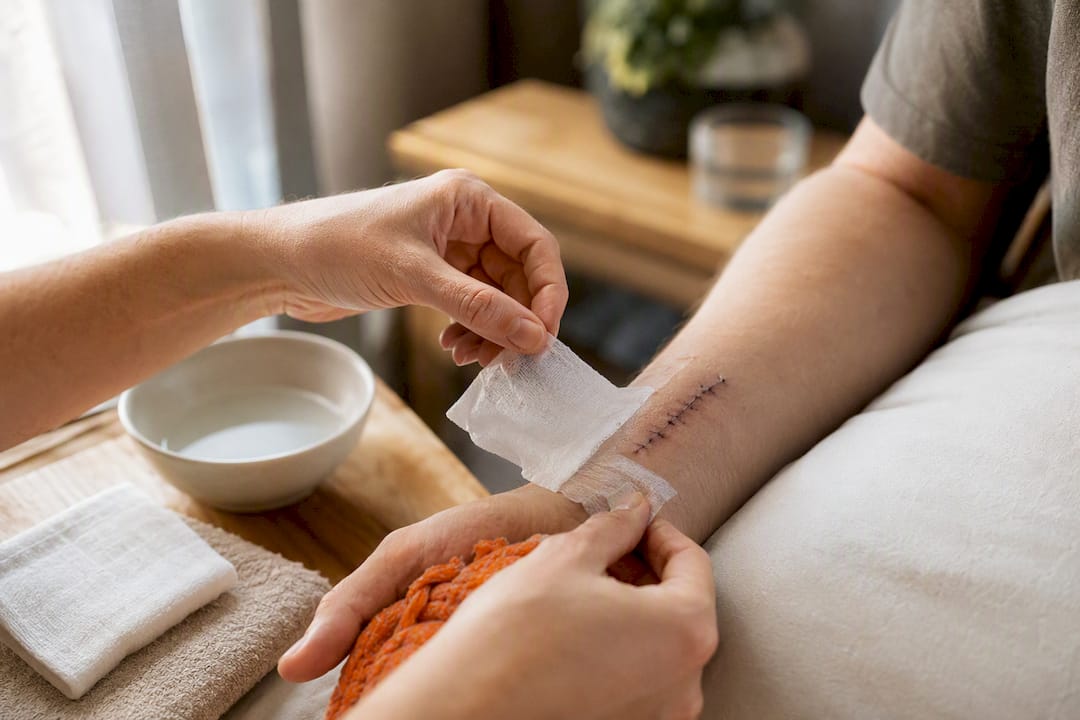
Get your supplies together before you start: mild soap, clean or sterile gauze depending on what your clinician recommended, a nonstick dressing, and tape. Some closures need sterile technique; many routine ones only need clean hands and a clean surface. Your discharge paperwork should say which applies to you.
Wash your hands thoroughly with soap and water.
Clean the area gently with mild soap and water, unless you were told to keep it fully dry for a set number of days first.
Pat dry with clean gauze. Don’t rub, and don’t blow on it to speed things along.
Apply a thin layer of ointment with a clean fingertip or a cotton swab, whether that’s plain petroleum jelly or a prescribed product.
Cover with a nonstick dressing if your clinician advised one, then secure it with tape that doesn’t pull directly on the wound edges.
Repeat this once or twice a day, matching whatever frequency your clinician specified. Kaiser Permanente’s stitch and staple guidance is explicit on one point: skip hydrogen peroxide and alcohol entirely, since both agents can damage new tissue instead of protecting it. Soap and water does the job with far less collateral damage.
If a dressing sticks, don’t rip it off. Dab it with a little extra petroleum jelly or warm water and let it soften for a minute before easing it away. The same logic applies to crusting: a light layer of petroleum jelly softens a scab far more reliably than picking at it, and picking risks reopening the closure. For patients recovering from procedures involving oral incisions, the moisture-retention principle holds just as well, as this oral surgery recovery guide explains for stitches inside the mouth.
When Do You Need a Prescription Ointment, and What Are Infection Warning Signs?
Clinicians reach for prescription topical antibiotics in specific situations, not as a routine add-on. That includes wounds with a confirmed contaminating organism, cuts that happened somewhere unclean, patients with weakened immune systems, or surgical sites the surgeon judges to carry above-average infection risk. If none of that applies to you, plain petroleum jelly usually covers the job.
Contact your provider promptly if you notice any of the following:
Redness that is spreading outward rather than staying confined to the incision line
Red streaking extending away from the wound
Pain that is increasing rather than gradually easing
Warmth or swelling that’s getting worse, not better
Pus or cloudy drainage, rather than a small amount of clear fluid
Fever, chills, or feeling generally unwell
MedicineNet’s guidance on stitch care recommends gentle cleaning about twice a day partly because it gives you a built-in chance to spot these changes early, while mild redness and slight swelling right after the procedure are normal and expected.
One distinction worth knowing: an itchy, spreading rash with no pus is more likely an allergic reaction to an ointment ingredient than an infection. Stop using that product and call your clinician, since more ointment won’t calm an allergic response, and misreading it as infection can lead to unnecessary antibiotics.
Can You Shower With Stitches? Bathing and Activity Rules
Most surgeons clear short, gentle showers around 24 hours after closure, but soaking in a bathtub, hot tub, or pool is off the table until the wound has fully healed. Submerging fresh stitches softens the skin too much and gives bacteria a way in.
Let water run over the area briefly rather than scrubbing it directly.
Pat the site dry afterward, then reapply ointment and a fresh dressing if that’s part of your routine.
Skip heavy lifting, stretching, or any activity that puts tension on the incision until stitches come out or your clinician clears you.
Pro Tip: If you’re anxious about water hitting the incision, cover it loosely with a dry washcloth during your shower rather than skipping bathing altogether. Basic hygiene still matters for the skin around the wound.
What Comes After the Stitches Are Removed?
Once your clinician removes the stitches, the ointment routine usually changes. Many surgeons transition patients to sunscreen over the healing skin, and sometimes silicone sheets or scar gels if the wound is in a visible or high-tension area.
Be skeptical of miracle scar remedies. Evidence for common home treatments like vitamin E oil or aloe vera improving a mature scar’s appearance is inconsistent at best, and Cleveland Clinic’s scar-prevention guidance points to sun protection and infection prevention as the two factors that reliably matter more than any topical marketed as a fading cure.
Keep the healed area covered or sunscreened outdoors for several months, since fresh scar tissue burns and darkens easily.
Give scars time. Most take a year or more to fully mature and lighten.
See a dermatologist or your surgeon if a scar becomes raised, thickened, or unusually painful.
Where a Plant-Based Ointment Like Re-gen Fits In
If you’d rather avoid petroleum-based products, Re-gen is a plant-based, petroleum-free topical designed to keep minor wounds moist while supporting tissue recovery, and it can serve the same thin-layer role petroleum jelly plays in a clinician-approved routine.
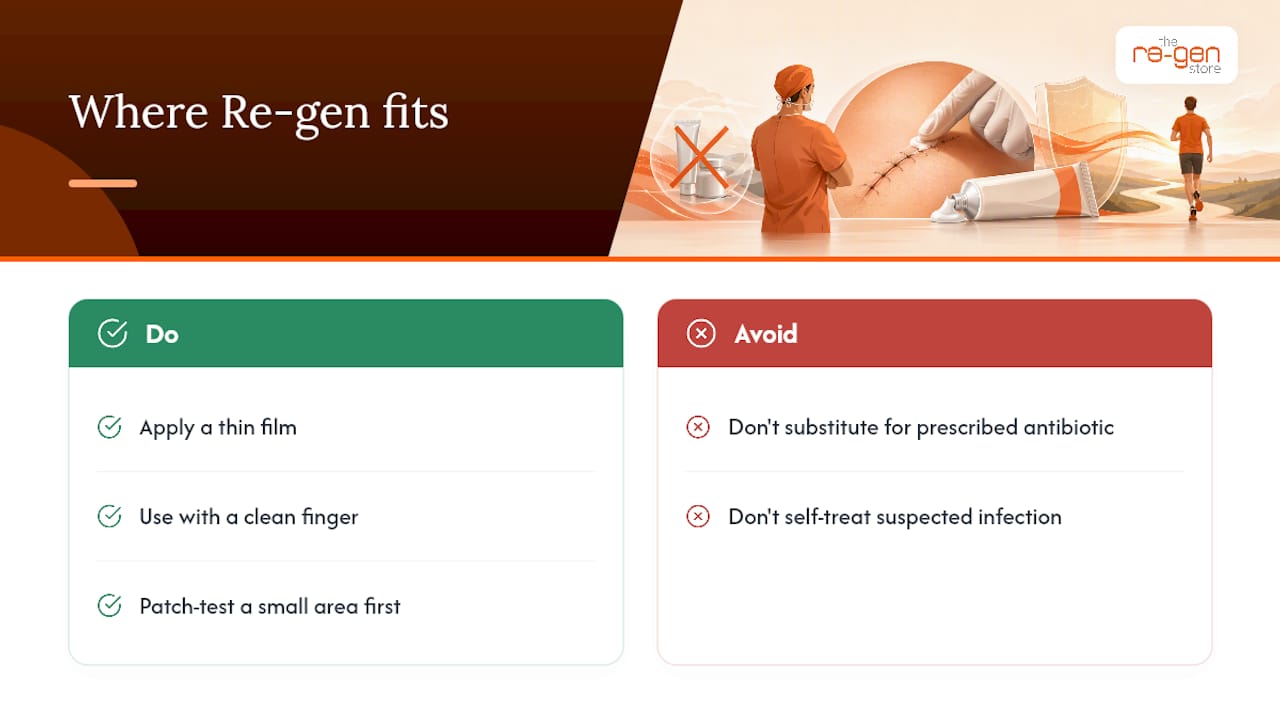
Apply it the same way: a thin film with a clean finger, patch-tested on a small area of skin first to rule out sensitivity before broader use. A plant-based ointment is not a substitute for a prescribed antibiotic. If you suspect infection, call your clinician before reaching for any topical, natural or otherwise.
A Publisher’s Note on Ointment and Stitches
The research here points in one direction consistently: simpler is safer for most closed wounds, and the biggest risk isn’t under-treating with plain petroleum jelly, it’s over-treating with an antibiotic ointment nobody asked you to use. Nonprescription topicals, whether petroleum-based or plant-based, work best as adjuncts inside a clinician’s plan, never as a replacement for it. When in doubt, call before you apply.
— Kyle
A Petroleum-Free Option Worth Knowing About
If your clinician has cleared petroleum jelly or a similar moisture-barrier product for your stitches, a plant-based, petroleum-free ointment offers a thin-layer, moisture-retaining approach without petroleum in the formula. It is designed to support recovery from minor cuts, post-surgical wounds, and everyday skin injuries.

Start by talking to your clinician about whether a petroleum-free option fits your specific aftercare plan, then do a small patch test before applying it near your stitches. From there, follow the same clean, thin-layer, cover-and-change routine outlined above. You can compare packaging sizes and read the full ingredient breakdown on the Re-gen product page, or learn more about how it stacks up against traditional options on the petroleum-free wound treatment page at Theregenstore.
Sources
FAQ
Are You Supposed to Put Ointment on Stitches?
Follow your surgeon’s specific instructions first. If none were given regarding an antibiotic ointment, a thin layer of plain petroleum jelly is the commonly recommended default to keep the area moist.
Do Stitches Heal Better Covered or Uncovered?
Most clinicians recommend keeping fresh stitches covered with a nonstick dressing, since a covered, moist wound tends to form less crust and can heal with a smoother result than one left exposed to air.
Should I Put Neosporin or Vaseline on Stitches?
Plain petroleum jelly (Vaseline) is generally the lower-risk choice, since triple-antibiotic products like Neosporin contain neomycin, a common trigger for allergic contact dermatitis. Use Neosporin only if your clinician specifically recommends it.
What Can I Put on My Stitches to Help Them Heal?
A thin layer of petroleum jelly or a clinician-approved plant-based alternative like Re-gen supports moist healing for most uncomplicated wounds. Reserve antibiotic ointments for cases where your provider specifically prescribes them.
Can You Put Ointment on Stitches Every Day?
Yes, most routines call for reapplying a thin layer once or twice daily during dressing changes, continuing until your clinician tells you to stop or the stitches are removed.
Recommended
Comments