
Can You Put Neosporin on a Dog Safely?

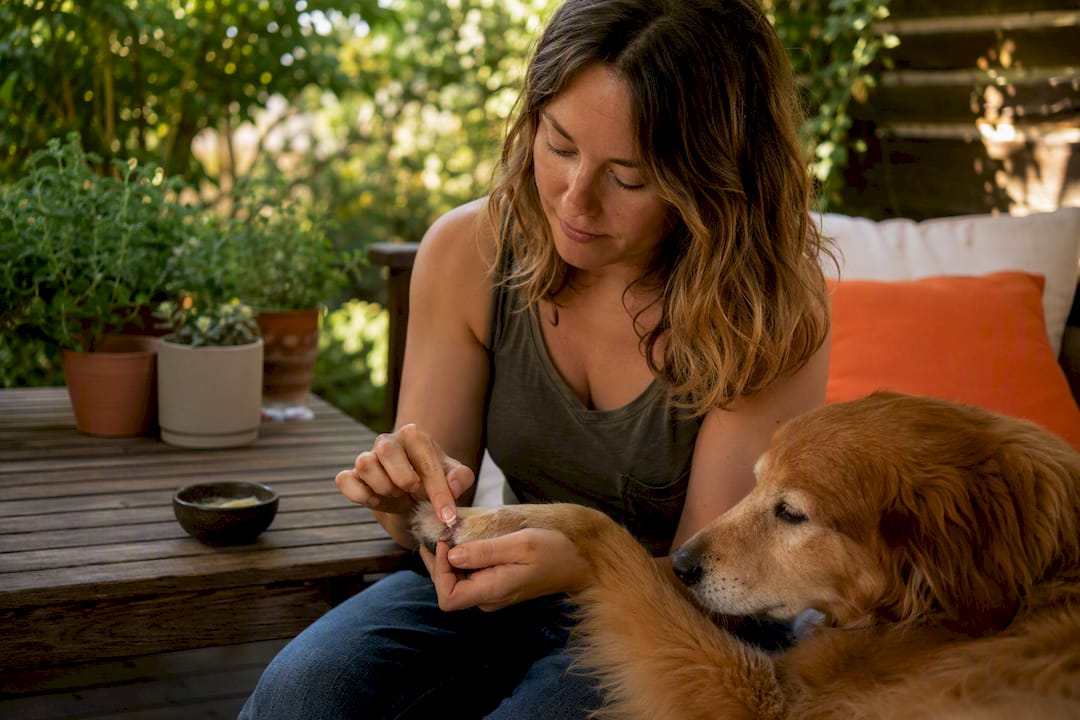
Yes, you can put a small amount of Neosporin on a dog, but only for minor, superficial wounds like small scrapes or shallow cuts. This comes with real caveats you shouldn’t skip.
Prevent licking immediately — ingestion is the biggest risk
Skip pain-relief variants containing pramoxine
Watch for allergic reaction at the application site
Call your vet if you’re unsure whether the wound qualifies as “minor”
TL;DR:
Neosporin can be used on small, superficial wounds in dogs only if licking is prevented and the formula does not contain pramoxine or other pain relievers.
The main risks include gastrointestinal upset from ingestion, allergic reactions mostly to neomycin, and delayed healing if used beyond 72 hours.
Never apply Neosporin to deep wounds, punctures, or bite injuries, which require veterinary assessment and prescription treatments.
Using pet-formulated antiseptics or plant-based ointments like Re-gen presents a safer natural alternative for minor surface scrapes.
Monitor wounds closely for signs of infection or worsening, and seek veterinary care immediately if symptoms such as spreading redness, swelling, or foul odor occur.
Table of Contents
What Is in Neosporin, and Which Ingredients Matter for Dogs?
Neosporin combines three topical antibiotics: bacitracin, polymyxin B, and neomycin. Each one targets a slightly different range of bacteria, which is why the trio works well on minor human cuts. Some Neosporin formulas add pramoxine, a topical pain reliever, to numb the area.
For dogs, two ingredients deserve extra scrutiny:
Neomycin can trigger contact allergies in dogs more often than the other two antibiotics
Pramoxine and other analgesic additives raise the risk profile for pets and should be avoided unless a vet specifically prescribes that formula
Topical use on unbroken or lightly broken skin is very different from systemic exposure through swallowing. The ointment sitting on the surface of a scrape is a low-dose, localized event. A dog licking off and swallowing that same ointment introduces the antibiotics into the gut, which is where most of the real risk lives.
What Can Go Wrong When You Use Neosporin on a Dog
The core risks fall into three categories: what happens if your dog eats it, what happens if their skin reacts to it, and what happens if you use it on the wrong kind of wound.
Ingestion and GI upset. Dogs groom reflexively, so licking is almost guaranteed unless you intervene. Ingesting topical antibiotic ointment can upset a dog’s GI tract, and repeated small exposures may cause vomiting or diarrhea as the ointment disrupts normal gut bacteria.
Allergic or contact reaction. Redness, swelling, or hives at the application site signal a reaction, usually to neomycin. A 24 to 48 hour patch test on a small, inconspicuous area is the safest way to check before treating a larger wound.
Delayed healing from overuse. Veterinarians commonly cap topical antibiotic use at 48 to 72 hours unless told otherwise. Beyond that window, you risk disrupting the skin’s natural microbiome and contributing to antibiotic resistance rather than helping the wound close.
Never apply Neosporin to deep punctures, bite wounds, or surgical incisions. These wound types need veterinary evaluation, often with prescription-strength therapy, because a thin layer of over-the-counter ointment can’t address what’s happening below the surface.
How to Use Neosporin on a Dog’s Minor Wound
Neosporin is only appropriate for superficial, non-bleeding wounds, things like a small scrape from a fall or a shallow cut from brushing against a fence. Anything deeper, anything still bleeding, or anything you’re not confident assessing belongs in front of a vet first.
If your vet has given the green light, here’s the process:
Clean the area. Rinse with saline solution or a mild soap and water. If you need a refresher on technique, our guide to cleaning a dog wound walks through it step by step.
Dry it fully. Pat the area dry with a clean cloth. Trapped moisture under ointment invites bacteria rather than keeping them out.
Apply a pea-sized amount. A thin layer is enough. More ointment doesn’t speed healing, it just gives your dog more to lick off.
Prevent licking right away. A cone, a soft recovery collar, or a light bandage all work depending on the wound’s location and your dog’s temperament.
Monitor for 48 to 72 hours. If the wound isn’t visibly improving in that window, or looks worse, stop and call your vet.
Pro Tip: Apply Neosporin right before a walk or a distraction like a puzzle toy. Dogs are far less likely to fixate on licking a fresh application when their attention is somewhere else for the first ten minutes.
Safer Alternatives to Neosporin for Dog Wounds
Plenty of vets skip human triple-antibiotic ointment altogether. Pet-formulated antiseptics and prescription topicals tend to be favored because they’re formulated with predictable dosing and none of the human-only additives that can trigger a reaction.
Dilute chlorhexidine or povidone-iodine work well as a rinse before bandaging and carry a lower allergy risk than triple-antibiotic ointments
Medical-grade Manuka honey has natural antibacterial properties and is often used under veterinary guidance for slow-healing wounds
Prescription veterinary topical antibiotics make sense for wounds a vet has already examined and wants to keep tracking
Plant-based, petroleum-free ointments like Re-gen give owners a non-antibiotic option without the neomycin or pramoxine concerns, though infected wounds still need a vet’s eyes on them first
For paw pads specifically, a light bandage over a non-greasy antiseptic often beats a heavy petroleum-based ointment, since petroleum bases trap moisture and debris against the pad. Whatever you choose, our pet-safe ointment guide breaks down more natural options in detail.
Option | Best For |
Diluted chlorhexidine/povidone-iodine | Pre-bandage rinse, lower allergy risk |
Medical-grade Manuka honey | Slow-healing wounds, vet-guided use |
Plant-based ointment (Re-gen) | Non-antibiotic topical care |
Prescription topical antibiotics | Wounds already evaluated by a vet |
Warning Signs That Mean You Need a Vet Right Now
Home care has a ceiling. Once a wound crosses into these signs, ointment of any kind stops being the answer.
Redness that’s spreading rather than staying contained
Swelling, warmth, or a foul odor coming from the wound
Discharge that’s yellow, green, or unusually thick
Bleeding that won’t stop within a few minutes of pressure
Limping, fever, or noticeable lethargy
Bite wounds, puncture wounds, and anything near the eyes, ears, or joints always warrant a trip to the vet, regardless of how small they look on the surface. A puncture can seal at the skin while trapping bacteria deep inside, which is exactly the kind of damage a home first-aid kit can’t reach.
If your dog eats a significant amount of Neosporin, a full tube rather than a small lick, contact Pet Poison Helpline or your emergency vet right away. A small accidental lick usually just causes mild stomach upset, but a larger ingestion is a different situation entirely.
Where Re-gen Fits for Owners Who Want a Plant-Based Option
Theregenstore sells Re-gen, a petroleum-free, plant-based ointment formulated for skin, soft tissue, and minor wound support in both people and pets. It’s built as a non-antibiotic alternative for owners who’d rather not introduce neomycin, pramoxine, or other human-only additives to their dog’s skin at all.
Full ingredient transparency listed on the product page
Usage guidance specific to pet application, separate from the human-use instructions
No petroleum base, which matters for paw pads and areas prone to trapping moisture
A resource like our pet-safe healing options list for owners comparing natural remedies side by side
Pro Tip: Keep a plant-based ointment in your dog’s first-aid kit specifically for surface scrapes, so you’re not reaching for a human medicine cabinet product as a default.
For infected or deep wounds, a vet visit still comes first. Re-gen is positioned for the minor, superficial end of the spectrum, not as a replacement for veterinary diagnosis.
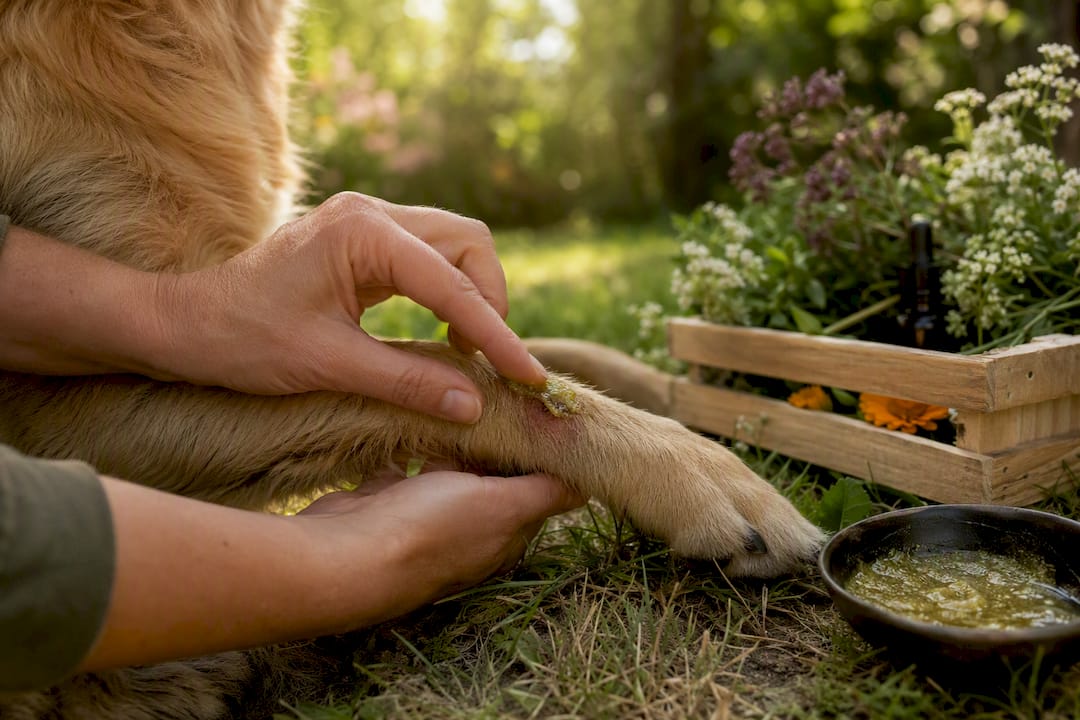
The Gap Between “Safe” and “Smart” Choice
Most articles on this topic answer the wrong question. They spend paragraphs debating whether Neosporin is technically safe for dogs and barely mention that “technically safe” and “the smart choice” aren’t the same thing.
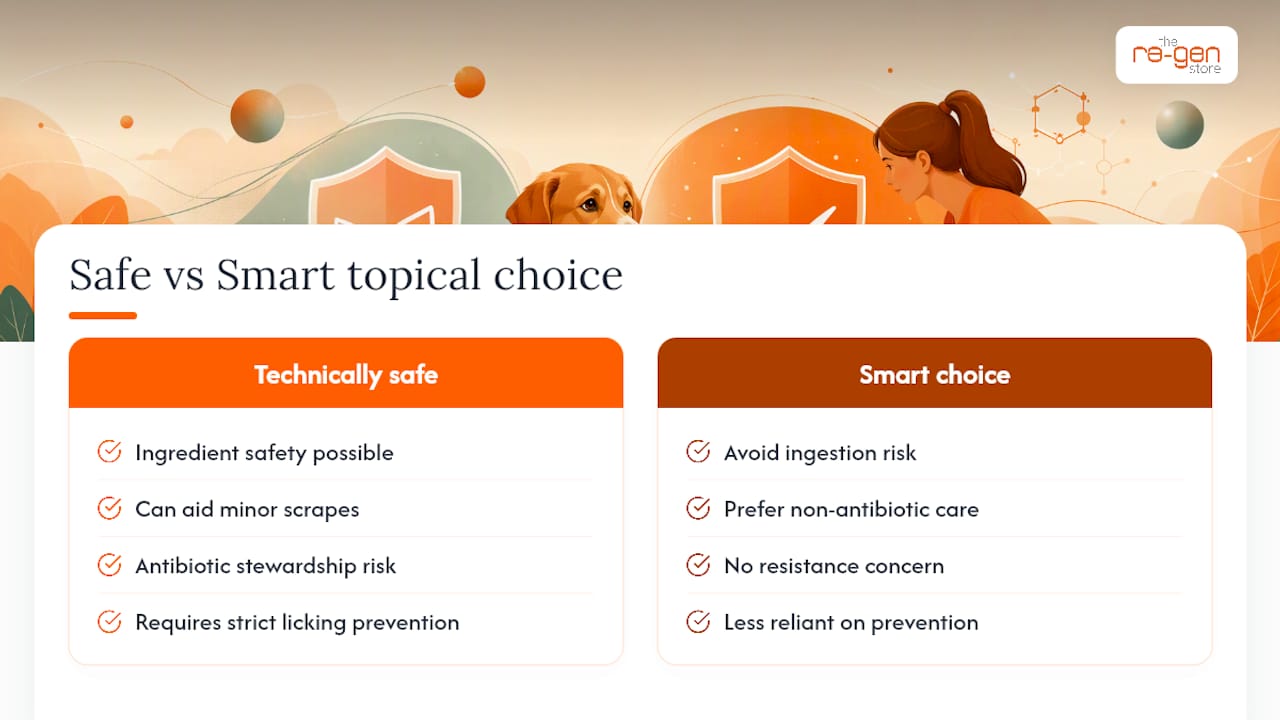
Here’s what the evidence actually supports: Neosporin can work on a truly minor scrape if you’re disciplined about licking prevention and you skip any variant with added pain relievers. But the entire case for using it rests on an owner successfully preventing a dog from doing what dogs do naturally, which is lick anything that smells or feels different on their skin. That’s a fragile plan.
The conventional advice treats Neosporin as the default first reach and alternatives as a backup. I’d flip that. If you’re standing in front of a first-aid kit deciding what to grab, start with something that doesn’t carry an ingestion risk or an antibiotic-stewardship tradeoff in the first place. Prioritize the wound assessment first, always. A scrape and a puncture are not the same decision tree, and no ointment fixes that distinction.
— Kyle
A Petroleum-Free Option Worth Keeping on Hand
If the idea of monitoring your dog for allergic reactions or racing to prevent licking every time you treat a scrape sounds like more risk management than a minor wound should require, Re-gen gives you a simpler starting point. Theregenstore’s Re-gen ointment is plant-based and petroleum-free, formulated without neomycin or pramoxine, so it skips the two ingredients that cause most of the caution around Neosporin on dogs in the first place.

It’s built for the same category of injury, cuts, scrapes, minor irritation, but without the antibiotic-resistance tradeoff or the analgesic additives some Neosporin variants carry. Owners who want a natural alternative to conventional wound ointments can check the ingredient list and usage guidance directly on the product page and decide if it fits their first-aid kit. Order a tube from Theregenstore before the next scraped paw pad happens, not after.
Key Takeaways
Neosporin is acceptable on dogs only for minor, superficial wounds, and only when you actively prevent licking and avoid pramoxine-containing formulas.
Point | Details |
Minor wounds only | Reserve Neosporin for small, superficial, non-bleeding scrapes and skip it for punctures or bites. |
Licking is the top risk | Ingestion causes GI upset in most cases; use a cone or bandage immediately after applying. |
Skip pain-relief variants | Formulas with pramoxine carry added risk and should only be used if a vet prescribes them. |
Cap use at 48 to 72 hours | Longer topical antibiotic use can disrupt healing and the skin’s natural microbiome. |
Re-gen as a non-antibiotic option | Theregenstore’s Re-gen offers a plant-based, petroleum-free alternative for minor wound care in pets. |
This article is general information, not a substitute for advice from a qualified doctor. Consult a qualified healthcare professional about your own circumstances before acting on anything here.
Sources
FAQ
Is It Safe to Put Neosporin on a Dog’s Sore?
Small amounts are generally safe for minor, superficial sores when you prevent licking and choose a formula without added pain relievers. Anything deeper or infected needs veterinary evaluation first.
What Antibiotic Ointment Can I Use on a Dog?
Standard triple-antibiotic ointment (bacitracin, polymyxin B, neomycin) can work for minor wounds, but many vets prefer pet-formulated antiseptics like diluted chlorhexidine or a prescription topical for more predictable results.
What Type of Ointment Is OK for Dog Wounds?
Non-antibiotic, non-petroleum options like medical-grade Manuka honey or a plant-based ointment such as Re-gen work well for surface-level scrapes without the ingestion or resistance concerns of human antibiotic creams.
What Should I Put on a Dog’s Wound?
Clean the wound with saline or mild soap, dry it fully, then apply a thin layer of an appropriate topical and prevent licking. Deep, bleeding, or worsening wounds should go straight to a vet instead of home treatment.
What Happens if My Dog Licked Neosporin?
A small lick typically causes only mild stomach upset. If your dog ate a large amount, such as a full tube, contact Pet Poison Helpline or your vet right away.
Recommended
Comments