
Avoiding Neosporin in Pregnancy: 4 Signs, Plant Based Options
- Sunny

- 3 days ago
- 6 min read

For small cuts and scrapes, Neosporin is generally considered low risk when used topically in pregnancy, though it’s not entirely risk-free. The main caveats: skip it if you have an allergy history to neomycin, avoid it on large or deep wounds, and never apply it near your eyes or nursing breast without asking your doctor. Infected or slow-healing wounds need clinician review, not more ointment. Always follow the product label and call your healthcare provider with any concerns.
TL;DR:
Topical antibiotics like Neosporin are low risk for small, clean wounds during pregnancy, but larger or infected wounds require medical review.
Bacitracin-only ointments and plant-based alternatives like Re-gen provide safe options that avoid neomycin and polymyxin B, especially for sensitive skin or allergy-prone patients.
Applying ointments near the eyes, genitals, or on deep wounds increases absorption and the need to consult a healthcare provider before use.
Using proper wound care techniques with soap, water, and breathable dressings is often sufficient, reserving antibiotics for contaminated or high-risk injuries.
Table of Contents
What’s Actually in Neosporin During Pregnancy
Neosporin isn’t one drug. It’s a triple-antibiotic blend of bacitracin, neomycin, and polymyxin B, and each ingredient carries a different safety story when you’re pregnant.
Bacitracin works by blocking bacterial cell wall formation and covers gram-positive bacteria like staph and strep. It’s the ingredient with the cleanest track record in pregnancy. Neomycin targets gram-negative bacteria but is also the most common cause of contact allergy in this trio. Polymyxin B disrupts bacterial cell membranes and rounds out the broader coverage, but like neomycin, human pregnancy data on it is thin.
Here’s the ingredient-level breakdown that matters for your decision:
Bacitracin is frequently noted as carrying no known fetal or neonatal risk when applied topically to intact skin.
Neomycin and polymyxin B typically require a case-by-case risk/benefit conversation with your provider, since human data on developmental effects remains limited.
The Neosporin package insert instructs patients to tell their doctor if they’re pregnant, and notes that formal animal reproduction studies haven’t been conducted for any of the three antibiotics.
Neosporin’s ophthalmic formulation specifically states it should be used in pregnancy only if clearly needed.
That labeling language isn’t a red flag so much as a standard disclaimer. Most topical over-the-counter drugs carry it because manufacturers rarely run controlled trials on pregnant patients.
What Clinical Guidance Says About Topical Antibiotics in Pregnancy
Clinicians lean on one core principle: topical medications absorb into the bloodstream far less than oral or injected ones, which lowers the theoretical risk to a developing fetus. A review in the Journal of Drugs in Dermatology reinforces this, noting that topical drugs generally carry less systemic exposure than their oral counterparts, even though safety still needs careful evaluation because high-quality pregnancy data is scarce.
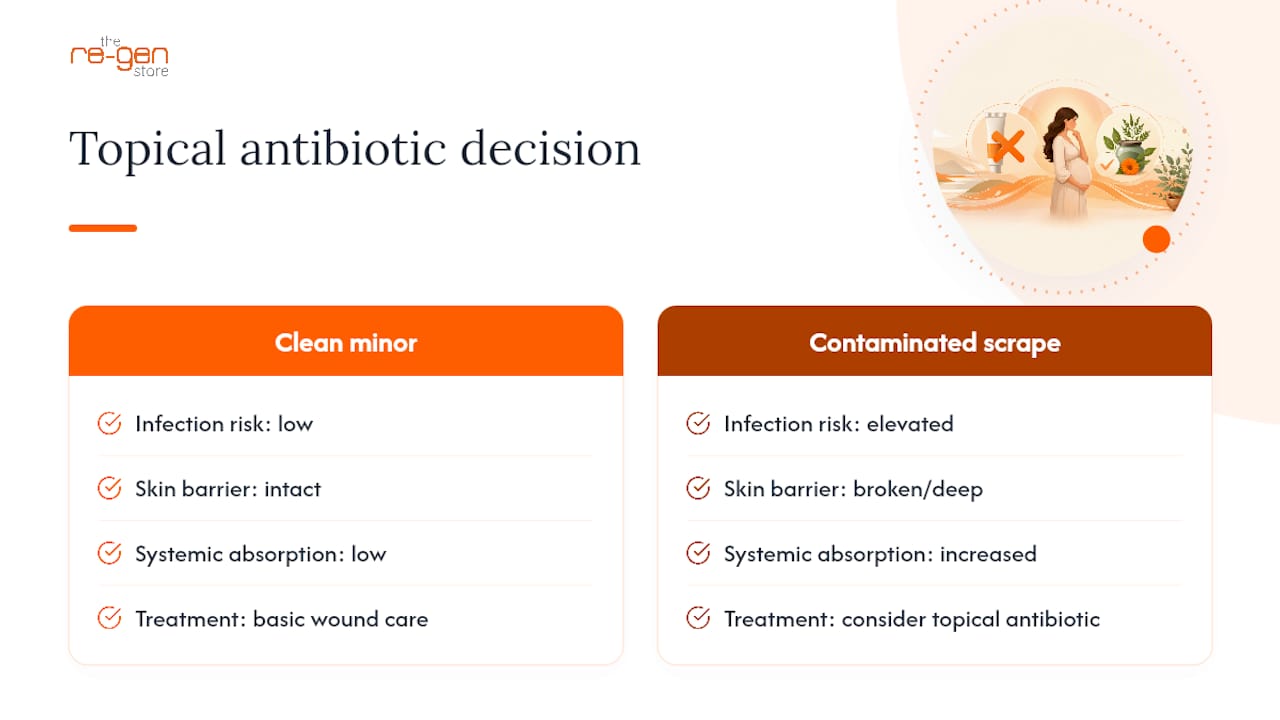
Low systemic absorption is the assumption behind topical safety, but that assumption changes fast once the skin barrier is broken. Deep wounds, burns, and large surface-area application all increase how much of a topical agent reaches your bloodstream.
That distinction matters more than most first-aid labels let on. A pinprick scrape and a two-inch abrasion are not the same exposure event, even with the identical tube of ointment.
WebMD’s rundown of safe OTC first aid ointments during pregnancy lists bacitracin, Neosporin, and Polysporin among products with no documented harmful effects when used as directed, while still recommending a check-in with your doctor. Meanwhile, Mayo Clinic’s drug information page advises talking with your provider before using neomycin, polymyxin B, or bacitracin products during pregnancy or breastfeeding.
The nuance clinicians actually apply: reserve topical antibiotics for wounds where infection risk is genuinely elevated, like a contaminated scrape, and skip them on clean, minor injuries that will heal fine with basic wound care. It’s a risk/benefit calculation, not a blanket yes or no.
When to Avoid Neosporin and Call Your Provider Instead
Some situations shift this from a personal-judgment call to a “contact your doctor first” situation.
You have a known allergy or contact dermatitis history to neomycin or other topical antibiotics. This is the clearest stop sign. Neomycin allergy is common enough that dermatologists test for it routinely.
The wound is large, deep, or a burn. Bigger and deeper wounds mean more broken skin barrier, which means more potential absorption.
The wound sits near your eyes, genitals, or nursing breast. Mucous membranes absorb more readily, and ointment near a nursing breast can transfer to a feeding infant.
The wound looks infected. Spreading redness, red streaking, fever, worsening pain, pus, or no improvement after 24 to 48 hours all warrant a same-day call to your provider rather than more ointment.
Pro Tip: Before a telehealth visit, snap a clear, well-lit photo of the wound next to a common object like a coin for scale, and jot down when it happened and what you’ve already applied. It saves time and helps your provider assess severity without guessing.
Safer First-Aid Steps and Alternatives Worth Knowing
Most minor cuts don’t need an antibiotic ointment at all. They need good basic care.

Start with soap and water, not alcohol or hydrogen peroxide, which can irritate healthy tissue and slow healing. Irrigate the wound gently under running water to flush out debris, pat it dry, and cover it with a clean, breathable dressing. If the injury is a puncture or came from something rusty or dirty, ask your provider whether your tetanus vaccination is current.
When you do want a topical layer:
Bacitracin-only ointments skip neomycin entirely, which removes the most common allergy risk while keeping antibacterial coverage.
Plain petroleum-based ointments create a moist healing barrier without any antibiotic exposure at all, appropriate for clean, low-risk scrapes.
Plant-based, petroleum-free options like Re-gen from Theregenstore offer a nonantibiotic alternative for minor cuts, scrapes, and burns where there’s no sign of infection.
If you’re also managing a skin condition like eczema flares, low-potency topical corticosteroids are generally considered acceptable in pregnancy, while higher-potency steroids over large areas warrant a conversation with your provider or a MotherToBaby specialist first. The same caution about broken-skin absorption applies here too.
How Theregenstore Approaches Wound Care in Pregnancy
Kyle, who covers wound care and recovery topics for Theregenstore, built this piece around one core belief: pregnant readers deserve straight answers, not vague reassurance or unnecessary alarm. Theregenstore specializes in Re-gen, a plant-based, petroleum-free topical for skin and soft-tissue recovery, and every product page includes full ingredient lists and usage guidance for exactly this reason.
That said, this isn’t a pitch dressed up as medical advice. For minor, uninfected cuts, a natural alternative like Re-gen fits many pregnant readers’ preference to limit antibiotic exposure. For anything deep, spreading, or unclear, the right move is always a call to your provider first. Product choice never substitutes for clinical judgment.
— Kyle
A Plant-Based Option for Minor Wounds During Pregnancy
If you’d rather keep antibiotic ointments off your skin altogether while you’re pregnant, Re-gen gives you a petroleum-free, plant-based alternative built specifically for skin and soft-tissue recovery.
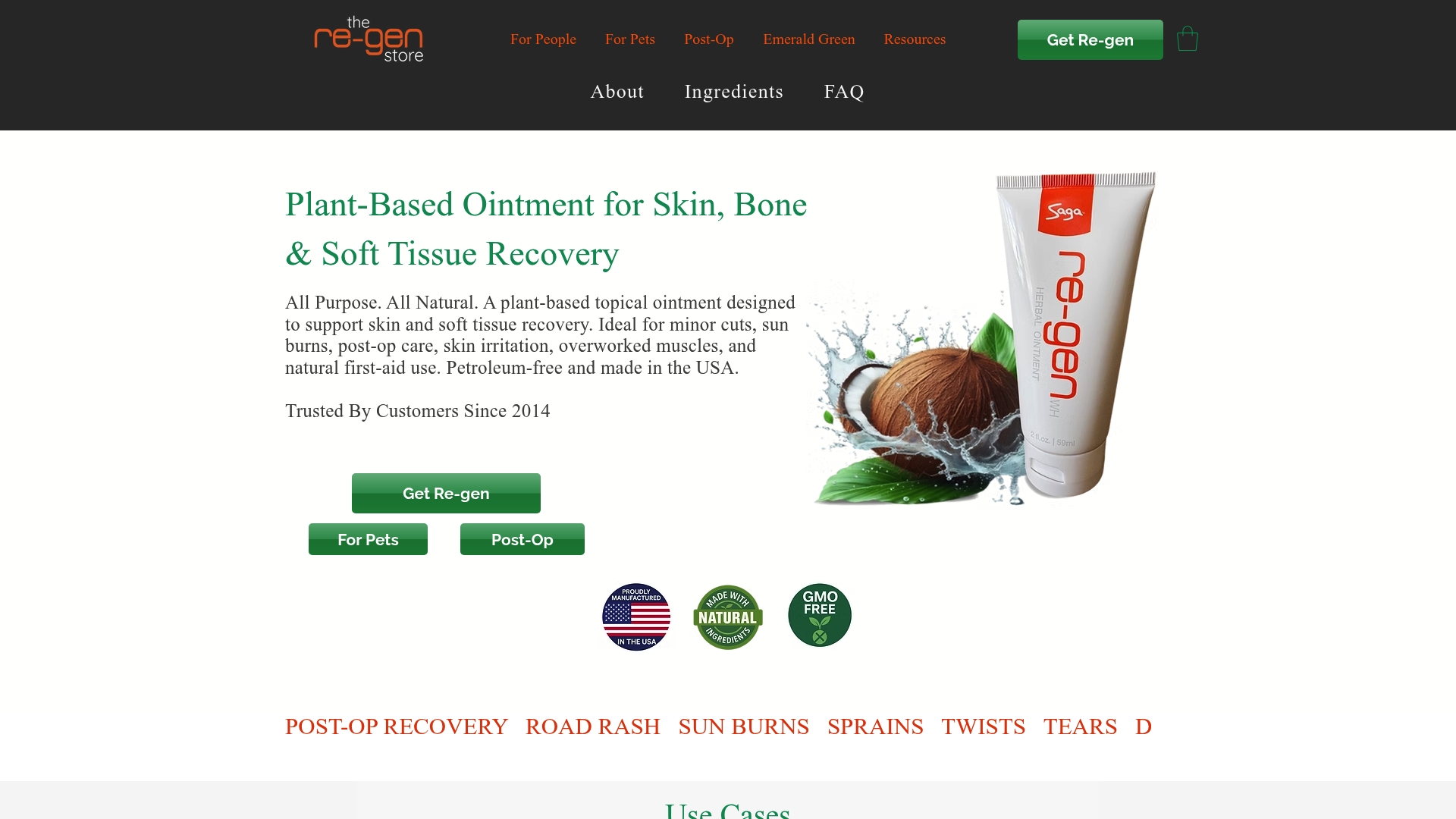
It’s formulated for minor cuts, scrapes, and burns where there’s no sign of infection, using botanical ingredients instead of neomycin, polymyxin B, or bacitracin. That makes it a fit for pregnant readers who want a wound-care option without the ingredient-level questions this article just walked through. Re-gen comes in multiple packaging sizes, and full ingredient details live on the Re-gen product page. Browse the petroleum-free wound treatment line to see which size fits your needs, and if a wound looks infected, deep, or sits near a sensitive area, call your healthcare provider before treating it yourself.
This article is general information, not a substitute for advice from a qualified doctor. Consult a qualified healthcare professional about your own circumstances before acting on anything here.
Sources
FAQ
Is Neosporin Safe to Use During Pregnancy?
For small, clean cuts and scrapes, Neosporin is generally considered low risk with topical use, but talk to your provider if you have an allergy history or a larger, deeper wound.
Which Antibiotic Ointments Are Safest to Use During Pregnancy?
Bacitracin-only ointments are often preferred since they skip neomycin, the ingredient most likely to cause allergic contact dermatitis, while plant-based options like Re-gen avoid antibiotics entirely.
Why Is Neosporin Sometimes Discouraged for Certain Pregnant Patients?
Neomycin allergy is common, and both neomycin and polymyxin B have limited human pregnancy data, so providers may prefer alternatives for patients with sensitive skin or allergy history.
What Ointment Can I Use While Pregnant for Minor Wounds?
Basic petroleum-based ointments, bacitracin-only products, or a plant-based option like Re-gen all work for minor, uninfected cuts and scrapes.
What Topical Creams Should I Avoid Using During Pregnancy?
Avoid high-potency topical corticosteroids over large body areas without medical guidance, and skip any topical antibiotic on wounds that appear infected, deep, or located near mucous membranes.
Recommended
Comments