
Natural wound care guide: healing people and pets


Wounds heal on their own schedule, and that schedule is often frustratingly slow. Whether you are dealing with a stubborn cut, a minor burn, a post-surgical site, or a scraped-up dog or cat, the instinct to reach for something chemical is understandable but not always necessary. A solid natural wound care guide gives you a better option: plant-based remedies that work with your body’s repair process rather than against it. From aloe vera and manuka honey to saline rinses and proper nutrition, natural care is not a workaround. For millions of people and their pets, it is the smarter first response.
Table of Contents
Key Takeaways
Point | Details |
Moist wound environment | Keeping wounds moist with natural dressings accelerates healing and tissue repair. |
Plant-based remedies work | Honey and aloe vera have strong evidence supporting their safety and effectiveness for many wounds. |
Nutrition fuels healing | Adequate protein, vitamins, and minerals are essential to support natural wound repair processes. |
Pet wounds need special care | Use pet-safe antiseptics and consult veterinarians for deep or infected wounds in animals. |
Avoid common mistakes | Do not air out wounds or use cytotoxic substances; these can slow healing and cause harm. |
What you need: natural wound care essentials
Preparation is everything. Treating a wound without the right supplies often leads to mistakes that slow recovery or introduce infection. Before you start, set up a clean, well-lit space and gather what you need.
Core natural supplies for human wounds:
Sterile saline solution for gentle cleaning
Medical-grade aloe vera gel for burns and inflammation
Manuka honey (UMF 10+ or higher) for infection control and moist healing
Breathable, non-stick dressings that retain moisture
Clean gauze and medical tape
Natural healing herbs such as calendula and comfrey for topical support
Core supplies for pet wound care:
Sterile saline (not tap water)
Veterinarian-approved chlorhexidine solution (diluted)
Pet-safe natural ointment, specifically plant-based wound treatments for pets
Non-adhesive gauze pads and self-adhesive wrap
Elizabethan collar (e-collar) to prevent licking
Supply | Human use | Pet use |
Sterile saline | Yes | Yes |
Manuka honey | Yes | Vet guidance only |
Aloe vera gel | Yes | External only, vet approved |
Hydrogen peroxide | No | Never |
Breathable dressings | Yes | Yes, with wrapping |
Pro Tip: Never use cotton balls on open wounds. Cotton fibers stick to raw tissue and pull away healthy cells when removed. Use non-woven gauze pads instead.
Step-by-step natural wound care for cuts and burns
With your supplies ready, follow these steps to treat cuts and burns naturally and effectively.
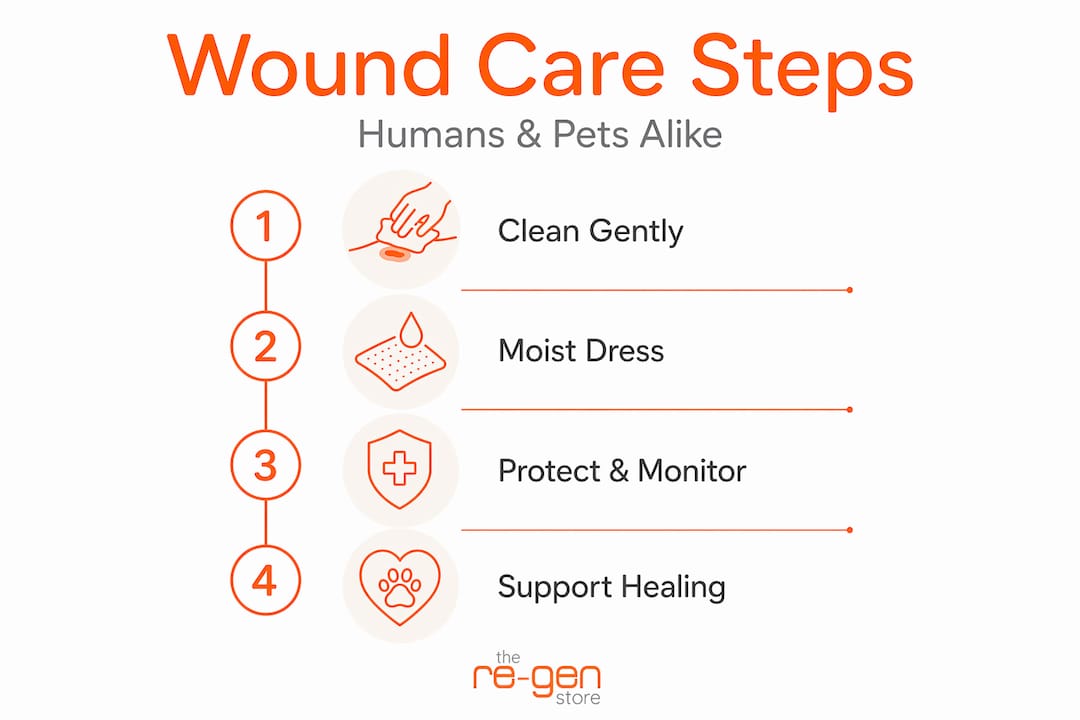
Stop the bleeding. Apply gentle, steady pressure with clean gauze for 3 to 5 minutes. Do not lift to check repeatedly as this disrupts clot formation.
Clean the wound. Rinse with sterile saline or cool running water for at least 60 seconds. Avoid scrubbing, which damages tissue.
Remove debris carefully. Use clean tweezers for visible particles only. If debris is embedded, leave it for a professional.
Apply your natural treatment. For burns, use a thin layer of pure aloe vera gel for burns. For cuts and abrasions, apply a thin layer of manuka honey directly to the wound bed. Aloe vera gel significantly accelerates healing of first- and second-degree burns compared to conventional treatments.
Cover with a breathable dressing. A moisture-retentive, non-stick dressing protects the wound and supports epithelial migration, the process where new skin cells travel across the wound surface to close it.
Change dressings minimally. Every 24 to 48 hours is usually sufficient unless the dressing is saturated or visibly soiled. Frequent changes cool the wound and interrupt healing.
What to watch for:
Sign | Meaning | Action |
Redness spreading outward | Possible infection | See a doctor |
Increasing warmth | Inflammatory response | Monitor closely |
Yellow or green discharge | Bacterial infection | Seek medical care |
Wound edges coming together | Normal healing | Continue care |
Pro Tip: The best way to speed up wound healing naturally is to keep the wound consistently moist. Letting it dry out between dressing changes is one of the most common mistakes that adds days to recovery.
Caring for surgical and chronic wounds naturally
Beyond cuts and burns, chronic and surgical wounds also benefit from natural healing principles.
Post-operative wounds and chronic wounds like diabetic ulcers need sustained care. The principles are the same, but the stakes are higher. Moisture, nutrition, and minimal disruption are your three core tools.
Maintain a moist but not wet environment. Excessive moisture causes maceration (softening and breakdown of skin around the wound). Dressings like foam or hydrogel help regulate this balance.
Use manuka honey dressings. Manuka honey is well tolerated in postoperative neurosurgical wounds and may prevent the need for operative debridement.
Eat for recovery. Protein, vitamin C, and zinc are foundational nutrients that fuel tissue repair and collagen synthesis. Aim for lean protein at every meal, citrus or bell peppers for vitamin C, and pumpkin seeds or legumes for zinc.
Limit unnecessary dressing changes. Temperature stability at the wound site matters. Every dressing change drops the wound temperature by several degrees, and it takes up to an hour to recover. That lost time is lost healing.
“Proper wound nutrition and moist wound care are not complementary extras. They are the foundation of faster, cleaner healing.”
You can support healing naturally by pairing targeted nutrition with consistent, gentle wound management. For more detail on what plant-based care does at the tissue level, see natural healing for skin recovery.

Safe natural wound care for pets: protecting your furry friends
Pets require special care. Here is how to safely use natural remedies and know when to see a vet.
Animals heal similarly to humans, but the products that are safe for you can genuinely harm them. This is the most important thing a pet owner can know.
Step-by-step pet wound care checklist:
Restrain your pet calmly. Use a muzzle if necessary, even with gentle animals. Pain causes unpredictable behavior.
Trim fur around the wound with blunt-tipped scissors for better visibility and cleaner dressing contact.
Rinse with sterile saline. Never use tap water on an open wound.
Apply a veterinarian-approved antiseptic or a plant-based wound care for pets ointment.
Cover lightly with non-stick gauze and self-adhesive wrap if the wound is in an area the pet can reach.
Fit an e-collar to prevent licking. Saliva introduces bacteria and delays healing.
Human antiseptics like hydrogen peroxide are cytotoxic to pets and actively delay wound healing. Use saline or vet-approved solutions only.
When to go to the vet immediately:
The wound is deeper than a surface scratch
Bleeding does not stop within 5 minutes
You see tissue, fat, or bone
There is swelling, odor, or discharge
The pet is limping severely or refusing to bear weight
Remember, home wound care is a short-term bridge to professional treatment for serious injuries or infections. It is not a substitute.
Pro Tip: Keep a pet injury care checklist printed and posted in your home. When your pet is hurt, your hands will shake and your memory will fail you. A checklist keeps you calm and systematic.
Common mistakes and troubleshooting natural wound care
To maximize your success with natural wound care, be aware of these traps and how to fix them.
Letting wounds air out. This is outdated thinking. “Airing out” wounds delays healing because the dry environment slows cell migration and crust formation impedes new tissue growth.
Using human antiseptics on pets. Products that are fine for adult human skin can destroy healthy cells in animals and cause unnecessary pain.
Changing dressings too often. More is not better. Stick to a consistent schedule and only change when genuinely needed.
Ignoring nutrition. Wound healing consumes significant metabolic energy. Skipping protein or micronutrients visibly slows repair.
Missing early infection signs. Redness expanding beyond the wound edge, increased warmth, or a change in discharge color are red flags that need professional attention.
If a wound is not showing improvement within 48 to 72 hours of consistent natural care, consult a healthcare provider. Early intervention prevents minor wounds from becoming serious ones.
For a broader view of holistic wound care common mistakes and how to avoid them, that resource is worth bookmarking.
Pro Tip: Take a photo of the wound each day you change the dressing. Visual records help you spot slow changes in size, color, or drainage that you would otherwise miss.
Why natural plant-based wound care is the future of healing
Conventional medicine has done remarkable things, but conventional wound care products often work despite the body’s natural response rather than alongside it. Antiseptics that kill bacteria also kill the fibroblasts (cells that build new tissue) laying the foundation for repair. That is a real tradeoff that rarely gets discussed at the pharmacy counter.
Natural remedies like honey and aloe vera take a different approach. Honey promotes autolytic debridement and modulates chronic inflammation to facilitate normal healing. It does not sterilize the wound at the cost of tissue health. Aloe vera calms inflammation without shutting it down entirely, which matters because inflammation is not the enemy. It is the body’s first-responder system. You support it, you do not suppress it.
For pets, the case is even stronger. Their skin chemistry differs from ours, and the margin for error with cytotoxic products is smaller. Gentler, plant-based options are not the soft choice. They are the scientifically defensible one.
Comparing aloe vera and Re-gen side by side illustrates how modern plant-based formulations can go further than single-ingredient remedies, addressing multiple stages of healing in one application. That is not a sales argument. That is where the science is pointing.
The future of wound care is not abandoning medicine. It is integrating what plant-based remedies do exceptionally well into a thoughtful, evidence-guided practice.
Explore plant-based wound treatments at The Re-gen Store
Your natural wound care routine works best with products that are formulated to back it up.

At TheRegenStore.com, the Re-gen ointment is a petroleum-free, plant-based regenerative ointment designed for skin, soft tissue, and post-surgical recovery, for both people and pets. It contains no synthetic additives or harsh chemicals that disrupt the healing environment you are working to maintain. Whether you are following a petroleum-free plant-based wound treatment protocol or building out your first-aid kit with pet-safe options, Re-gen fits naturally into the approach outlined in this guide. For a deeper look at combining these strategies, the holistic wound care guide is a great next step.
Frequently asked questions
Can I use honey on all types of wounds?
Medical-grade manuka honey is effective for many wound types including burns, chronic ulcers, and surgical sites, but regular table honey carries contamination risks and should never be used. Topical manuka honey promotes rapid healing and reduces infection in chronic wounds.
Is it safe to apply aloe vera to open wounds?
Pure, sterile aloe vera gel is safe for open wounds, particularly burns, but avoid products with added fragrance or alcohol. Aloe vera significantly accelerates burn healing compared to conventional creams.
When should I take my pet to the vet for a wound?
Go immediately if the wound is deep, bleeding heavily, involves visible tissue layers, or shows signs of infection. Deep or infected pet wounds require immediate veterinary assessment.
Why should wounds be kept moist rather than dry?
A moist wound environment allows skin cells to migrate across the wound surface, supports collagen formation, and reduces scab buildup that physically blocks healing. Wounds heal faster in moist conditions that support key cellular processes.
Are human antiseptics safe for treating pet wounds?
No. Products like hydrogen peroxide are toxic to the healthy cells in a pet’s wound and slow recovery while causing pain. Human antiseptics are cytotoxic to pet wounds; use vet-approved saline or diluted chlorhexidine instead.
Recommended
Comments