
Herbal skin support: safe, effective recovery guide


Not every product labeled “herbal” or “natural” is automatically safe, effective, or appropriate for your skin or your pet’s wound. Many people pick up a botanical salve with confidence, assuming plant-based means risk-free. That assumption can slow healing, trigger a reaction, or in some cases cause real harm to animals. This guide walks you through what herbal skin support actually means, which ingredients have real evidence behind them, how to use these products safely for people and pets, and when professional care is the only right answer.
Table of Contents
Key Takeaways
Point | Details |
Herbal support defined | Herbal skin support uses plant-based ingredients to help soothe and restore skin for mild issues. |
Safety is essential | Not all natural products are safe for every person or pet—always check ingredients and use carefully. |
Evidence matters | Some herbs show promising effects but scientific testing and regulation are still catching up. |
Pets need special care | Many herbal products are unsafe for pets; vet guidance is crucial before use on animals. |
When in doubt, seek help | Professional medical or veterinary evaluation should not be replaced by herbal support for serious problems. |
What is herbal skin support?
Herbal skin support refers to a broad category of topical products and supplements that use plant-based ingredients to soothe skin, reinforce the skin barrier, and encourage tissue repair. As noted by Beyond Health, “herbal skin support” is a marketing term for botanical skin-care products intended to soothe skin, support the skin barrier, and promote healing or regeneration. That definition matters because it draws a clear line between gentle, supportive care and actual medical treatment.
Common botanicals you will find in these products include:
Rosehips for antioxidant support and vitamin C content
Plantain leaf for its traditional use in calming irritated or inflamed skin
Chickweed for cooling and soothing minor rashes
Calendula for tissue-supportive and anti-inflammatory properties
Comfrey root for its traditional role in soft tissue recovery
These ingredients are often marketed for natural irritation relief, minor wound care, sunburn skin recovery, and general skin barrier maintenance. Pet owners frequently reach for herbal salves after a dog scrapes a paw or a cat develops a hot spot.
One important distinction: herbal skin support is not the same as treating a diagnosed skin disease. A rash that persists, spreads, or shows signs of infection needs professional evaluation, not just a plant-based salve applied at home.
Statistic to know: The global herbal skin care market has grown significantly in recent years, with demand driven largely by consumer preference for “clean” and “natural” ingredients. However, product quality and formulation standards vary widely across that market.
How do herbal ingredients support skin and tissue?
The biological activity behind herbal skin support comes from phytochemicals, the naturally occurring compounds plants produce. The most studied groups are polyphenols and terpenoids. Scientific literature frames herbal skincare as targeting multiple biological processes, including inflammation modulation and antioxidant effects, using phytochemicals rather than a single active mechanism.
In plain terms, these compounds can:
Interrupt inflammatory signaling pathways that cause swelling and redness
Neutralize free radicals that damage skin cells during healing
Support collagen synthesis, which rebuilds tissue after injury
Modulate the activity of enzymes involved in skin repair
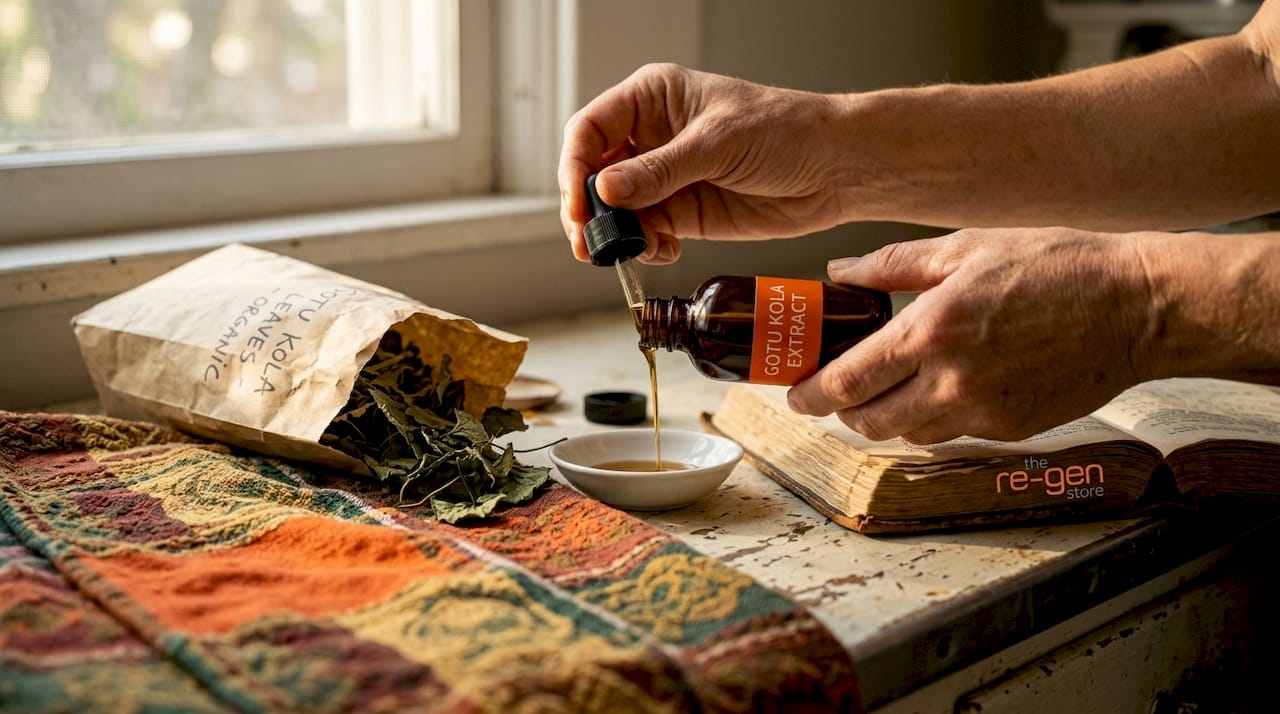
One of the best-studied examples is Centella asiatica, also called gotu kola. Its triterpenoids and saponins are linked in research reviews to wound-healing and skin-barrier remodeling mechanisms. Clinical studies show it supports scar reduction and skin regeneration at a cellular level. It is a strong example of an herb where the traditional use and the biological evidence actually align. For more on botanicals with real research behind them, the healing herbs for skin overview is worth reading.
Here is a quick comparison of well-studied versus less-studied herbal ingredients:
Herbal ingredient | Evidence level | Primary mechanism | Notes |
Centella asiatica | Strong | Tissue remodeling, collagen support | Multiple clinical reviews |
Calendula | Moderate | Anti-inflammatory, antimicrobial | Traditional use widely supported |
Aloe vera | Moderate | Wound cooling, moisture retention | Well-studied for burns |
Chickweed | Limited | Soothing, itch relief | Mostly traditional evidence |
Comfrey (topical) | Moderate | Cell proliferation support | Avoid on deep or open wounds |
Evidence quality varies significantly from one herb to the next. Standardized manufacturing, consistent dosing, and third-party testing make a real difference in whether a product actually delivers what it promises.
“When choosing an herbal skin product, the quality of manufacturing matters as much as the ingredient list. A poorly extracted or contaminated botanical formula can do more harm than good.”
Pro Tip: Look for products that list the actual plant species (Latin name included), the part of the plant used (leaf, root, flower), and the extraction method. Vague labels like “herbal blend” or “botanical complex” without specifics are a signal to dig deeper before buying.
Safe use of herbal skin support for people
Herbal products can genuinely support skin recovery when used appropriately. The key is knowing when they fit and when they do not.
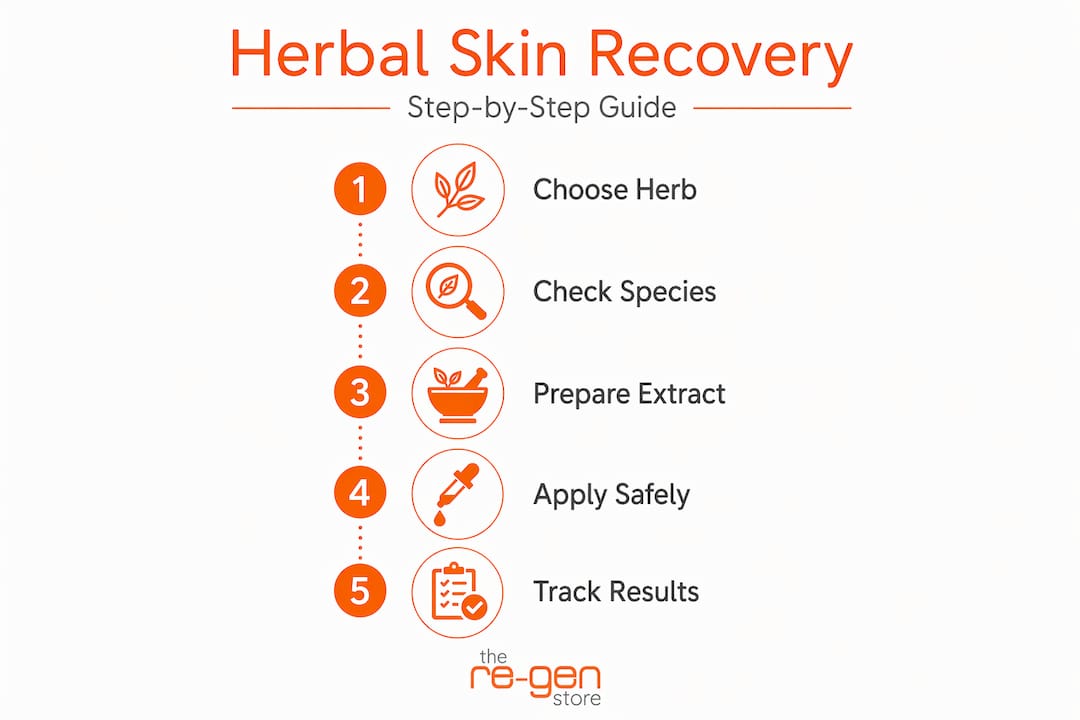
Here is a practical approach to safe use:
Assess the wound or condition first. Minor cuts, scrapes, dry patches, mild sunburn, and small rashes are reasonable candidates for herbal support. Deep lacerations, infected wounds, or unidentified skin conditions need medical attention.
Patch test before full application. Apply a small amount to the inner forearm and wait 24 hours. Redness, swelling, or itching means that formula is not right for you.
Avoid applying herbal preparations to actively bleeding wounds. Stabilize the wound first; herbal support works best in the follow-up recovery phase.
Check for known plant allergies. Someone with a ragweed allergy may react to related botanicals like calendula or chamomile.
Do not rely on herbal care if symptoms worsen. Increasing redness, warmth, pus, fever, or spreading inflammation requires a doctor, not a salve.
As PetMD notes, herbal support is not a substitute for medical or veterinary evaluation when symptoms are severe, worsening, or infected. That principle applies to humans just as much as pets.
For more guidance on supporting recovery at home effectively, natural recovery tips provide a useful, practical starting point.
Pro Tip: Keep a simple wound journal for any ongoing skin concern you are treating at home. Note the date, what you applied, and how the area looks each day. If improvement is not visible within three to five days, that is your cue to consult a healthcare provider.
Herbal skin support for pets: Special cautions
Pet owners often reach for the same herbal products they use on themselves. This is where the “natural equals safe” assumption becomes genuinely dangerous. Animals metabolize compounds differently than humans do. What soothes your skin can be toxic to your dog or cat.
Veterinary sources are clear: treating pet wounds naturally requires caution. Many home remedies delay healing or introduce toxicity risks. Here are some specific cautions:
Essential oils (tea tree, eucalyptus, lavender) are frequently toxic to cats and can irritate or harm dogs even in small amounts
Hydrogen peroxide damages tissue and delays healing rather than helping it
Human herbal salves with xylitol, certain essential oils, or high-alcohol bases should never touch a pet’s skin
Garlic and onion-based preparations used by some as “natural antiseptics” are toxic to dogs and cats
Here is a quick reference for pet wound care approaches:
Approach | Safe for pets? | Notes |
Gentle saline rinse | Yes | Effective, non-toxic wound cleaning |
Vet-approved topical ointment | Yes | Always confirm with your vet |
Tea tree oil | No | Toxic, especially for cats |
Hydrogen peroxide | No | Damages healing tissue |
Plain aloe vera (inner gel) | Use with caution | Inner gel only; avoid aloe latex |
Essential oil blends | No | Most are unsafe for animals |
For safer first-aid for pets, the guiding rule is simple: if you are not certain it is safe for animals, do not use it. Always confirm with your veterinarian before applying any topical product to a pet’s wound, skin condition, or post-surgical site. For a broader view, holistic wound care covers approaches suited to both people and animals.
Wounds in pets that are deep, swelling, showing discharge, or not improving within 24 to 48 hours need veterinary evaluation, not more home treatment.
Perspective: Why evidence, not just “natural,” should drive your choices
Here is the harder truth that most herbal wellness content skips: “plant-based” is a description of origin, not a guarantee of safety or effectiveness. Poison ivy is plant-based. So is arsenic. The word “natural” on a label tells you nothing meaningful about whether a product will actually help you heal.
Evidence quality varies widely across herbal skincare, and even well-regarded herbs lack the number of large-scale clinical trials needed to confirm specific dosing, interaction risks, or long-term outcomes. That does not mean herbal skin support is without value. It means you should choose products made by formulators who take manufacturing standards, ingredient sourcing, and clinical evidence seriously.
The most effective approach combines respect for what plants genuinely offer with the same critical scrutiny you would apply to any health product. Read labels carefully. Research the specific herbs in any product you consider. Look for evidence-based healing examples rather than relying on marketing claims alone. And above all, keep professional medical and veterinary care as your foundation when the situation calls for it.
Explore safe, effective herbal skin recovery with The Re-gen Store
Now that you understand what makes herbal skin support genuinely effective and where the risks lie, you can choose products with real confidence.
At TheRegenStore.com, Re-gen is a carefully formulated, plant-based ointment designed to support skin, soft tissue, and wound recovery for both people and pets. It is petroleum-free and chemical-free, made with herbal ingredients chosen for their biological activity, not just their label appeal. Whether you are looking for natural wound healing tips, a trusted plant-based ointment for cuts, scrapes, or burns, or a petroleum-free wound treatment you feel good about using on your family or animals, Re-gen offers a solution backed by transparent formulation and real-world results.
Frequently asked questions
Is herbal skin support safe for all pets and injuries?
No. Some herbal ingredients and many “natural” remedies are unsafe or toxic for animals, so always confirm with a veterinarian before applying any topical product to a pet.
Can I use herbal products instead of seeing a doctor for severe skin problems?
No. Herbal products support recovery for minor concerns but do not replace medical evaluation when symptoms are severe, worsening, spreading, or showing signs of infection.
What is the difference between herbal skin support and conventional ointments?
Herbal skin support uses plant-based ingredients such as botanical infusions and oils to soothe and restore skin, while conventional ointments typically rely on petroleum bases and synthetic active compounds.
Are herbal remedies always effective for wound healing?
No. Effectiveness varies by ingredient and product quality. Evidence quality varies widely across herbal skincare, and more large-scale clinical trials are needed before firm conclusions can be drawn for most botanical ingredients.
Recommended
Comments