
Herbal Post-Surgical Care: What Patients Need to Know


Herbal post-surgical care is the targeted use of plant-based remedies to support wound healing, reduce inflammation, and aid recovery after surgery. Clinically, this practice falls under the broader category of integrative post-operative care, where natural therapies work alongside conventional medicine rather than replacing it. A meta-analysis of 16 randomized controlled trials involving 1,546 patients found that herbal medicine significantly improved gastrointestinal recovery times and quality of life after gastric cancer surgery. That finding signals something important: natural remedies for recovery are not just traditional wisdom. They carry measurable clinical weight. Theregenstore supports this approach with plant-based formulations designed specifically for post-operative skin and tissue healing.
What is herbal post-surgical care and which herbs work best?
The most clinically supported herbs for post-operative wound healing are turmeric, bromelain, aloe vera, chamomile, and calendula oil. Each one acts through a distinct biological pathway, and together they address the core challenges of surgical recovery.
Turmeric (curcumin): Reduces postoperative inflammation by modulating inflammatory signaling pathways. Curcumin also shows promise in reducing postoperative adhesions, a common complication after abdominal surgery.
Bromelain: A proteolytic enzyme derived from pineapple. It breaks down damaged tissue proteins, which speeds up the clearance of swelling and bruising around a wound site.
Calendula oil: Carries antimicrobial and anti-inflammatory properties. An Ayurvedic herbal formulation containing calendula achieved a 40% wound size reduction by day 14 and full healing by day 28 post-surgery, with no infection recorded.
Aloe vera: Supports skin cell regeneration and keeps wound tissue hydrated, which is critical for preventing scar formation.
Chamomile: Soothes inflamed tissue topically and reduces oxidative stress when consumed as a tea.
These herbs work through three primary mechanisms: anti-inflammatory action, antimicrobial protection, and antioxidant support. The pharmacological analysis of Ayurvedic blends confirms that bromelain, curcumin, and calendula each contribute distinct healing properties that complement one another.
Pro Tip: Always source herbal products from suppliers who provide third-party testing certificates. Potency and purity vary widely between brands, and a low-quality extract may deliver none of the clinical benefits shown in studies.
How can herbal care help manage inflammation, pain, and digestive recovery?
Herbal remedies for recovery address more than just the wound site. Surgery stresses the entire body, including the digestive system, liver, and immune response. Natural post-operative care targets all three.
Ginger tea: Reduces post-surgical nausea and systemic inflammation. Ginger and chamomile teas are among the most clinically supported drinks for comfort and recovery in the days following a procedure.
Turmeric and quercetin: Both suppress pro-inflammatory cytokines. Quercetin, found in onions and apples, pairs well with turmeric because it enhances curcumin absorption in the gut.
N-Acetyl Cysteine (NAC): Supports liver detoxification after exposure to anesthesia and prescription pain medications. NAC at 900 mg twice daily for 14–30 days is a clinically recommended protocol for post-surgical liver support.
Homeopathic Arnica: Reduces swelling and pain after surgery. Arnica’s mechanism differs from pharmacological compounds, which makes it safer for use alongside conventional medications without altering their pathways.
Post-surgical care should also support elimination pathways like the liver and bowel, which slow down significantly after anesthesia. Herbal teas, fiber-rich foods, and gentle movement all help restore normal function.
Pro Tip: Introduce herbal supplements one at a time during recovery. This makes it easier to identify any sensitivity and gives your body time to adjust without overloading your system.
What precautions matter when combining herbs with post-surgical medications?
Many people assume all natural remedies are safe immediately after surgery. That assumption is wrong and potentially dangerous. Herbal supplements can interact with conventional medications and anesthesia, altering drug effectiveness and increasing complication risks.
Key safety guidelines include:
Stop certain herbs 3–7 days before surgery. Integrative practitioners recommend this timing to prevent bleeding complications and anesthesia interference. Herbs like garlic, ginkgo, and high-dose fish oil all increase bleeding risk.
Wait until the acute prescription phase ends. Reintroduce botanicals only after finishing antibiotics or opioid pain medications. Staggering use prevents herb-drug interactions during the most medically sensitive window.
Watch for bleeding risks. Bromelain and turmeric both have mild blood-thinning effects. These are beneficial long-term but require caution if you are on anticoagulants like warfarin.
Always consult your surgeon or a naturopathic doctor. Self-medicating with herbal supplements post-surgery without professional guidance raises the risk of complications that delay healing rather than support it.
The safest approach treats herbal care as a complement to your prescribed recovery plan, not a substitute for it.
How can you build a practical herbal recovery routine?
A structured approach to herbal healing after surgery prevents the most common mistakes: starting too early, using too many remedies at once, or applying topical herbs to open wounds without medical clearance.
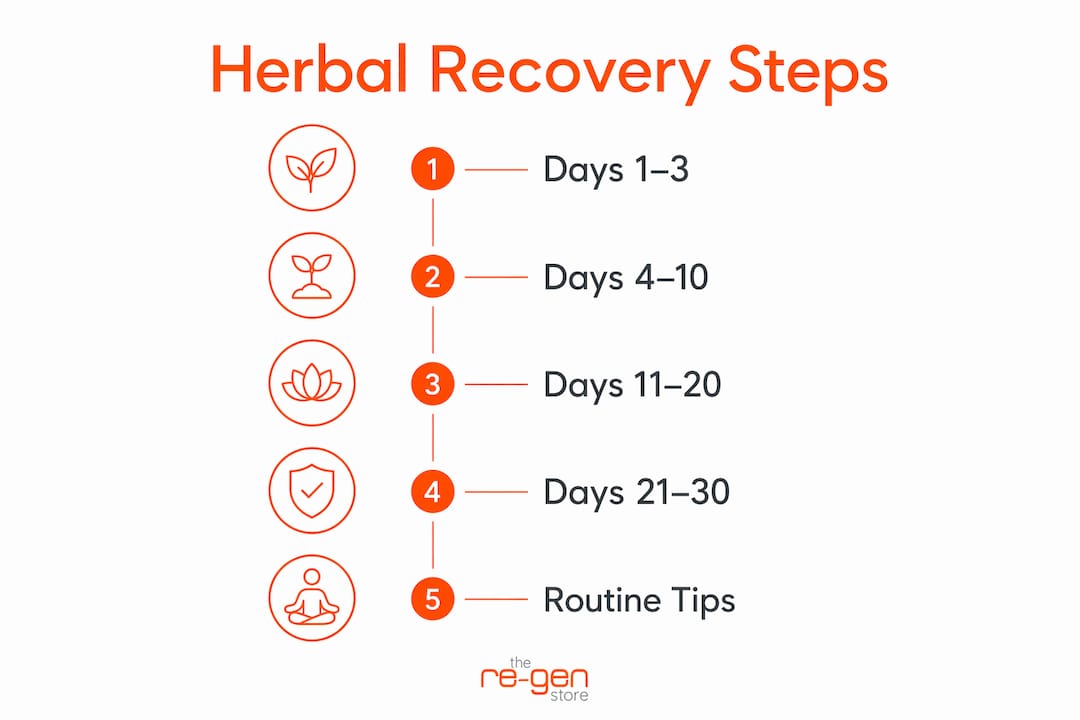
Recovery Phase | Herbal Application | Format |
Days 1–3 post-surgery | Ginger or chamomile tea for nausea and comfort | Oral (tea) |
Days 4–7 | Arnica for swelling and bruising | Topical or homeopathic oral |
Days 7–14 | Calendula or aloe vera on closed wounds | Topical ointment |
Days 14–30 | Turmeric, quercetin, NAC for systemic support | Oral supplement |
Ongoing | Plant-based topical ointments for scar support | Topical |
Hydration is the foundation of every phase. Herbal teas count toward your fluid intake and deliver therapeutic compounds at the same time. Rest, protein-rich nutrition, and consistent sleep amplify the effects of any herbal regimen. For wound healing naturally, combining topical and oral herbal applications produces better results than either approach alone.
Key takeaways
Herbal post-surgical care works best when specific plant-based remedies are timed correctly, sourced carefully, and integrated with conventional medical guidance rather than used as a standalone treatment.
Point | Details |
Start with clinical evidence | Herbs like turmeric, bromelain, and calendula have documented wound healing benefits backed by clinical studies. |
Time your herbs carefully | Stop certain herbs 3–7 days before surgery and reintroduce them only after finishing acute prescriptions. |
Support the whole body | Address liver detox, gut recovery, and inflammation, not just the wound site. |
Use topical and oral forms | Combining topical ointments with oral supplements produces stronger recovery outcomes. |
Always seek professional guidance | Herb-drug interactions are real and can delay healing without proper oversight. |
Why I think most people underestimate herbal post-surgical care
People tend to fall into one of two camps after surgery. Either they dismiss herbal remedies entirely as unscientific, or they overload on supplements the moment they get home. Both approaches miss the point.
What I have observed is that the timing and sequencing of herbal care matters more than the specific herbs chosen. A patient who waits until day 10 to introduce turmeric and uses a quality calendula ointment on a closed wound will see far better results than someone who starts five supplements on day two without medical clearance. The research on herbal extracts in wound healing supports this measured approach consistently.
The other thing worth saying plainly: herbal care is not a replacement for your surgeon’s instructions. It is a layer of support that works when the foundation of conventional care is already in place. Patients who treat it that way tend to recover with less scarring, less discomfort, and better energy levels through the process.
— Kyle
Plant-based wound care from Theregenstore
Theregenstore’s Re-gen ointment is a petroleum-free, plant-based formulation designed to support skin and soft tissue recovery after surgery. It contains no synthetic antibiotics and is built for people who want a natural option that actually works on post-operative wounds.

For anyone building a herbal recovery routine, a quality topical product is one of the most practical starting points. Re-gen applies directly to closed wounds and healing skin, delivering plant-based support without the chemical load of conventional ointments. Theregenstore also offers guidance on plant-based wound treatment options for different recovery stages. You can also explore the full Re-gen regenerative ointment product page for ingredient details and usage guidelines.
FAQ
What is herbal post-surgical care exactly?
Herbal post-surgical care is the use of plant-based remedies, including topical ointments and oral supplements, to support wound healing, reduce inflammation, and aid recovery after surgery. It works alongside conventional medical treatment, not in place of it.
Which herbs are safest to use right after surgery?
Ginger and chamomile teas are among the safest options in the first few days, as they reduce nausea and inflammation without significant drug interaction risks. Arnica is also widely recommended for swelling and bruising in the early post-operative period.
Can herbal supplements interfere with surgical medications?
Yes. Herbs like garlic, ginkgo, and high-dose bromelain can increase bleeding risk and interact with anesthesia or anticoagulants. Integrative practitioners recommend stopping these herbs 3–7 days before surgery and reintroducing them only after finishing prescription medications.
How long does herbal post-surgical care typically last?
Most structured herbal recovery protocols run for 14–30 days post-surgery, depending on the procedure and individual healing rate. Liver support supplements like NAC are often used for the full 30-day window to address the effects of anesthesia.
Is topical herbal care safe on surgical wounds?
Topical herbal applications like calendula oil and aloe vera are safe on closed wounds, typically from day 7 onward. Always confirm with your surgeon before applying any product to a wound that has not fully closed.
Recommended
Comments