
Evidence Backed Gotu Kola for Scars: 4–12 Week Results and How to Use

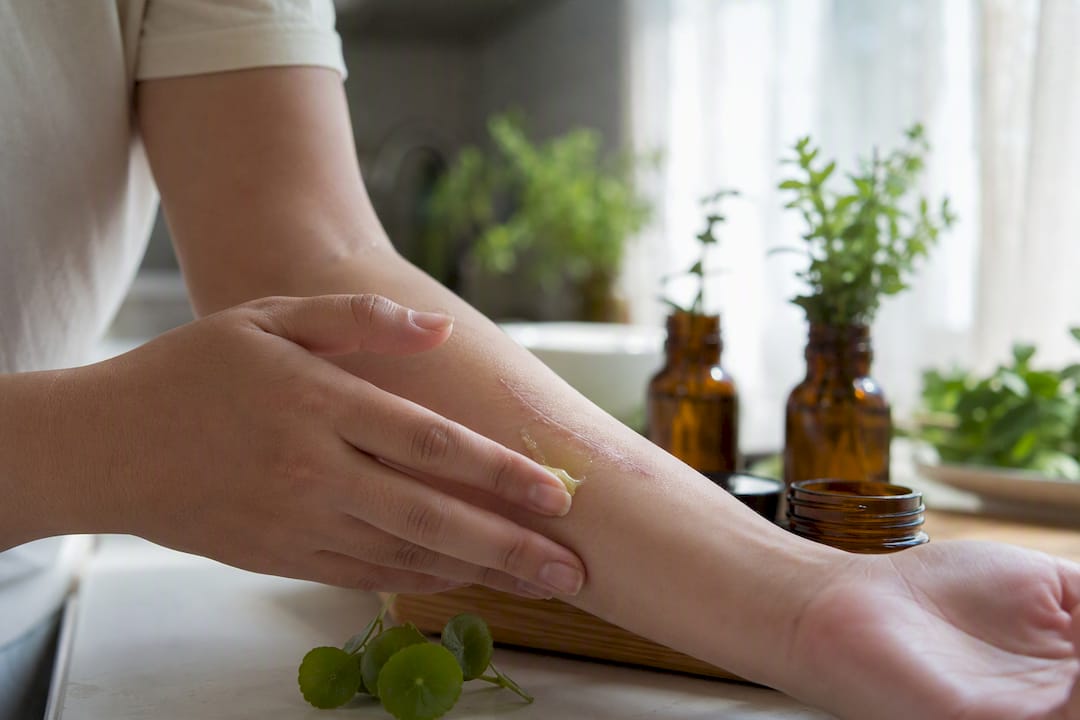
Topical gotu kola (Centella asiatica) has real, clinically observed benefits for wound healing and some early scar outcomes, particularly when it comes in a standardized formulation like ECa 233. The evidence for oral supplementation is thinner. Gotu kola works best when you start early, on healing or recently closed skin, not as a treatment you reach for after a keloid has already matured. Expect gradual improvement over weeks to months, not scar removal.
TL;DR:
Topical gotu kola with standardized extracts shows measurable benefits in improving early scar appearance and pigmentation, especially within the first 12 weeks.
Formulation quality and delivery systems are crucial, with hydrogels and nanocarriers improving penetration into deeper skin layers for better results.
Evidence strongly supports topical application over oral supplements for targeted scar healing, particularly on fresh wounds or post-procedure sites.
Most positive trial results come from small studies focusing on recent wounds, with limited data on long-term or mature scars.
Proper use involves consistent application starting after epithelialization, pairing with sun protection, and patience for gradual improvement.
Table of Contents
What the Research Says About Gotu Kola Scars
The clinical picture on gotu kola scars is more encouraging than most herbal remedies, but it comes with real caveats you should know before you buy anything.
A 2013 review in PMC on Centella asiatica in cosmetology laid the groundwork here, documenting that the plant’s active compounds stimulate fibroblast activity and boost collagen and fibronectin synthesis in skin tissue. That review helped explain decades of traditional use for wound care across Southeast Asia and pointed dermatology researchers toward the plant’s two headline triterpenes: asiaticoside and madecassoside.
A more recent 2024 review published in MDPI builds on that foundation. It looks specifically at topical formulations, including hydrogels and newer delivery systems, and concludes that Centella asiatica continues to show measurable wound healing benefits in both preclinical and clinical studies. The review flags formulation and delivery system as major variables in how well the active triterpenes actually reach the skin’s deeper layers, a detail that matters more than most product labels let on.
The strongest human evidence comes from a randomized, double blind, placebo controlled trial published in 2018. Researchers led by Jenwitheesuk tested a 7% Centella extract cream on split thickness skin graft donor sites, comparing it against placebo over 12 weeks. The trial results showed statistically meaningful improvement in pigmentation and in overall Vancouver Scar Scale scores, the standardized tool dermatologists use to rate scar height, pliability, vascularity, and pigmentation. Patients using the Centella cream saw better outcomes as early as four weeks, with the gap widening by week 12.
A separate arm of research on ECa 233, a standardized Centella extract used at 0.05% concentration in gel form, tested the compound after laser resurfacing procedures. That trial found reduced erythema and better early wound appearance compared to placebo, suggesting gotu kola has a role in post-procedure recovery, not just spontaneous wound healing.
There is also supplement based evidence worth noting. A registry study on Centellicum®, an oral Centella supplement, found that patients at high risk for keloids showed improved scar regularity and homogeneity on ultrasound imaging when they took the supplement post-operatively. This is one of the few data points supporting oral use, and it comes from a registry rather than a randomized trial, so weigh it accordingly.
A health information summary from PeaceHealth reflects the balanced institutional view: some research does support gotu kola for enlarged, keloid type scars, but the overall evidence base remains limited and inconsistent across studies.
Here’s where the evidence gets thinner, and where you should temper your expectations:
Most trials use small sample sizes, often fewer than 50 participants per arm.
Formulations vary widely between studies. A 7% cream, a 0.05% gel, and an oral capsule are not interchangeable products, even though they all get filed under “gotu kola.”
Follow-up periods rarely extend past 12 weeks, so long-term scar maturation outcomes are largely unstudied.
Standardization of extract potency is inconsistent. Two products labeled “Centella asiatica extract” can have very different triterpene concentrations.
Most positive trials focus on fresh or recent scars and wounds, not scars that are already years old.
None of this means gotu kola scar treatment is snake oil. It means you’re looking at a supportive therapy with real mechanistic backing and a handful of solid trials, not a universally proven cure.
How Centella Asiatica Works on Healing Skin
The biology behind gotu kola’s effect on scars traces back to two compounds: asiaticoside and madecassoside. Both are triterpene saponins, and both act directly on the cells responsible for rebuilding skin after injury.
Fibroblasts are the cells that lay down new collagen during wound repair. Research documented in the PMC review on Centella asiatica shows that asiaticoside promotes fibroblast proliferation and increases both collagen and fibronectin synthesis, which improves the tensile strength of newly formed skin. Stronger, better organized collagen fibers tend to produce flatter, less noticeable scars than the disorganized collagen bundles that build up in hypertrophic or keloid scarring.
The second mechanism involves inflammation control. Scars that turn thick, raised, or discolored usually trace back to a prolonged or exaggerated inflammatory phase during healing. Centella compounds appear to modulate that inflammatory response, which is part of why researchers think the plant can inhibit the kind of runaway healing that produces hypertrophic scars in the first place.
Key mechanisms at a glance:
Asiaticoside and madecassoside stimulate fibroblast activity and collagen production.
Increased fibronectin synthesis improves the structural scaffold new skin cells build on.
Anti-inflammatory action may reduce the excessive fibrosis linked to hypertrophic scarring.
Antioxidant properties help protect healing tissue from oxidative stress during repair.
Pro Tip: The mechanism only matters if the active compound reaches the dermis. This is why formulation type, not just ingredient list, determines whether a gotu kola scars product actually does anything.
That last point deserves more attention than it gets. Asiaticoside and madecassoside are large molecules, and getting them through the skin’s outer barrier and into the dermis, where fibroblasts live, is a genuine formulation challenge. The 2024 MDPI review specifically calls out newer delivery systems like hydrogels and nanostructured carriers as improving penetration compared to basic cream bases. A jar of gotu kola cream with poor penetration properties may contain the right ingredient at the wrong depth to do much good.
Topical vs. Oral Gotu Kola: Which One Actually Helps Scars?
If you’re choosing between a gotu kola cream and a gotu kola supplement, the topical route has considerably more evidence behind it for scar outcomes specifically.
The strongest human trials, including the Jenwitheesuk study on donor site scars and the ECa 233 gel research on post-laser skin, both tested topical delivery. Oral evidence exists too, mainly through the Centellicum® registry study showing improved scar regularity in keloid-prone surgical patients, but registry data carries less weight than a randomized controlled trial.
Here’s how the two routes generally break down:
Topical gel or cream: Best supported for fresh wounds, post-surgical sites, and post-procedure skin (like after laser resurfacing). Delivers active triterpenes directly where fibroblasts are working.
Oral supplementation: Weaker but present evidence, mostly in high-risk surgical patients monitored via imaging. May offer systemic anti-inflammatory support that a topical alone can’t provide.
Combining both: Not extensively studied together, but plausible given the different delivery mechanisms and no known conflict between them.
Topical use also comes with a practical advantage: you can control exactly where the compound goes, and you can pair it with sun protection or silicone therapy on the same site. Oral supplementation is harder to monitor and carries more variables around absorption and individual metabolism.
Pro Tip: If you have a single scar or surgical site you’re focused on, topical application gives you more control and better-supported outcomes than swallowing a capsule and hoping it reaches the right tissue.
Oral gotu kola may make more sense for people at elevated keloid risk heading into surgery, where the goal is systemic support rather than targeting one specific site. Talk to your surgeon or dermatologist before adding an oral supplement ahead of a procedure, especially if you take other medications.
How to Use Gotu Kola for Scars: A Practical Regimen
Getting a real benefit from gotu kola scar treatment depends less on which product you buy and more on when and how consistently you use it.
Wait for epithelialization. Apply gotu kola products once the wound has closed over with new skin, not on open wounds unless a product is specifically labeled and cleared for that use.
Choose a gel for fresh wounds and post-procedure skin. Gel formulations, like the 0.05% ECa 233 gel tested after laser resurfacing, penetrate faster and were linked to reduced early erythema.
Choose a cream when you also want barrier protection. The 7% Centella extract cream used in the Jenwitheesuk trial showed pigmentation and Vancouver Scar Scale improvements over 4 to 12 weeks on donor site scars, and cream bases tend to sit better on skin needing ongoing moisture support.
Apply consistently, typically once or twice daily, matching the frequency used in the trial you’re basing your expectations on. Sporadic use won’t replicate study results.
Give it real time. Meaningful change in pigmentation and scar texture showed up around week 4 in trial data, with continued improvement through week 12. Don’t judge results at the two-week mark.
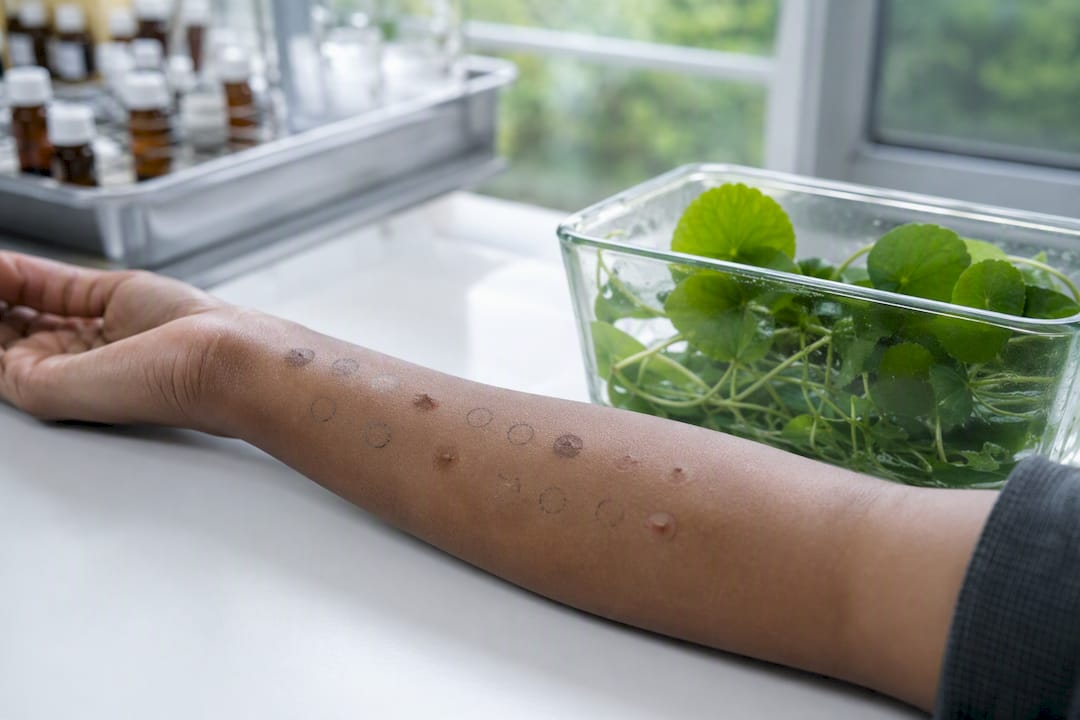
Patch test first. Apply a small amount to unaffected skin, like your inner forearm, and wait 24 to 48 hours before treating a scar or healing wound.
Layer in complementary care. Silicone sheeting and daily sunscreen on the scar site both have separate, well-established evidence for improving scar appearance, and there’s no known conflict with gotu kola use alongside them.
Pro Tip: Take a photo of the scar or wound site before you start, then again at four and twelve weeks. Trial data shows the improvement curve is gradual, and your memory alone won’t reliably catch it.
If you’re recovering from a surgical procedure, pairing this regimen with broader post-treatment skin care for men guidance can help you sequence products correctly. Theregenstore’s guide on how to heal skin after surgery walks through timing considerations that apply directly here.
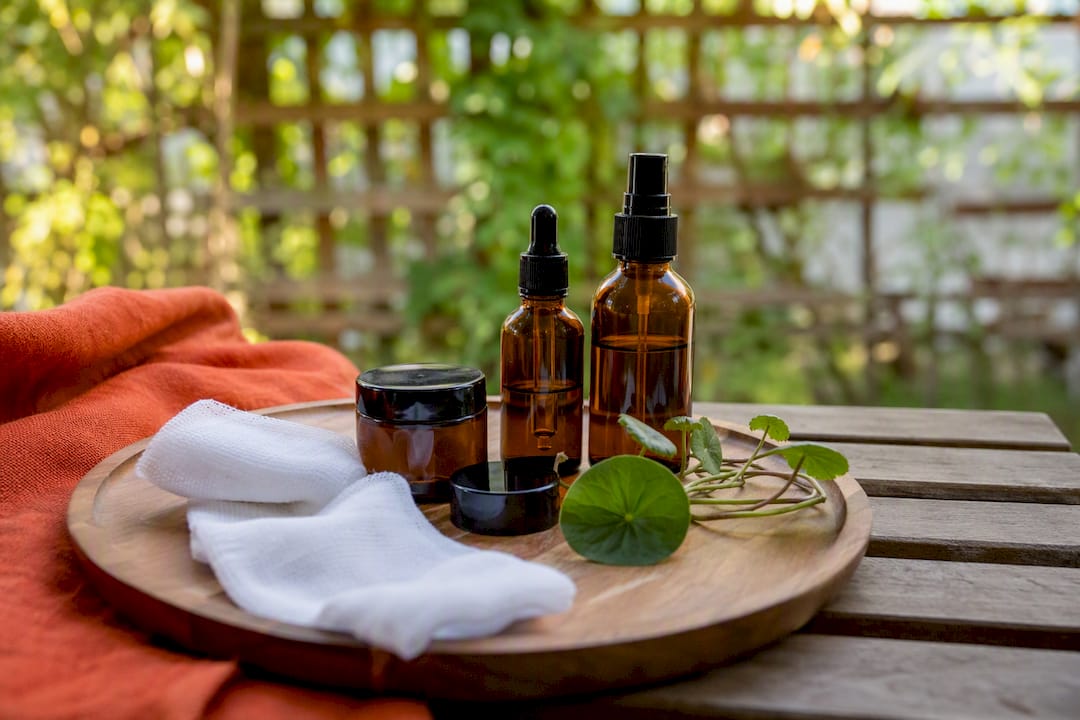
Safety, Side Effects, and Who Should Be Cautious
Gotu kola has a good safety profile overall, but it isn’t risk-free, and a few precautions matter more than marketing copy tends to suggest.
Contact dermatitis has been reported with topical Centella products, though it’s often tied to the formulation, fragrance, preservatives, or other inactive ingredients, rather than the plant extract itself. This is exactly why the patch test step in the regimen above isn’t optional. If you notice redness, itching, or swelling beyond the treated area within 48 hours, discontinue use.
A few other precautions worth knowing:
Avoid applying gotu kola products to open, unhealed wounds unless the product is explicitly formulated and labeled for that use.
Evidence on gotu kola use during pregnancy or breastfeeding is too limited to draw firm safety conclusions, so check with a physician before starting either topical or oral use in either case.
If you’re on anticoagulant medication or manage a complex medication regimen, mention oral gotu kola supplementation to your prescribing clinician before starting it, since herb-drug interaction data is not extensive.
People with known sensitivities to plants in the Apiaceae family (which includes carrots and celery) may want to patch test with extra caution.
Stop use and consult a dermatologist if a scar site becomes increasingly raised, painful, or discolored despite consistent treatment. That pattern points toward a keloid that needs medical intervention, not more topical product.
The PeaceHealth summary echoes this balanced stance: gotu kola shows promise for scar care, but it isn’t a substitute for medical evaluation when a scar is behaving abnormally.
What to Look for in a Gotu Kola Scar Product
Marketing terms like “cica” have flooded skincare shelves, and most of them tell you very little about whether a product will actually do anything for your scar.
“Cica” is shorthand for Centella asiatica, and cica-labeled products range from serious clinical formulations to moisturizers with a token amount of extract added for the label appeal. Dermatologists generally treat cica cream as valuable for soothing and barrier support, useful post-procedure care, but not a standalone fix for a deep or established scar.
Here’s what actually separates a serious product from a marketing exercise:
Look for standardized extract naming. Terms like ECa 233 or Centellicum® indicate the manufacturer used a defined, consistent triterpene concentration, the same kind of standardization used in the clinical trials discussed above.
Check for asiaticoside and madecassoside on the ingredient list, ideally with a stated percentage. Vague listings like “Centella asiatica extract” with no concentration tell you nothing about potency.
Favor gel formulations for fresh scars and post-procedure skin, since gel bases showed better penetration and faster erythema reduction in trial data.
Favor cream or ointment bases when you need ongoing barrier support alongside the active ingredient.
Skip products loaded with added fragrance or excessive inactive ingredients, which raise your contact dermatitis risk without adding benefit.
Be skeptical of any product claiming to “erase” or “remove” scars entirely. No formulation, gotu kola included, has trial evidence supporting full scar elimination.
Consider pairing your product with silicone sheeting and daily sunscreen, both of which have independent evidence for scar improvement and no known conflict with Centella use.
Theregenstore’s overview of natural scar treatment options covers additional plant-based ingredients worth understanding alongside gotu kola, and its roundup of healing herbs for skin puts Centella in context against other options you might see on a label.
Where Gotu Kola Fits in a Real Scar-Care Plan
Here’s the gap I see most often between what gotu kola scars content promises online and what the actual trial data supports: people expect a cream to erase a five-year-old scar, and that expectation sets them up to quit after two weeks when nothing dramatic happens.
The honest read on the evidence is that gotu kola performs best as an early intervention, applied to fresh wounds and post-procedure skin, not as rescue therapy for a mature keloid. If a scar is already raised, discolored, or growing months after the injury, no topical treatment, gotu kola or otherwise, is your first move. That calls for a dermatologist and options like steroid injection, laser treatment, or surgical revision. Understanding how scar tissue forms helps clarify why timing matters so much here. Used early and consistently, though, gotu kola is a low-risk, well-reasoned addition to a broader plan, not a replacement for one.
— Kyle
A Plant-Based Ointment Worth Knowing About
If you’re building a natural scar-care routine around gotu kola, Theregenstore’s Re-gen ointment is worth adding to the conversation. It’s a plant-based, chemical-free topical formulated to support skin, soft tissue, and post-operative wound recovery, without the petroleum bases found in many conventional first-aid ointments.
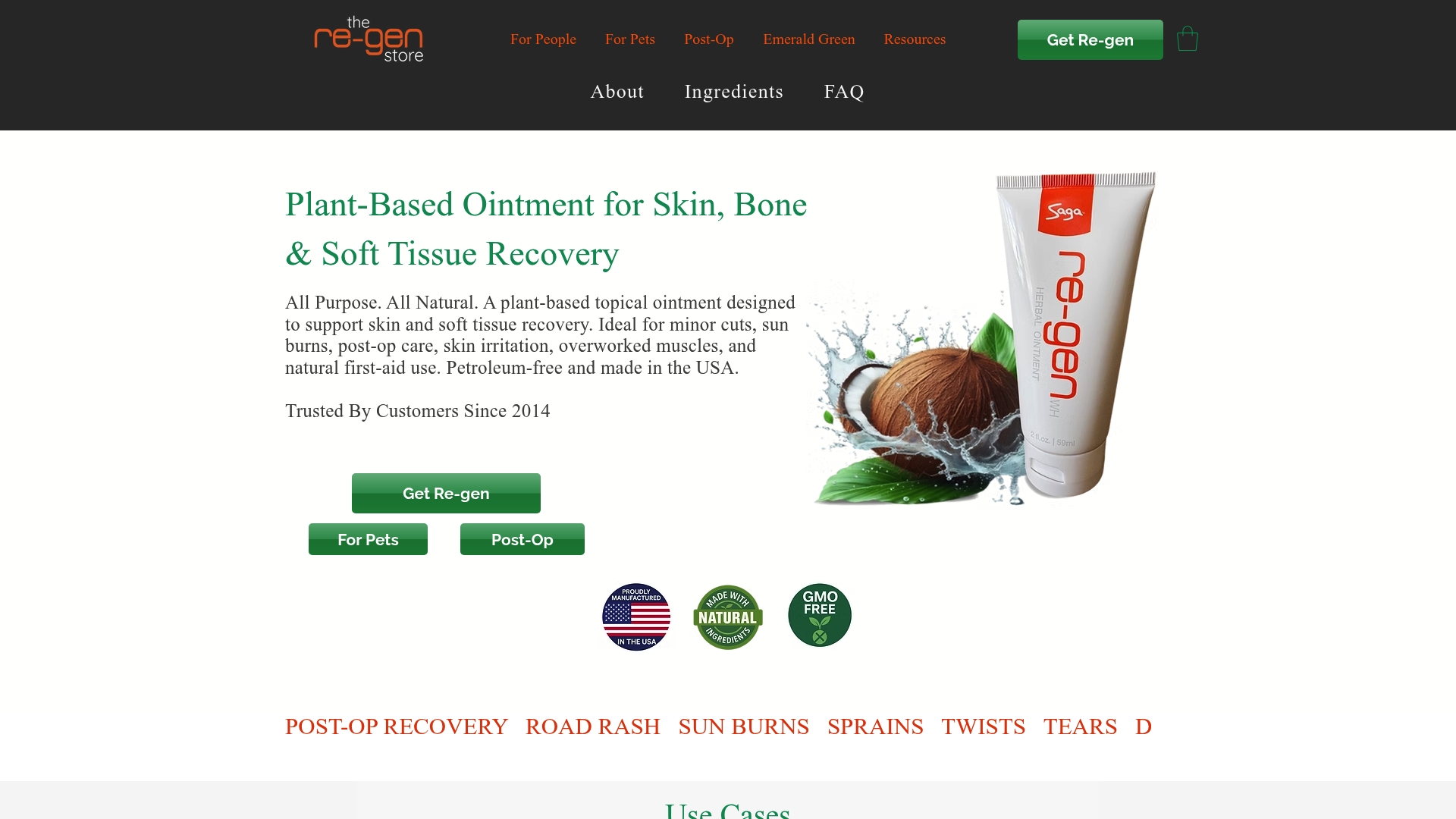
Re-gen isn’t positioned as a replacement for standardized Centella extracts like ECa 233. It’s built for a different, complementary purpose: supporting the broader healing process on cuts, post-surgical sites, and skin recovering from injury, using a natural ingredient base rather than synthetic antibiotics. If you’re already following the patch-test-first, apply-after-epithelialization approach outlined above, Re-gen fits into that same routine as an alternative or companion product on sites where you want a chemical-free option. Check out the Re-gen plant-based ointment product page to see ingredient details and pick the packaging size that matches your recovery needs.
Key Studies on Gotu Kola and Scars
PMC review: foundational mechanism data on fibroblast and collagen effects.
MDPI 2024 review: updated look at formulation and delivery systems.
Jenwitheesuk 2018 RCT: strongest human trial data on cream and gel outcomes.
Centellicum® registry study: oral supplementation evidence in keloid-prone patients.
PeaceHealth summary: balanced institutional overview of benefits and limits.
This article is general information, not a substitute for advice from a qualified doctor. Consult a qualified healthcare professional about your own circumstances before acting on anything here.
Sources
FAQ
What herbs are effective for treating scars?
Gotu kola (Centella asiatica) has the strongest clinical trial support among topical herbal options, with additional evidence for onion extract and licorice root extract in some scar studies, though none match the consistency of medical procedures for mature scars.
What does gotu kola do for your skin?
It stimulates fibroblast activity and boosts collagen and fibronectin synthesis, which can improve wound strength and reduce the inflammatory response linked to thick or discolored scarring.
How long does it take to see results from gotu kola?
Clinical trial data shows measurable improvement in pigmentation and scar scores starting around four weeks, with continued gains through 12 weeks of consistent topical use.
What is the best all-natural scar treatment?
No single natural option outperforms all others, but topical Centella asiatica with standardized extract content, paired with silicone sheeting and daily sunscreen, has the most consistent evidence behind it, and a plant-based ointment like Re-gen can support the broader healing process alongside it.
Recommended
Comments