
Best Ointment for Skin Infections: Expert-Reviewed Guide

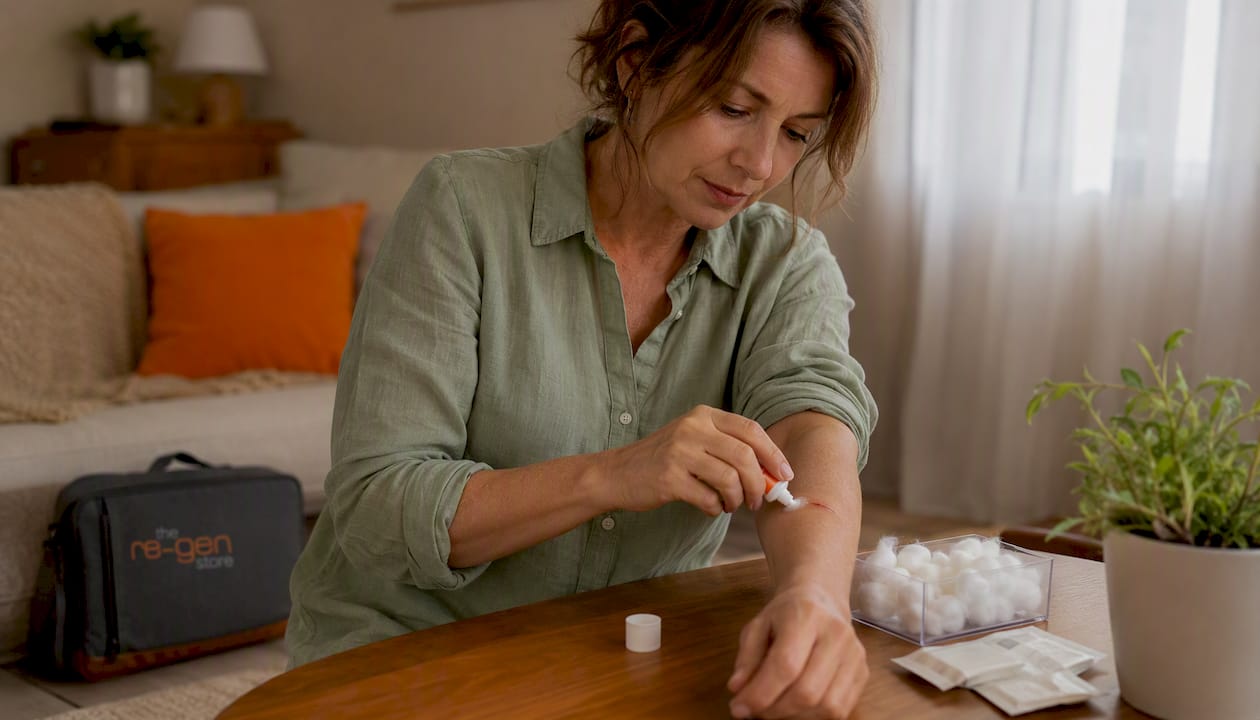
For most minor infected cuts and scrapes, an over-the-counter triple-antibiotic ointment like Neosporin or a double-antibiotic option like Polysporin is a reasonable first step. That said, dermatologists surveyed by U.S. News ranked Hibiclens antiseptic and simple bacitracin or polymyxin preparations among their top choices for routine wound care, partly because they carry a lower allergy risk than neomycin-containing products. For confirmed impetigo or a secondarily infected wound that isn’t responding to OTC care, prescription mupirocin (Bactroban) is the clinical standard, with trial data showing clinical efficacy around 71% versus 35% for placebo in one controlled study.
Skip the antibiotic ointment entirely and go straight to a clinician if any of these apply:
Deep wounds, puncture wounds, or large burns — topical OTC antibiotics are not designed for these.
Signs of spreading infection: expanding redness, red streaking, fever, or swollen lymph nodes.
Known allergy to neomycin — use a neomycin-free product (bacitracin alone, Polysporin, or petroleum jelly) or consult a provider.
Table of Contents
What are topical antibiotic ointments, antiseptics, and moisture-based care?
The best ointments for skin infections: OTC options compared
When petroleum jelly or plant-based care is the better choice
Side effects, allergic reactions, and when to avoid topical antibiotics
When to see a doctor and what prescription options are available
What the clinical evidence says about non-antibiotic alternatives
Re-gen: a plant-based option for routine wound and skin recovery
What are topical antibiotic ointments, antiseptics, and moisture-based care?
These three product categories are often grouped together on pharmacy shelves, but they work differently and serve different purposes.
Topical antibiotic ointments contain one or more antibacterial agents that kill or inhibit bacteria directly in the wound. They are applied after cleaning and are intended for wounds where bacterial infection is likely or already present.
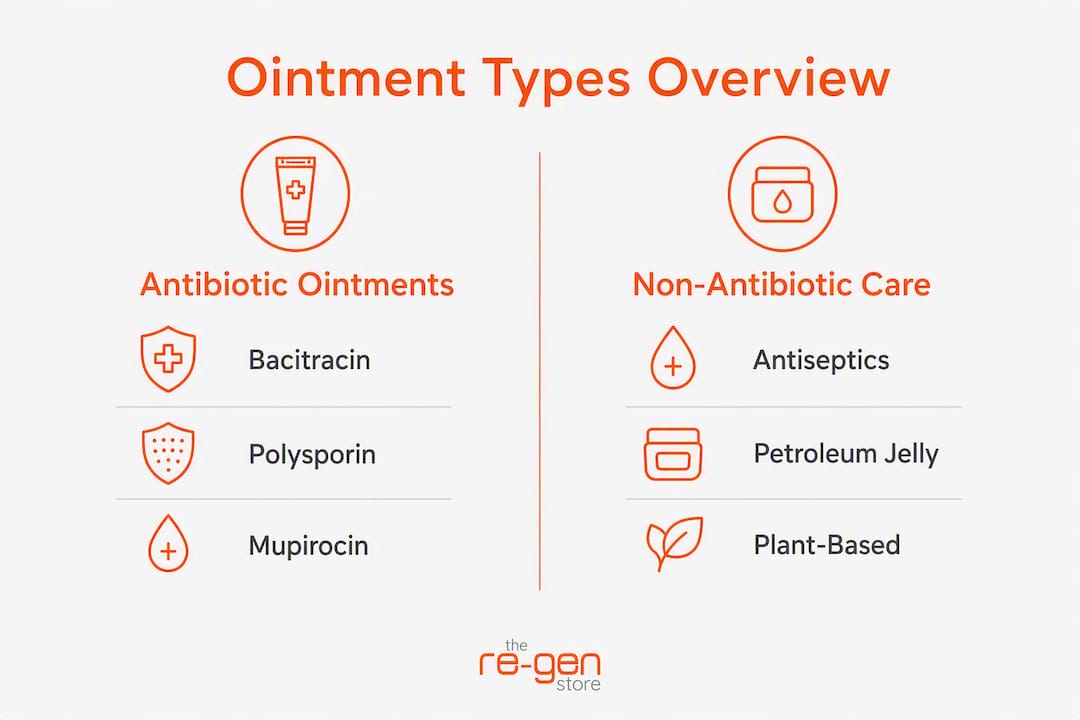
Antiseptic cleansers like Hibiclens (chlorhexidine gluconate) are used to clean and decontaminate skin before or after injury. They reduce the bacterial load on the surface but are not left on the wound as a treatment ointment.
Petroleum-based moisture care — plain petroleum jelly (Vaseline) being the most common example — does not kill bacteria. Instead, it keeps the wound moist, which supports the skin’s own repair process and reduces scab formation. For clean, uncomplicated minor wounds, published clinical trials support moisture management as an effective strategy that avoids the sensitization risk that comes with repeated antibiotic exposure.
OTC vs. prescription at a glance:
OTC (over-the-counter): Bacitracin, polymyxin B, neomycin, and their combinations (Neosporin, Polysporin). Available without a prescription.
Prescription only: Mupirocin 2% (brand name Bactroban). Required for impetigo and certain secondarily infected traumatic lesions.
Antiseptic cleanser: Hibiclens (chlorhexidine). Available OTC; used for cleaning, not as a wound-treatment ointment.
The best ointments for skin infections: OTC options compared
The active ingredients matter more than the brand name. Here is how the most common OTC formulations break down.
Product type | Best for | Active ingredient(s) | OTC or Rx | Allergy risk | Typical use | When to prefer an alternative |
Triple antibiotic (Neosporin) | Minor cuts, scrapes, small burns | Bacitracin + neomycin + polymyxin B | OTC | Neomycin: moderate sensitization risk | Thin layer 1–3x daily, up to 5–7 days | Known neomycin allergy; facial or pediatric use |
Double antibiotic (Polysporin) | Minor wounds; neomycin-sensitive patients | Bacitracin + polymyxin B | OTC | Low | Thin layer 1–3x daily, up to 5–7 days | When moisture-only care is sufficient |
Bacitracin (generic) | Simple cuts and abrasions | Bacitracin zinc | OTC | Low | Thin layer 1–3x daily | When polymyxin B coverage is also needed |
Mupirocin 2% (Bactroban) | Impetigo; secondarily infected lesions | Mupirocin | Prescription only | Low | Small amount 3x daily for 8–12 days | Not for routine minor wounds; requires diagnosis |
Hibiclens (chlorhexidine) | Pre-wound cleaning; skin decontamination | Chlorhexidine gluconate | OTC | Low | Rinse/wash; do not leave on open wound | Not a treatment ointment; use for cleaning only |
Petroleum jelly (Vaseline) | Clean minor wounds; moisture maintenance | None (occlusive base) | OTC | Very low | Thin layer under bandage; change daily | When active bacterial infection is present |
According to the manufacturer’s own comparison resource, the practical difference between Neosporin, Polysporin, and bacitracin comes down to ingredient count and allergy exposure. Adding neomycin to a formulation broadens antibacterial coverage slightly, but it also introduces the most common sensitizer in OTC topical antibiotics.
Pro Tip: For wounds on the face or for children under two, choose a neomycin-free product — bacitracin alone or Polysporin — and apply only a thin layer. The Cleveland Clinic notes that OTC topical antibiotics are not effective against all bacteria and can cause local irritation, so less is genuinely more here.
Dermatologist rankings tend to favor simpler formulations for routine first aid. Antiseptic cleansers and single- or double-antibiotic preparations often rank ahead of triple-antibiotic mixtures because they reduce allergic risk while still preventing contamination.
When petroleum jelly or plant-based care is the better choice
Not every minor wound needs an antibiotic. For clean, uncomplicated cuts and scrapes with no visible signs of infection, moisture-only care is clinically supported and carries fewer risks.
Situations where non-antibiotic care is preferred:
The wound is clean, shallow, and shows no redness, warmth, or discharge.
You or your child has a history of contact dermatitis from neomycin or other topical antibiotics.
You are using the product for routine moisture maintenance between dressing changes.
The wound is healing well and you want to support the final stages of skin repair without further chemical exposure.
Petroleum jelly vs. OTC antibiotic ointment:
Petroleum jelly pros: Very low allergy risk, widely available, inexpensive, supports moist wound healing.
Petroleum jelly cons: No antibacterial action; not appropriate when infection is already present or likely.
OTC antibiotic ointment pros: Reduces bacterial load, may prevent infection in higher-risk wounds.
OTC antibiotic ointment cons: Neomycin sensitization risk, not effective against all organisms, contributes to antibiotic resistance with overuse.
Antibiotic stewardship applies to topical products too. Reviews published in peer-reviewed literature document rising resistance to mupirocin and other topical agents and recommend short-term, targeted use rather than routine application to every minor wound. Reaching for petroleum jelly or a plant-based alternative for clean wounds is a practical way to preserve the effectiveness of topical antibiotics for when they are genuinely needed.
Pro Tip: If you are exploring natural remedies for skin infections and plant-based ointments, look for products with documented ingredient transparency and clear usage guidelines. A plant-based ointment used on a clean wound can support recovery without adding antibiotic exposure.
How to clean and apply ointment safely at home
Proper technique matters as much as product choice. Follow these steps for minor wounds.
Wash your hands thoroughly with soap and water before touching the wound.
Rinse the wound under clean running water for at least 1–2 minutes to remove debris and bacteria. Avoid hydrogen peroxide or iodine directly in the wound, as these can damage tissue.
Pat dry with a clean cloth or sterile gauze. Do not rub.
Apply a thin layer of your chosen ointment. A thin smear is enough — a thick coat does not improve outcomes and wastes product.
Cover with a bandage if the wound is in an area prone to friction or contamination. Leave small facial wounds uncovered if they are clean and dry.
Change the dressing once daily or whenever it becomes wet or dirty. Reapply ointment with each dressing change.
Duration: For OTC antibiotic ointments, use for no more than 5–7 days on minor wounds. For prescription mupirocin, prescribing guidance specifies three times daily for 8–12 days, with re-evaluation recommended for patients not responding within 3–5 days.
Bandaging basics: Keep the wound moist but not wet. A non-stick dressing or standard adhesive bandage over a thin ointment layer is usually sufficient. For home wound care practices that go beyond basic first aid, a healthcare provider can guide you on advanced dressings.
If a wound shows no improvement after 48–72 hours of consistent topical care, that is your signal to seek professional evaluation rather than continue self-treating.
Side effects, allergic reactions, and when to avoid topical antibiotics
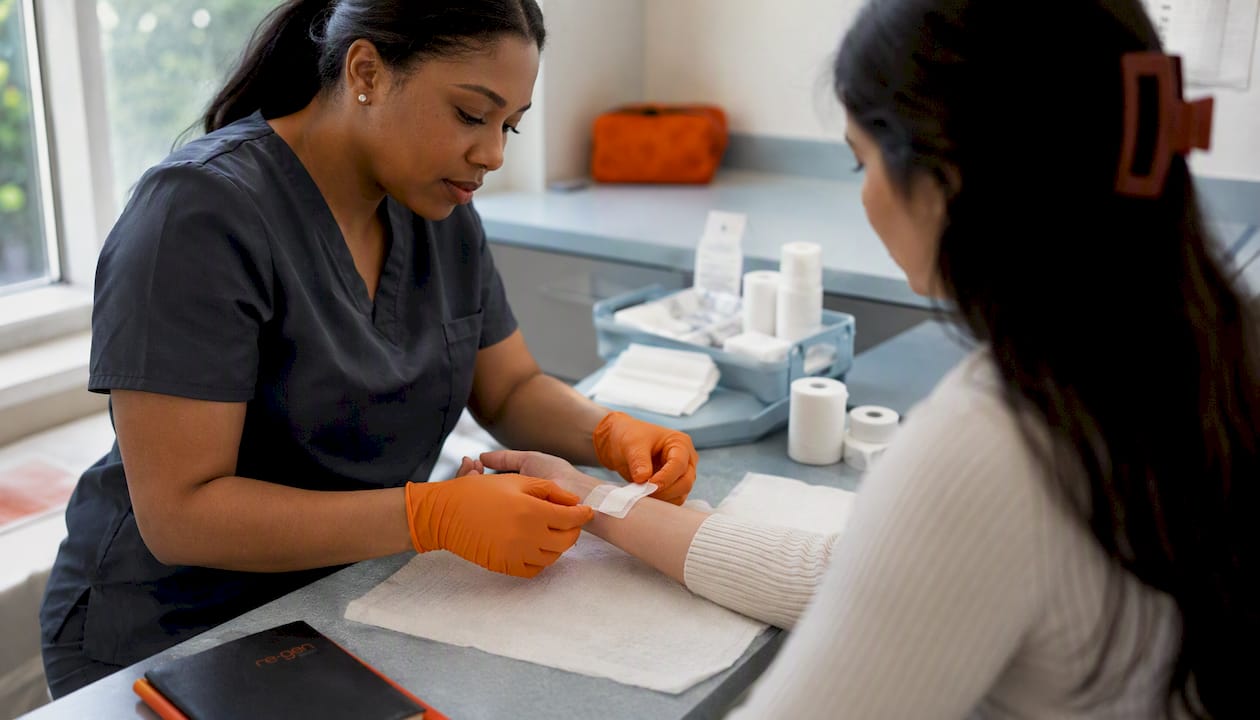
Most people tolerate OTC topical antibiotics without problems, but reactions do occur and some are worth watching for closely.
Common side effects and risks:
Local redness, itching, or burning at the application site.
Allergic contact dermatitis, most often triggered by neomycin. This reaction can look like the wound is getting worse rather than better, which is a common source of confusion.
Delayed wound healing in some cases, particularly with overuse or occlusion of a wound that needs air.
Skin thinning or irritation with prolonged use beyond the recommended duration.
Body parts and situations to avoid:
Eyes and surrounding tissue — topical antibiotic ointments are not ophthalmic products unless specifically labeled as such.
Large burns covering significant body surface area — these require professional wound management.
Deep puncture wounds — surface ointment cannot reach the depth where bacteria may be active.
Ear canals — unless a product is specifically labeled for otic use.
Pediatric cautions: Use the smallest effective amount in children. Avoid neomycin-containing products on infants and toddlers unless directed by a clinician. Keep all topical products out of reach of children.
Allergy warning: If you notice increasing redness, swelling, or a rash spreading beyond the wound edges after starting a topical antibiotic, stop using the product immediately. These signs suggest allergic contact dermatitis rather than worsening infection. Wash the area with mild soap and water and consult a clinician. Neomycin is a frequent sensitizer and is often the trigger in these reactions.
When to see a doctor and what prescription options are available
Topical OTC care has real limits. Certain signs mean the infection has progressed beyond what a pharmacy product can address.
Red flags that require prompt medical attention:
Redness spreading beyond the wound edges, especially if it is expanding hour by hour.
Red streaking extending from the wound (a sign of lymphangitis).
Fever, chills, or feeling systemically unwell.
Pus, significant swelling, or warmth that is increasing rather than improving.
A wound that shows no improvement after 48–72 hours of consistent topical treatment.
Any wound in an immunocompromised person, a person with diabetes, or a pregnant person — these groups should consult a clinician earlier rather than later.
Prescription topical options:
Drug | Indication | Efficacy data | Typical regimen | Notes |
Mupirocin 2% ointment (Bactroban) | Impetigo; secondarily infected traumatic lesions | 3x daily, 8–12 days | First-line for localized impetigo | |
Mupirocin calcium cream (Bactroban Cream) | Secondarily infected traumatic skin lesions | 96.1% clinical efficacy vs 93.1% for oral cephalexin | 3x daily | Comparable to oral antibiotics for localized infections |
Clinicians choose topical mupirocin over oral antibiotics when the infection is localized, superficial, and caused by susceptible organisms like Staphylococcus aureus or Streptococcus pyogenes. Oral antibiotics are reserved for spreading infections, systemic symptoms, or cases where topical therapy has already failed.
What the clinical evidence says about non-antibiotic alternatives
The evidence base for non-antibiotic wound care is stronger than many people expect.
Dermatologist rankings and antiseptic preferences: The U.S. News survey of 129 dermatologists placed Hibiclens (chlorhexidine-based) and simple bacitracin or polymyxin preparations ahead of multi-antibiotic mixtures for routine first aid. The reasoning is consistent with the clinical literature: lower allergic risk, adequate contamination prevention, and no contribution to resistance.
Moisture management: For routine uncomplicated wounds, petroleum-based moisture care reduces infection risk and avoids sensitization that can develop with repeated topical antibiotic exposure. The wound healing literature consistently supports keeping minor wounds moist rather than dry.
Plant-based alternatives: When evaluating any plant-based ointment as a natural remedy for skin care and wound support, look for:
Full ingredient transparency with no undisclosed chemical additives.
Clear guidance on which wound types the product is and is not appropriate for.
Documented use cases that align with your specific wound or skin condition.
No claims of replacing prescription care for infected or complicated wounds.
Theregenstore’s Re-gen ointment is one option in this category, formulated with plant-based ingredients and positioned for skin, soft tissue, and wound recovery. You can read more about natural alternatives to conventional antibiotic ointments and how plant-based care fits into a broader wound-care approach.
Antibiotic resistance: Resistance to mupirocin and other topical antibiotics is an emerging and documented concern. Short-term, targeted use is the standard recommendation. Routine application of antibiotic ointments to every minor wound accelerates resistance without providing meaningful benefit over moisture-only care for clean injuries.
Key Takeaways
For most minor skin infections, an OTC antibiotic ointment or plain petroleum jelly is sufficient — but knowing when to step up to prescription mupirocin or step back to moisture-only care is what separates effective home treatment from unnecessary antibiotic exposure.
Point | Details |
OTC first line | Bacitracin or Polysporin (neomycin-free) suits most minor infected wounds with low allergy risk. |
Neomycin allergy risk | Neomycin is the most common sensitizer in triple-antibiotic ointments; choose neomycin-free products for facial or pediatric use. |
Prescription mupirocin | Indicated for impetigo and secondarily infected lesions; clinical efficacy is about 96.1% for secondarily infected traumatic lesions and about 71% versus 35% for placebo in impetigo, according to controlled trials. |
Moisture-only care | Plain petroleum jelly supports healing in clean, uncomplicated wounds and avoids sensitization from repeated antibiotic use. |
Theregenstore Re-gen | A plant-based, petroleum-free ointment for routine wound and skin recovery support, positioned as a non-antibiotic alternative for clean wounds. |
A plant-based perspective on wound care
The conventional approach to a minor cut has been automatic: reach for the triple-antibiotic ointment. That reflex made sense when antibiotic resistance was less of a concern and when the sensitization rate for neomycin was less well documented. The evidence has shifted.
What the clinical literature now supports is a more selective approach. Use an antibiotic ointment when there is a genuine reason to: a wound with visible infection risk, a contaminated abrasion, or a lesion that is already showing signs of bacterial activity. For a clean, shallow cut that you have rinsed well and covered promptly, moisture-based care does the job without adding chemical exposure.
The plant-based category sits in that same space. A well-formulated plant-based ointment with documented ingredients and clear usage guidance can support the skin’s own recovery process for routine wounds. It is not a replacement for mupirocin when impetigo is diagnosed, and it is not a substitute for a clinician when red streaking appears. But for the everyday cuts, scrapes, and minor skin irritations that most people manage at home, it is a reasonable and lower-risk choice.
What gets underestimated is the cumulative effect of repeated antibiotic exposure. One course of Neosporin on a scraped knee is unlikely to cause problems. Years of reaching for the same triple-antibiotic product for every minor wound, on the other hand, is exactly how contact sensitization to neomycin develops. Choosing a non-antibiotic option for clean wounds is not a compromise on care. It is a more precise use of the tools available.
Re-gen: a plant-based option for routine wound and skin recovery
If you are looking for a petroleum-free, chemical-free alternative for everyday wound care, Theregenstore’s Re-gen ointment offers a plant-based option designed for skin, soft tissue, and recovery support. Unlike conventional antibiotic ointments, Re-gen uses herbal ingredients without synthetic antibiotics, making it a practical choice for clean wounds, minor skin irritation, post-operative skin care, and situations where you want to support healing without adding antibiotic exposure.
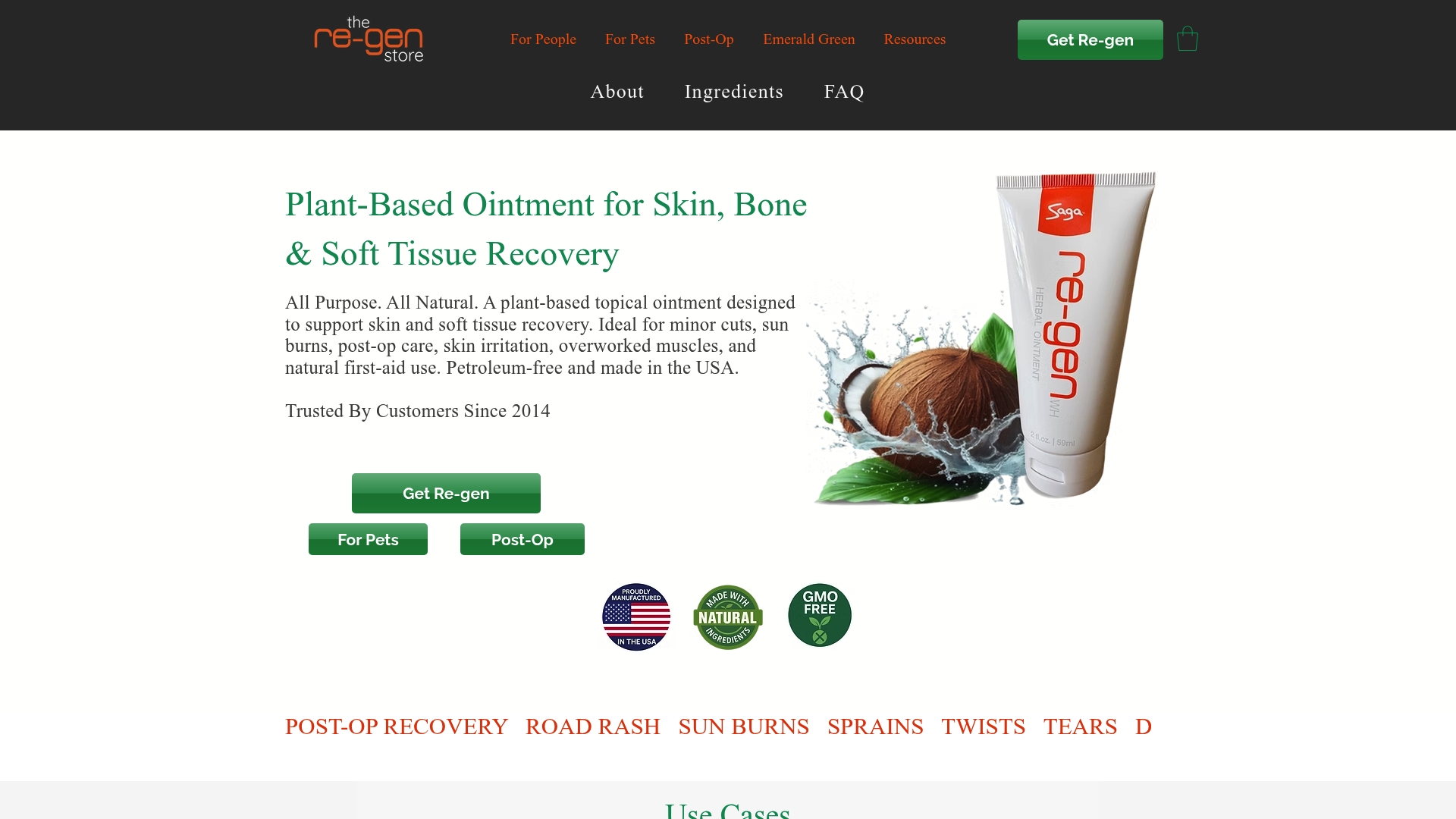
Re-gen is available in multiple sizes through the Theregenstore online store and is formulated for both human and pet use. Visit the petroleum-free plant-based wound treatment page to review the full ingredient list and usage guidelines, or go directly to the Re-gen product page to choose your size and place an order. Re-gen is intended to support routine wound recovery and is not a substitute for professional medical care when signs of spreading infection are present.
Useful sources
The claims in this article draw from the following primary and clinical sources. For specific medical questions about your wound or infection, consult a licensed healthcare provider.
This article provides general educational information and is not a substitute for professional medical advice. Confirm treatment decisions with a qualified clinician, particularly for infected, deep, or non-healing wounds.
FAQ
What is the best ointment for skin infections?
For most minor infected cuts and scrapes, a neomycin-free OTC antibiotic ointment (bacitracin or Polysporin) or plain petroleum jelly is the practical first choice. Prescription mupirocin (Bactroban) is indicated for impetigo and secondarily infected wounds that do not respond to OTC care.
What do dermatologists recommend instead of Neosporin?
Dermatologists surveyed by U.S. News frequently recommend Hibiclens (chlorhexidine) for wound cleaning and Polysporin or plain bacitracin as lower-allergy-risk alternatives to Neosporin, primarily because they avoid the neomycin sensitization risk.
What kills bacterial skin infections topically?
Mupirocin 2% (prescription) achieves the highest documented eradication rates for localized bacterial infections caused by Staphylococcus aureus and Streptococcus pyogenes, with clinical efficacy of about 96.1% for secondarily infected traumatic skin lesions and about 71% versus 35% for placebo in impetigo shown in randomized trials. OTC bacitracin and polymyxin B combinations are effective for preventing and treating minor surface infections.
When should I use petroleum jelly instead of an antibiotic ointment?
Use petroleum jelly for clean, shallow wounds with no signs of infection. Published clinical evidence supports moisture management as equally effective to topical antibiotics for routine uncomplicated wounds, with a much lower risk of allergic sensitization.
Can Theregenstore’s Re-gen ointment replace antibiotic ointments?
Re-gen is a plant-based ointment designed to support skin and soft tissue recovery in routine wounds. It is a non-antibiotic option suited for clean wounds and minor skin care, not a replacement for prescription mupirocin when a confirmed bacterial infection requires targeted antibiotic treatment.
Recommended
Comments