
Why Use Magnesium for Skin: Benefits and Healing Guide


Magnesium is a vital mineral that promotes skin health by reducing inflammation, strengthening the skin barrier, and supporting cellular repair. The reason to use magnesium for skin goes well beyond surface-level hydration. Magnesium participates in over 300 enzymatic reactions affecting nerve function, inflammation, and tissue repair. Those reactions directly shape how your skin heals, holds moisture, and responds to stress. Whether you apply it topically or take it orally, magnesium works at a biological level that most skincare ingredients simply cannot reach.
How does magnesium support skin barrier function and hydration?
The skin barrier is your body’s first defense against moisture loss and environmental irritants. Magnesium acts as a cofactor in the enzymatic reactions that produce ceramides, the lipids that hold the barrier together. Without adequate magnesium, ceramide synthesis slows, and the barrier weakens.
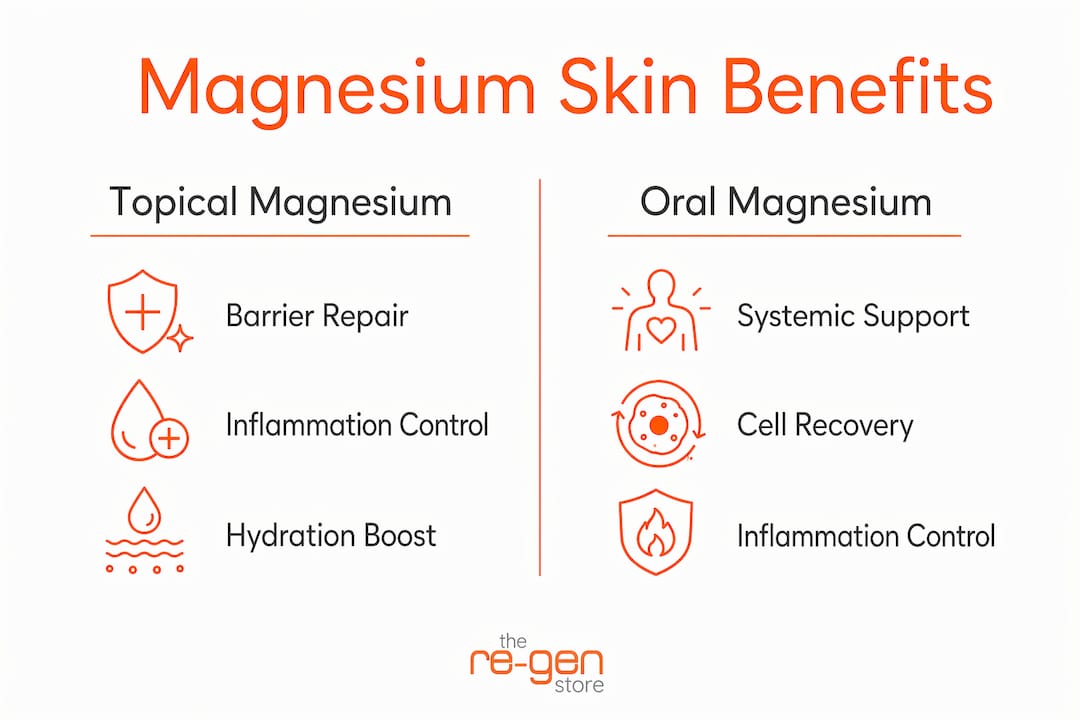
Transepidermal water loss reduces by 15–20% in damaged skin with consistent topical magnesium use. That reduction means your skin retains more moisture between applications, which directly supports healing and comfort. Dead Sea salt treatments, which are rich in magnesium chloride, have demonstrated improved skin hydration and reduced inflammation in people with eczema and psoriasis. The mineral physically integrates into the lipid structure of the epidermis, reinforcing the barrier from within.
Understanding skin barrier repair helps you see why magnesium is not just a moisturizing ingredient. It is a structural one.
Barrier benefit | What it means for your skin |
Ceramide synthesis support | Keeps the lipid layer intact and reduces dryness |
Reduced water loss | Skin stays hydrated longer between applications |
Lipid structure reinforcement | Protects against environmental irritants |
Inflammation modulation | Calms reactive skin and reduces redness |
Pro Tip: Apply topical magnesium chloride to slightly damp skin at a concentration between 3–8% for better absorption. Warm skin temperature also increases uptake through hair follicles.

Does magnesium reduce skin inflammation and irritation?
Magnesium controls inflammation at the molecular level. It inhibits NF-kB activation, the signaling pathway that triggers the release of pro-inflammatory cytokines. When NF-kB stays quiet, your skin produces less TNF-alpha, IL-17, and IL-23, all of which drive conditions like psoriasis and eczema.
Topical magnesium chloride reduces erythema by 22% in people with atopic dermatitis within 14 days. That is a measurable clinical outcome, not a cosmetic claim. Magnesium deficiency correlates with elevated inflammatory markers like CRP and IL-6, which are directly linked to acne and eczema flares. Restoring magnesium levels helps interrupt that cycle.
Skin conditions that respond well to magnesium include:
Atopic dermatitis (eczema): Reduced redness and itching with consistent topical use
Psoriasis: Lower levels of IL-17 and IL-23 with magnesium chloride application
Acne: Improved inflammatory balance by correcting magnesium deficiency
Stress-related flares: Magnesium modulates cortisol production, blunting stress-driven skin reactions
Magnesium acts as an adjunct by reducing inflammation without the harsh side effects common in medicated creams. It does not replace treatment for chronic skin disease, but it supports the skin’s ability to recover and stay calm between flares.
Pro Tip: For sensitive skin, magnesium chloride in a diluted spray or bath soak is gentler than concentrated oil. Start with a lower concentration and increase gradually if no irritation occurs.
Topical versus oral magnesium: which is better for skin?
Both forms work, but they work differently. Topical magnesium delivers local benefits directly to the skin. Oral magnesium supports skin health indirectly by improving systemic inflammation, sleep quality, and stress response.
Magnesium oil absorption occurs mainly via hair follicles and is unlikely to correct a systemic deficiency. That is a key limitation people often misunderstand. Topical magnesium is best used for localized inflammation, barrier support, and calming irritated skin. It is not a substitute for adequate dietary or supplemental intake.
Oral magnesium glycinate and citrate are the most bioavailable forms for systemic support. Dosages around 200–400mg daily are commonly used for skin and inflammatory support. Magnesium glycinate is particularly well-suited for people who also struggle with sleep, since magnesium supports overnight skin repair and collagen production by calming the nervous system.
Form | Best use | Key benefit |
Magnesium chloride (topical) | Localized inflammation, barrier repair | High solubility, direct skin contact |
Magnesium oil (topical) | Spot treatment, calming irritation | Easy application, fast absorption |
Magnesium glycinate (oral) | Sleep, systemic inflammation | High bioavailability, gentle on digestion |
Magnesium citrate (oral) | General inflammatory support | Well-absorbed, widely available |
Pro Tip: Combine oral magnesium glycinate at night with a topical magnesium chloride spray in the morning. You address both systemic and local skin needs without overlap.
How to integrate magnesium into your natural skincare routine
Adding magnesium to your routine does not require a complete overhaul. The key is consistency and correct application.
Choose the right form. Magnesium chloride spray or a diluted oil works well for daily topical use. Look for formulations with a pH near 5.5–7.0 to match your skin’s natural acid mantle.
Apply at the right time. Use topical magnesium after cleansing and before heavier moisturizers. Applying it to slightly damp skin improves absorption.
Layer with complementary ingredients. Ceramide-based moisturizers reinforce the barrier work magnesium starts. Vitamin C supports collagen synthesis alongside magnesium’s repair activity.
Set realistic expectations. Visible calming benefits appear within 24–72 hours of first use. Barrier repair takes several weeks of daily application. Redness reduction in atopic skin requires about 14 days of consistent use.
Watch for tingling. Mild tingling with topical magnesium chloride on sensitive skin is a normal mineral interaction with nerve endings, not an allergic reaction. If it persists or worsens, dilute the formulation further.
For chronic skin conditions like eczema or psoriasis, consult a dermatologist before relying solely on magnesium. It works best as a supportive layer alongside a broader care plan. You can also learn more about soothing skin irritation naturally to build a complete approach.
Clinical evidence supports combining magnesium with plant-based topical recovery products to promote healing and barrier restoration synergistically.
Key Takeaways
Magnesium supports skin health through barrier repair, inflammation control, and cellular recovery, making it one of the most biologically active minerals in natural skincare.
Point | Details |
Barrier function | Magnesium supports ceramide synthesis and reduces transepidermal water loss by 15–20%. |
Inflammation control | Topical magnesium chloride reduces erythema by 22% in atopic dermatitis within 14 days. |
Topical vs. oral use | Topical works locally; oral glycinate or citrate at 200–400mg daily supports systemic skin health. |
Realistic timelines | Calming effects appear within 24–72 hours; full barrier repair takes several weeks of daily use. |
Best form for topical use | Magnesium chloride at 3–8% concentration on damp skin delivers the most consistent results. |
What I’ve learned from watching magnesium work in real skin recovery
People come to natural skincare looking for a fix. Magnesium is not a fix. It is a foundation. That distinction matters more than most articles admit.
I’ve seen people apply magnesium oil twice and give up because their eczema didn’t clear. The biology doesn’t work that fast. What magnesium does is reset the inflammatory baseline over time, and that process requires patience and consistency. Pairing it with a quality plant-based ointment, managing sleep, and reducing stress compounds the results in ways that no single ingredient can replicate alone.
The most underrated benefit is the cortisol connection. Stress spikes cortisol. Cortisol degrades the skin barrier and drives sebum overproduction. Magnesium blunts that spike. That means your skin stays calmer during stressful periods, not just when life is easy. That is where the real value shows up.
— Kyle
Natural skin healing products from Theregenstore
Magnesium lays the groundwork for skin recovery. The right topical ointment takes that recovery further.
Theregenstore’s Re-gen ointment is a petroleum-free, plant-based formula designed to support skin repair, reduce irritation, and promote tissue regeneration without synthetic chemicals. It pairs naturally with magnesium’s barrier-building and anti-inflammatory work, giving your skin two layers of support instead of one. Whether you’re managing a wound, a burn, or a chronic skin condition, Re-gen addresses the recovery side that magnesium alone cannot cover. Visit Theregenstore to explore their plant-based wound treatment and find the right fit for your skin health goals.
FAQ
Why use magnesium for skin instead of other minerals?
Magnesium participates in over 300 enzymatic reactions that directly affect inflammation, barrier function, and tissue repair. No other common topical mineral matches that range of biological activity.
How quickly does topical magnesium improve skin?
Calming and redness-reducing effects appear within 24–72 hours. Barrier repair and sustained inflammation control take several weeks of daily use.
Is magnesium good for acne-prone skin?
Magnesium deficiency raises inflammatory markers like CRP and IL-6, which are linked to acne. Restoring magnesium levels through diet or supplementation helps reduce that inflammatory load.
What is the best form of magnesium for skin health?
Magnesium chloride is preferred for topical use due to its high solubility and skin penetration. Magnesium glycinate is the top oral form for people who also want sleep and stress support, which indirectly benefits skin.
Can magnesium replace prescription creams for eczema or psoriasis?
Magnesium is an adjunct, not a replacement. It reduces inflammation and supports the barrier without the side effects of medicated creams, but chronic conditions require professional medical guidance alongside any natural approach.
Recommended
Comments