
Soothe Peeling Sunburn: AM/PM Care and a Plant Based Ointment Option


Get out of the sun, cool the skin with a compress or brief cool shower, then moisturize while it’s still damp. Peeling is your body clearing away sun-damaged surface cells, and it’s usually a normal part of recovery, not a problem to fix. Watch for blisters, fever, or spreading redness, since those signs call for a clinician rather than home care.
TL;DR:
Applying a gentle, fragrance-free moisturizer or aloe gel to damp skin reduces peeling and discomfort, but avoid heavy ointments until swelling subsides.
Cooling the skin with brief damp cloths or showers and drinking water supports healing without using alcohol or fragrance products.
Leave blisters intact and avoid popping them, as they protect new tissue and lower infection risk, seeking medical attention for large or painful blisters.
Signs like widespread blistering, fever, spreading redness, or signs of infection require prompt evaluation by a healthcare professional.
Using plant-based ointments like Re-gen can support healing on closed, non-infected peeling skin if applied according to product directions.
Table of Contents
Immediate first-aid steps to calm pain and prevent further damage
Daily care while your skin peels: moisturizers, bathing, and clothing choices
Clear red flags: when to call your clinician or seek urgent care
A simple AM and PM routine to ease peeling and speed comfort
Nutritional support and supplements that may aid skin healing
Re-gen ointment: a plant-based option to consider for protecting peeling skin
Immediate first-aid steps to calm pain and prevent further damage
The first hour after you notice peeling matters most. Your skin is inflamed and fragile, and the choices you make right away shape how comfortable the next several days will be.
Stop sun exposure immediately. Move to shade or indoors and remove clothing that’s rubbing against the burned area.
Cool the skin with a damp cloth or a brief cool shower. Cool compresses work best in short stretches of 10 to 15 minutes rather than one long soak, and ice should never touch burned skin directly.
Pat the area dry with a soft towel, but leave it slightly damp. That moisture helps the next step work better.
Apply a gentle moisturizer while skin is still damp to trap hydration before it evaporates.
Drink water. Sunburned skin pulls fluid toward the surface, and replacing it supports healing from the inside.
Skip anything with fragrance or alcohol here. Your goal is simply to calm the skin down, not to treat it yet.
Daily care while your skin peels: moisturizers, bathing, and clothing choices
Once the initial sting has passed, your daily routine determines how much flaking and irritation you deal with over the following week.
Apply a fragrance-free moisturizer or an aloe or soy based gel to slightly damp skin, and reapply whenever the skin feels tight.
Stick with water-based lotions or aloe gels during active healing, since dermatologists recommend cool baths and aloe- or soy-containing moisturizers applied to damp skin while heat and swelling are still present.
Save heavier ointments or emollients for later, once the burn has cooled down and swelling has eased.
Avoid exfoliants, scrubs, and harsh soaps. A mild, unscented cleanser is enough.
Wear soft, loose cotton clothing so fabric doesn’t drag across peeling skin.
Pro Tip: Keep a travel-size moisturizer by your shower so you can apply it within a minute or two of stepping out, while your skin is still damp.
How to manage pain, itch, and blisters safely at home
Discomfort and itching are the two complaints that drive most people to search for relief, and both have safe, simple answers.
For pain, ibuprofen or acetaminophen taken per the label can help, though you should check for age restrictions, pregnancy considerations, or interactions with other medications first.
For itching, a short course of 1% hydrocortisone cream applied per label directions, or an oral antihistamine at night, can ease the urge to scratch.
Leave blisters intact. They protect the healing skin underneath, so cover them loosely rather than popping them.
Seek care for blisters that are unusually large or painful rather than draining them yourself.
Avoid topical anesthetics like benzocaine or lidocaine, since MedlinePlus cautions against these ingredients on sunburned skin, along with heavy oil-based products that can trap heat and sweat.
Actions and products to avoid while skin is peeling
A few common instincts actually slow healing down or raise your infection risk.
Don’t pick or peel flakes yourself. Pulling at loose skin exposes the fragile new layer underneath and invites bacteria in.
Skip exfoliation, retinoids, and alpha hydroxy acid products until the peeling has fully resolved.
Avoid benzocaine or lidocaine sprays, and hold off on thick petroleum-based ointments while the skin still feels hot.
Never apply diclofenac gel or other prescription treatments meant for actinic keratosis to open or peeling skin.
Clear red flags: when to call your clinician or seek urgent care
Most peeling sunburns resolve at home, but certain signs mean it’s time to get evaluated.
Large-area or deep blistering, fever, chills, fainting, nausea, or confusion.
Spreading redness, pus, increased warmth, or a wound that isn’t healing point to infection and need a clinician’s attention.
Burns involving the eyes, face, hands, feet, or genitals, especially with blistering, deserve prompt medical evaluation rather than a wait-and-see approach.
A simple AM and PM routine to ease peeling and speed comfort
A predictable routine takes the guesswork out of the days while your skin recovers.
Morning: take a brief cool rinse, apply moisturizer while skin is damp, then dress in soft clothing and use sunscreen on any healed, non-blistered areas.
Evening: use a cool compress if the skin feels hot, cleanse gently only if needed, and apply moisturizer generously before bed.
Throughout the day: address pain or itching as it comes up, and avoid prolonged water immersion, heavy sweating, or tight clothing that rubs against peeling areas.
Following this pattern for several days in a row, rather than treating it once and forgetting about it, is what actually keeps the skin comfortable.
How plant-based ointments fit into gentle aftercare
Once skin is closed, no longer blistered, and shows no signs of infection, some people look for a plant-based option to support the barrier as it finishes recovering.
Reasonable use means protecting fragile new skin and supporting comfort on closed, healed areas, not open wounds or active blisters.
TheRegenStore.com sells Re-gen, a plant-based, petroleum-free ointment marketed for skin and soft tissue recovery, with product details listed on its site.
Always follow the product’s label directions, avoid applying it to open blisters or infected skin, and see a clinician for severe burns before trying any topical product.
Nutritional support and supplements that may aid skin healing
What you eat while your skin repairs itself plays a supporting role alongside the topical care you’re already doing. Protein supplies the building blocks your body uses to rebuild skin cells, so meals with enough protein during a peeling episode are worth prioritizing. Vitamin C and vitamin E are commonly mentioned for skin healing because they’re involved in collagen support and cell protection, though neither replaces the basic first-aid steps of cooling and moisturizing. If you’re considering a supplement, talk to your clinician first, particularly if you take other medications or have an underlying health condition, since even common vitamins can interact with certain treatments. Staying hydrated matters just as much as any single nutrient. Sunburned skin loses moisture faster than healthy skin, and drinking enough water supports the same repair processes that a good moisturizer supports from the outside. None of this speeds up peeling itself. It simply gives your body the raw materials it needs while the natural process runs its course over the coming days.

Author viewpoint and reassurance
Peeling on its own, without fever or spreading redness, is a normal healing sign. When you’re unsure, lean gentle and check with a clinician.
— Kyle
Re-gen ointment: a plant-based option to consider for protecting peeling skin
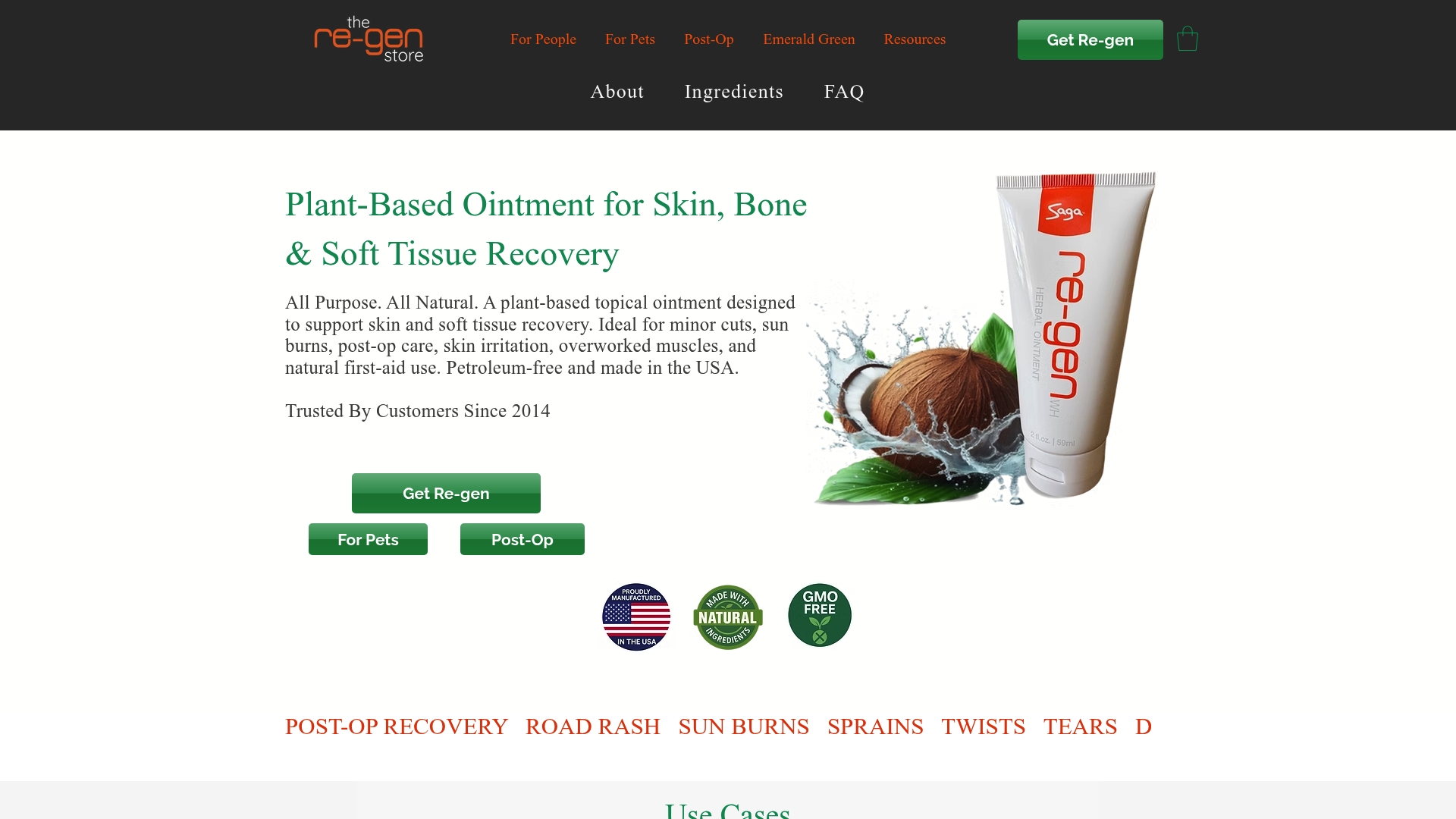
If you’d rather use a chemical-free option while your skin finishes healing, Re-gen is a plant-based, petroleum-free ointment from TheRegenStore.com built for skin and soft tissue recovery. It’s meant for closed, non-infected peeling skin, not open blisters, so follow the label directions and check with a clinician first if the burn is severe. Shipping runs a flat rate per order, and you can browse the Emerald Green formula or start at Theregenstore to see what fits your aftercare routine.
Sources
Contact a clinician directly for severe or worsening cases rather than relying on home care alone.
This article is general information, not a substitute for advice from a qualified doctor. Consult a qualified healthcare professional about your own circumstances before acting on anything here.
FAQ
What helps sunburn peeling go away?
Cooling the skin, keeping it moisturized while damp, and avoiding picking at flakes are the most reliable ways to ease peeling. Aloe or soy based moisturizers applied to damp skin reduce tightness and make the flaking less noticeable, though nothing reverses the underlying sun damage instantly.
Will I lose my tan if I’m peeling?
Peeling removes the top layer of sun-damaged skin, and any tan in that layer sheds along with it. The new skin underneath starts out lighter and is more sensitive to sun, so it needs sunscreen rather than more exposure.
How long should sunburn peeling last?
A mild sunburn generally improves within about 7 days, though more severe burns can take one to two weeks to fully resolve. Peeling itself usually starts a few days after the burn and tapers off as new skin finishes forming underneath.
Should you moisturize a peeling sunburn?
Yes, moisturizing peeling skin helps reduce tightness and discomfort, especially when applied while the skin is still damp from a shower. Choose a fragrance-free, water-based lotion or an aloe or soy based gel rather than a heavy, oil-based product while the skin still feels warm.
Recommended
Comments