
Natural Ingredients in Recovery: Plant-Based Topical Guide


Plant-based topical ingredients can genuinely support recovery for many superficial wounds, soft-tissue injuries, and muscle soreness when used appropriately. Re-gen from Theregenstore, and FDA guidance on topical safety both point to the same principle: choose products with transparent ingredient lists, clear intended uses, and no harsh synthetic additives.
Quick takeaways:
Plant-based topicals work best for minor cuts, abrasions, burns, sprains, and post-exercise muscle soreness.
Always patch-test a new product and stop use if redness spreads or a wound shows signs of infection.
For deep wounds, suspected fractures, or signs of systemic infection, see a clinician before applying any topical.
Safety note: Re-gen (Theregenstore) is formulated as a supportive topical aid, not a replacement for prescribed antibiotics or medical treatment. The FDA classifies topical wound products by intended use — always follow labeled instructions.
Table of Contents
How do natural ingredients support the body’s healing process?
Several biological mechanisms explain why plant-based ingredients can move recovery forward. Phytochemical classes including flavonoids, terpenoids, saponins, and phenolic compounds each contribute to distinct stages of tissue repair.
Anti-inflammatory: Polyphenols reduce pro-inflammatory cytokines, limiting excess swelling that slows healing.
Antimicrobial: Compounds like EGCG from green tea and certain terpenoids inhibit bacterial growth at the wound surface.
Antioxidant / free-radical scavenging: Botanicals neutralize reactive oxygen species that damage healthy tissue. Learn more about antioxidants in healing.
Collagen and cell-proliferation support: Ingredients such as jojoba and curcumin stimulate fibroblast activity and collagen production, which is central to tissue rebuilding.
Angiogenesis / circulation support: Green tea EGCG promotes new blood vessel formation, improving nutrient delivery to healing tissue.
Topical delivery matters as much as the ingredient itself. Plant polysaccharide hydrogels and wax-based carriers meaningfully change how actives penetrate the skin barrier and reach underlying tissue. A well-formulated ointment outperforms a poorly delivered extract of the same botanical.
Pro Tip: When reading a label, look for the specific extract name and concentration (e.g., “calendula extract 5%”) rather than just the plant name. “Fragrance” or “botanical blend” with no further detail is a red flag for low active content.
Limitation: Topical mechanisms address surface and near-surface tissue. Deep bone fractures and systemic infections require oral or intravenous treatment. No topical botanical replaces systemic antibiotics when an infection has spread beyond the wound site.
Which natural ingredients should you look for (and which need caution)?
The role of herbs in healing is well-documented for several key botanicals. Here is a practical reference:
Aloe vera: Soothes burns and abrasions; supports moisture retention and reduces surface inflammation.
Calendula: Promotes wound closure and reduces inflammatory infiltration. In one rat excision model, calendula showed 90.0% wound closure versus 51.1% in controls on day 8.
Curcumin (turmeric): Improves granulation tissue and collagen deposition; also studied for reducing exercise-induced muscle damage markers.
Green tea (EGCG): Antioxidant, antimicrobial, and angiogenic; one of the most studied polyphenols for wound models.
Jojoba: Reconstitutes the skin barrier, reduces inflammatory infiltration, and stimulates collagen I production in fibroblasts.
Pomegranate extract: Rich in ellagitannins with antioxidant and antimicrobial properties relevant to skin recovery.
Plant-derived polysaccharides: Support hydration and act as delivery carriers for other actives in chronic wound healing.
Omega-3 topical components: Anti-inflammatory; among the compounds with stronger research support for recovery outcomes.
Use with caution:
Comfrey (pyrrolizidine alkaloids): Traditionally used for sprains, but internal use carries liver toxicity risk. Topical use on broken skin is not recommended.
Undiluted essential oils (tea tree, eucalyptus): Can cause chemical burns or sensitization on open wounds.
Garlic and ginkgo: May increase bleeding risk and interact with anticoagulant medications.
Pro Tip: Always patch-test a new topical on intact skin for 24 hours before applying to a wound. Dilute essential oils to 1–2% in a carrier oil. If you are pregnant, nursing, or treating a child under 2, consult a clinician before use.
For pregnancy, pediatric use, or medicated wounds, do not substitute a plant-based topical for a prescribed antibiotic without medical advice.
How do you choose and apply a plant-based topical safely?
Selection checklist:
Full ingredient list visible on the label and product page
Stated intended use (wound care vs. muscle soreness vs. burn relief)
No petroleum, synthetic preservatives, or undisclosed “fragrance”
Third-party testing or quality certification noted
Clear frequency and application instructions
Transparent return or satisfaction policy
Step-by-step application:
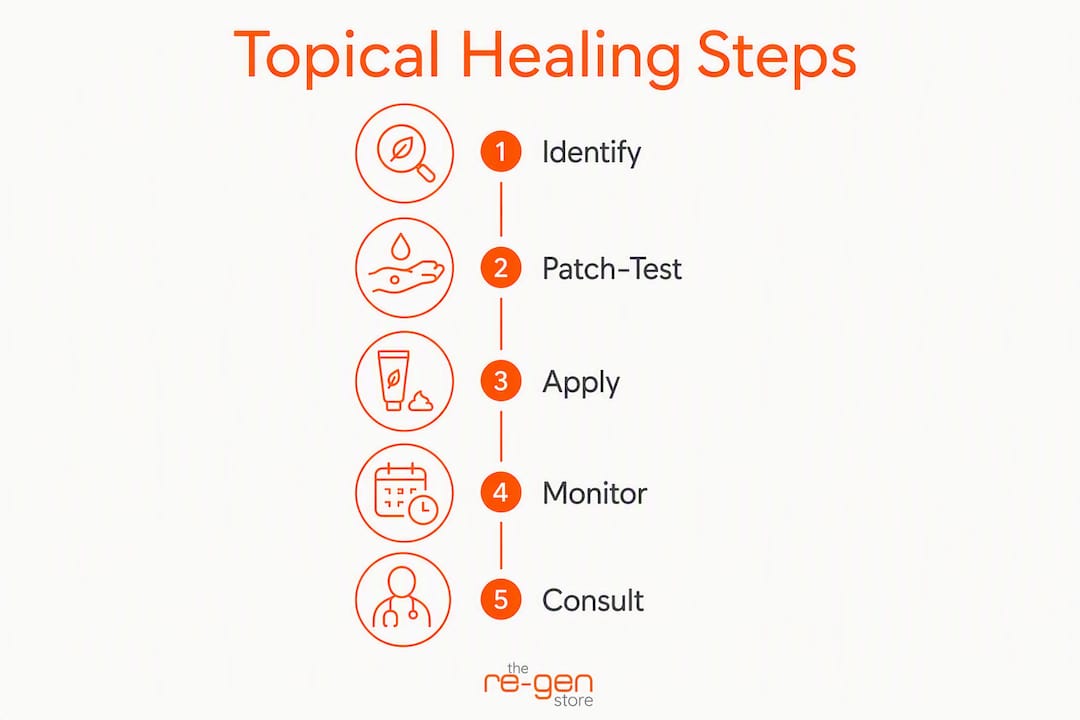
Clean the area gently with mild soap and water; pat dry.
Apply a thin, even layer of the topical directly to the affected area.
Cover with a breathable bandage if the wound is open or in a high-friction area.
Reapply 2–3 times daily or as directed on the label.
Monitor for improvement; reassess after 48–72 hours.
Stop use and seek care if you notice:
Redness spreading beyond the wound edge
Fever or chills
Increasing pain, warmth, or pus
Numbness or loss of sensation near the site
Sourcing and processing conditions affect potency. Polyphenol composition varies with growing and post-harvest handling, so choose brands that disclose their sourcing. A natural healing workflow can help you stay consistent. See Theregenstore’s injury recovery workflow for a structured approach.
What does the science actually support?
Some botanicals have solid preclinical data and limited clinical support; only a few have stronger clinical evidence. The table below summarizes the current state of evidence for key agents.
Ingredient / Compound | Evidence Level | Study Note |
Calendula | Moderate (animal + limited human) | 90.0% wound closure vs. 51.1% control in rat excision model on day 8 |
Curcumin | Moderate (preclinical, some clinical) | Reduces exercise-induced muscle damage markers (CK, LDH) in human supplementation studies |
Green tea (EGCG) | Moderate (in vitro, animal) | Antioxidant, antimicrobial, and angiogenic effects in wound models |
Jojoba | Moderate (in vitro, animal) | Accelerated keratinocyte and fibroblast wound closure; increased collagen I |
Omega-3 fatty acids | Strong (clinical, nutritional) | Among the best supported compounds for post-exercise recovery outcomes |
Plant polysaccharide hydrogels | Emerging (preclinical) | Promising delivery carriers for chronic wound healing |
Polyphenol-rich botanicals tend to help by both reducing inflammation and protecting tissue from oxidative damage simultaneously. For readers interested in how antioxidant skin care fits into this picture, antioxidant types in skin care offers useful depth.
Evidence gaps to keep in mind:
Most botanical wound studies use animal models; large human clinical trials remain limited.
Preparation variability (extract concentration, carrier, storage) makes study-to-study comparisons difficult.
Topical omega-3 and tart cherry data is primarily from nutritional studies, not topical applications.
What recovery timelines should you expect, and when should you see a doctor?
Typical improvement windows by injury type:
Minor abrasions and superficial cuts: Visible improvement within 3–5 days with consistent topical care.
Sutured or closed wounds: Support tissue remodeling for 2–4 weeks post-closure; use only after a clinician clears topical application.
Sprains and strains: Soft-tissue swelling and bruising typically improve over 1–2 weeks; topicals can support surface comfort. See Theregenstore’s guidance on muscle and connective tissue recovery.
Exercise-induced muscle soreness (DOMS): Usually peaks at 24–48 hours and resolves within 3–5 days.
Suspected fractures: Topicals are not appropriate as primary treatment. Seek imaging and clinical care immediately.
See a doctor when:
A wound shows no improvement after 5–7 days of consistent care.
You develop fever, chills, or red streaks extending from the wound.
Pain increases rather than decreases after the first 48 hours.
Movement in a joint is significantly limited or a bone feels unstable.
The wound is deep, gaping, or caused by an animal bite or puncture.
If a plant-based topical is not producing visible improvement within the expected window, discontinue use and consult a clinician rather than increasing application frequency.
What should you expect to pay, and where can you buy?
Plant-based topical ointments in the U.S. typically range from around $10–$20 for a small tube (0.5–1 oz), $20–$45 for a mid-size jar (2–4 oz), and $35–$70 or more for multi-unit or larger packs. Prices vary by formulation complexity, ingredient sourcing, and retailer.
Buying checklist:
Full ingredient list visible before purchase
Clear pack size and concentration information
Customer reviews that mention specific use cases (wound care, muscle recovery, burns)
Return or satisfaction policy stated
Usage instructions included with the product
Re-gen is available directly through Theregenstore in multiple sizes. Pricing varies by pack size, and the product page lists all available options with ingredient transparency. For readers also exploring nutritional support alongside topical care, recovery nutrition timing is worth reviewing.
Is a plant-based topical the right choice for your injury?
Plant-based topicals are appropriate for minor to moderate superficial injuries: cuts, abrasions, minor burns, sprains, post-exercise soreness, and post-operative surface wounds cleared by a clinician. They are not a substitute for systemic antibiotics, surgical care, or fracture management.
Re-gen from Theregenstore fits this use case directly:
Petroleum-free formulation with a fully disclosed plant-based ingredient list
Regenerative botanical actives targeting inflammation, collagen support, and skin barrier repair
Intended for skin, soft tissue, muscle, and bone recovery with separate guidance for human and pet use
No synthetic preservatives or undisclosed fragrance compounds
Usage guidelines and safety notes included with every product
For readers ready to try a transparent, plant-based alternative to conventional ointments, Re-gen plant-based ointment is a well-matched starting point.
Key Takeaways
Plant-based topical ingredients support recovery through anti-inflammatory, antimicrobial, antioxidant, and collagen-stimulating mechanisms, but work best for superficial injuries and should never replace medical care for deep wounds or systemic infections.
Point | Details |
Mechanisms are real but scoped | Botanicals work via anti-inflammatory, antioxidant, and collagen pathways — effective for surface and near-surface tissue only. |
Calendula has measurable data | In a rat excision model, calendula achieved a significantly higher wound closure rate compared to controls on day 8. |
Formulation determines delivery | Carriers like hydrogels and waxes change how actives penetrate skin — the formula matters as much as the ingredient. |
Red flags require a clinician | Spreading redness, fever, or no improvement after 5–7 days means stop the topical and seek medical care. |
Re-gen is a transparent option | Theregenstore’s Re-gen is petroleum-free, plant-based, and formulated for skin, soft tissue, muscle, and bone recovery. |
A perspective on what plant-based topicals actually deliver
The conversation around plant-based recovery products tends to split into two camps: uncritical enthusiasm and flat dismissal. Neither is useful to you.
The honest picture is more specific. Certain botanicals, particularly calendula, curcumin, and EGCG, have genuine mechanistic support and measurable preclinical results. The limitation is not the plants themselves. It is the gap between a well-designed lab extract and what ends up in a commercial product. Concentration, carrier, and sourcing all determine whether an ingredient actually reaches the tissue it is meant to support.
What this means practically: ingredient transparency is not a marketing nicety. It is the only way to evaluate whether a product can do what it claims. A product that lists “botanical blend” without concentrations is asking you to trust a black box. Products like Re-gen that publish their full ingredient list give you something to actually evaluate. That is the standard worth holding every plant-based topical to.
Re-gen from Theregenstore: a plant-based option worth knowing
If you have been reading this article because you want a natural, petroleum-free alternative to conventional ointments, Re-gen from Theregenstore is built for exactly that purpose. It is a plant-based regenerative ointment formulated without petroleum, synthetic preservatives, or undisclosed additives, designed to support skin, soft tissue, muscle, and bone recovery for both humans and pets.
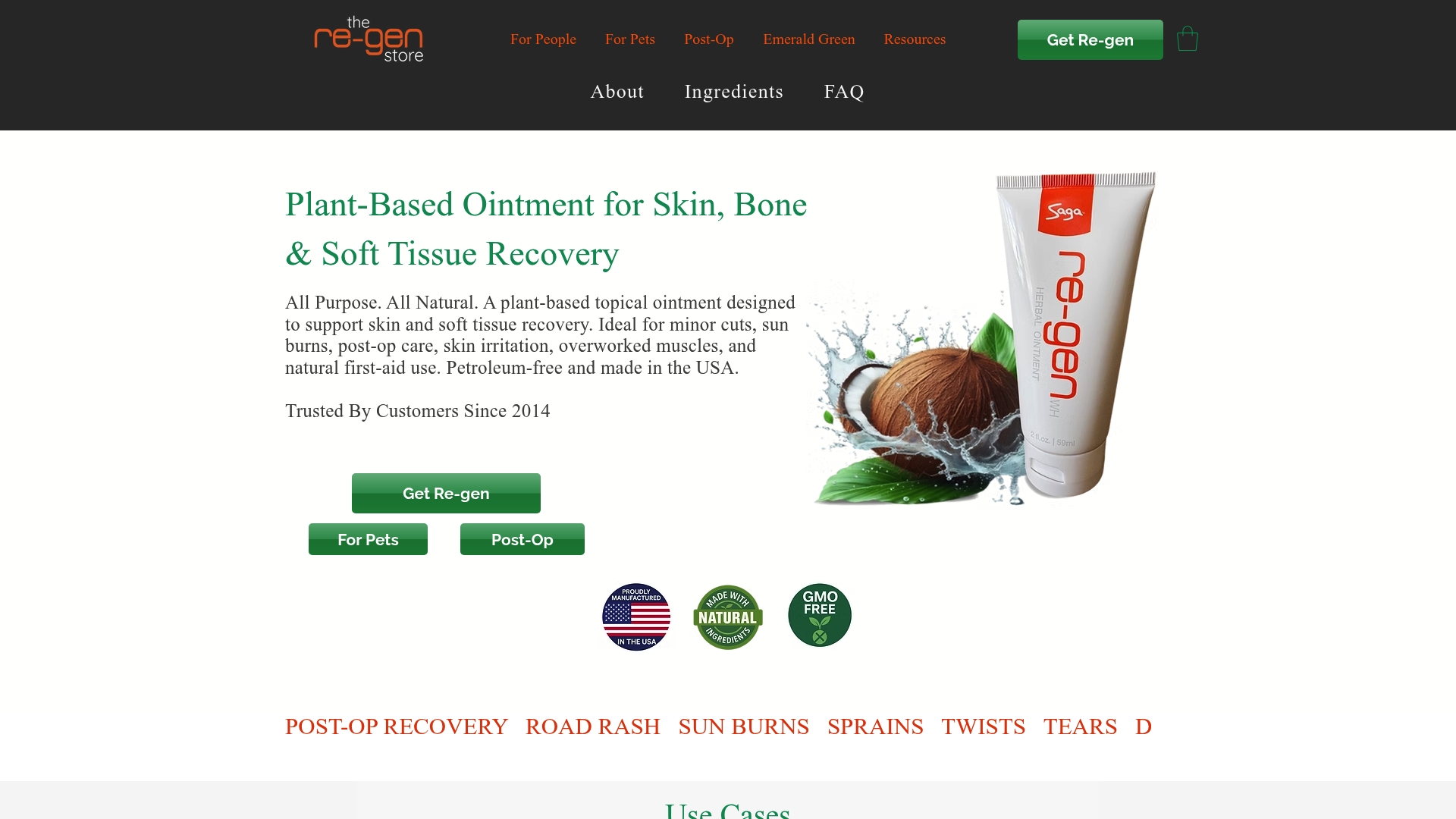
Re-gen is available in multiple pack sizes through Theregenstore, with full ingredient transparency and clear usage guidelines included. It is positioned as a natural alternative to conventional topical antibiotics for eligible injuries, not as a replacement for medical care when infection or serious injury is present. Visit theregenstore.com to review the full ingredient list, choose your pack size, and place an order.
Useful sources
Therapeutic Wound Healing Bioactivities of Medicinal Plants (PMC)
Phytochemistry and Biological Activity in Wound Healing: Molecules
Nutritional Compounds for Post-Exercise Recovery (MDPI Nutrients)
Plant Polysaccharide Hydrogels for Chronic Wound Healing (ScienceDirect)
Herb Safety and Drug Interactions (University of Rochester Medicine)
Re-gen product page (Theregenstore)
Herbal skin support guide (Theregenstore)
This article is general information, not medical advice. For complex, infected, or post-surgical wounds, consult a qualified clinician before starting or changing any topical treatment.
FAQ
What is the role of natural ingredients in recovery?
Natural ingredients support recovery through anti-inflammatory, antimicrobial, antioxidant, and collagen-stimulating mechanisms. They are most effective for superficial skin and soft-tissue injuries when delivered in a well-formulated topical product.
Which plant-based ingredients have the strongest evidence for wound healing?
Calendula, curcumin, and green tea EGCG have the most studied preclinical profiles. Calendula showed 90.0% wound closure versus 51.1% in controls in a rat excision model, and curcumin has demonstrated reduced muscle damage markers in human supplementation studies.
Can a plant-based topical replace Neosporin or prescription antibiotics?
No. Plant-based topicals can support minor wound recovery, but they do not replace systemic antibiotics for infected wounds. Re-gen from Theregenstore is formulated as a natural supportive option for eligible injuries, not as an antibiotic substitute.
How do you know if a plant-based topical is working?
Expect visible improvement in minor wounds within 3–5 days and reduced muscle soreness within 3–5 days of consistent application. If redness spreads, fever develops, or there is no improvement after 5–7 days, stop use and see a clinician.
Does formulation affect how well plant-based ingredients work?
Yes, significantly. Carriers like hydrogels, waxes, and nanoemulsions change how actives penetrate the skin barrier. The same botanical in a poorly formulated product may deliver little benefit compared to a well-designed ointment with a disclosed concentration.
Recommended
Comments